

Laufas is an old turf house in Northern Iceland. There are many of these partially underground historical sod houses in Iceland. The house was built between 1866-1870 and is very large and multi-level, with one floor completely underground. In this photo you can see the sod brick construction which has withstood the test of time and Iceland’s formidable winters.
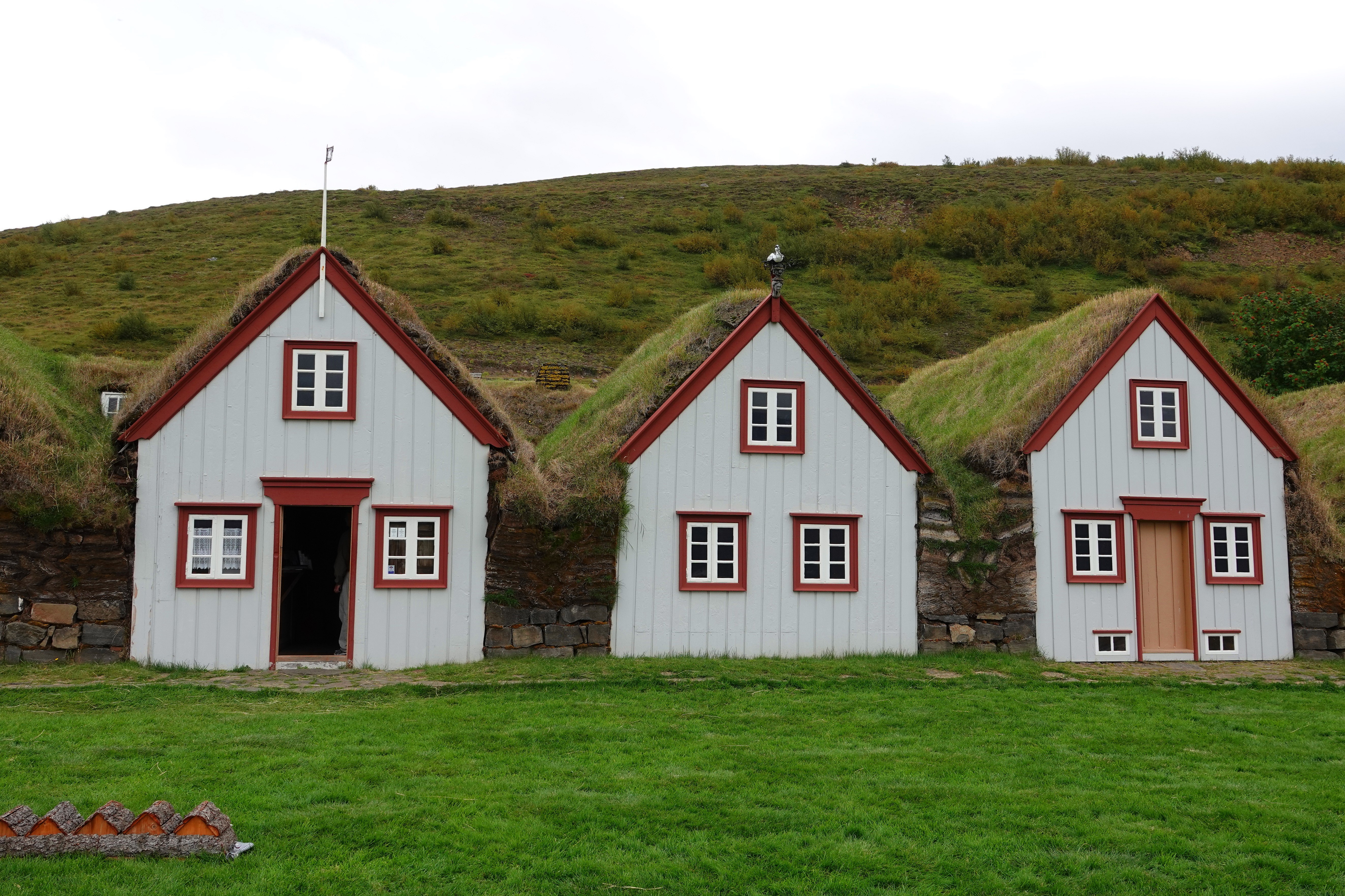
Laufas house facades are made of wood which is quite scarce in Iceland.
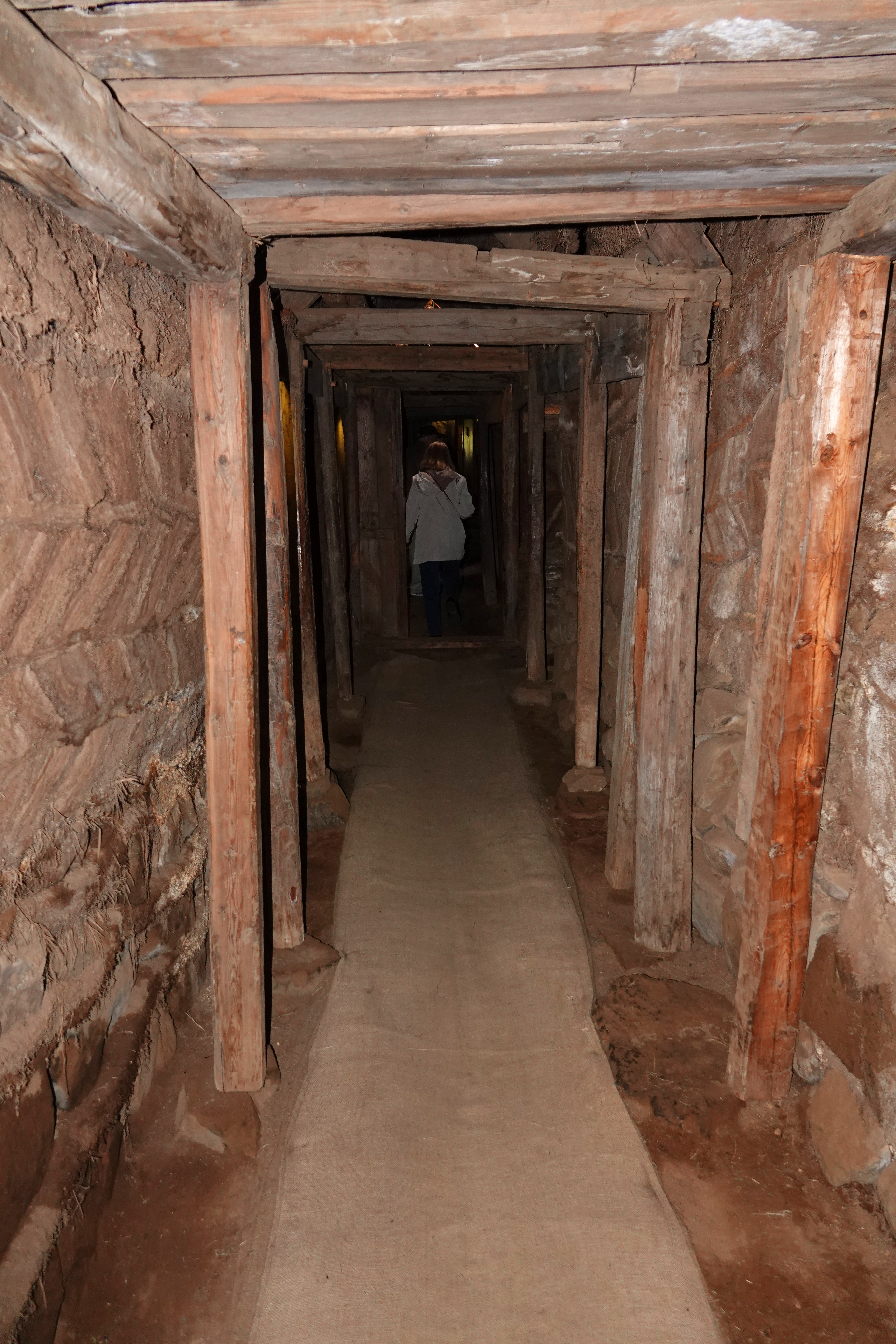
There are underground passages,

and underground rooms.
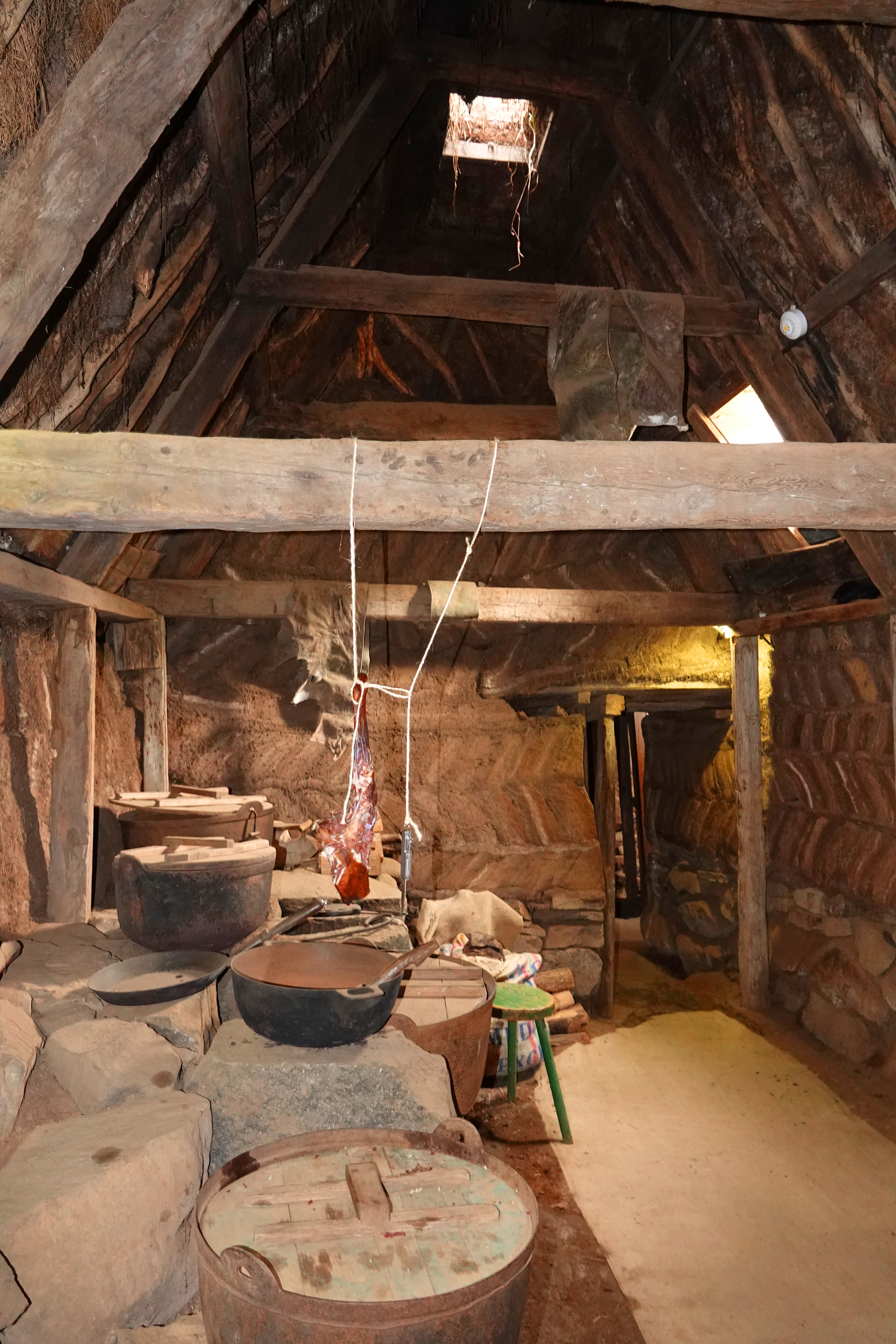
These houses are snug,
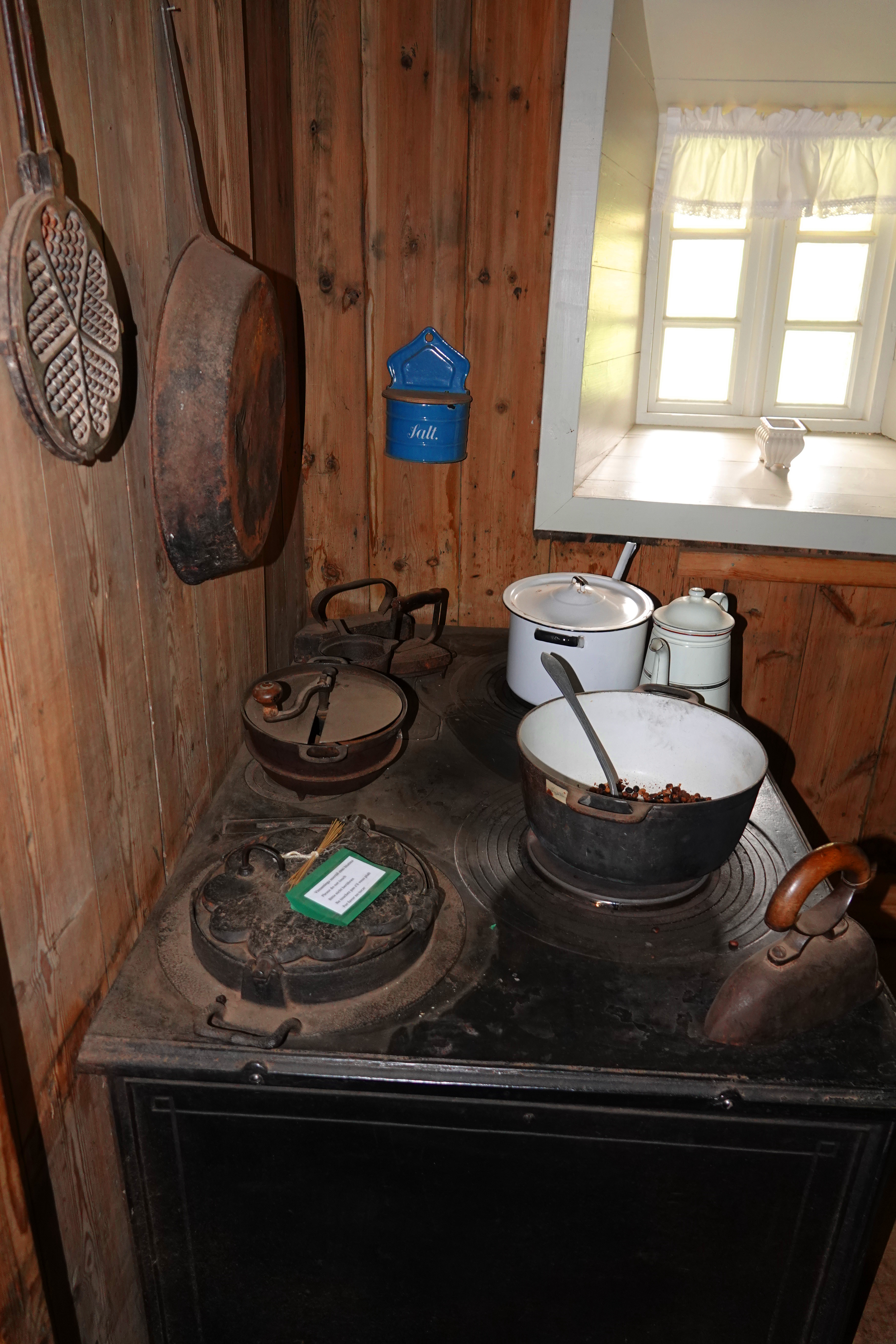
but quite spacious,
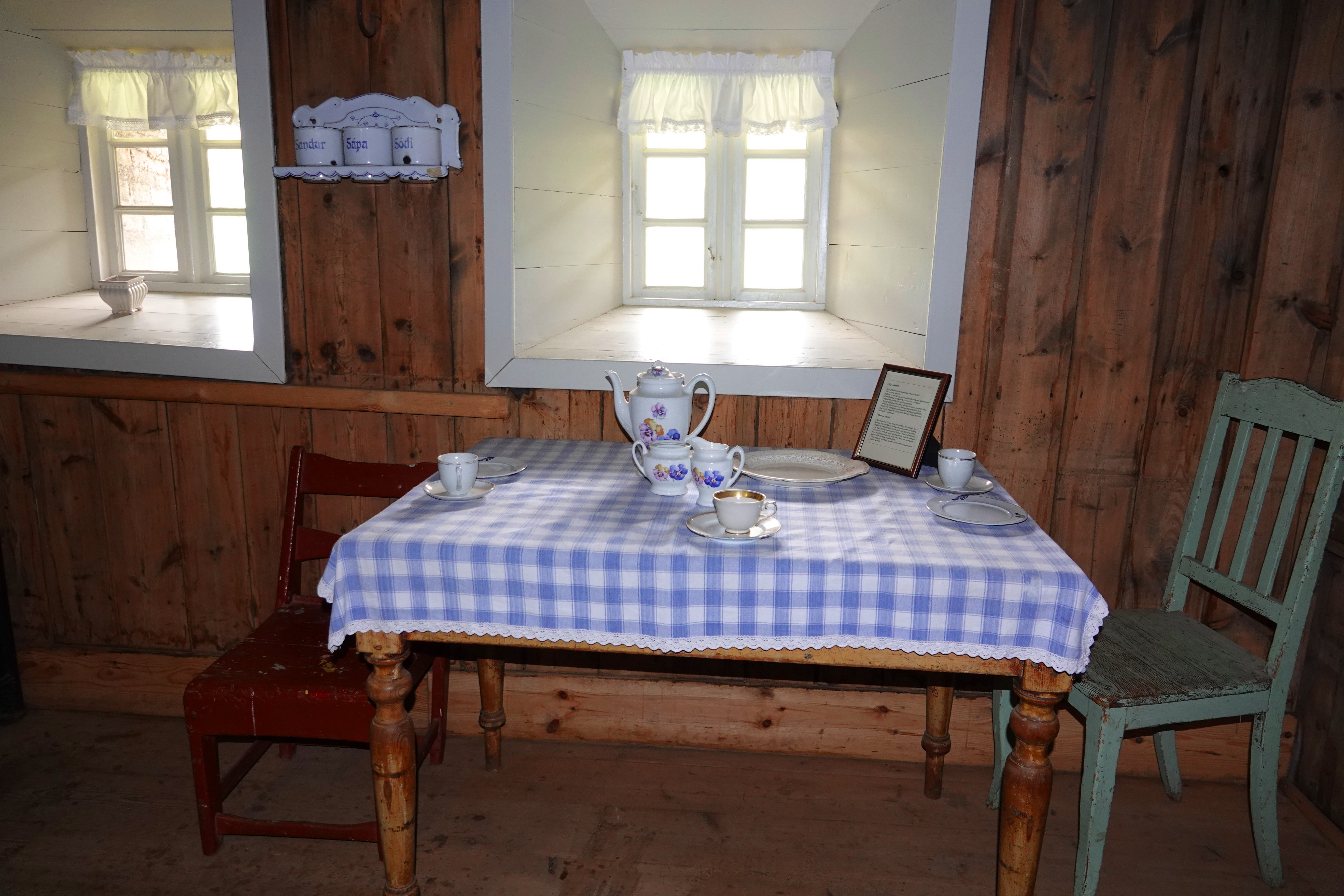
and not at all claustrophobic inside.

20-30 people lived in Laufas House.
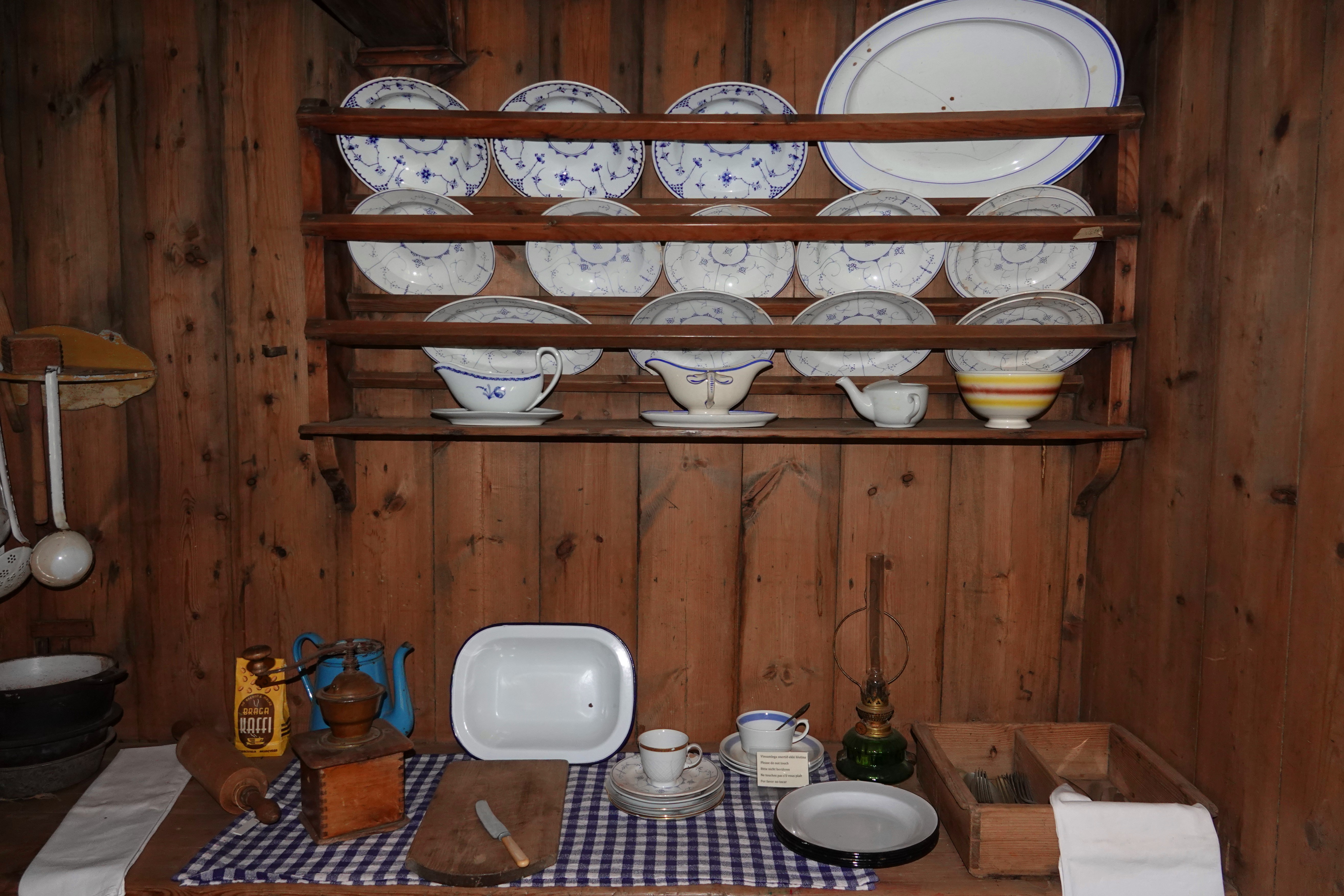
The houses give one a sense of communal underground living,
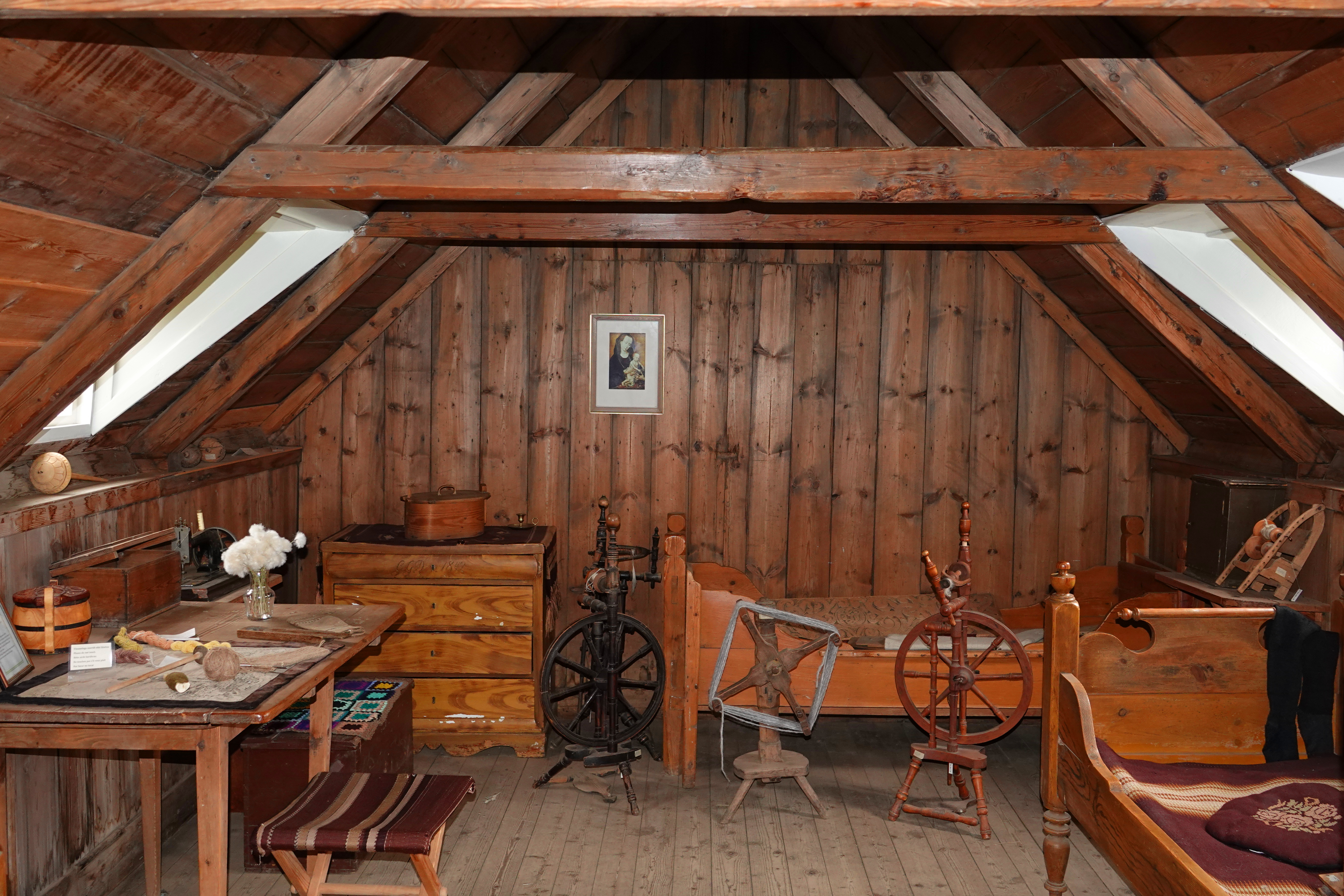
that was heat efficient during Iceland’s unforgiving winters.
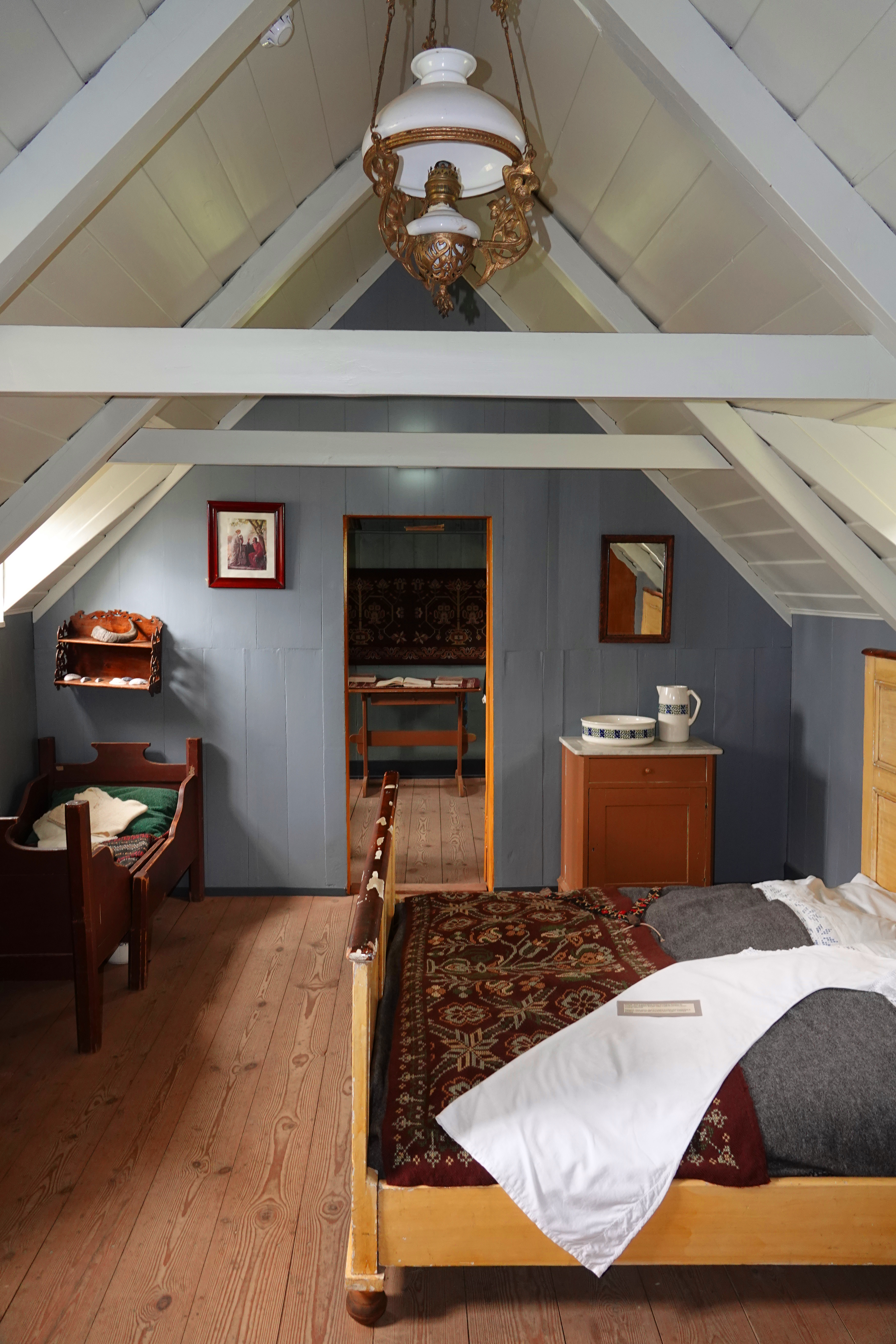
Laufas House was a wealthy priest’s house, and some rooms are more polished and finished than others.
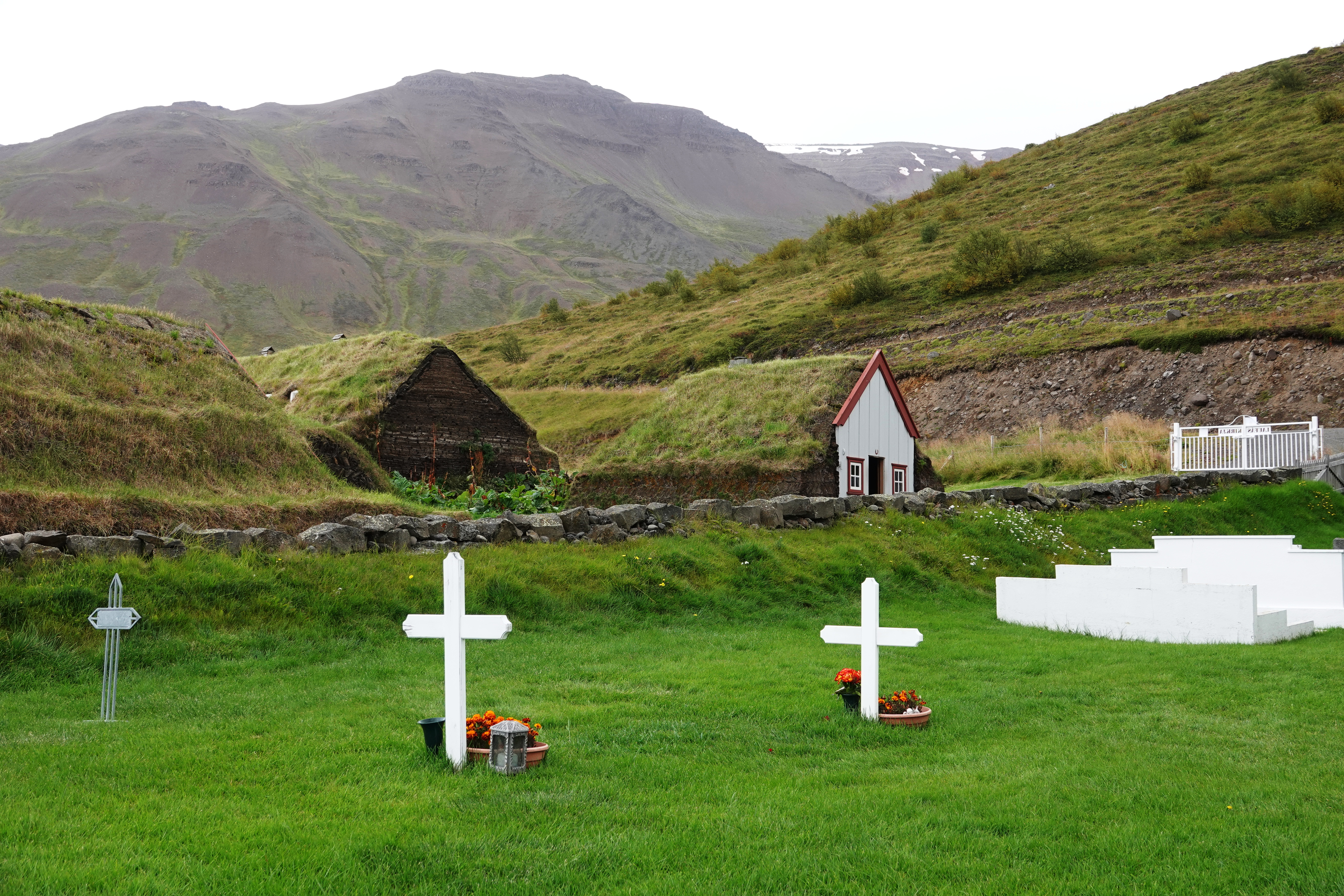
This was a working farm, on a gorgeous site, with a church that was originally built in 1698.
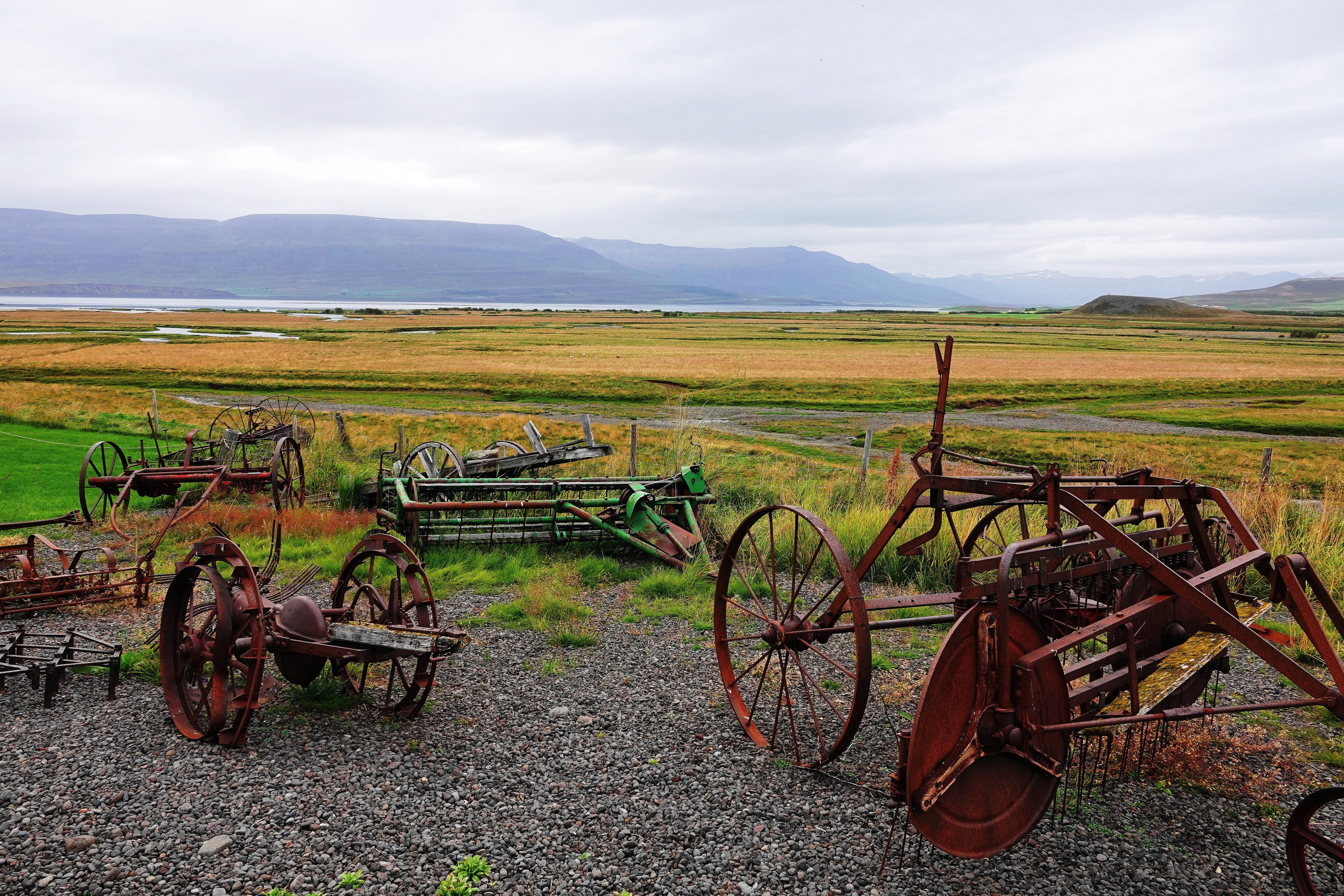
Cheers to you from Iceland’s fascinating turf houses~
Share this:

Discover more from Cindy Knoke
Subscribe to get the latest posts sent to your email.
What an interesting post. Love the houses and the history of the inhabitants would be interesting as well. If walls could speak.
I am completely fascinated by these houses. They are similar to the sod houses in the central plains during the pioneer days in America with one major difference, many of Iceland’s houses are large, multi-dwelling, interconnected, underground homes, like small underground towns.
My mother wanted to build an underground house, I thought she was crazy. Today my idea is completely different, the footprint would be much smaller. 🙂
What a clever mother! I am utterly charmed and fascinated by these houses. They have a very peaceful and secure vibe.
Great photos as always! Glad I got to see the houses. 🙂
<3 <3
How interesting! Thanks for the tour, and for the info.
I am happy you enjoyed and have a wonderful weekend!
You, too, have a wonderful weekend,
Pit
<3
Dear Cindy, for me these are the most intriguing images you have ever posted! I love that you have left the beaten track in Iceland and have shown us how it was in the past. I love the below- ground passages and rooms! What skilled labor went into all that! I assume they had wood fires for winter heat and the smoke rose into the small vent in the roof. Can you imagine what it was like to winter over in such houses! Thank you for revealing a way of life I had never imagined (and we have wintered in Nordic climes!). The kitchen takes me back to our time in Maine – they lived a lot on what we called “Maine meals” – everything in one pot!
I grew up reading Laura Ingalls Wilder books and wanted to live in her sod house on Plum Creek, so I am fascinated by these houses. They are almost little underground towns, all the working and living aspects are partially underground with these thick, almost woven sod bricks. Only the church is completely above ground and I will post about the church later. The craftmanship and skill are evident everywhere. There is this sense of snug safety and security. Icelanders tell me people lived in winter in continual pursuit of calories. It does challenge my imagination to envision living here all winter, but I am very impressed with Icelanders and their fortitude. I am happy you share my interest in these amazing houses and the stories they tell. Be well my friend & thank you.
Fortitude is a good word to describe living in these homes! The pursuit of calories says it well. A great tour, Cindy! Keep us in touch with your gorgeous adventures.
<3 <3
Such An snail country and way of life. So few outsiders know the beauty but Iceland is becoming a popular destination. Lovely and intriguing photographs Cindy! ❤️
It is incredible country and Icelanders have a unique culture and history. I am happy you enjoyed & cheers to you <3
Cheers, enjoy Cindy, it’s a dream to be there!
<3
<3 <3
turf house are very cool – and nice post – stay safe cindy
Thanks so much and so glad you like the houses too!
all the cool stuff and how nice to see this via your visit there
So nice of you and cheers to you!
Iceland is definitely on our list. Have you read any of the Inspector Erlander novels by Arnaldur Indridason? I imagine that was the type of house and farm Erlander grew up on from reading all the novels in the series.
No, I haven’t, but now you have definitely sparked my interest. Thanks for the tip!
I think they are fantastic novels. I would recommend reading them in order. “Jar City” is the first novel in the series.
I will download on my kindle.
Really cool houses Cindy. Quite cozy. Enjoyed the photos!
They are quite wonderful aren’t they. They have a very peaceful vibe.
Lovely Cindy.
Leslie
So pleased you enjoyed & cheers to you!
Thank you Cindy.
Leslie 🙂
<3 <3
Astonishing, cosy and oddly appealing. I’m thinking Hobbits…
Oh, yes, perfect! Icelanders tend to believe in fairies, so we can include them too.
Very interesting
I find them fascinating too, so thank you!
I love those houses! It seems a little cool inside but cozy. I love the grass on the roof!
Yes cool inside and cozy too. Truly charming. The grass is classic isn’t it!
Pingback: Living Under the Winter Ice – Timeless Wisdoms
great bog Cindy, really enjoyed it
So happy you did & hugs to you <3
Those are darling homes!!! How cutely quaint!
I love them and pleased you do too!
How wonderful to see the houses of Iceland. Lovely, and as you said cozy but roomy, at the same time. You always bring us new and exciting things. Thank you.
Ahhh, sweet friend, happy weekend!
Being fairly treeless, you wonder where they get all their wood from?
I think this answers your very good question which I didn’t know the answer too:
https://en.wikipedia.org/wiki/Icelandic_turf_house
Aha! Thanks for that, Cindy. Most interesting.
<3 <3
Thanks for sharing these interesting underground houses, Cindy. Personally that long dark corridor with soil between the upright posts looks positively claustrophobic. I need light. The others images which show windows and ‘normal’ walls and colourful interiors look absolutely delightful.
Love the box (or children’s) beds.
When I downsized my bed in 2010 to a king single, one of the first things I bought was a sort of box bed with drawers underneath and attached headboard. Can be a bit of a chore to tuck the fitted sheets under the heavy mattress though. With box beds you need a very light mattress 🙂
I love box beds ever since reading Thumbelina as a child, she slept in one. The corridors are passage ways between the houses underground and they are a bit claustrophobic, but the rooms and houses feel very spacious which is odd since they are mostly underground,
Must be the colours of the walls that reflect the light too. Colour makes a big difference.
Very true.
Wow, really cool! Get it? Cool?
Laughing……
amazingly interesting dear.<3
Ahhhh, thank you!
My pleasure ❤️
<3
Love how you captured the turf houses as part of the curves of the natural landscape. An Intriguing and educational post Cindy 💛
You sweet friend <3
I would love to live in a house that was partially underground, because then I could pretend to be a Hobbit 😉
Perfect!!! Another blogger mentioned the hobbit angle which I hadn’t thought of, but now I am definitely thinking hobbit houses!
Nice, cozy Hobbit houses with pleasant interiors!
There is the visible wisdom of previous generations reacting to harsh environments. How cozy the sod houses were and what a wonderful post this is.
Ahhhh, thank you Dor. These turf houses were much warmer than wood,and you can see the thickness in the walls. Amazing how inventive and creative people are.
Iceland is such a unique country! Great post Cindy!
Yes, Iceland and Icelanders are quite remarkable and different. The language is basically impossible for me!
Yes on all of that! I hope to go back again sometime!
I understand <3
That is really amazing. Thank you!
Thank you more for your appreciation!
Very interesting. I can see living here
Yes. So can I <3
Fascinating. We have had several short visits to Iceland but this was completely new for us.
I am happy to be able to show you something new & cheers to you!
Fascinating photography and history. Thanks.
Thank you for the thoughtful comment.
Thank you for the photographicalisations, Cindy. X
<3 <3
Beautiful, Cindy.
Grazie mille~
Wow, how lovely!
I am happy the photos can convey this & thank you.
Wow, so amazing and wonderfully preserved. Thanks for sharing this, Cindy!
I love traveling with you Eliza <3
You just expanded my world with these images and the accompanying text. Thank you.
You just touched my heart with such a thoughtful comment.
This post was a real eye opener for me. I had no idea what it was like in those underground places. Not much daylight, and the dark days would seem long, but everything is so well organized.
I imagine fires burning, and candles everywhere. It might form light and respite from the hostile winter above.
It’s so beautiful…the exteriors with the lush green grass, wood, and stone. They were so clever. They look quite comfy, and cozy.
I saw some Cave houses in France and wished I could have toured them, but they were private houses in use at the time. I imagine the premise was the same warm in the winter, and cool in the summer.
Yes, in the Loire Valley. I have seen photos and read of them, but have never seen them. How fascinating!
Fascinating! I think I could live there.
I could too. You should see the amazing birds!
I’ve heard quite a bit about this place in the last year. Thank you so much for taking me along!
Amazing nature, homes… history. Thank you!
Thank you for the kind appreciation.
What a wonderful way to stay warm and connected.
Yes, it felt like an underground village, which I suspect in many ways it was.
Thank you, Cindy, for this visual journey through the cozy partly underground houses in Iceland. One of our sons made a car tour all around Iceland and brought home some fascinating photos and later even created a fascinating video. I am sure that my blogging friends would love to see your photos too.
Reblogged this on The Peter and Gertrud Klopp Family Project and commented:
Thank you, Cindy, for this visual journey through these cozy, partly underground houses in Iceland. One of our sons made a car tour all around Iceland and brought home some fascinating photos and later even created a fascinating video. I am sure that my blogging friends would love to see your photos too. That’s why I reblog it with your kind permission.
Your son drove the wonderful ring road! Good for him. I imagine the photos are impressive. It is impossible not to take impressive photos in Iceland. Thank you for kindness and the reblog. It is thoughtful of you and most appreciated too.
Wow, this is amazing! Our ancestors lived the life inextricably intertwined with nature & science, but we live with science & technology and take nature for granted.
Yes! We are devolving.
FANTASTIC CINDY THINK OF THE HOUSES COVERED IN THICK SNOW, CHINA
I know it is amazing, snow and ice, and potential avalanches on nearby mountains. These were, and are, hearty souls.
It’s lovely how people choose to uniquely define their personal space.🤔
Yes, it shows human hope and ingenuity.
Wow, life must be so tough in those underground houses. I always thought its a wrong idea to build underground houses in cold places. You see our basements always are coldest during winter time. But there should be some explanation here too. But in any case, it’s amazing stuff. I wonder how it would look during winter!
Even underground, these houses were built with thick amounts of insulation from the surrounding freeze, and there were fireplaces everywhere, but still, I think they might be cold and survivable. It is quite amazing isn’t it.
Yes, those old times are tough really. Now we are so much dependent on technology for everything!. Have a great weekend!
<3 <3
I would be quite amenable to giving a fortnight in a Loftas house a go, then seeing how I feel at the end of the stay.
I like your perspective very much.
Iceland is quite an amazing country – I have visited several times and have really enjoyed being there. Great photos. 🙂
Wonderful that you have been here so many times!
Stunning. Icelanders must be very good at getting along with each other living n in such close quarters.
Yes, I definitely think of this and compare my country unfavorably to Iceland. Iceland’s capital has a jail with a couple of cells, but, according to Icelanders, it has a dearth of business. America has the fullest jails in the world, so it is hard for me to comprehend and painful to compare. Icelanders still live in close quarters, but they are much less experienced with crime.
I suspect the fact that they live in such close quarters leads to less crime – its harder to inflict injury on people you actually know.
I hope so, but, I treated domestic violence perpetrators for many, many years. We don’t know what the incidence of child abuse and spouse abuse were in those long dark winters.
Extraordinary, aren’t they? 🙂 🙂
Very much so, yes.
Like you, I think the house looks cosy, but I wonder how it would really feel to be living underground in an Icelandic winter. I think I would feel trapped.
Yes. We aren’t accustomed to this degree of hardship,.
Fascinating, when I go back to Iceland I need to visit them too. Icelandic people did think well how to avoid those cold winters and came up with great solutions. And they look so lovely form outside too. Just imagine in Summer you say, I just go out to mow the roof…… 🙂 This is obviously a museum, do people still live in those houses though?
Laughing…..They don’t need to mow their roofs, winter will do that for tham. It is amazing, isn’t it, how people step up to hardship.These houses are now all protected cultural artifacts, aka, museums. But, if I recall correctly, Laufas house, as just one example, was occupied until the late 1930’s.
Cindy, utterly fascinating photos of a magical place. I have always appreciated your many photos from your travels that have shown us the intricate and opulently decorated buildings and cathedrals, but the stark beauty and perfect simplicity of these sod-covered below-ground houses are every bit as majestic as any ornate building you’ve shared. Thanks for giving us this glimpse. Best, Babsje
Your comment gave me goosebumps. Is it our species amazing artistry that makes the greatest impact, or just the clever craftsmanship of long term survival, against significant odds.
Hmmm good questions. I think the survival of our species from the earliest of days into, hopefully, the future is magnificent artistry and cleverness combined. Was harnessing fire clever? Making and using the first wheel? The first tools? Even birds such as crows and ravens and herons use tools. The ancient cave paintings of France and Spain are both clever and artistry. I tend to find beauty in simplicity – the Shaker and Quaker – as well as in the ornate European cathedrals that took centuries to build and decades to paint. Whatever the answer is, I was deeply moved by your post and found your exterior photos gorgeous. Thanks for making me think. Best, Babsje
Thank you for making me think <3
You’re welcome. Me too. 😃