
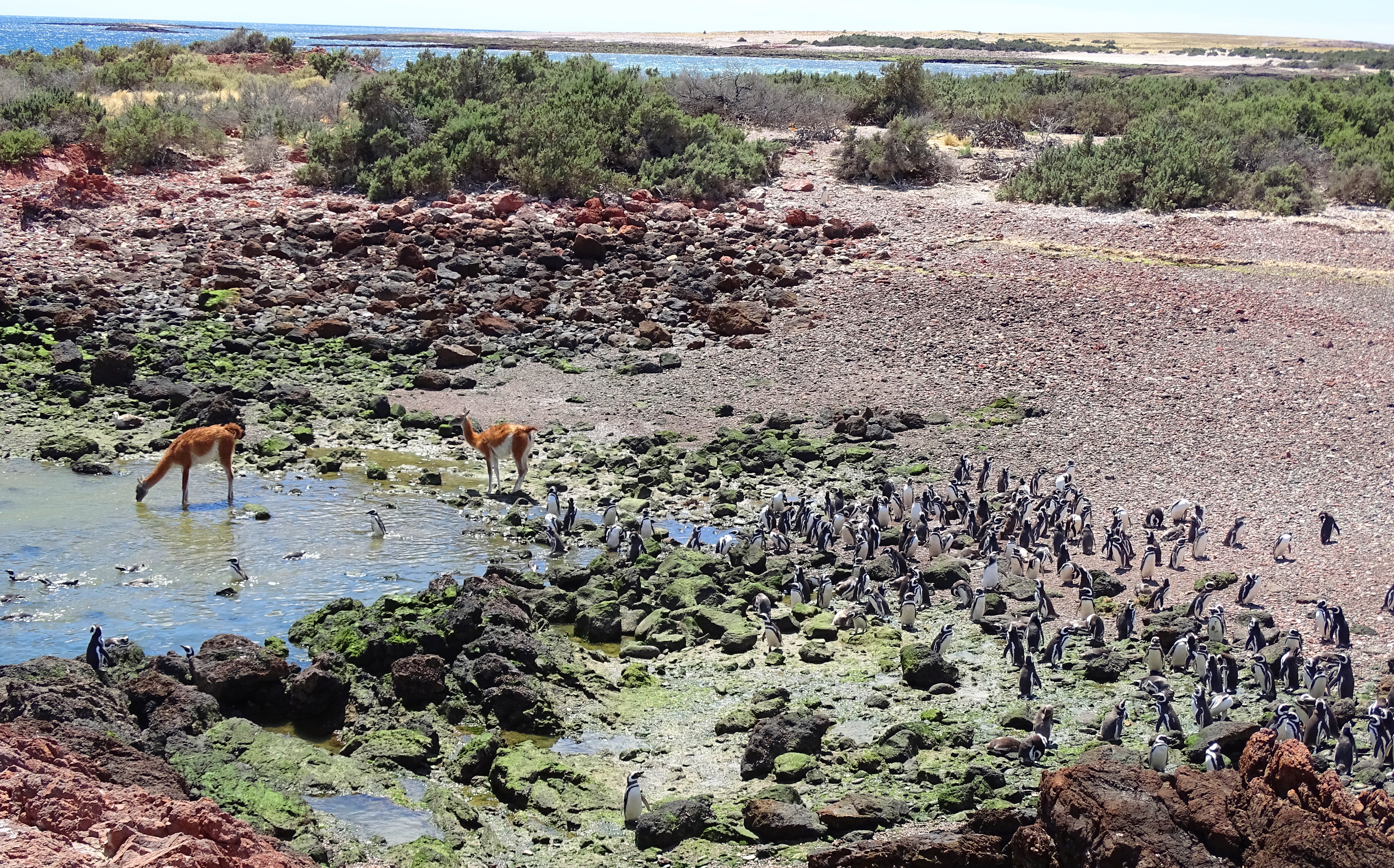
Punto Tumbo is a nature reserve located on Argentina’s central Patagonian coast.
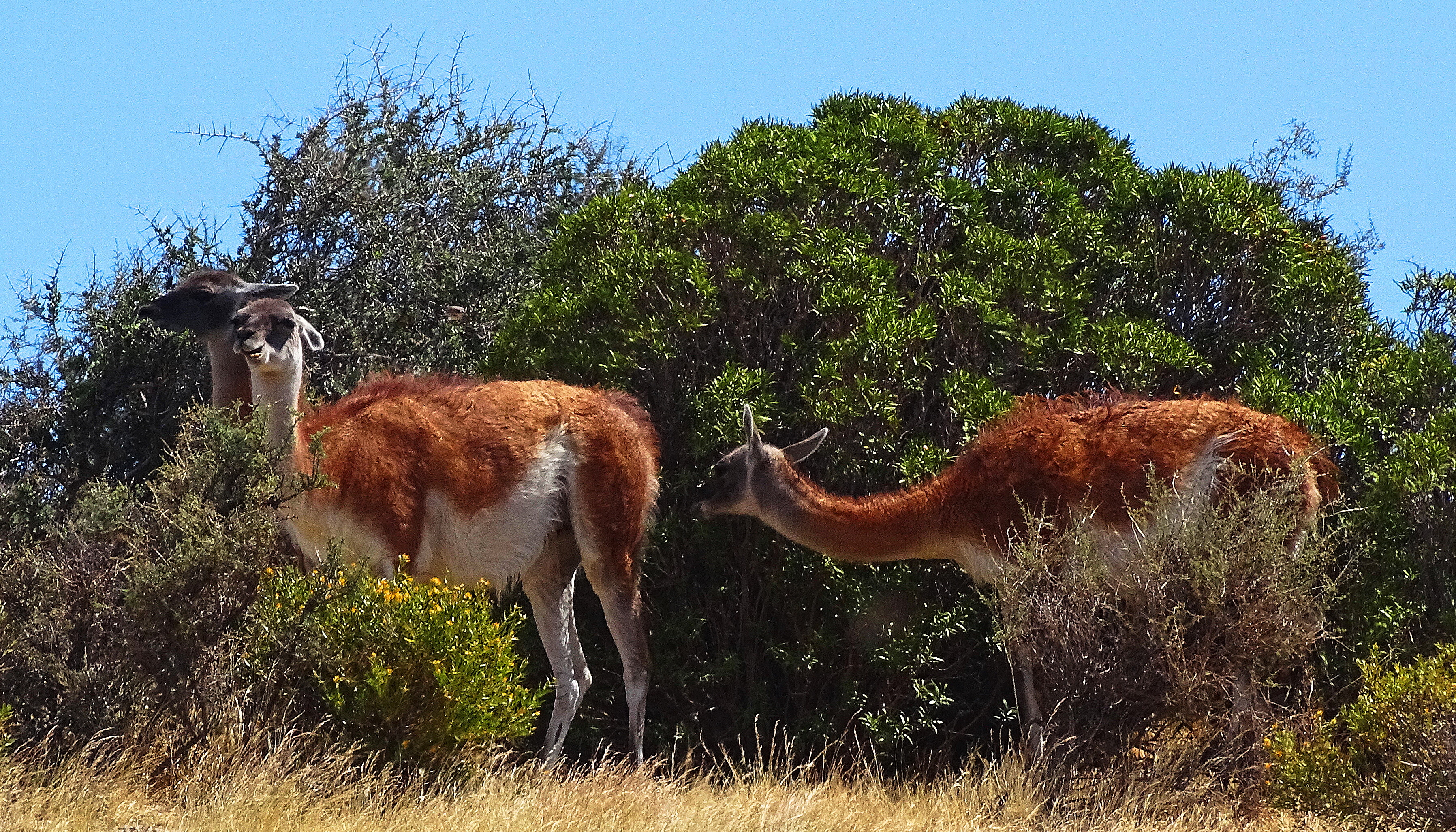
It was set aside as a reserve in 1979,
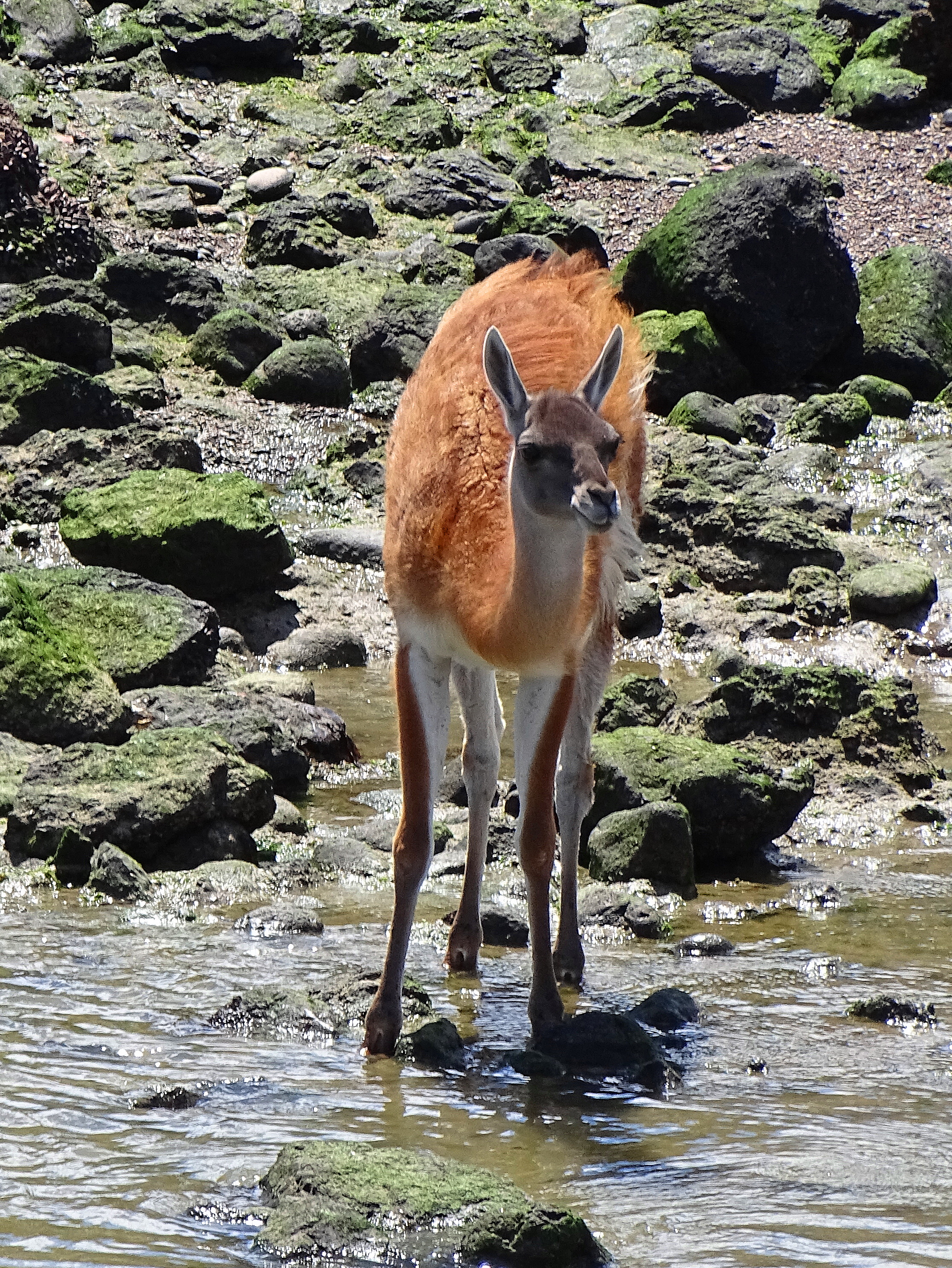
and is home to the largest colony of Magellanic Penguins in the world.
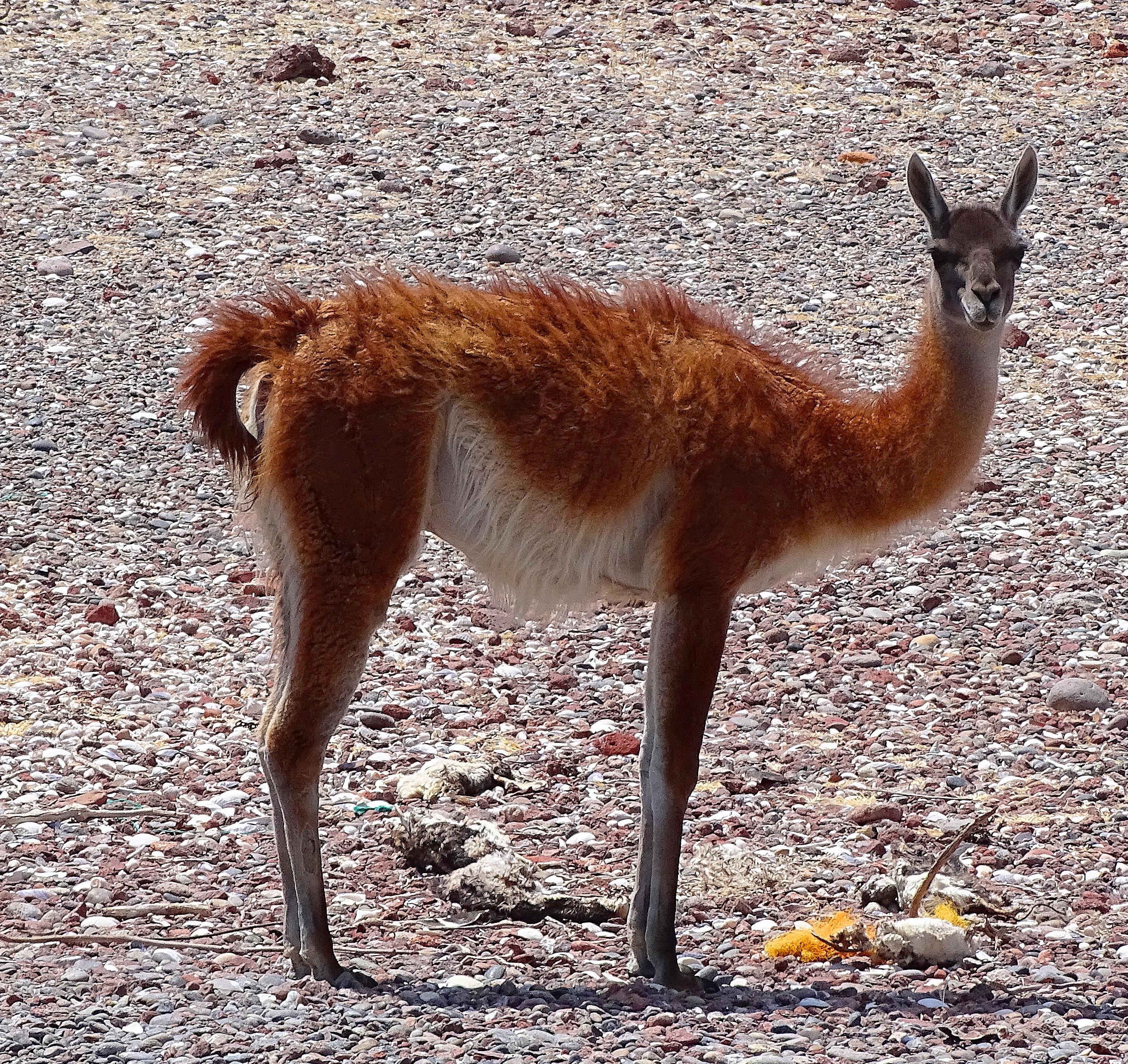
It is also home to the Guanaco, the largest non-domesticated herbivore in South America.
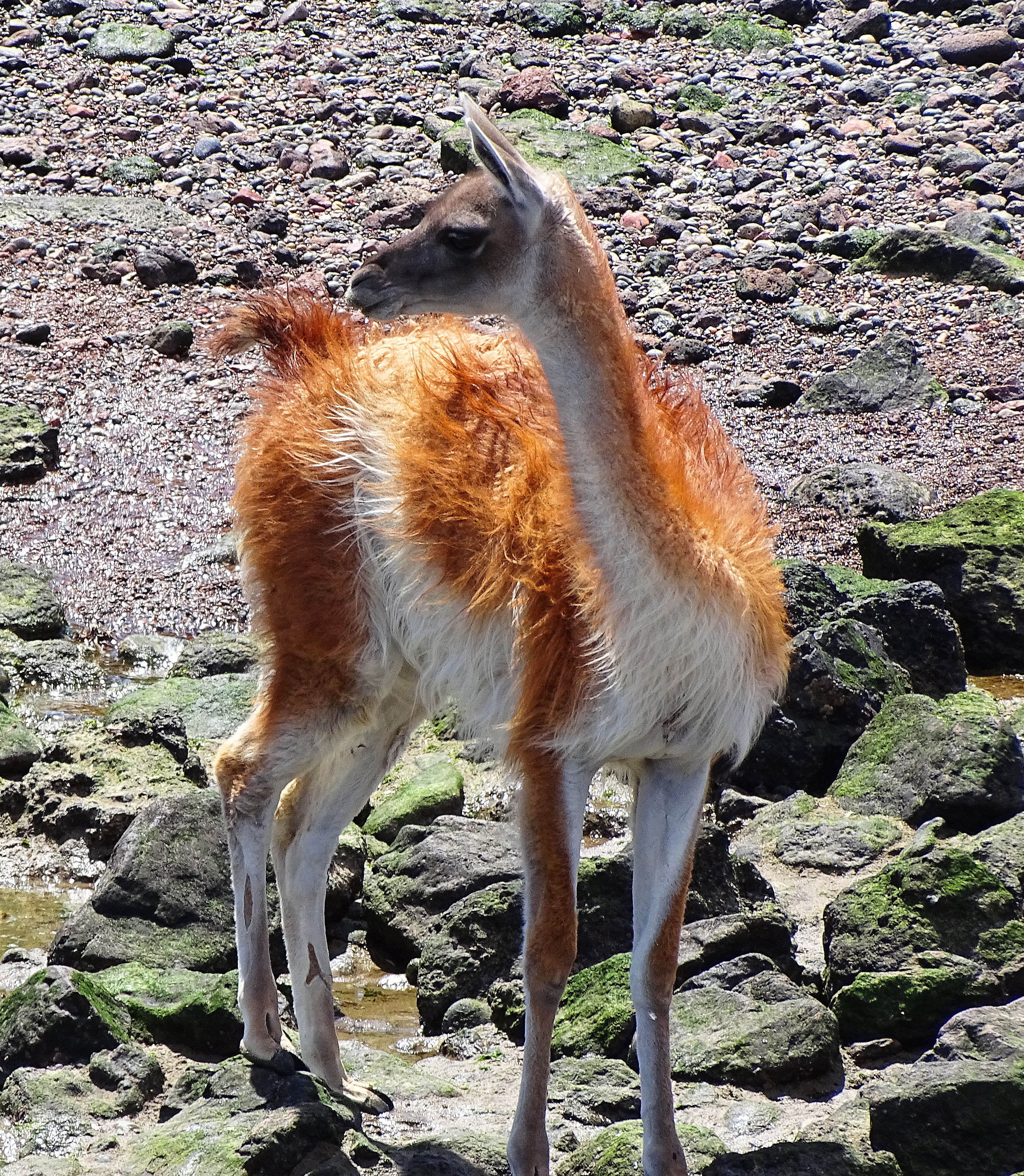
Guanacos are members of the camel family and are undomesticated or wild llamas.

Adult Guanacos can weigh up to 310 pounds and are excellent swimmers.
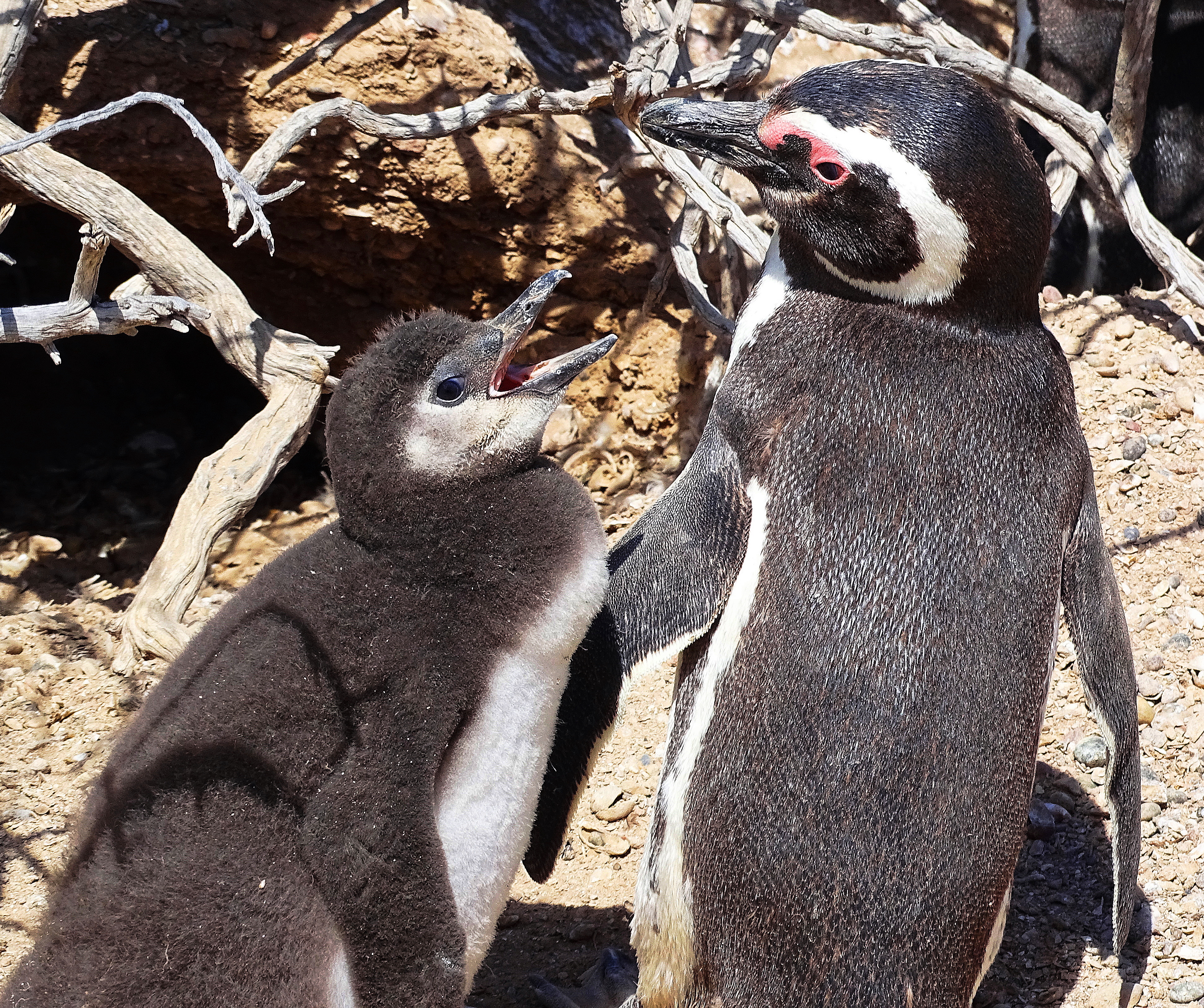
They coexist happily with the penguins,
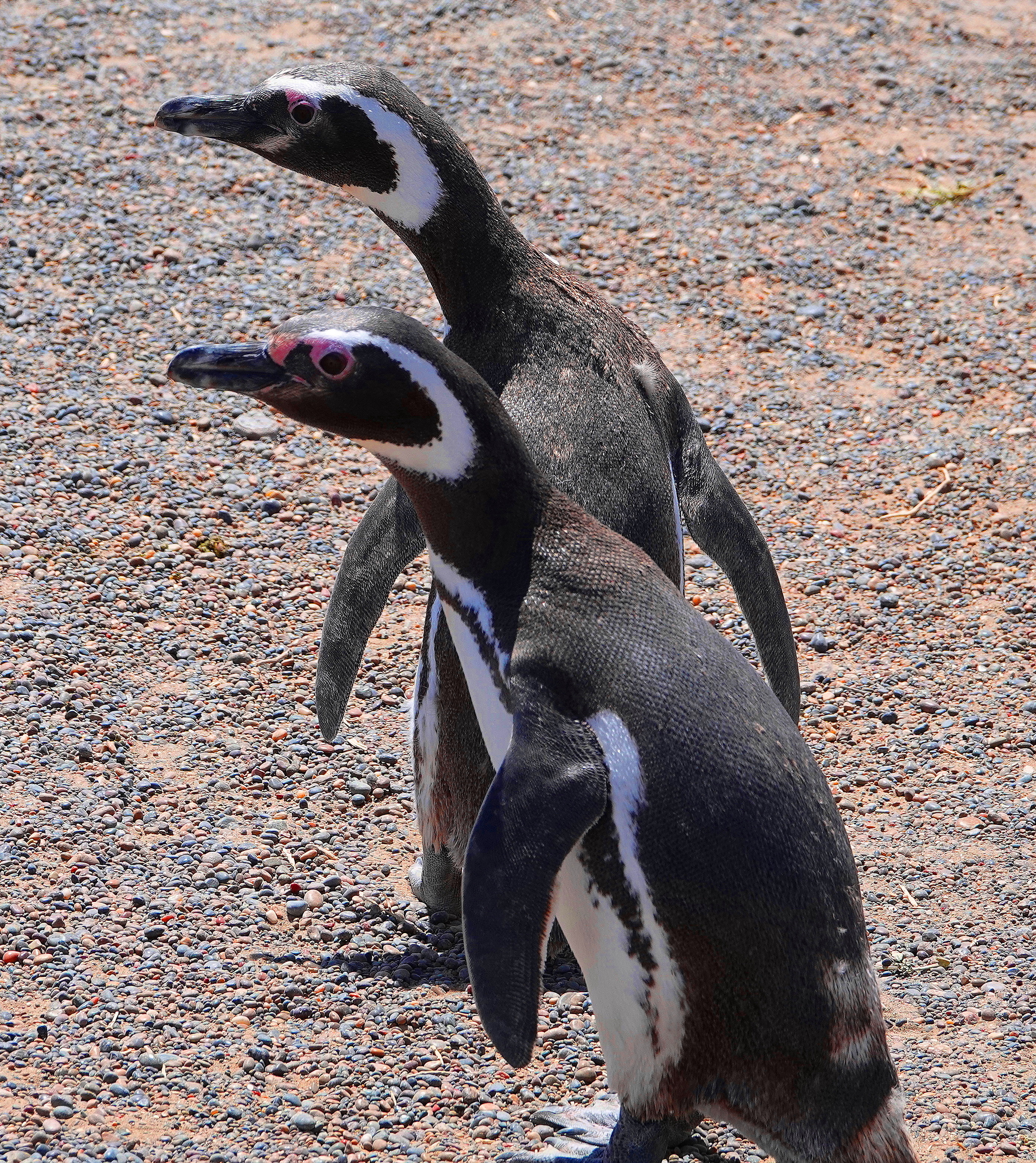
which is just a shameless lead-in to slip in a couple more penguin pics!
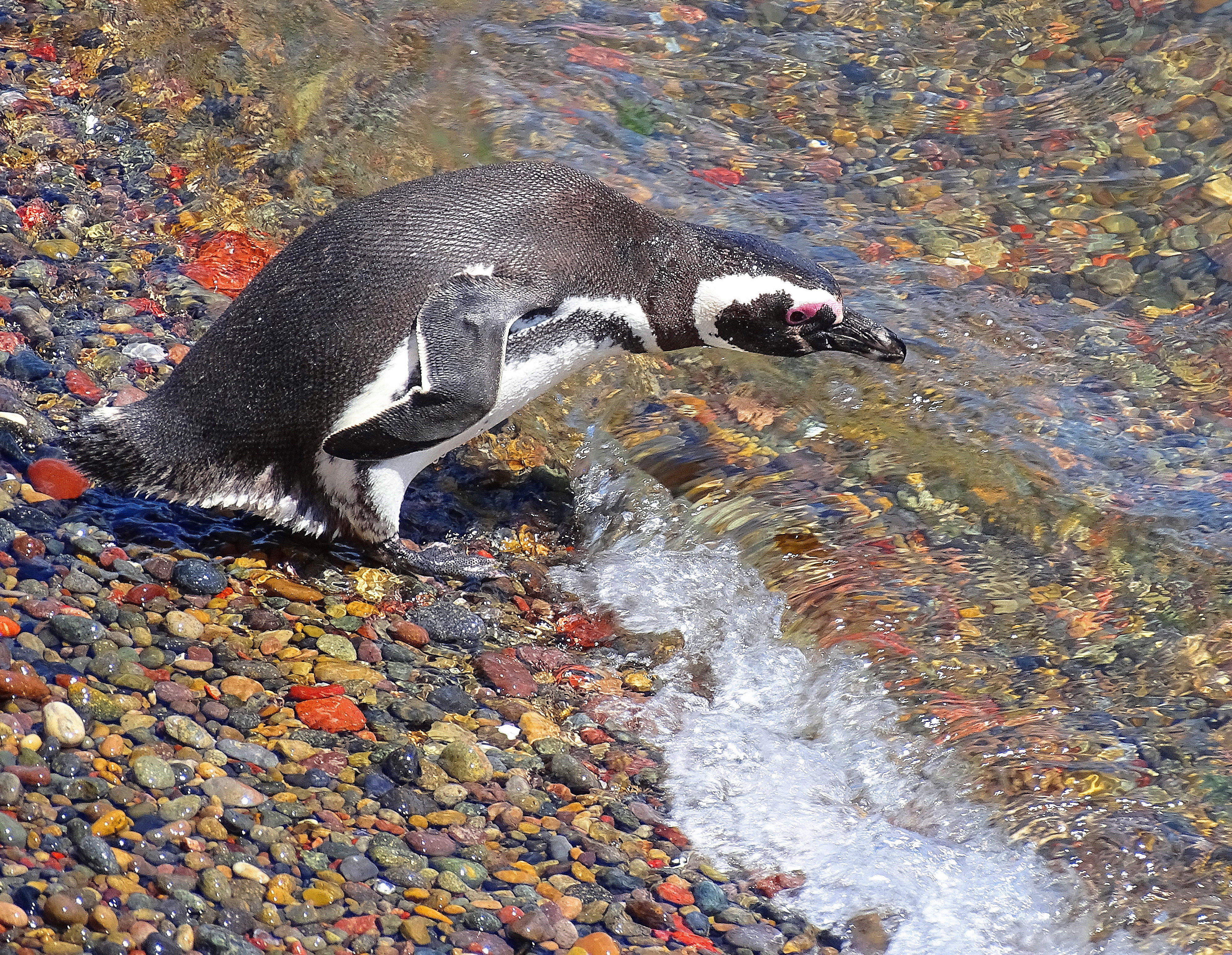
The final photo is from Gypsy Cove in The Falkland Islands which is an entirely different colony of Magellanic Penguins that I also couldn’t resist slipping in.
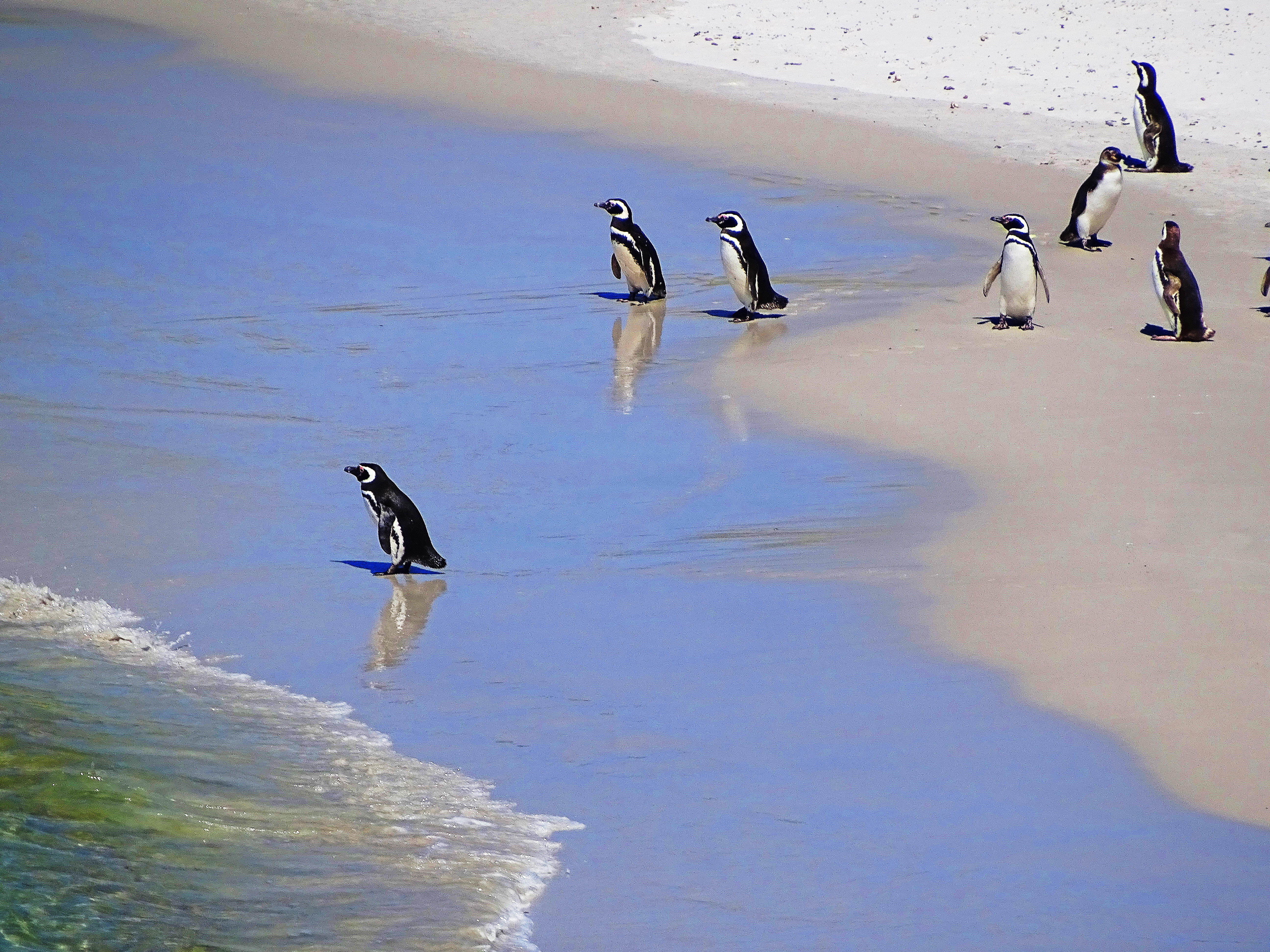
Cheers to you from the stunning wild creatures of the southern latitudes~
Share this:

Discover more from Cindy Knoke
Subscribe to get the latest posts sent to your email.
Guanacos are beautiful – the penguins are comical, I love the stones in the shot of the water’s edge. You are having the dreamiest vacation, Cindy!
Yes indeed Eliza, guanacos are gorgeous & colonies of penguins in pristine environments have to be one of the most inspiring sights in the world. It also helps that they like people! 🐧
You got to see guanacos in the wild? That’s fantastic!
Yes, I was thrilled! I had to discipline myself to limit the photos. There were lots of them and I have photos of them with the penguins swimming all around them that are really fun! There was also a Giant Petrel on a nest in the midst of the whole chaotic scene 🐧
So much life in one spot!
Look at those sweet faces!!
They are very calm, very nice wild animals!
The penguins are amazing and so are those colored rocks. What a beautiful back drop for your photo.
Punto Tumbo is breathtaking and so beautifully protected. Kudos to Argentina! 🐧
Kudos, indeed! 45 could take a page from their book, eh?
45 could take all new pages from anybody’s book and it would have to be an improvement~
Amen to that!
<3 <3
don’t suppose you can tame one and bring it home for me.. what beautiful creatures.. and to be free, wonderful…..
I have photos of a baby…..so incredibly cute!!!
Fantastic pictures on wildlife in the most southern latitudes!
Thank you so much! It is gorgeous down here! 🐧
I feel like I am looking through my own bare eye, fabulous work Cindy!
Ahhh, makes me happy! Thank you 🐧
You’re so talented, thank, you… <3
<3 <3
All great photographs! On the ninth picture, or, the next to the last if you count backwards, the penguin’s feathers look like fish scales, and the stones on the beach are more colorful than any others I have seen.
You are observant. The whole area around Punto Tombo is a fossil dream. It is just packed with intact dinosaur skeletons, amazing minerals, rocks and fossils. It is also wind swept, isolated, hot in summer (now) and freezing in winter. But it would be simply amazing to go fossil and rock hunting here. This is why Argentina has such a huge market in precious and semi-precious stones.
Don’t resist, we like those penguin photos! 🙂
Oh good! I have to discipline myself and I am already regularly breaking my eight photos per post rule! 🐧
The guanaco looks like a kangaroo, the head I mean, a mixture between a kangaroo and an alpaca. They are very good looking! I envy you Cindy. What a wonderful trip you are making!
Yes. They are cameloids, members of the camel family. There are four species, llamas and alpacas were first domesticated by the Incas around 4000 BC high in the Andes. Guanacos and Vicuna are un-domesticated and wild.
How glorious Cindy – when I see the Guanaco and Penguin together I get a feeling of Yin and Yang!😁
It was amazing to watch them. The penguins swam circles around the guanacos and the guanacos were totally unperturbed! 🐧
What a fabulous moment to witness!
And, plus there was a giant petrel, sitting on a nest. I had been photographing giant petrels flying at sea. I couldn’t believe there was one right there watching all the hub-bub. What incredible birds!
Yay you Cindy – right place, right time, right Petrel!
Three rights make it great! <3
😄
What a wonderful series of photos, especially that last one on the beach.
Thanks for sharing Cindy.
Thank you so much more for the kind appreciation Vicki & cheers to you~
https://youtu.be/P_LmtLQCBsM
Que hermosa!
No tanto como tu amistad…
Tu tan bien mi amigo <3
The furs of Guanacos look soft and a bit on the long side. It is tempting to touch. Another close look at penguin, it looks like they are wearing wet suits. I guess their feathers are designed for swimming. Very nice pictures of these cute creatures!
Very accurate observations. The guanacos look like velvet, incredibly soft, and the penguins have cold water resistant feathers that help them hold in body heat!
love all the photos
Thank you for telling me and very happy you do!
Me too! Always a bright spot to the day Cindy!
Guanaco are swimmers? Wow. I love that.
I do too and so wish I had seen them swimming!
Lovely shots. They look so fuzzy and friendly but something tells me they aren’t high on being petted. 🙂
Agreed, they might spit like a camel! 🐫 Penguins are known to regurgitate on you if you displease them by being overly tactile! I talked to a biologist who used a garbage can lid to shield himself whilst tagging penguins in Antarctica. I kinda relate with the penguins on this issue. I might regurgitate too, if tagged by a biologist 🐧
Are the penguins singing? Love your photos.
Yes!!! Check out this post on just this issue done years ago!!!
https://cindyknoke.com/2013/01/31/yelling-penguins/
Thanks Cindy!
🐧
Beautiful photos.. they do look a lot like llamas. Have a great trip. 🙋🐦
Muchas gracias! 🐧
Superb, as always, Cindy. Happy New Year!
So kind! Thank you 🐧
I love anything from the camel family and of course, you had to add a few more penguin photos!! Just love them!
Cannot resist the 🐧🐧🐧!
I’d never heard of the Guanaco. Your long shots are as excellent as your close ups
Ahh, so appreciated & thank you!
I like the fact these animals can coexist. This is a lesson for us.
Yes, humans should do it too! 🐧
Ahaha never need an excuse to add penguin photos! Penguins are so lovely. These are great pictures. I’d never heard of guanacos before!
Yay, I am so glad I got to introduce you to them!
How very wonderful to travel in Patagonia. Breathtaking shots.
Patagonia is the sort of place that calls you back again & again!
I can believe that. A magnificent wilderness.
<3
The guanacos are adorable although at 300+ pounds it might be a challenge to carry one in my pocket. I can’t get enough of penguins. 🙂
They are big critters! I think they can reach up to 6′ 2″ in height…..
Wow. Do you know if their coats are soft? In the photos they look so furry.
Their coats are incredibly soft. There are four types of cameloids in South America, two of these are domesticated, llamas and alpacas, both of which are sheared like sheep but make a fiber so much softer than wool. I bought sweaters for my family made of alpaca fibers and they are being worn constantly!
Your photos really captured the soft quality of their fur. I can almost imagine running my fingers through it.
Wouldn’t that be awesome!
I have never seen Guanacos before, they are beautiful! How cool to watch penguins! Thank you for the post, Cindy! 🙂
Thanks Amy. I look forward to another year with your wonderful photos my friend. The bamboo forest was awesome~
I’m thankful for your support and blog friendship, dear Cindy. 💓
While all the images are delightful, I was especially taken with the Punto Tumbo penguin who seems to be admiring the multicolored beach pebbles as seen thru the water.
They do this funny thing before they enter the water. They stand on their tippy-toes, arch their necks and dive just like Olympic divers!
Reblogged this on Musings on Life & Experience and commented:
More great animal pictures Cindy Knoke has taken on her and her husband’s trip south.
Sweet Friend <3 Happy Sunday 🐧
It is good to know that you have made it to paradise, Cindy! 😊
Yes!!! And it is good to know there are still paradises left on this gorgeous planet 🐧
Thank you for bringing us these beautiful miracles of nature in the south, Cindy!
Thank you more for appreciating them!
Penguins and Guanaco… I’m enchanted Cindy. And somehow, I had missed, or forgotten the camel connection. Fascinating. Must have happened way back when the continents of the world were all one big happy family! –Curt
Their faces especially look camel like and they survive in harsh environments often with little water. Hard to conceptualize that llamas were first domesticated in 4000 BC by the Incas high up in the Andes~
Hard to conceptualize and very interesting, Cindy. Thanks. –Curt
Makes me aware of how insignificant we are in the force of time, which makes me feel happy. Our modern sense of human importance depresses me.
I’d feel better if we could redefine our role on this tiny, fragile planet. We might survive much longer, and much better.
Unfortunately, too many seem incapable of doing this…….
Vision isn’t a strong suit… sigh.
and a species, even more unfortunately for us, is defined by their actions. we really can’t escape the cumulative impact of our harm, and our lack of will to do anything substantive about it~
Agreed, Cindy. Maybe our survival genes will kick in at some point…
I hear an optimist in you Curt <3
Always has been, Cindy. Has to be. 🙂 🙂
Beautiful pics, Cindy. And I like all the sunshiny shots (something we’re missing here in the rainy NW). Happy Travels.
We have had our share of gales too with massive winds and waves, but eventually the sun wins out!
Eliza Waters mentioned the coloured stones on the beach from the Falkland Islands. I’ve never seen such colourful stones on a beach before.
Leslie
Yes, Argentina has amazing precious and semi-precious rocks, minerals and fossils! They were gorgeous on this beach~
I’m really enjoying learning about new places and animals from your posts, and of course your beautiful photos! Thanks Cindy! 🙂
I am looking forward to another virtual year with you Brad 🐧
Thank you Cindy. It’s a mutual joy. 🙂
<3
The Guanacos look like they could be a handful if you got on their wrong side – like the rest of the camel family, I guess. The penguins are a delight, and the sandy beaches they roam in the Falklands look very inviting!
Yes, the guanacos are peaceable creatures like camels, but you wouldn’t want to make them spit!!!
I do love your friends. It seems that you are collecting them all over the world. And that is a joyful experience for you and for me. Many hugs!
So very happy to spend another year with you my dear Rebecca! You make life better! 🐧
Fabulous post and photos!
If you see the Southern Cross in the night skies, grab some shots! Hugs!!
I will do so with pleasure! <3
YEAH!!! +
+++
+
🐧 <3
Fantastic …. but the last picture is what caused the most positive reaction. 😀
Thank you! I am so glad I included it. I almost didn’t…..🐧
Perfect ending …. like topping the sundae with a cherry.
Makes me smile……. <3
A series of wonderful photos. Great post, Sue. Thanks.
So happy you enjoyed & thanks for stopping by!
What an amazing time you are having Cindy, the colour of the coat of the guanacos is beautiful. Do they ever domesticate them and use them for their wool/hair? I bet you could sit for hours watching all the action going on around you. Thank you for taking the time to share all this beauty with us
Guanacos are cameloids, members of the camel family, there are four species, two are domesticated, llamas and alpacas, and two are wild vicuna and guanacos. Guanacos are completely wild animals. Llamas were first domesticated by the Incas in 4000 BC. Llama and alpaca fibers are used extensively in the making of baby fine, soft clothing. Baby alpaca fiber is the most prized. I have seen very expensive clothing (men’s jackets and such) made from vicuna fibers in the past, but I am hoping protections are now in place for the wild ones. The domesticated cameloids are used for transport and their fiber is processed much like sheep. I am no expert on these animals though, and if any blogger has more accurate information, I hope they chime in.
Very interesting Cindy. Makes me wonder why 2 are domesticated and 2 aren’t. Maybe they are like the difference between dogs and dingo. It is possibly a genetic thing….
Yes, yes probably so. Plus dingos are really interesting in that they are genetically distinct. Like lots of your critters in Oz. They evolved in isolation on your continent which makes them utterly unique and so fascinating.
Hope you see lots of our unique critters when you come over here Cindy
Beautiful captures, much enjoyed, Cindy, thank you! 🙂
Thanks so much for taking the time to let me & cheers to you!
What a wondrous place! These guanacos look like a mix of a kangaroo, llama, and camel…
They do don’t they! They have very velvet looking coats and seem quite sweet and docile.
What a marvelous adventure, Cindy! I’m wondering how long you’ll be wandering… 🙂
Thanks Patti! We are traveling for a little over 5 weeks with one month on a boat which is now over! It has been an amazing adventure and especially wonderful to share it with our adult children and son in law!
The texture of the fur and the feathers Cindy!! I wanted to reach out and touch them!! Looks like such an amazing trip Cindy– I love it that you “take us along!” thanks! xo
I love it that you travel along with me Rhona and I am so happy to be back and connected. You make the experience even more enjoyable <3
I think you have hundreds of people who look forward to your photos from near and far!! thanks Cindy!
You are a lovely friend. <3 🐧
Oh Cindy, your lovely blog is a magnificent way to visit distant and beautiful places and beings. Hugs to you for sharing, sweet friend ❤
You are such a delightful friend Tina and a joy to know! Happiest and healthiest 2018 to you my friend and I so look forward to sharing the year with you <3
The feeling is mutual, Cindy ❤
Such beauty captured with such detail. Wonderful images, Cindy!
Ahh, thank you Robert! I am so glad you enjoyed and took the time to tell me. Wishing you only good things for 2018 <3
LLama tell ya something….this GuaNacHos just remind me of Guacamole. The photos are so amazing, it gives me happy feet. ♪₍₍ ◝( ゚∀ ゚ )◟ ⁾⁾♪
If I had a pet guanaco I would name it Guacamole in your honor! 🐪♪₍₍ ◝( ゚∀ ゚ )◟ ⁾⁾♪
(´▽`ʃƪ)♡
What beautiful pictures Cindy, your photography skills are fantastic, your post made me homesick for the beautiful Chilean country, you have seen the Argentina’s central Patagonian region, and I have seen the Chilean Patagonian region, sure you will agree with me, both sides of this part of the world are unbelievably beautiful.
Kind regards and best wishes.
How kind of you! Thank you so much. I will be doing some posts on Chilean Patagonia so stay tuned and I was reading Isabelle Allende as we traveled through Chile. This was our third time in Chile. It is absolutely gorgeous!!! The beauty is breathtaking as you know <3
Good to know you have fallen under the spell of Chile also Cindy.
Make sure you visit the Hanging Glacier.
<3 <3