“The Orchardist,” by Amanda Coplin

images (8)
This is a beautifully written book, an incandesant lamentation and exultation of the loneliness and deep contentment of solitude. The author tells us, “…sorrow came from these two feelings, the happines of company, the anxiety of interrupted solitude.” Each finely developed character in this thought provoking  book experiences this conflict and one senses that the author, glimpsed through her characters, might also. A writers life I imagine is in many ways a solitary one. Amanda Coplin spent eight years writing this book. You sense in her characters the strength Coplin sees in solitude, the beauty and the sorrow of it, but mostly the strength and power one can derive from it.

 
Human relationships in this book are a bit trickier, offerring love, comfort and company, but also pain, loss and grief. They disrupt the peace of solitude. She sees this in the bonds of parental figures and their children, “..and that was the point of children: to bind us to the earth and to the present, to distract us from death. A distraction dressed as a blessing: but dressed so well and so truly, that it became a blessing. Or maybe it was the other way around: a blessing first, before a distraction
 
Human relationships are a distraction. Complicated.
 
I think Coplin is onto to something. The book takes place at the turn of the twentieth century, when maybe people were more at ease with a solitary life. There were  homesteaders by the thousands making their way on their own. Today a solitary life is often viewed with suspiscion. Coplin encourages us to contemplate the potential error of this thinking.
 
Talmadge the main character is a man who is rooted, comfortable and committed to his land, his orchard. He is an orchardist. But he is also a haunted man, seemingly ever in pursuit of the obscure objects of his conflicted desire, the missing fully intimate connection in his life with another person. Although he is a profoundly decent and caring man, he seems very alone always. Yet what makes this book so interesting, is that the author constantly is drawing the readers attention to the spare beauty of this almost existential aloneness. She doesn’t blame her characters for their reserve, their distancing, she seems to admire them for the strength it takes to face solitude.
 
And so did I. She is a remarkably talented writer. She weaves a spell of the fragile beauty of nature, of the orchard, of the seasons, the pull of people to their land and to each other.This is a beautiful book. Complex. Dense. Worthy of contemplation and Coplin is a stunningly talented writer. I wonder what she is writing now? It will be worth waiting another eight years to find out.
 
Highly recommend.

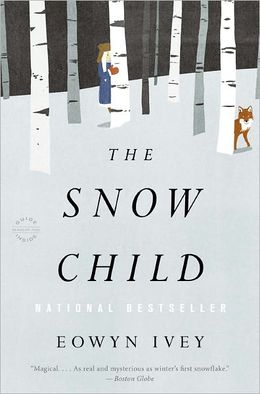
“The Snow Child,” by Eowyn Ivey

9780316175661_p0_v1_s260x420
The prose in this book is as feathery, fragile, and ethereal as snow. I read it during a recent heat wave, temps in the 100’s, yet I felt chilled. Really. Put on my slippers. Eowyn Ivey is this eerily good a writer. Just beautifully evocative imagery. The pensive loneliness of childless couple facing old age, isolated, in the frightening maw of a harsh Alaskan winter. The winter of their discontent. Until, a fairy child appears, bringing with her a magical mysticism that can warm the bleakest heart.
“…I am reminded of the time you spent as a child chasing faires in the woods…you slept more than one night in those old oak trees, and when mother found you in the morning you would swear you had seen fairies that flew like butterflies and lit up the night like lightening bugs. I remember with some shame that the rest of us teased you about seeing such spirits, but now my own grandchildren chase similar fancies and I do not discourage them. In my old age, I see that life itself is often more fantastic and terrible than the stories we believed as children, and that perhaps there is not harm in finding magic among the trees.”
Beautiful writing. Beautiful book.
Not a book I would usually read, but so glad I did.
Maybe you should read it in the summer though?
Highly recommend.

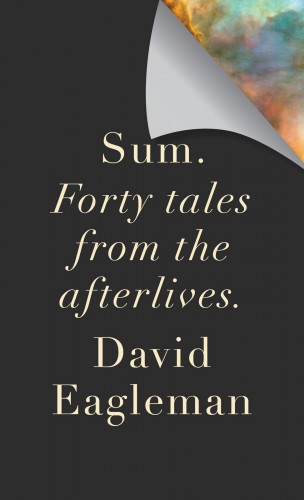
“Sum forty Tales From The Afterlives,” by David Eagleman

sum_forty_tales_from_the_afterlives.large_

I don’t know how this man has accomplished all he has in his life and how he managed to write such a hilarious, thought provoking and profound book.
He’s a comedically gifted neurologist.
I know, I know, we’re all like this.
Not.
Read this wonderful book.
It will make you laugh.
And think.
Plus this guy would the best graduate advisor in the world.

“The Glass Castle,” by Jeanette Walls

The Glass Castle by Jeannette Walls
The Glass Castle
by Jeannette Walls

Cindy Knoke‘s review

Aug 13, 12  · 
This has to be the best memoir I have read.
Jeanette Walls has a lot guts.
She worked as an entertainment editor for MSNBC when she wrote this book, hob-nobbing with celebrities and such. No one she worked with could ever have imagined this successful, attractive, bright, high-functioning woman, could ever have come from the background and childhood that she did.
This is what makes her gutsy.
She told everyone.
She shreds off the patina of her social status and tells us in heartbreakingly beautiful prose what her childhood was like She doesn’t minimize or gloss over things. She gives us the whole sad story.
Two, umm, “eccentric” parents? Basically an artsy, but mentally ill mother. An gadget-gizmo-tinker, alcoholic dad. A vagabond childhood of continuous movement and upheaval. Being destitute, eating out of trash cans, wearing ragged clothes, worrying about her siblings, caring for them with parents whose heads were someplace else.
The family ends up in horrific circumstances in a West Virginia mining town in her father’s childhood home with relatives straight out of an Alfred Hitchcock horror flick.
Yet, she doesn’t really describe it like this. She includes all the above unflinchingly.
But so much more.
There is love in this book. Lot’s of it. Love for her parents, and her brothers and sisters. She describes her parents in many ways, affectionately. She recognizes the creativity and intelligence behind their oddity. She describes her father teaching her about science and astronomy. She describes her mother and her positive thinking and her love of art.
This is what makes this author so unusual and admirable. Her memoir is beautifully written and un-self pitying. It is a tour-de-force.
Highly recommend..

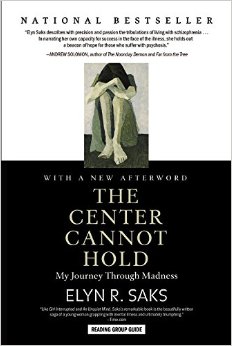
“The Center Cannot Hold: My Journey Through Madness” Elyn Saks

51r0fm0Y82L._SY344_BO1,204,203,200_

Elyn Saks is a remarkable and impressive person. She is a law professor At USC who has schizophrenia and is an advocate for the rights of involuntarily hospitalized psychiatric patients. She is an expert in mental health law and has a special interest in limiting the use of involuntary physical restraint on psychiatric patients which she is interested in due to her own terrifying experiences being involuntarily hospitalized and restrained. She is also an Adjunct Professor of Psychiatry at UCSD and recipient of a MacArthur Foundation genius grant which she is using to fund the “Saks Institute for Mental Health Law, Policy & Ethics.”

 
Saks bravery and honesty in presenting herself and her experience is remarkably compelling. Although this book chronicles Saks frightening experience with her disease and the societal response to it, it is ultimately an inspiring book that will help to educate people about the realities of the disease of schizophrenia and provide hope to people struggling with it. She is quoted as saying, “there is a tremendous need to implode the myths about mental illness, to put a face on it…”
This is precisely what she has done. Elyn Saks is a magnificent role model and this is an excellent and empowering book.
images (5)
Elyn Saks

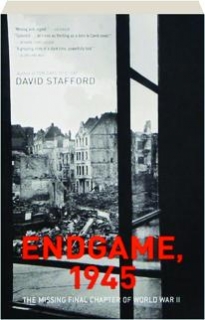
“Endgame 1945: The Missing Final Chapter of World War II,” by David Stafford

2680653 (1)Endgame 1945 is an historical narrative told from the perspective of eyewitnesses, about the final three months after VE Day in Europe. It covers in fascinating detail events leading to the deaths of Hitler and Mussolini, the liberation of concentration camps and the challenges faced by allied occupying forces contending with the mass human trauma of war devastated Europe. It describes the Herculean task faced by relief agencies dealing with displaced persons and the traumas experienced by German women and children in Allied occupied Germany.
This book is a tour de force. Stafford is a brilliant writer and historian and his subject, these specific three months, has been mostly neglected by historians. This is a riveting, compelling read that is difficult to put down and stays with you long after you finish reading it. The extent of the trauma in Europe was mind boggling. The task of restoring order, Sisyphean. The heroism of the allies incredible and the suffering of so many hard to contemplate.
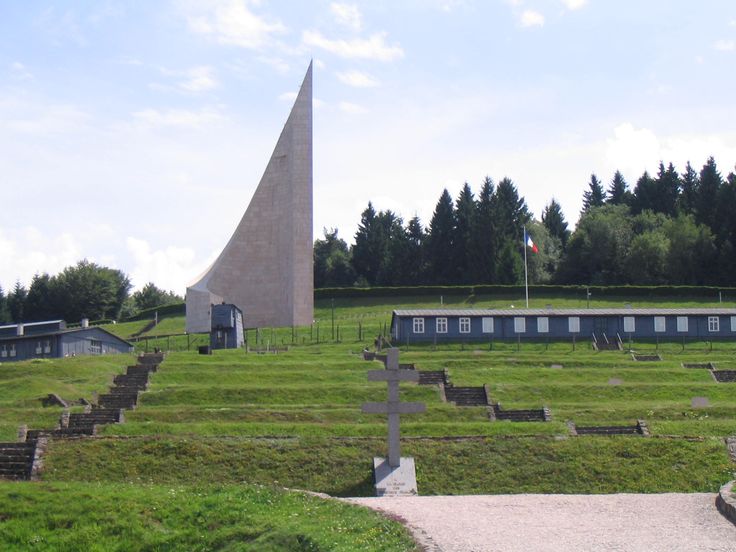
87408c1301d10a9bdc812743de94cd2f (Photo: Struthof Concentration Camp, C. Knoke).

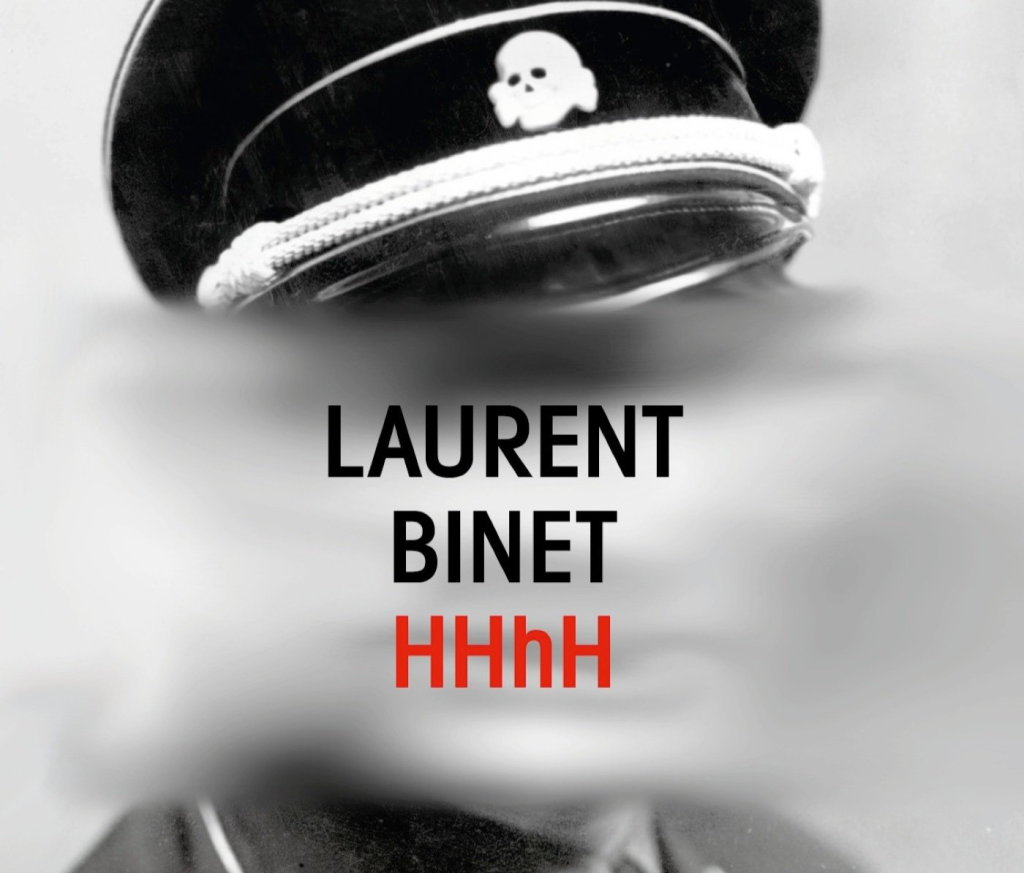
HHhH by Laurent Binet

HHhH-Laurent-Binet-1024x873
I am addicted to reading about the history of WWII and I really wanted to like this book.
Binet’s book however frustrated me. The constant insertion of the author into the text and his continuous use of the word “I” was incredibly distracting. Who was this book about precisely, the author or Heydrich? The purported topic, Heydrich was interesting, the author’s pathos? Not so much.
His short chapter format consisting of 257 chapters, some of which were only a few sentences long, resulted in a choppy, stilted flow.
His constant debunking of historical novels, and their fictionalized aspects, gets a bit tired, but I found his statement that, “I am struck all the same by the fact that, in every case, fiction wins out over history,” provocative. But I also was then, confused by his many discussions of Hollywood movies about the era and his continuous insertion of fictionalized vignettes that he explained were to serve as examples of how he wasn’t fictionalizing. One senses he is really fascinated with historical fictionalized accounts but thinks he is doing something far superior. I think he may not have achieved this goal.
He is an interesting, intelligent man, and this should have been a better book.
If you want a recommendation for a riveting read on the era, try, “Endgame, 1945: The Missing Final Chapter of World War II,” by David Stafford.

Wild: From Lost to Found on the Pacific Coast Trail, by Cheryl Strayed


by Cheryl Strayed(Goodreads Author)

5908500

Cindy Knoke‘s review

Aug 11, 12  · It is noteable that this author chose the name “Strayed” for herself, because stray she certainly does in her life choices, emotions, and finally solo on to the Pacific Coast Trail to hike it, by herself.
Initially the book annoyed me and I even decided to stop reading it. Did I really want to read another memoir about a sex addicted, heroin injected, husband dumping, mother obsessed woman, who made up her name and maybe her memoir?
Well, yes.
It was her decision to deal with these, uh, problems, by hiking the Pacific Crest Trail that hooked me. It was a novel approach to some seriously common problems.
Plus she really doesn’t try to make herself look good in this book at all. She is unfailingly honest, even about the really embarrassing stuff, like how woefully unprepared she was to hike the trail and how many really dumb mistakes she made while doing it.
So this book, like this author grows on you, and once she is on the trail, boy are you rooting for her!
It was a subtle change for me, from not liking her much at first, to genuine admiration that slowly builds. All the while though she stays humble, pointing out to you how imperfect she really is.
Good for you Cheryl. You did it. You strayed back on course with your hike, this book, and your life.

Catherine the Great

Catherine the Great: Portrait of a Woman
by Robert K. Massie
catherine-i_3-t

5 of 5 stars
This was an excellent, riveting, read.
Catherine was a fascinating woman who came to Russia from Prussia when she was fourteen to marry the ridiculously perverse future King Peter with whom she had a loveless, miserable, and sexless marriage.
She nonetheless triumphed. A disciple and friend of Voltaire, Diderot, and the ideas of the Enlightenment, she was a true intellectual and intense life long reader, who spoke, read, and wrote Russian fluently. In fact she was fluent in four or five languages and was obviously an intellectually gifted individual.
She ruled Russia for 44 years, during which time she fought and won several wars. She supervised the building of many architecually significant palaces and museums. She was a patron of the arts and collector of a world class collection of art.
She spent several years researching and writing the “Nakaz,” which was a modernization of Russian law based on the ideas of the Enlightenment in which she attempted to codify an enlightened government’s obligation to it’s people and the people’s obligation to society based on a set of just and fair laws. In the Nakaz she sought to eliminate all torture and capital punishment. She tried and failed to set up a system which would result in the freeing of serfs. She was writing about the dignity and rights of man, before these ideas were championed across the pond, in America by people like Thomas Jefferson. She urged the humane and fair treatment of serfs and the elimination of corporal punishment. Her Nakaz was said by some historians, to be one of the most remarkable written codifications of law written by a sitting monarch.
She also had insatiable sexual appetites and had a long string of lovers, many quite younger than her, well into her later sixties, really up until her death.  She was like a female Henry VIII, plucking up handsome young courtiers well into her dotage. Monogamy didn’t seem to hold much appeal for her. This of course makes for very interesting reading!
Like all of Massie’s books, this book will thoroughly educate you about this period of Russian history and thoroughly interest you in the process.
Highly recommend.

Hemingway’s Fetishism by Carl Eby

Cindy Knoke’s Review

Hemingway's Fetishism by Carl P. Eby

Hemingway’s Fetishisms

“Hemingway’s Fetishism” is a thoughtful, detailed, thorough and fascinating exploration of Hemingway’s complex and often dark psyche. It is most interesting to read this book followed by several other books that expand and explore similar themes from other family member’s perspectives. Several that I would recommend include:
“Strange Tribe,” by John Hemingway. This book is by Hemingway’s grandson and explores the gender bending proclivities and transvestic behaviors of both his father and grandfather, and their struggles with bi-polarity, alcohol, and suicidal depressions.
“The Hemingway Women,” by Bernice Kent, examines Hemingway’s troubled relationships with his four wives.
“Hemingway and Gelhorn,” by Jerome Lucille chronicles their wartime relationship.
If you follow this up with a re-read of “Moveable Feast,” you will have some new and interesting insights into the psyche and writing of Ernest Hemingway.
All of these books tend to corroborate and expand upon the themes addressed in Eby’s book which explores the relationship between Hemingway’s hyper-masculine personality and his gender confusion, fetishism, transvestitism and depression. The book is not reductive. The author is not dogmatic. He constantly points out potential weaknesses in his analysis. His respect for Hemingway, the author and person shines through, but he doesn’t, like so many others before him, shy away from addressing “the elephant on the dining room table,” namely the artificial construct of Hemingway’s uber-masculine personae and the sexual conflicts this was attempting to conceal.
The book is comprehensive and fascinating.  It begins with Hemingway’s early childhood. It explores some of the roots of his challenges, with a dominant mother who dressed her son in dresses long past the age it was fashionable to do so. It explores his distant relationship with a cold and disapproving father who committed suicide. It looks at his odd relationship with his first wife, where his obsession with emulating her hair fully presents itself, to the deteriorating relationships with all his subsequent wives where his fetishism is played out in remarkably similar ways in each relationship.

The narcissism of Hemingway’s chronic fetishism is fully evident in these and other family relationships.
For anyone interested in Hemingway, in better understanding the themes and imagery in his books, and the familial origins of paraphilias, this book is a fascinating read.
Highly recommend.