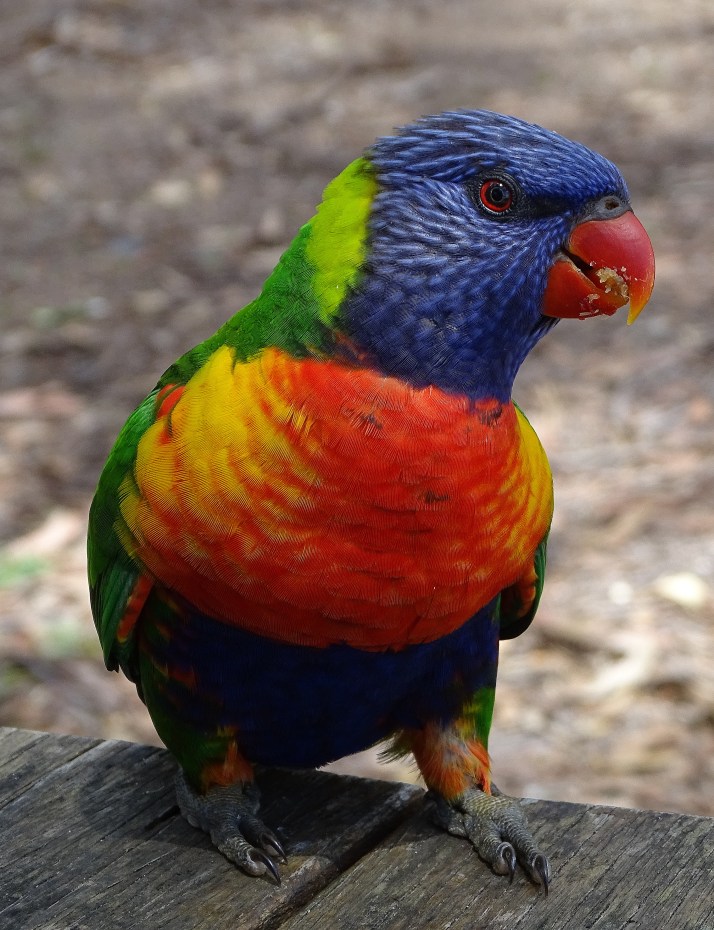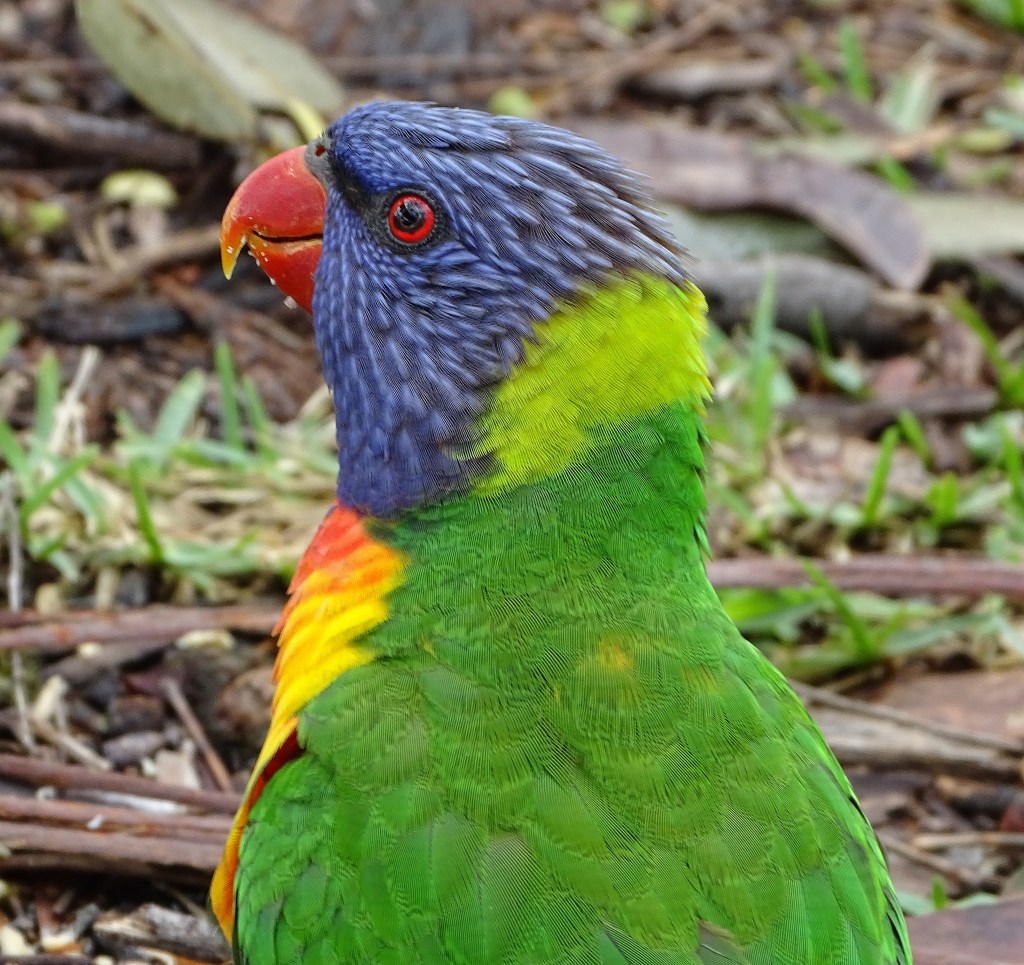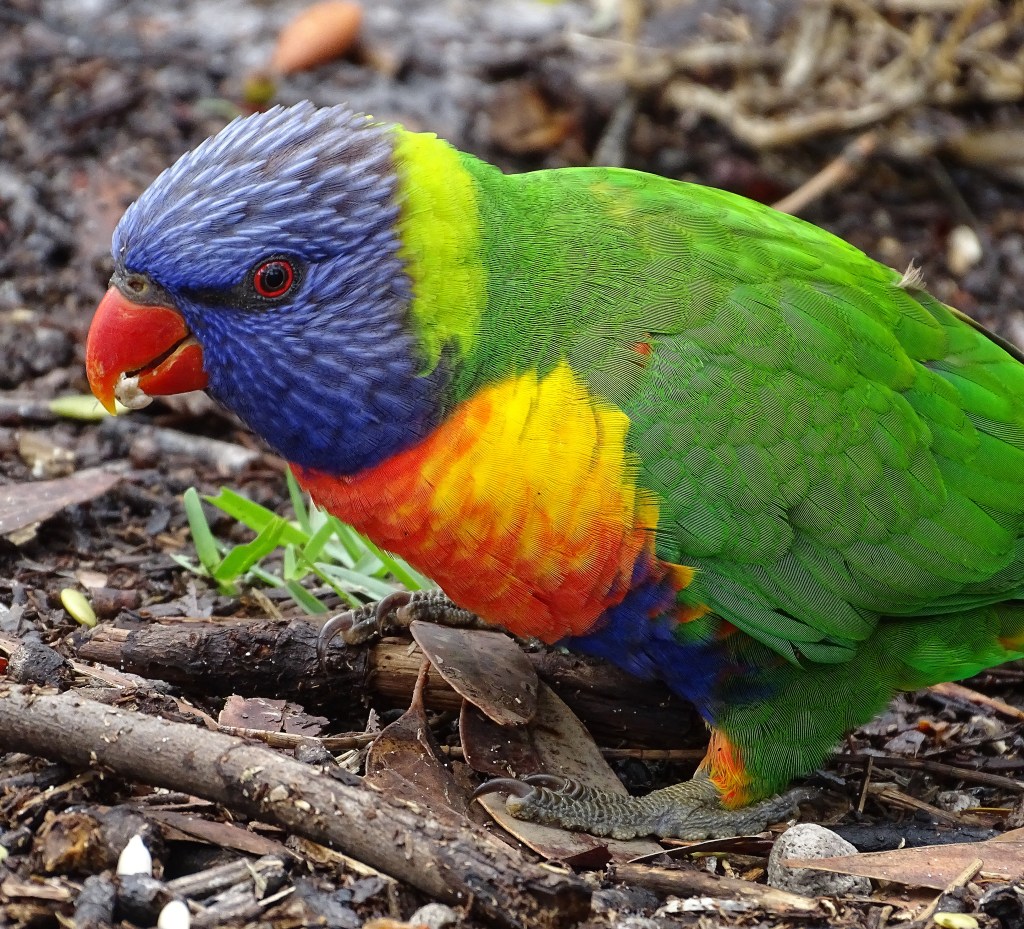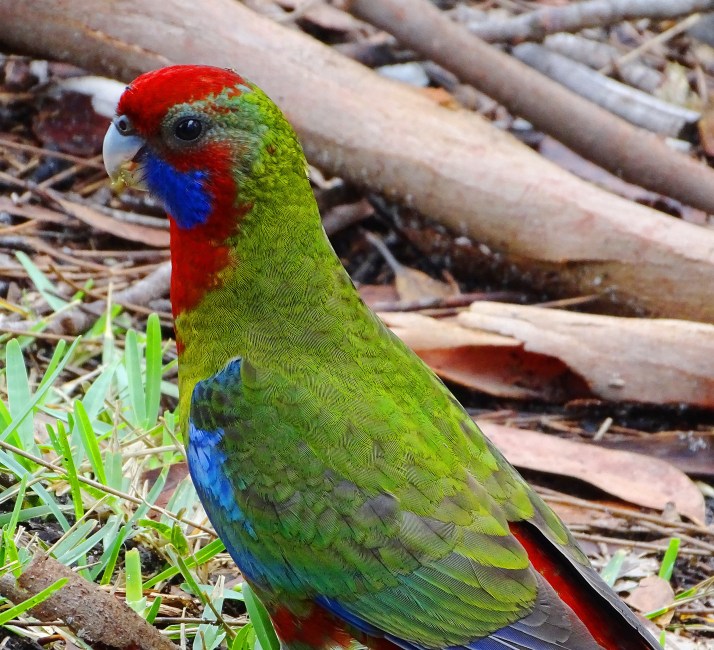
This red head,
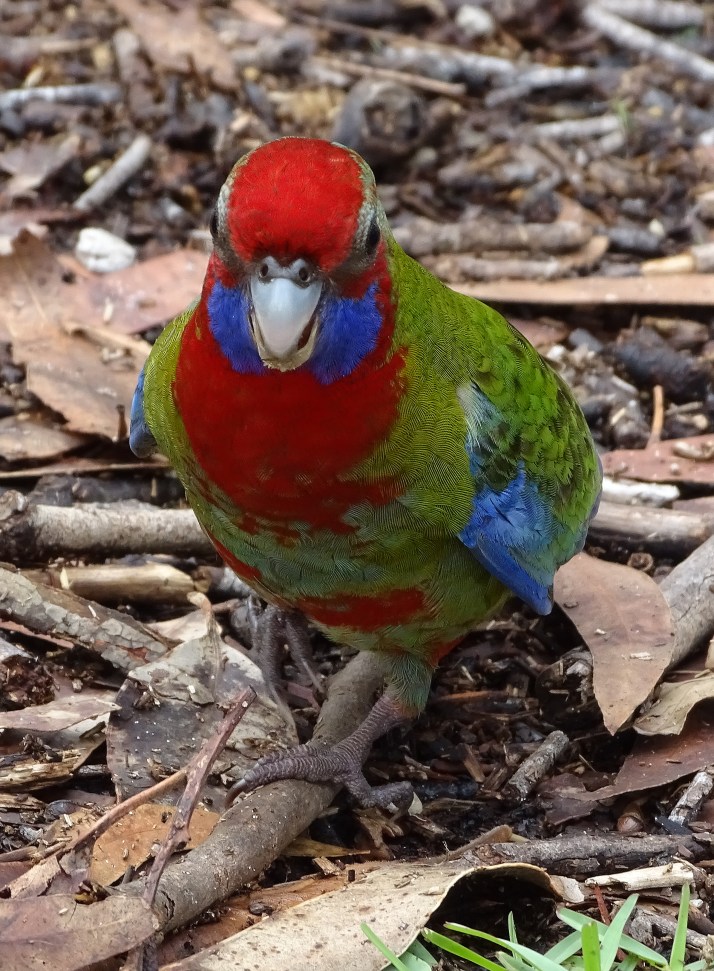
blue cheek,
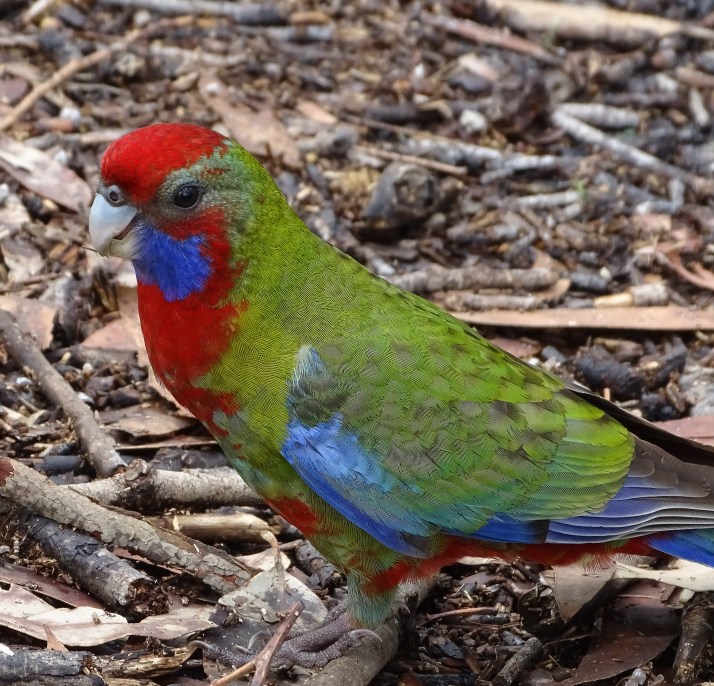
friendly baby,
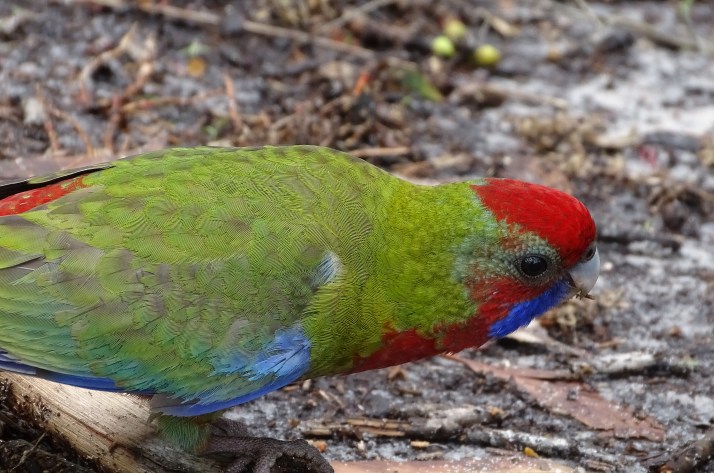
will grow into,
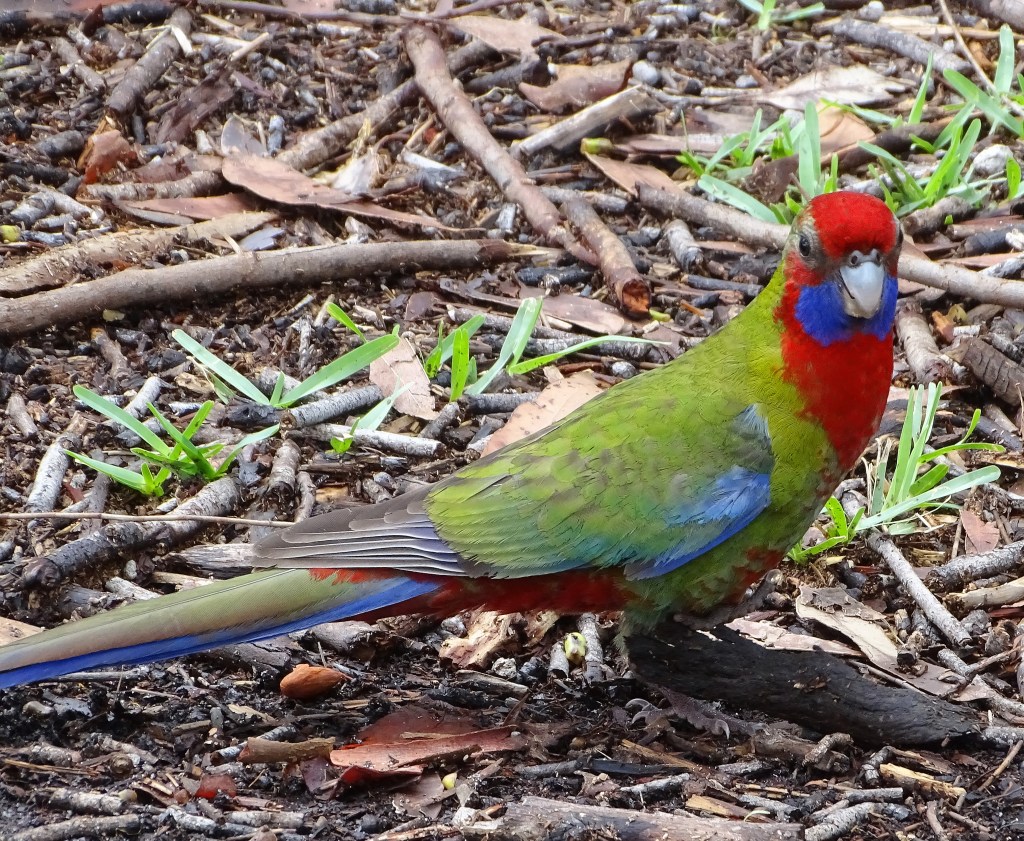
a pure scarlet beauty.

Cheers to you from the baby rosella in Oz~

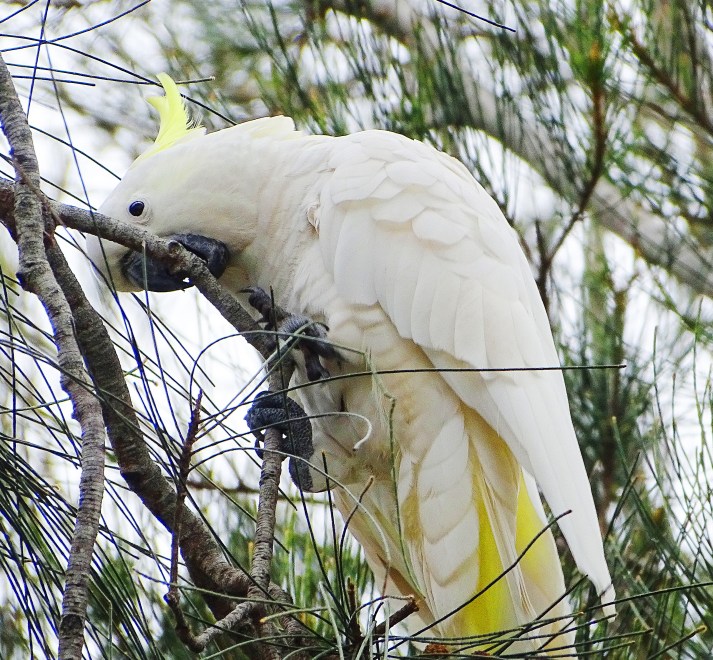
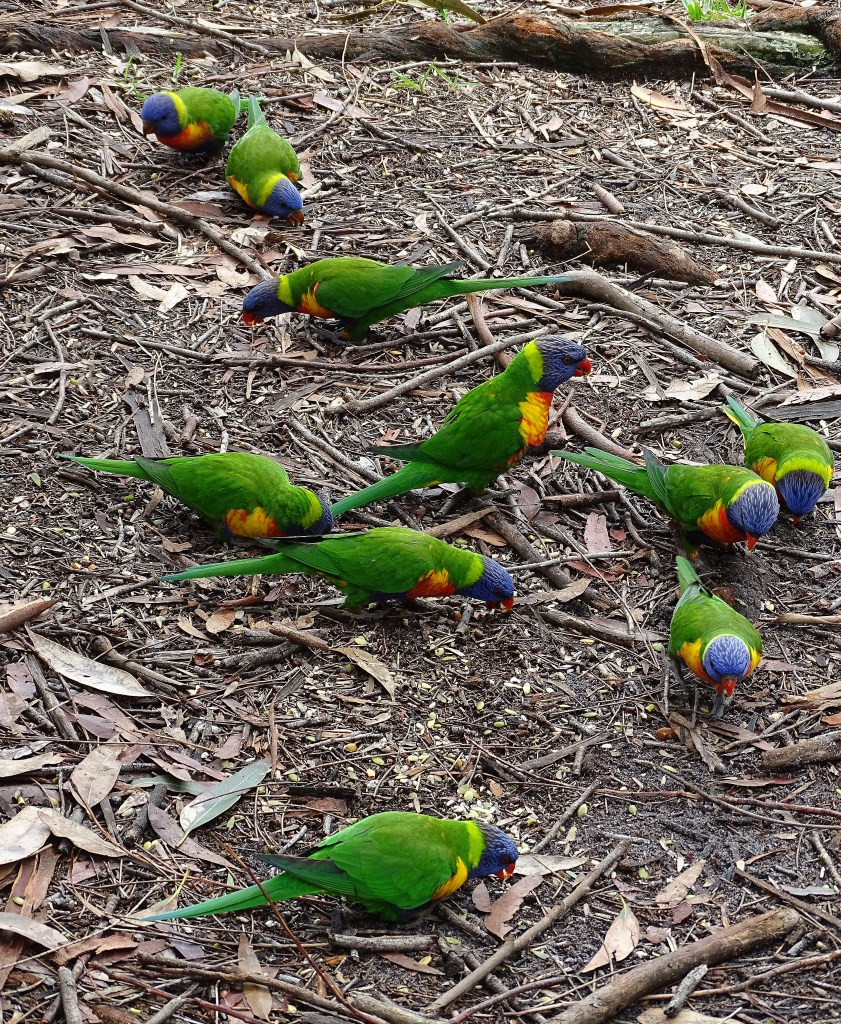
and golden tails,
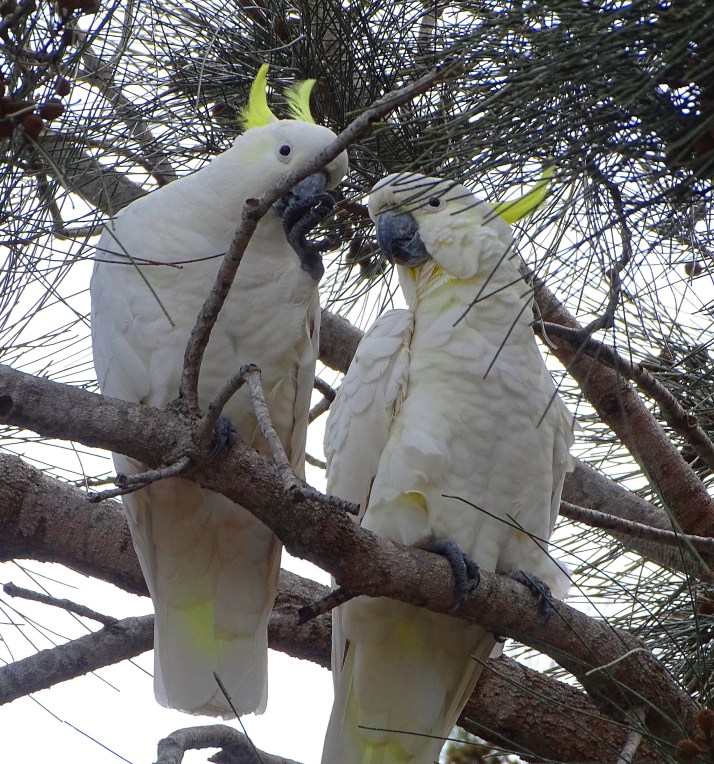
feast on pine cones,
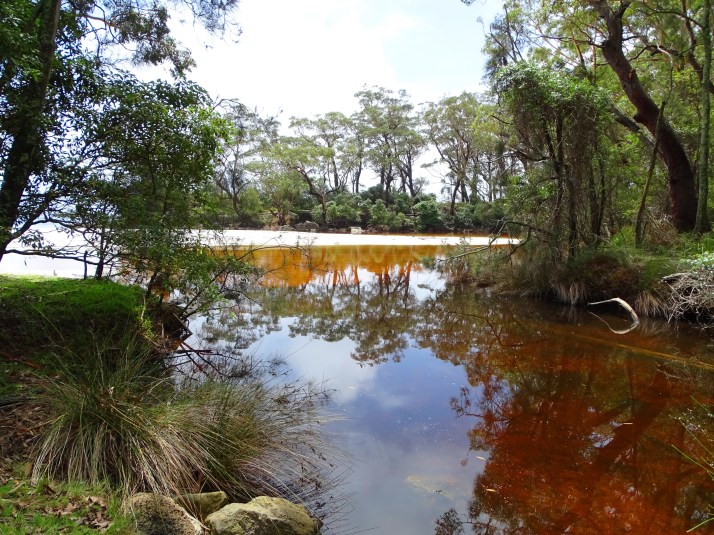
by bush lagoons.

Raucous flocks,
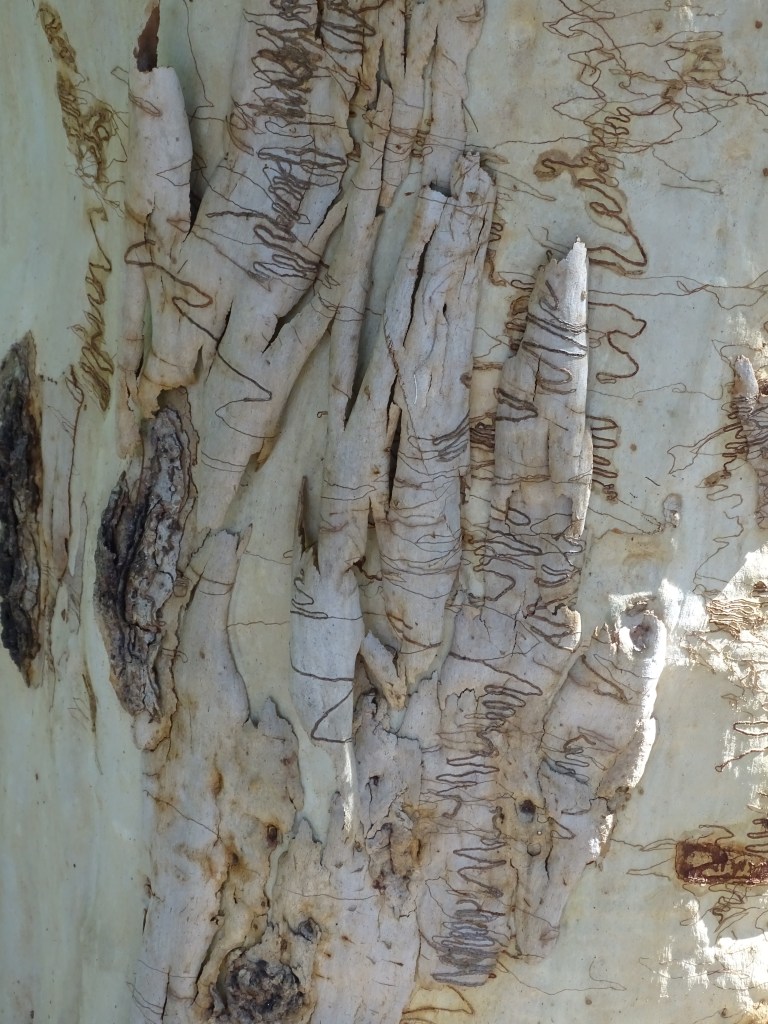
rest on scribbly gums.
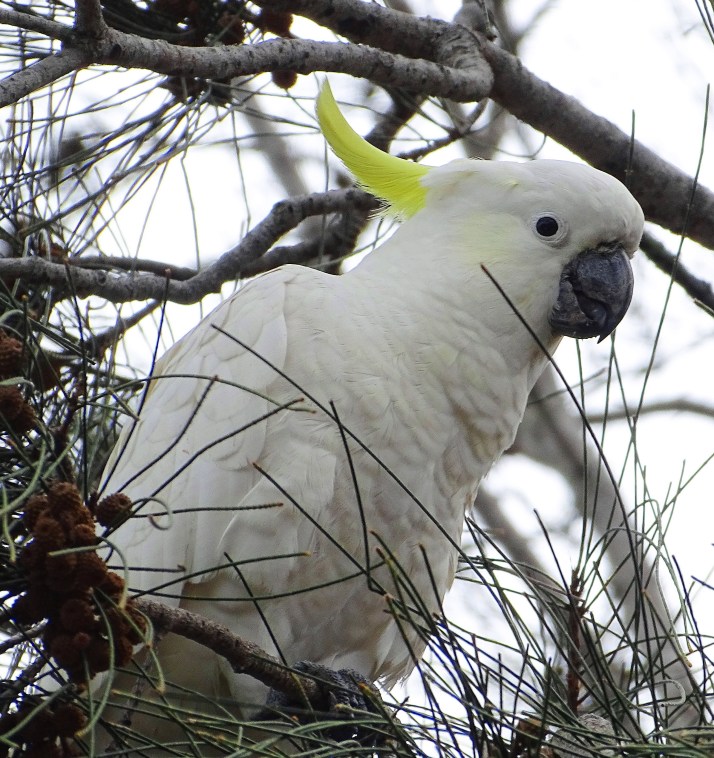
While a curious cockatoo,
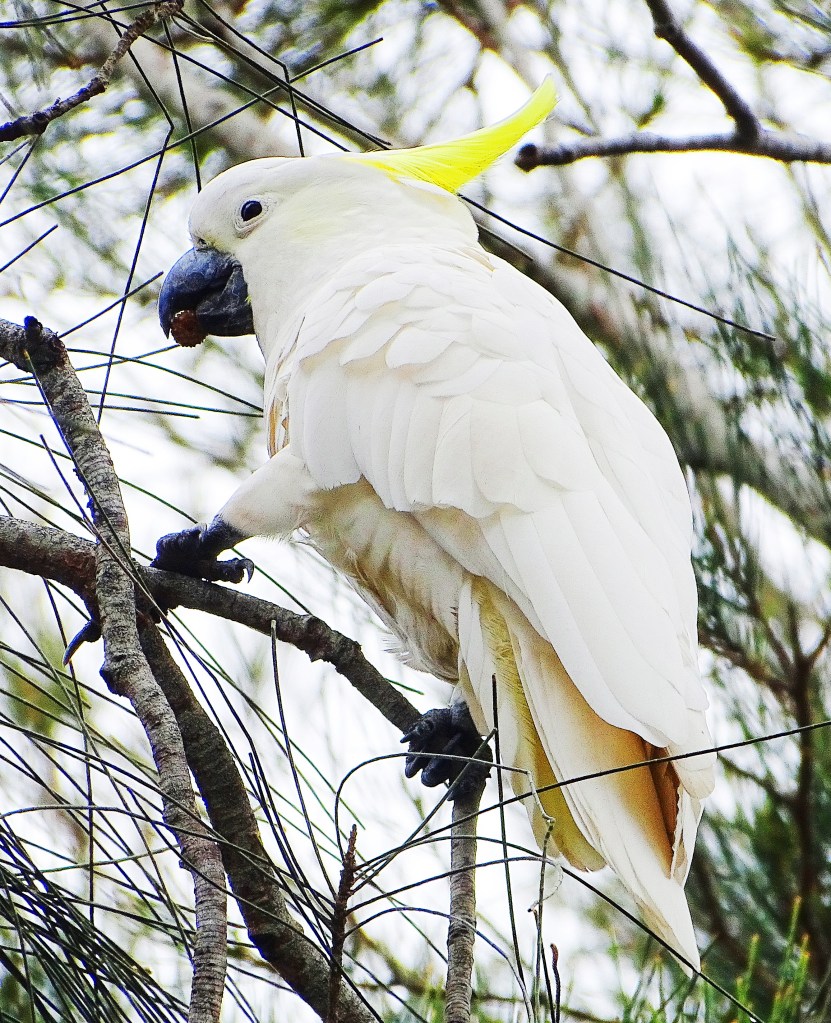
climbs down to me.
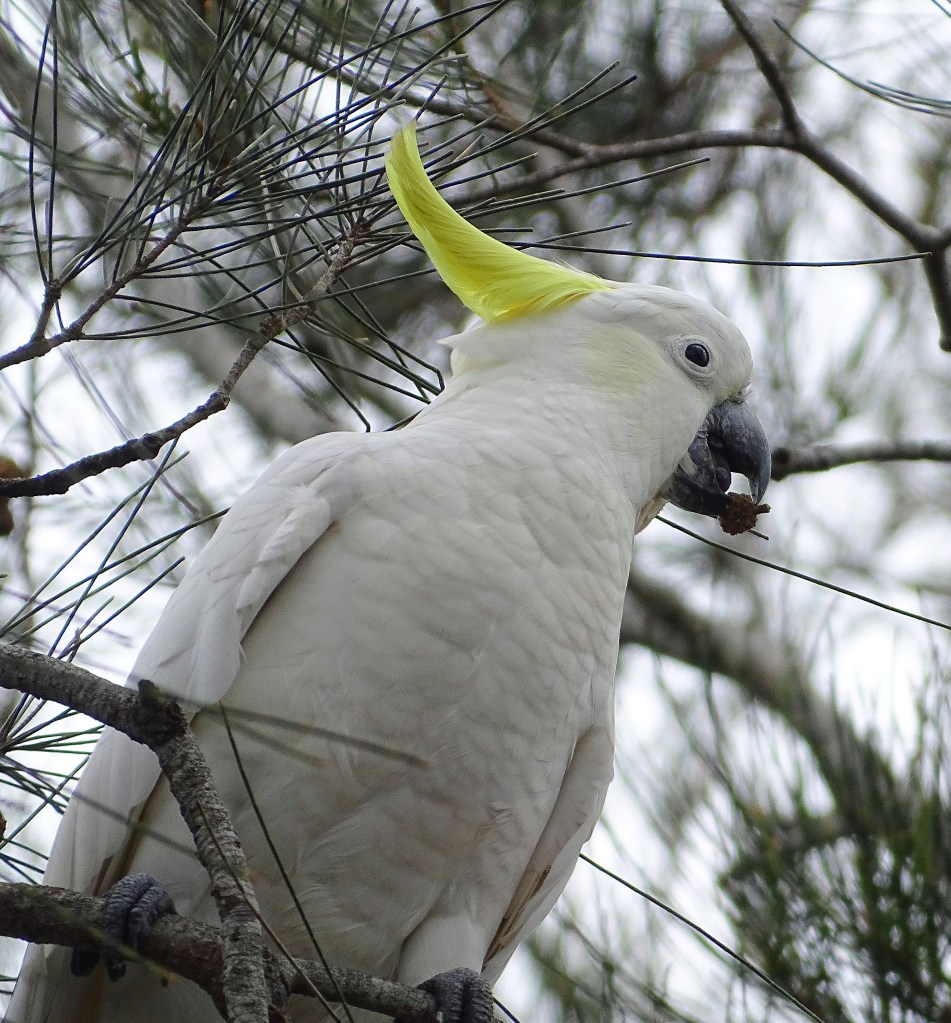
Cheers to you from Australia’s gorgeous sulphur crested cockatoos~
Note: Scribbly Gum are a type of NSW eucalyptus tree that have distinctive scribbles on their bark left by larval scribbly gum moths.

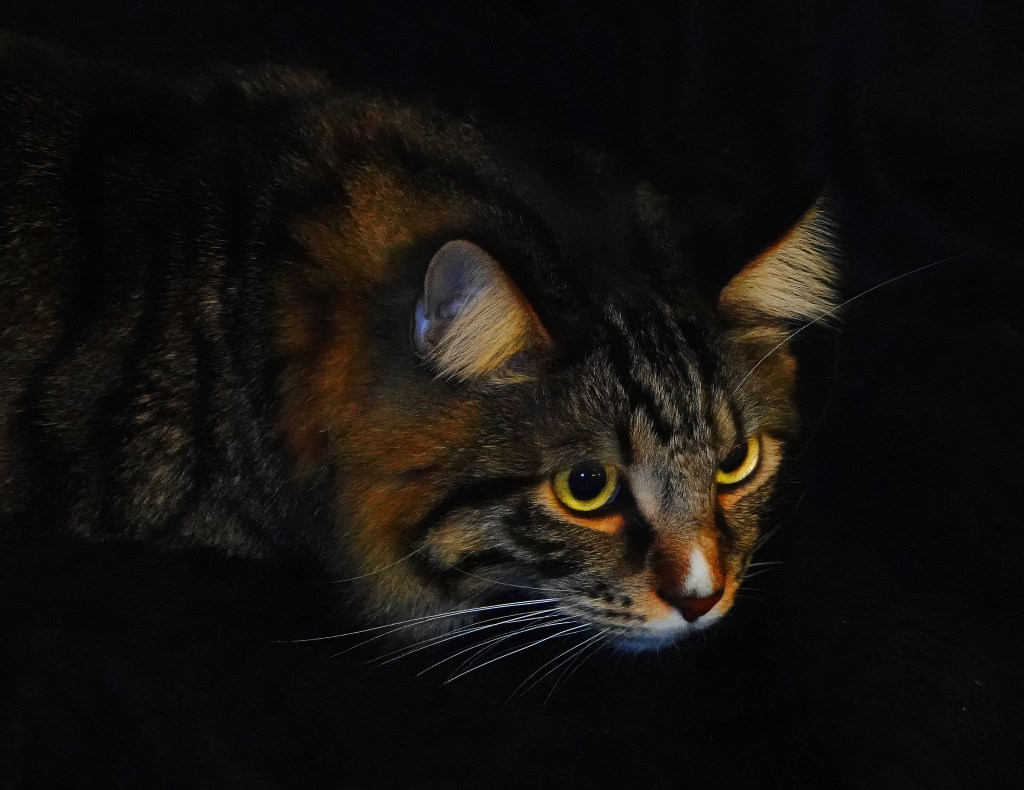
Herbert the cat,
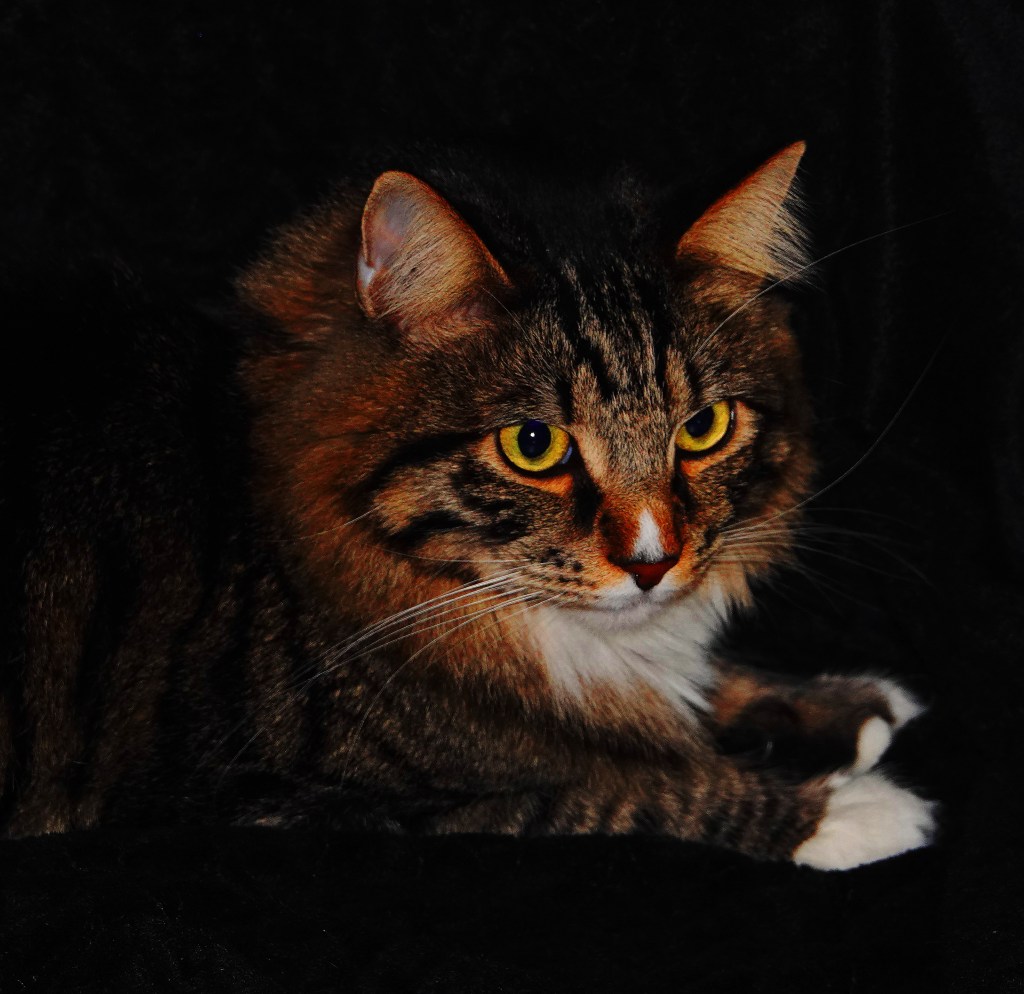
is quite content in quarantine.
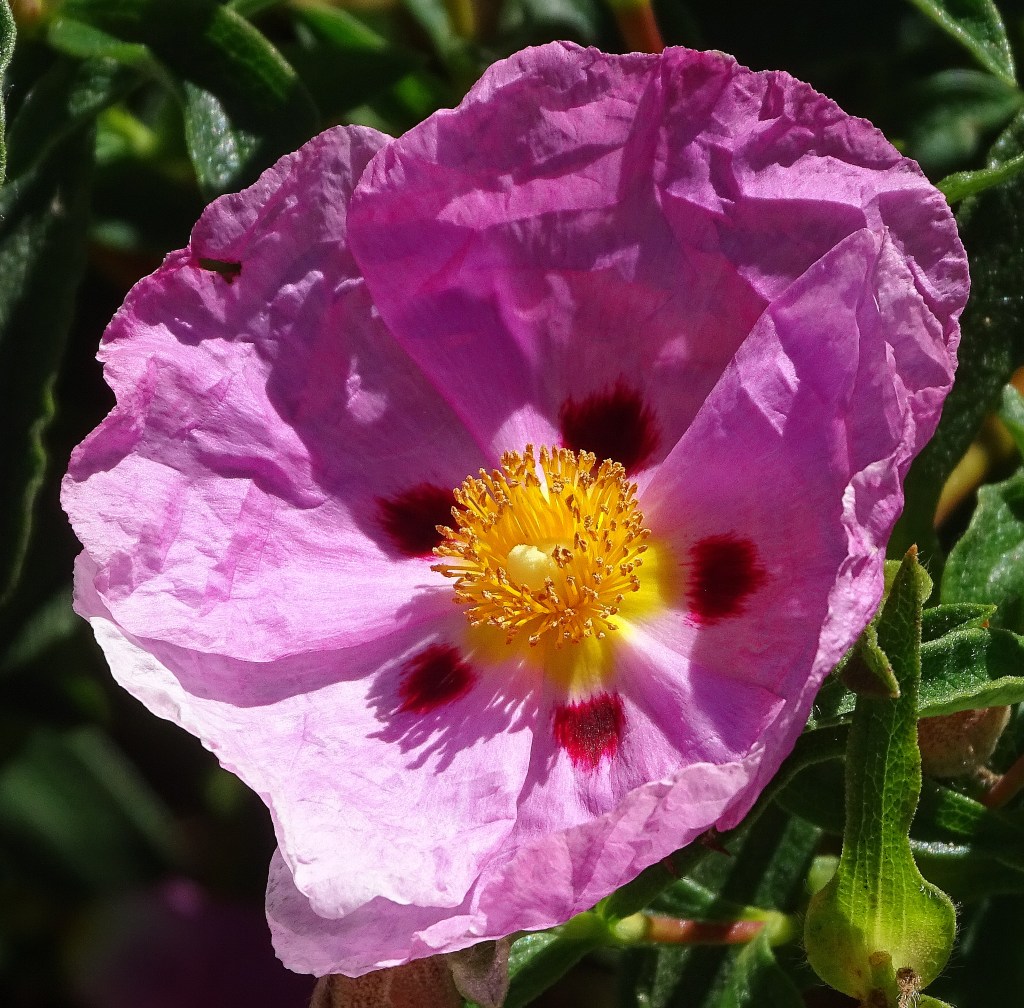
He watches the Holler burst in bloom! Rock Roses show off.
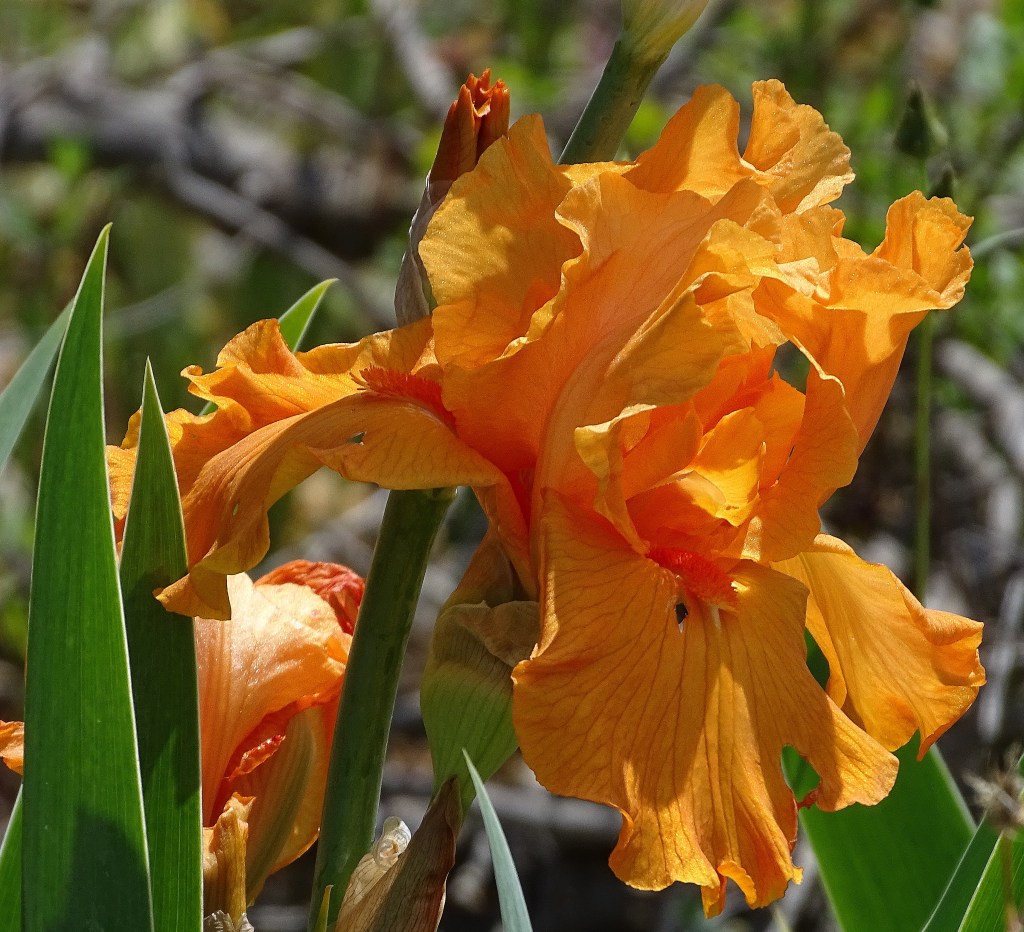
Bearded Iris,
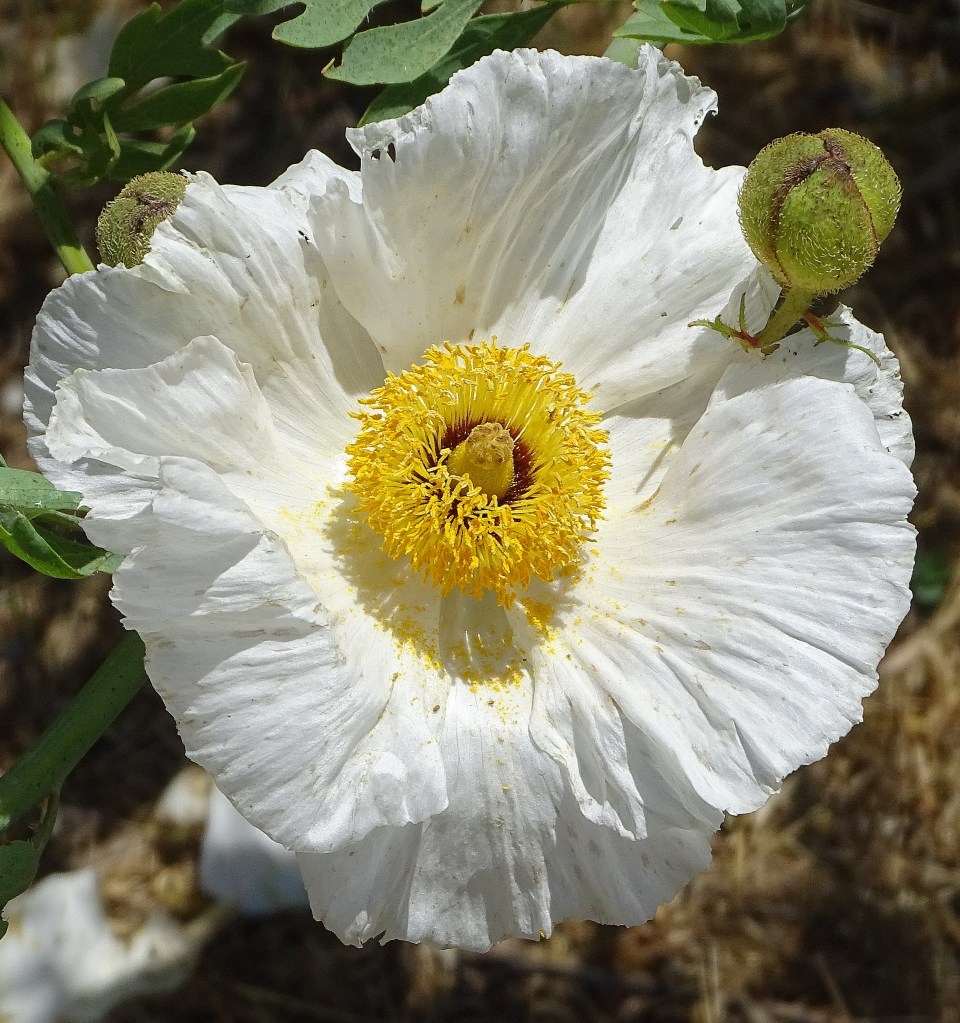
and Matijila Poppies,
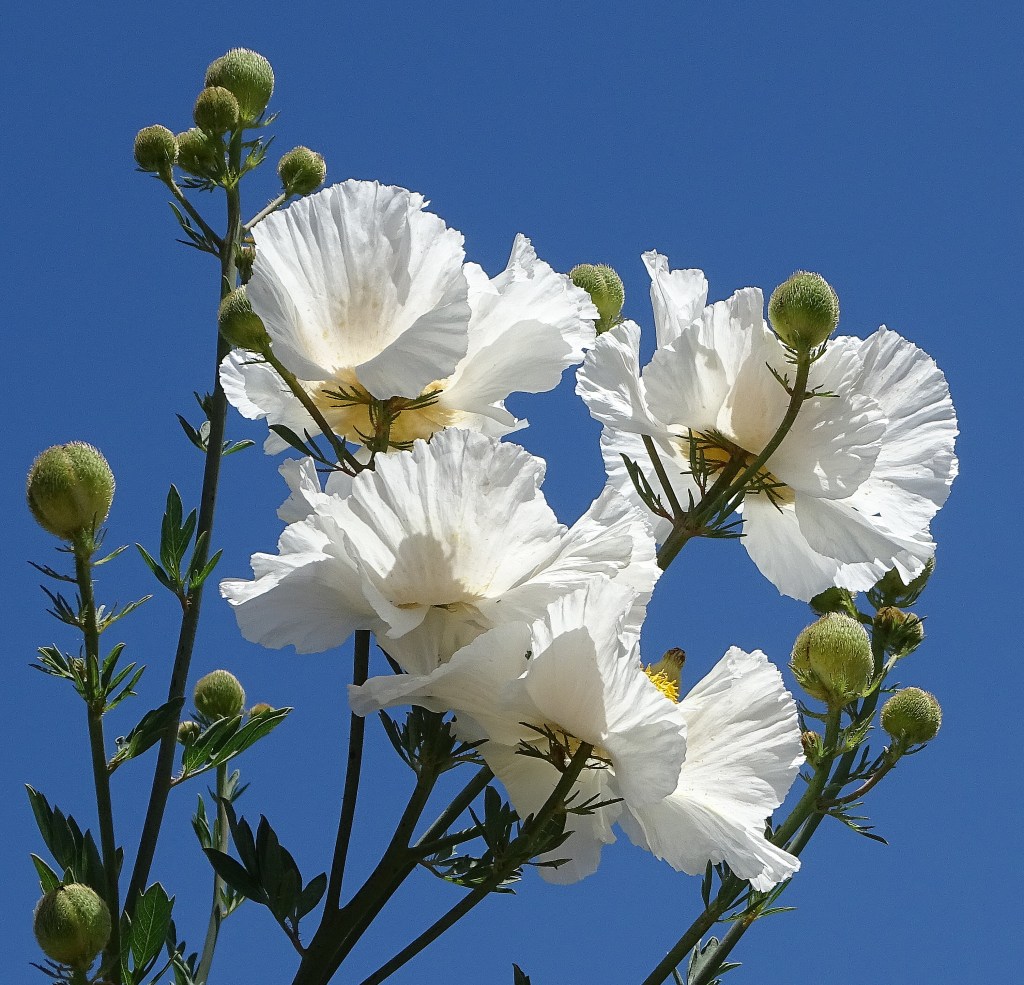
reach for the sky.
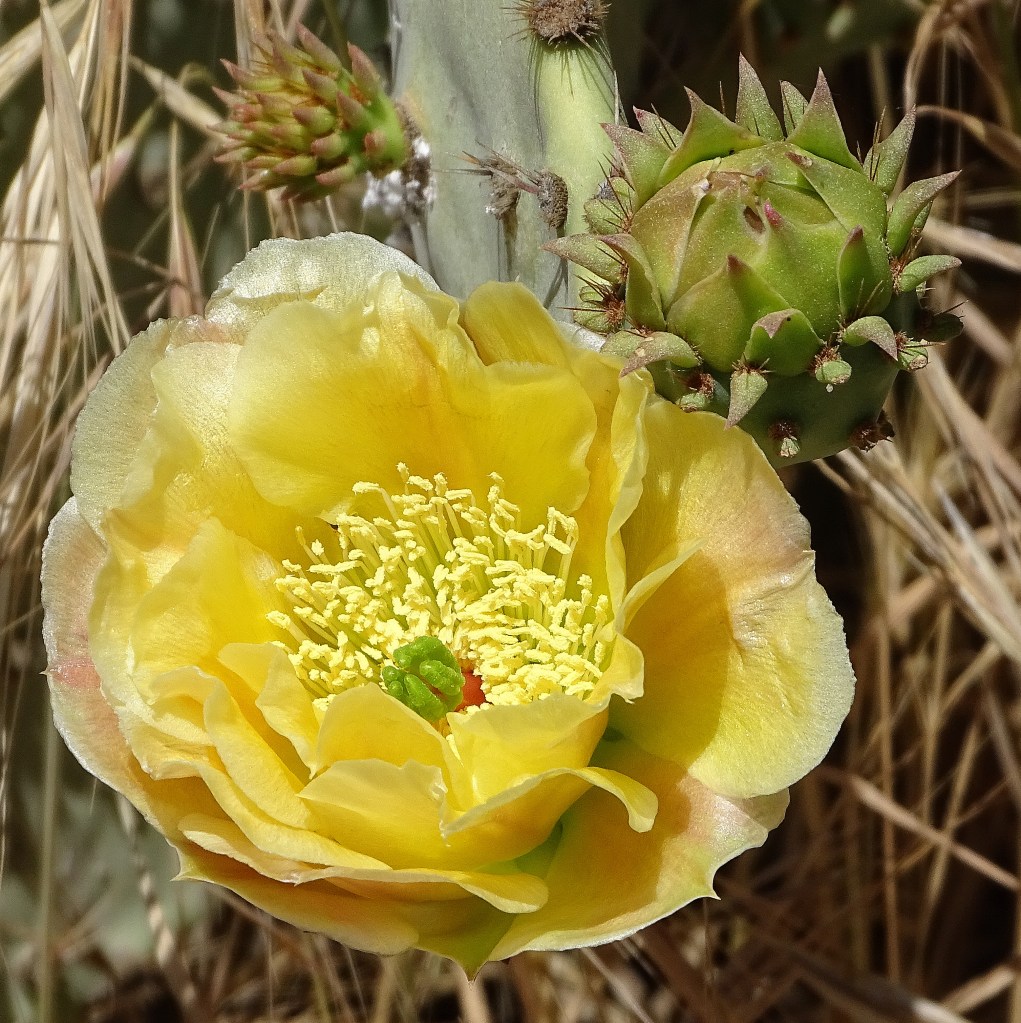
Cactus flowers are everywhere,
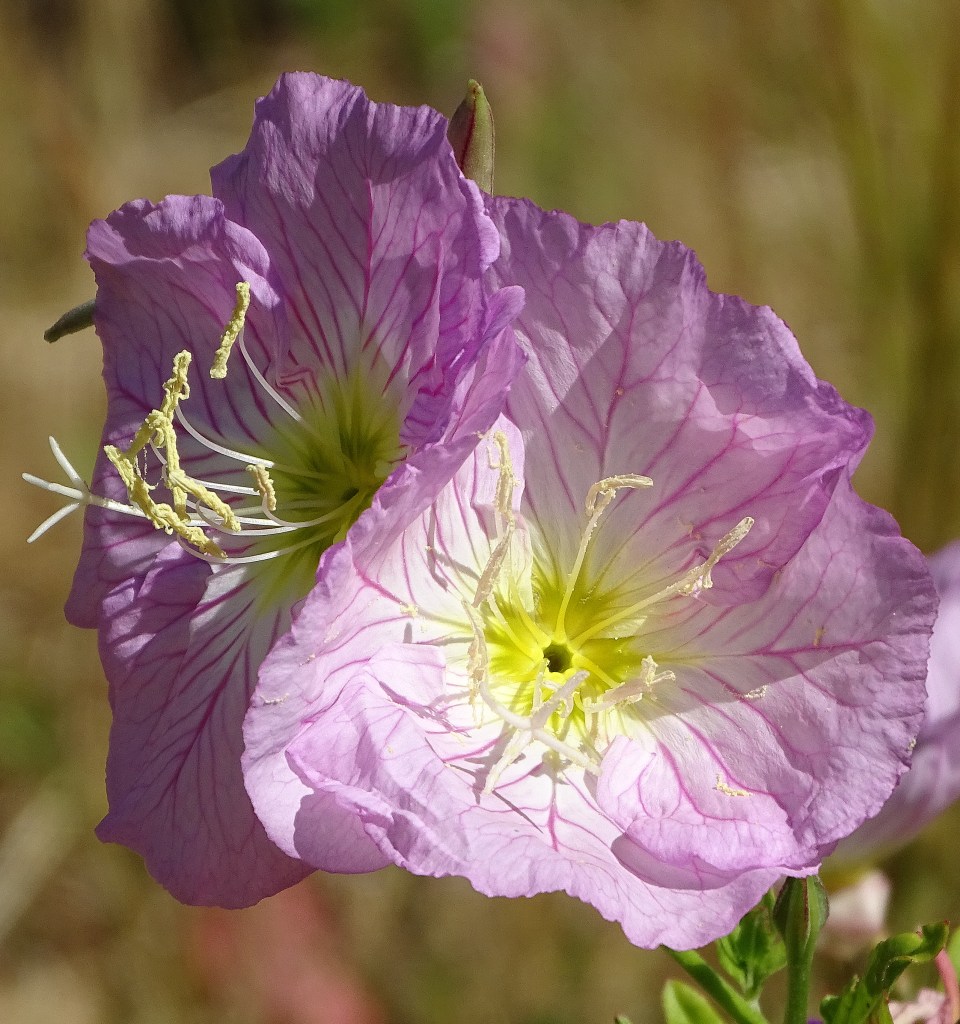
while Mexican Evening Primrose blanket the slopes.

Southern California Wild Grape vines are producing bumper crops.
Cheers to you from The Blooming Holler~


Dolerite Columns rise up to 980 feet from the sea in Cape Raoul Tasmania.

Dolphins fish,
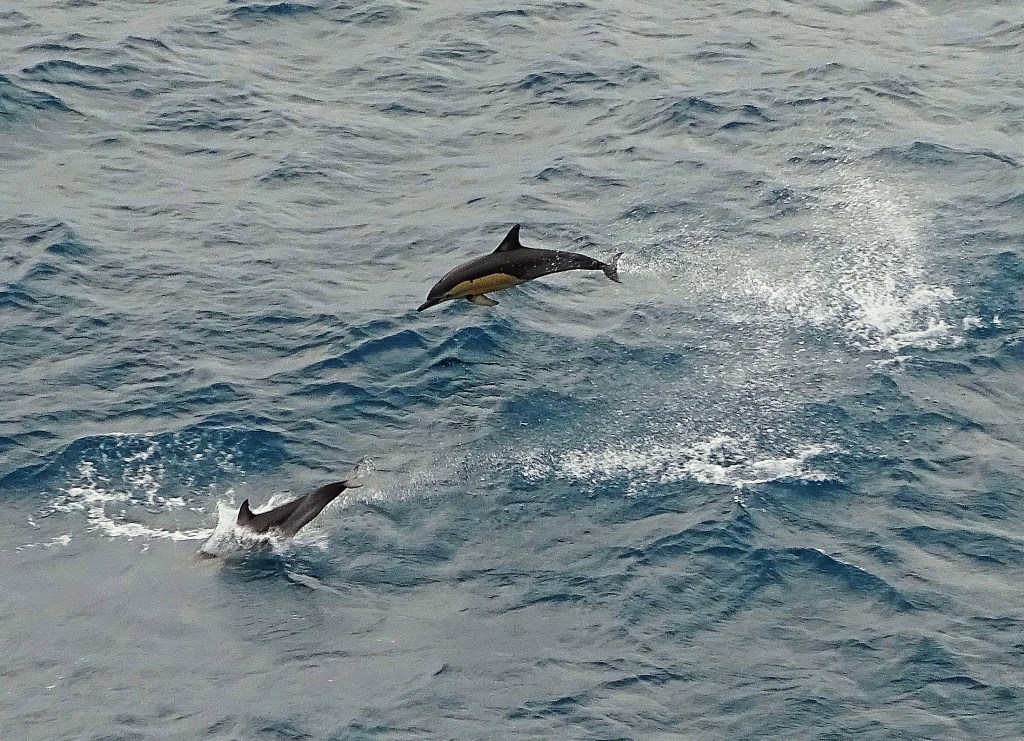
and fly,
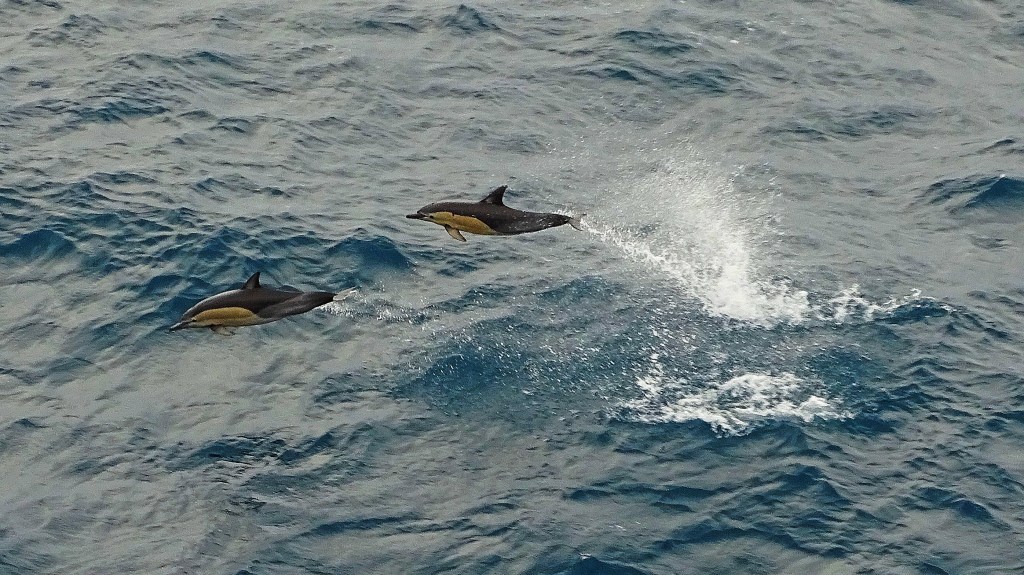
off the eastern coast.
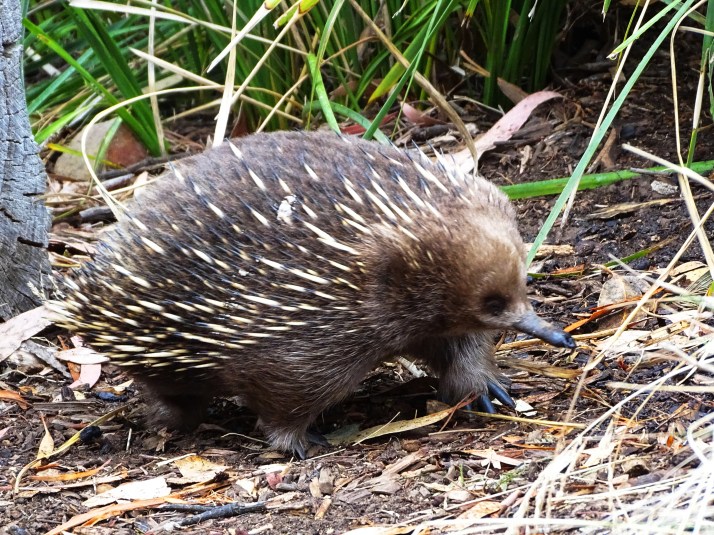
Echidna encountered on the trail. Echidnas, like platypus, are the world’s only egg laying mammals or monotremes.
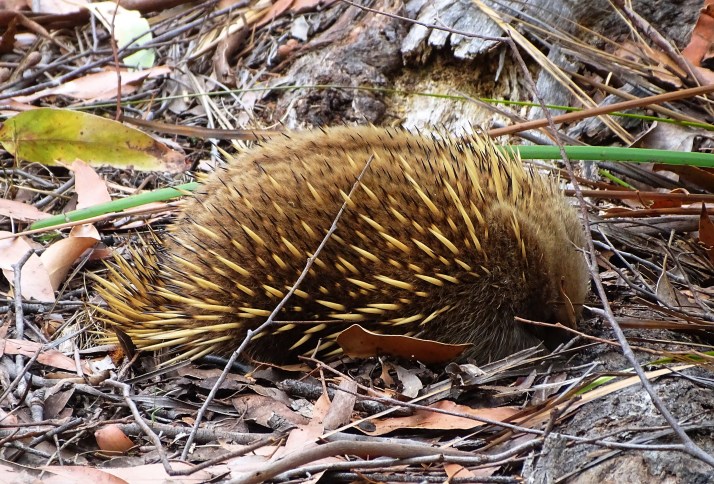
He buries his face in the ground to hide from us!
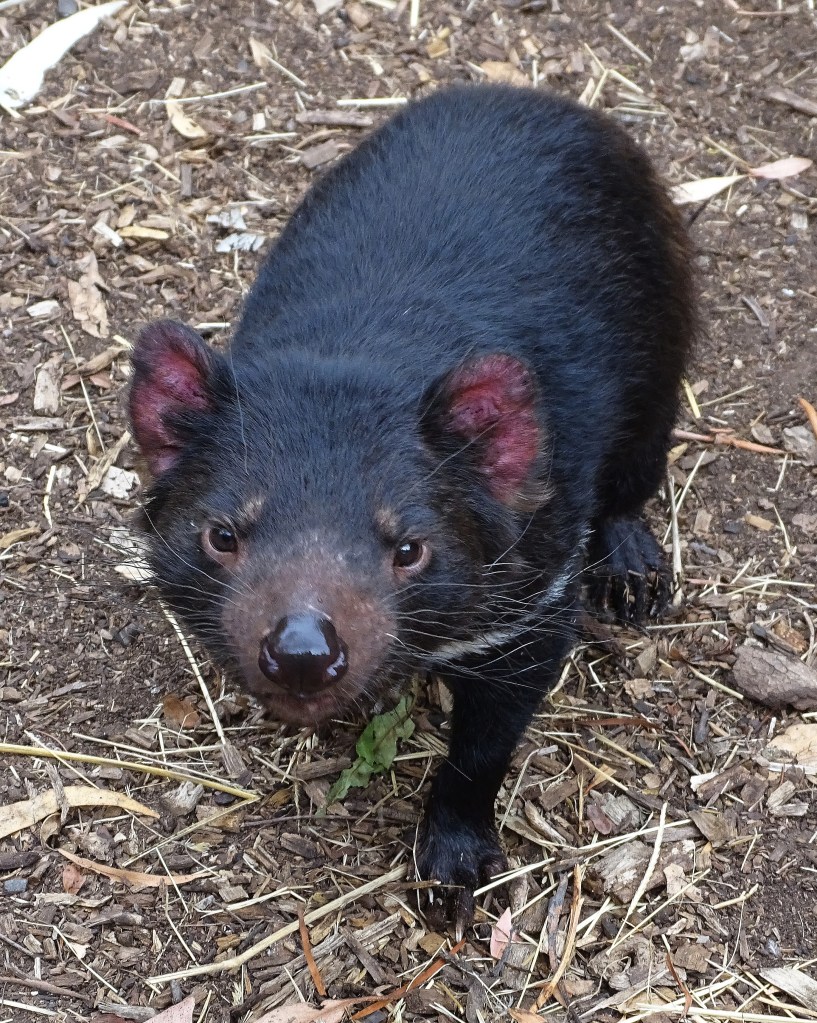
Endangered Tasmanian Devil stares at the camera lens at Bonorong Wildlife Rescue, Hospital & Sanctuary, in Brighton Tasmania.
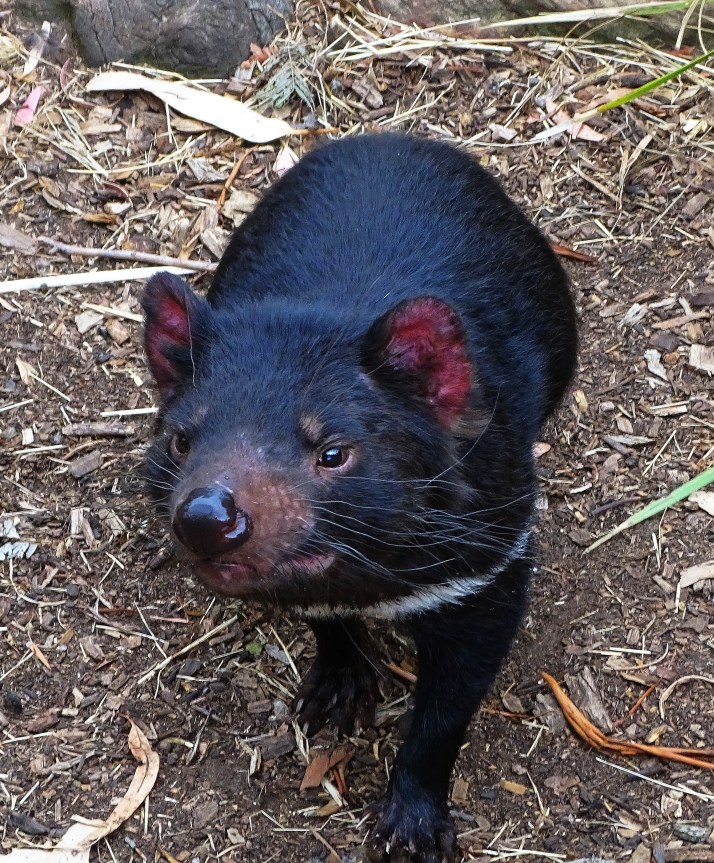
Tasmanian Devils are carnivorous marsupials once endemic in Australia, but now wild only in Tasmania.
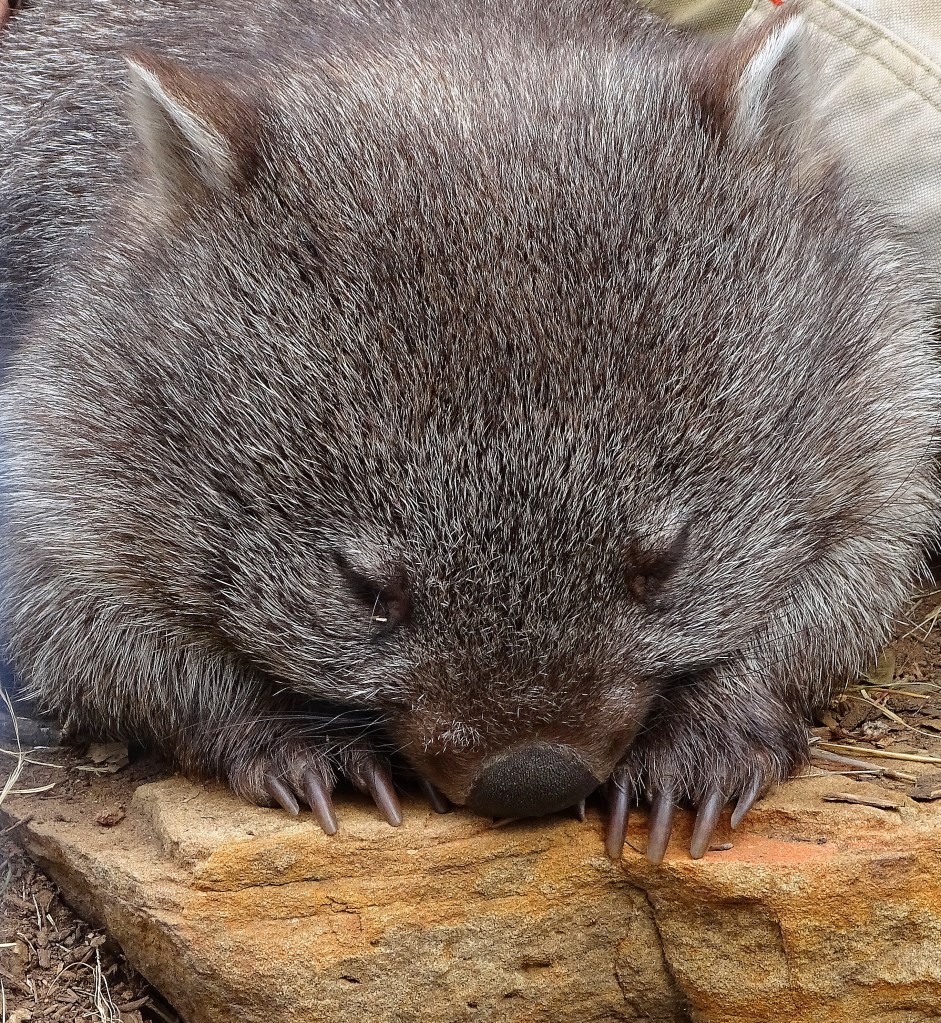
Sleepy wombat at Bonorong. Wombats are herbivorous marsupials native to Australia and Tasmania. They are one of the rarest land mammals in the world.
Cheers to you from stunning Tasmania and her wild creatures~
For more about Bonorong and the work they do, check out: https://www.bonorong.com.au/

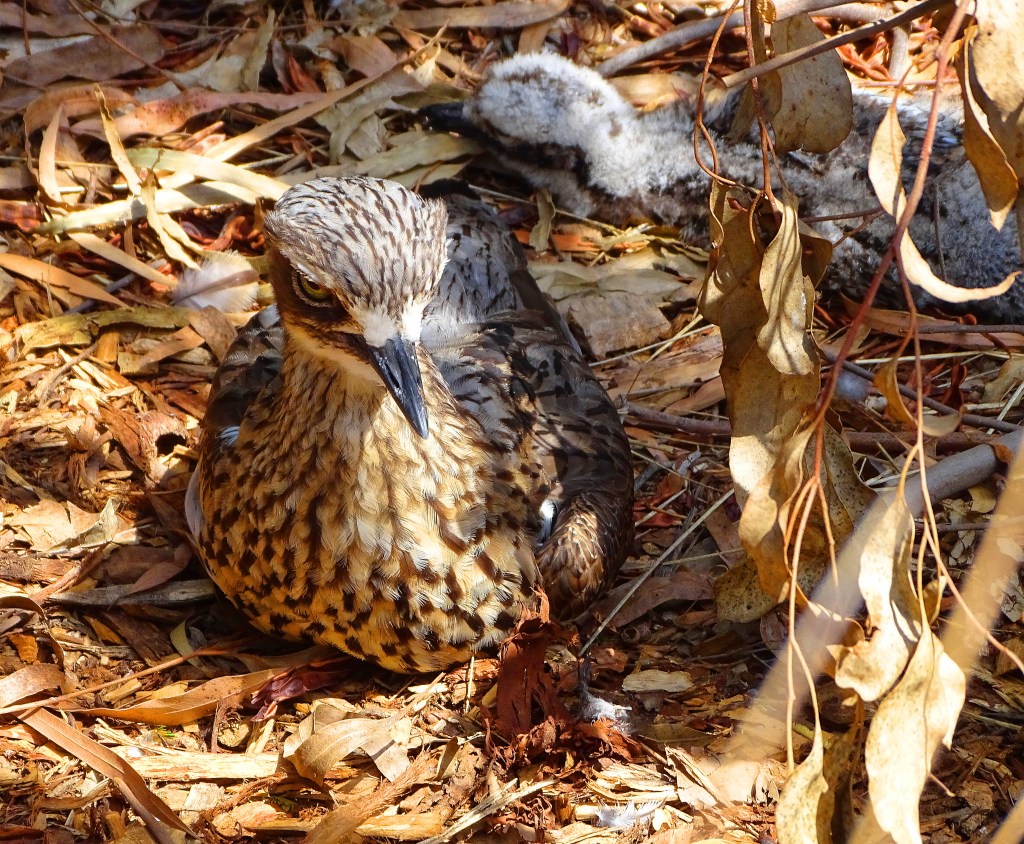
Whose hiding here?
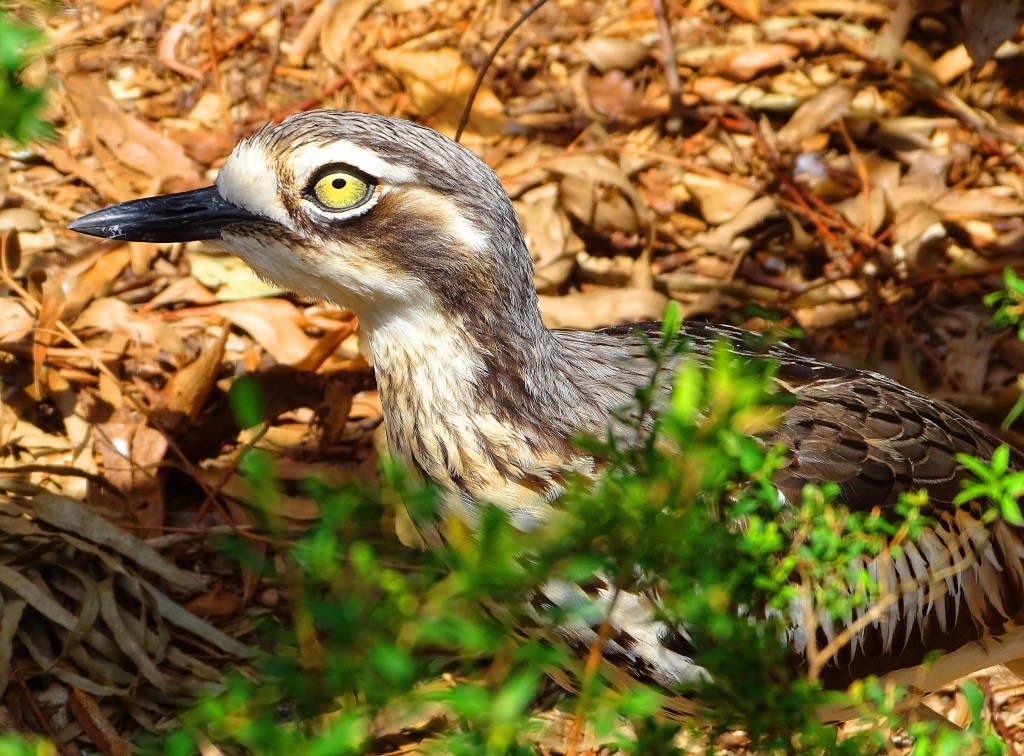
A mama curlew and her chick, that’s who! (You can see the camouflaged chick in the first photo in the upper right if you look carefully).
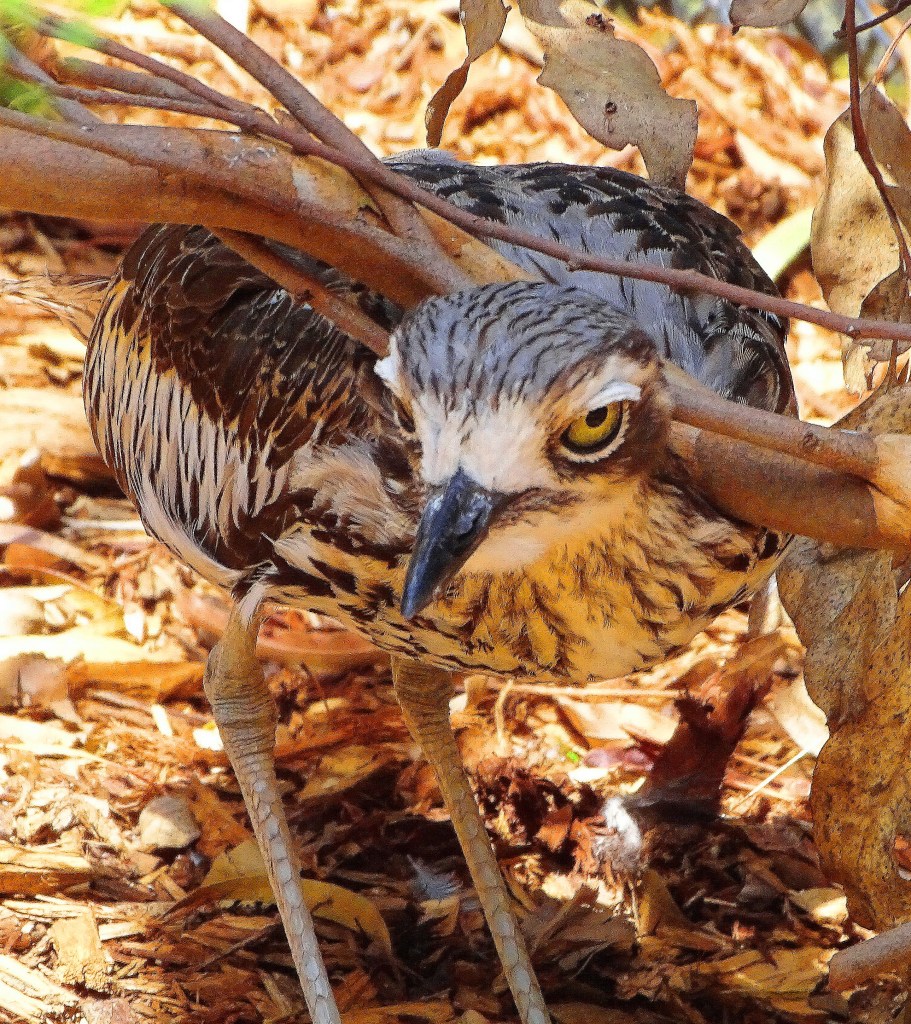
Mama quickly proceeded to lead me away from her chick,
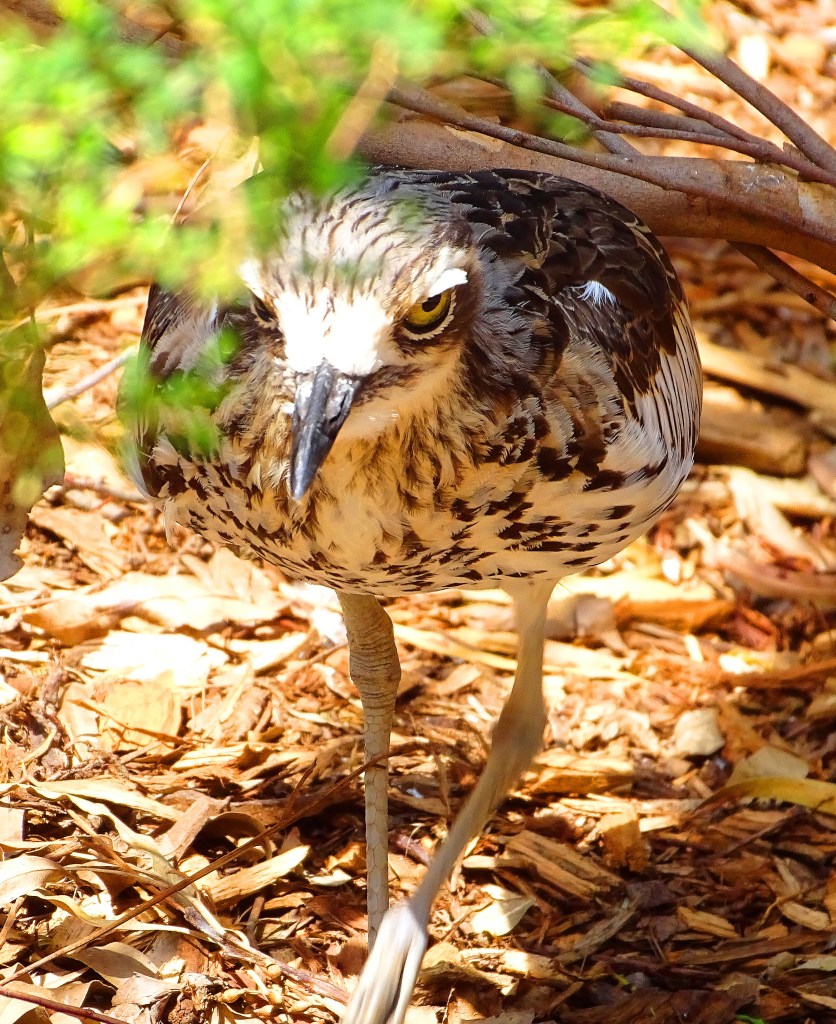
like a good protective mama bird.
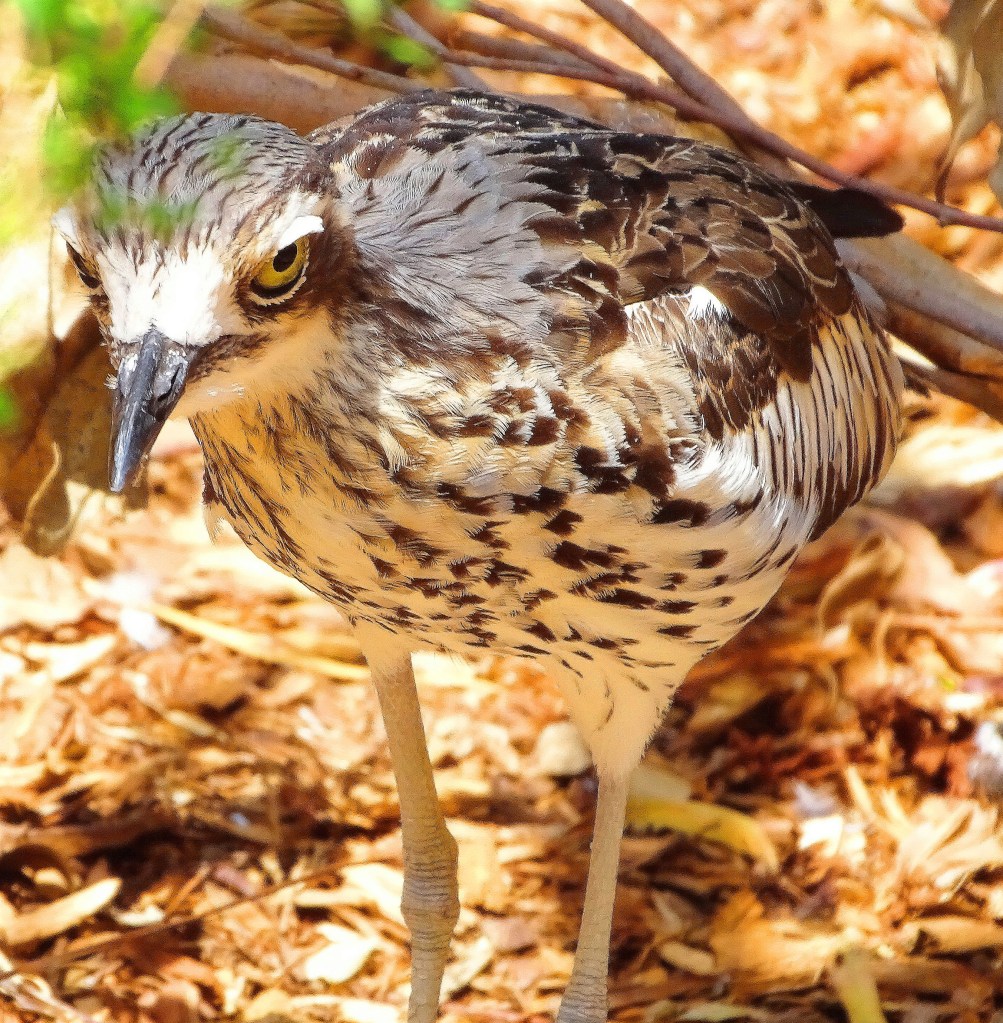
Bush Stone Curlews are ground dwelling, carnivorous birds native to Australia. They can fly, but rely on concealment to evade predation.
Cheers to you from the clever, camouflaged, curlews~

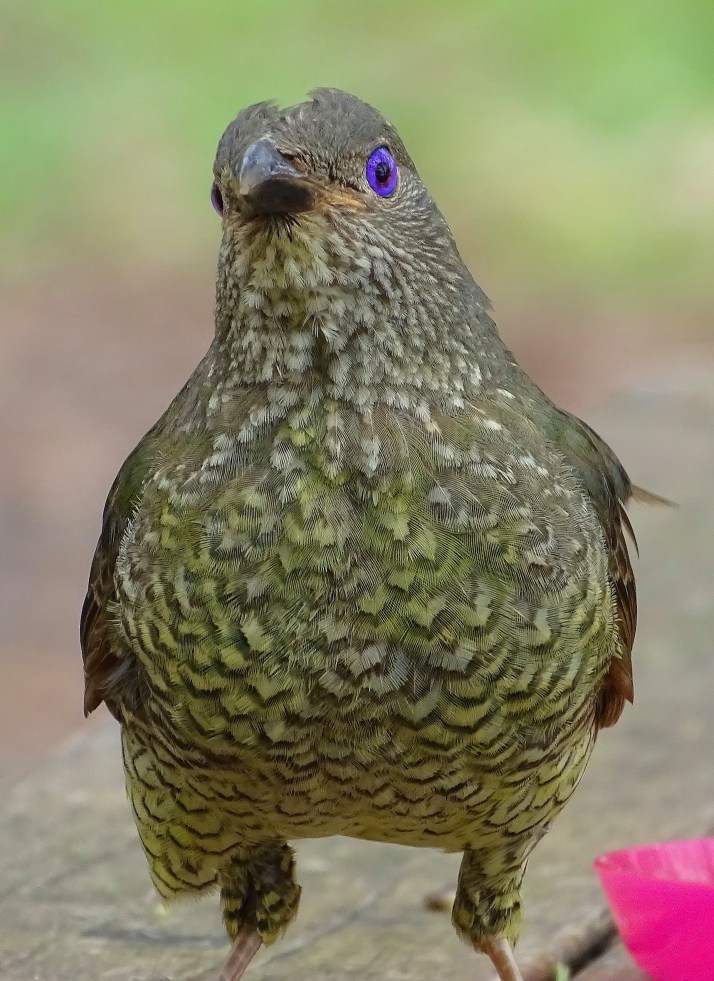
Satin Bowerbirds are native to Australia. The birds pictured here are females. Males are dark black, but have the same startling blue eyes.
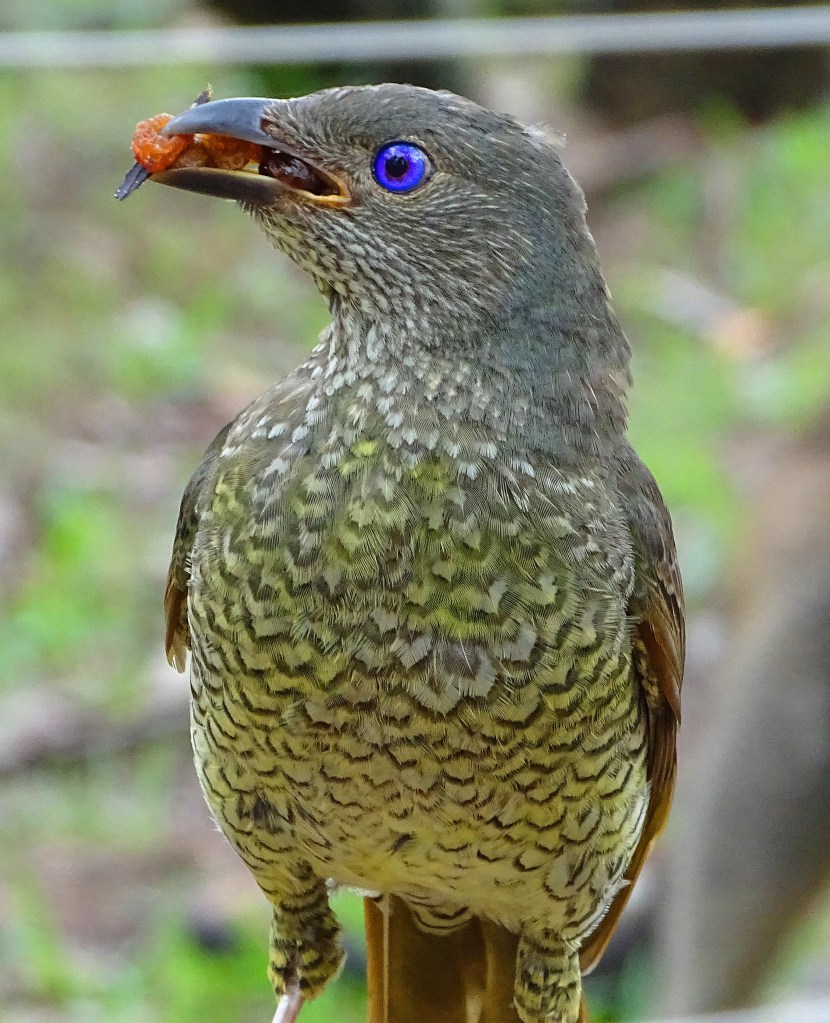
Bowerbirds are named after the elaborate stick structures called bowers that males build to attract a mate.
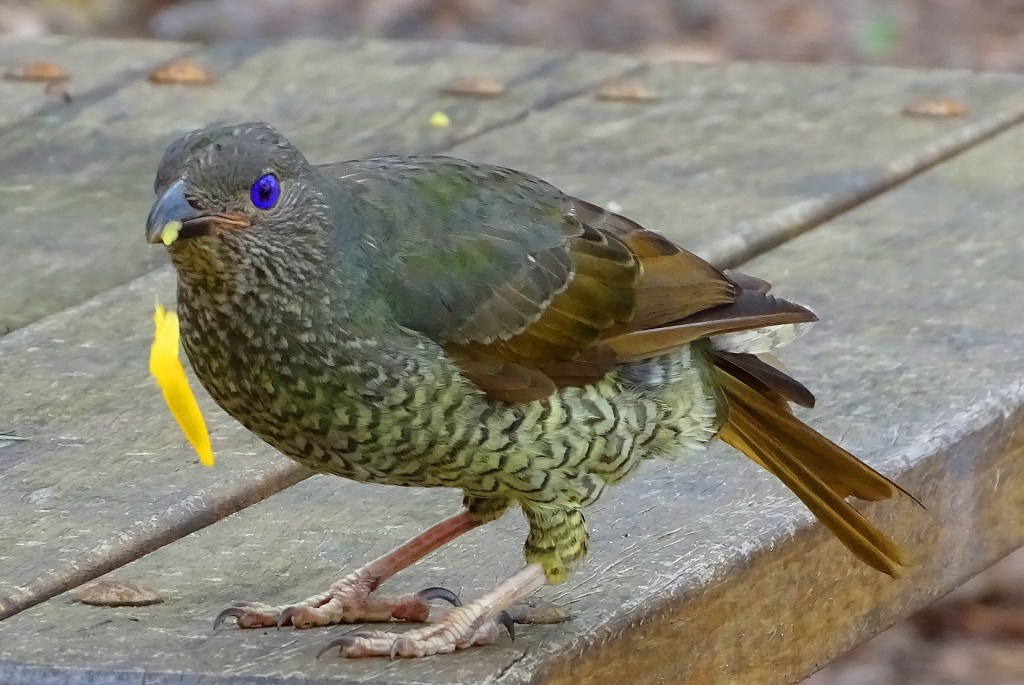
They use found objects, to decorate their bowers, the flashier and bluer, the better!

Females inspect the bowers, while the males dance near them, and females choose their mate based both on the dance and the bower.

Bowers are decorated with anything colorful the birds find, like pens, buttons, blue plastic, blue balloons, blue bottle caps, blue feathers etc. There have a definite preference for blue colors that match their eyes!
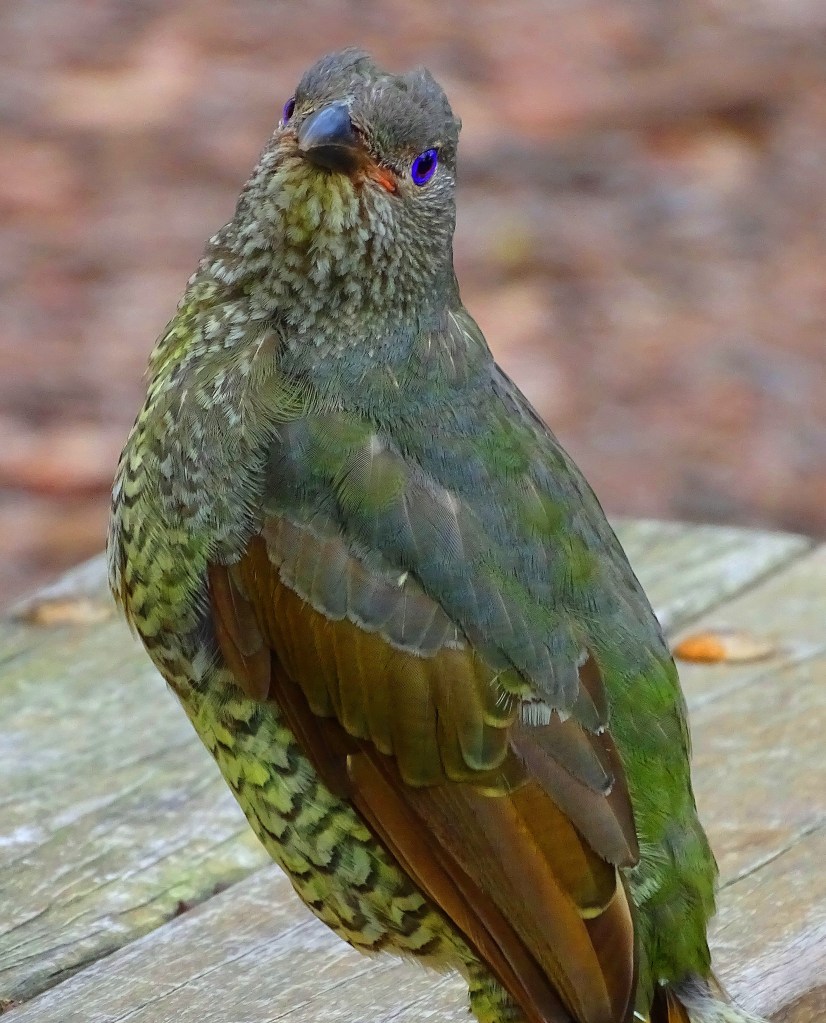
I am impressed with any guy who will not only build a house for his mate, but shop till he drops to decorate it, and dance for her too!
Wow!
I didn’t find any bowers in Australia, but here is an image of a bower that I found on The San Diego Zoo’s website.
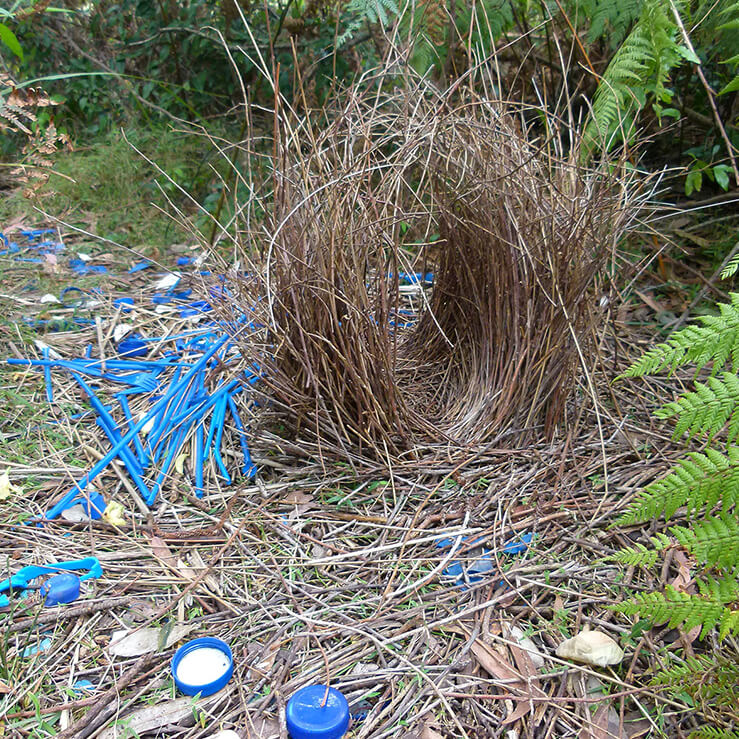
Photo Source: San Diego Zoo.org
Cheers to you from the lucky female Australian Bowerbirds~

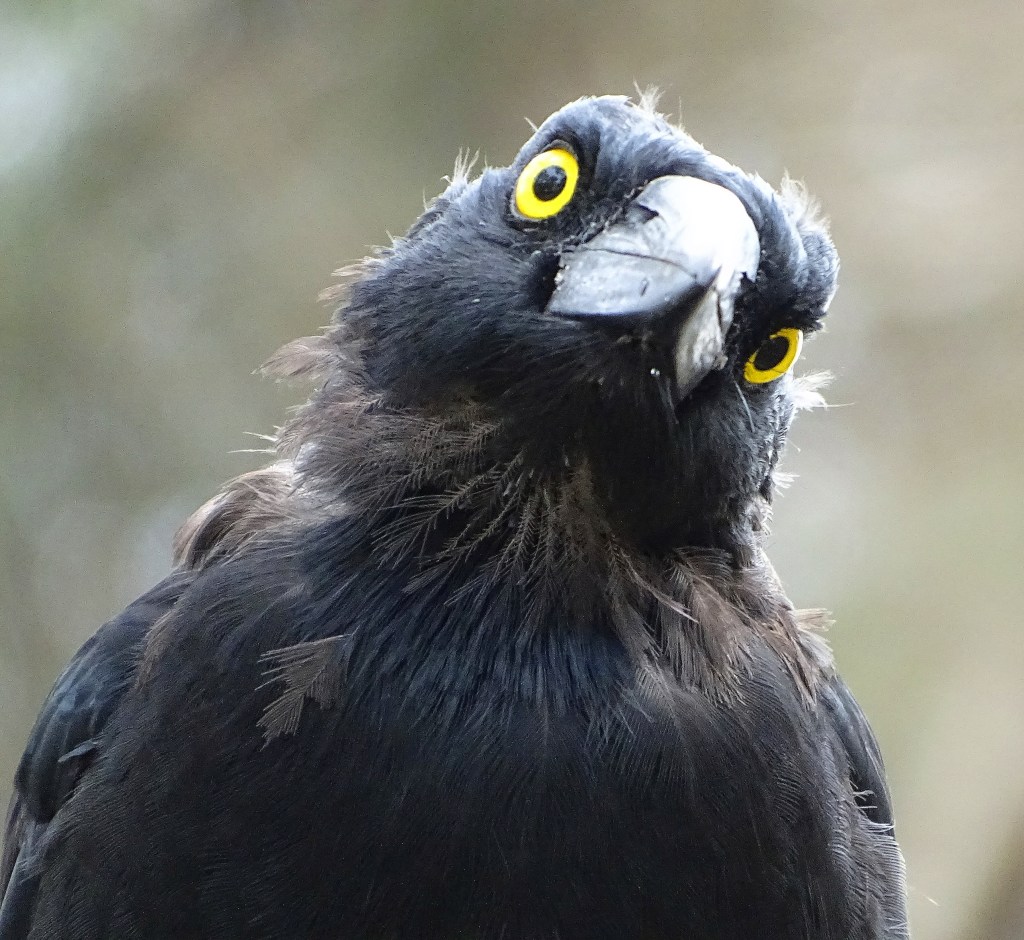
I know just how this bird is feeling.
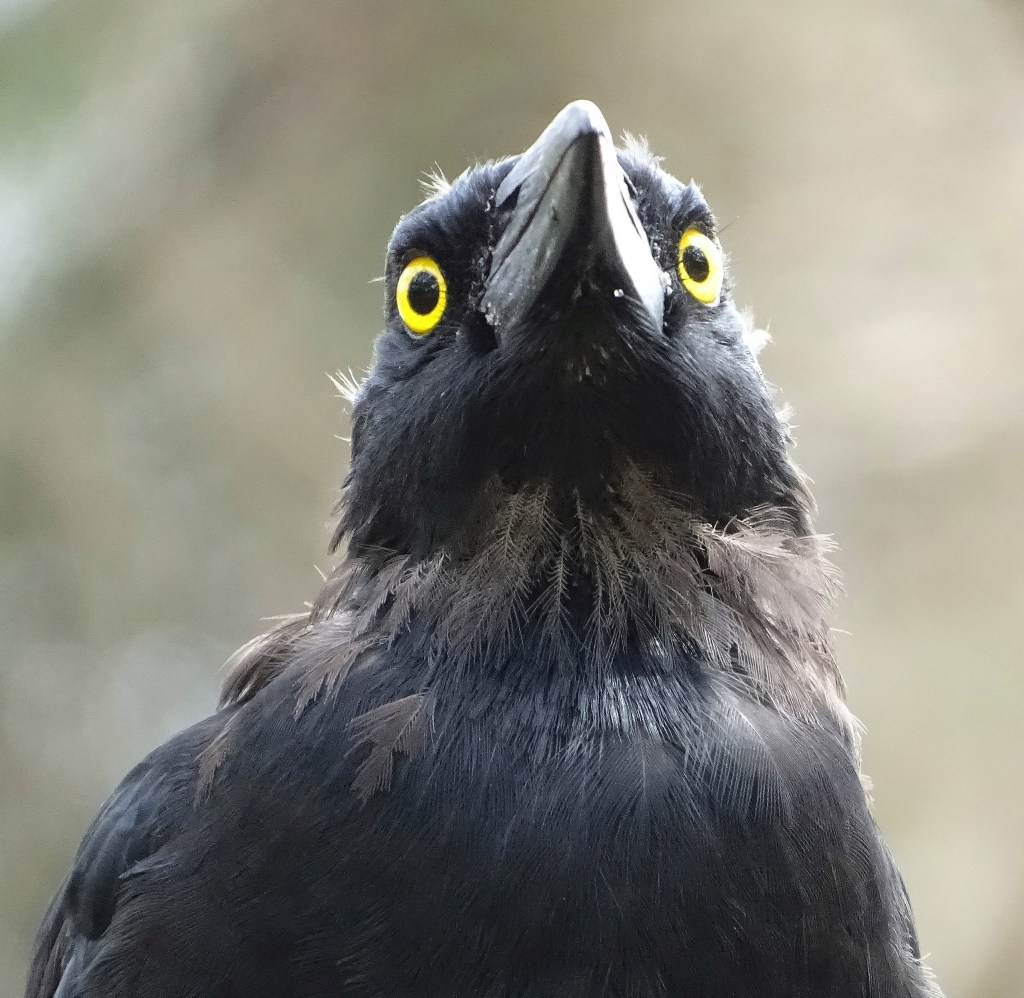
This is my face after reading the news.
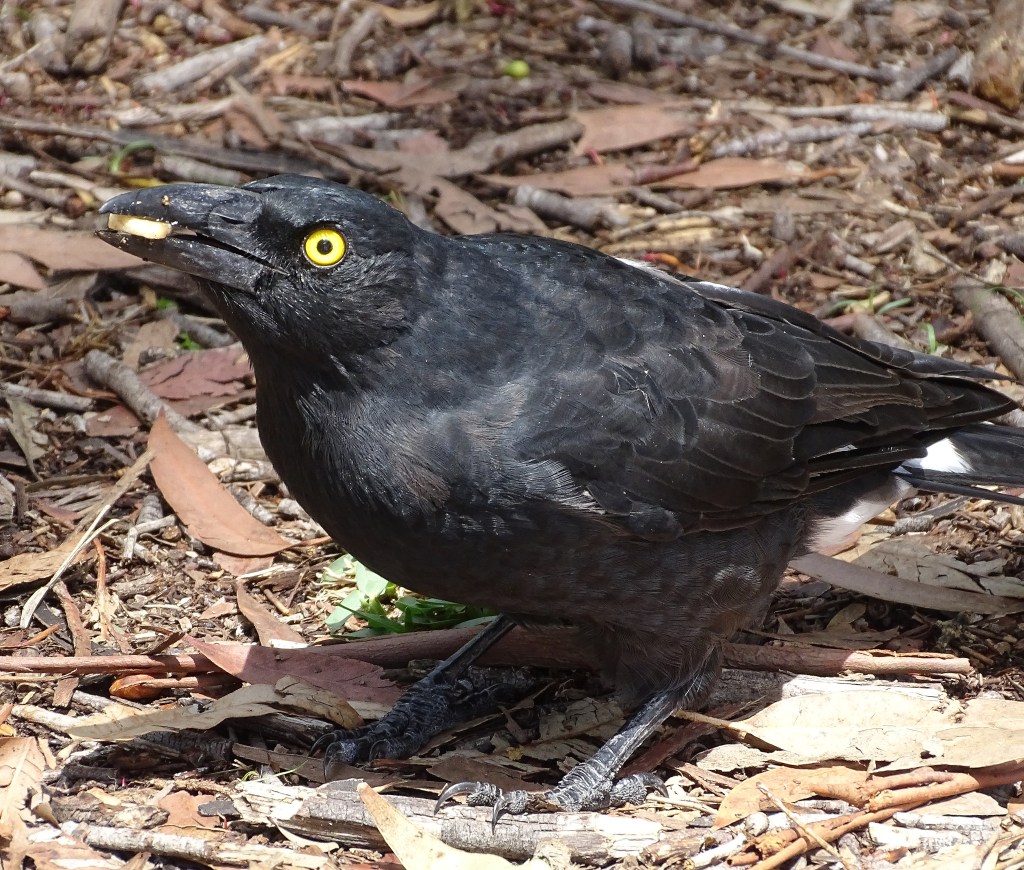
I also relate to the stressful snacking,
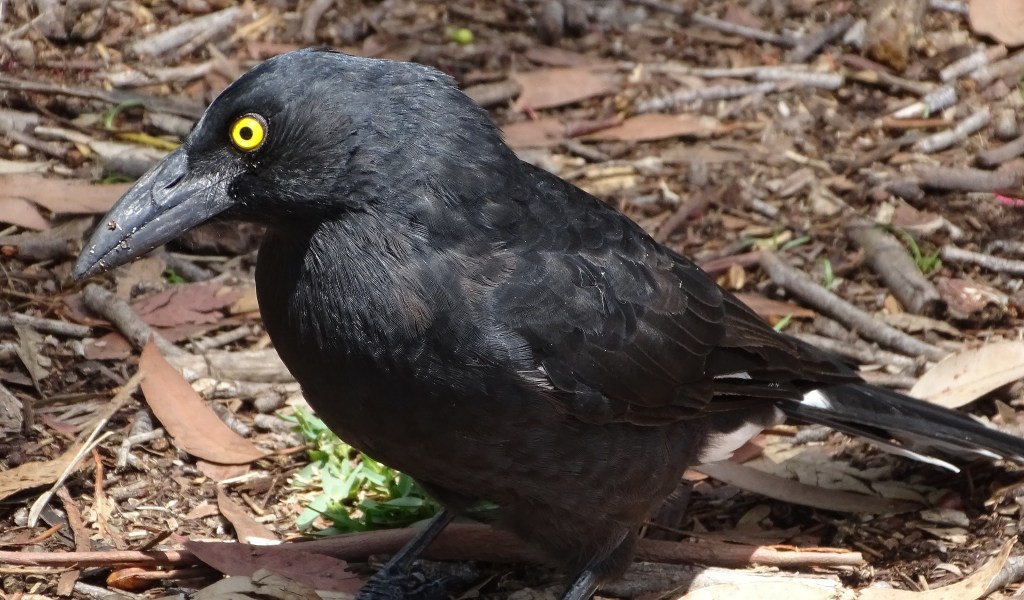
and that guilty look afterwards.
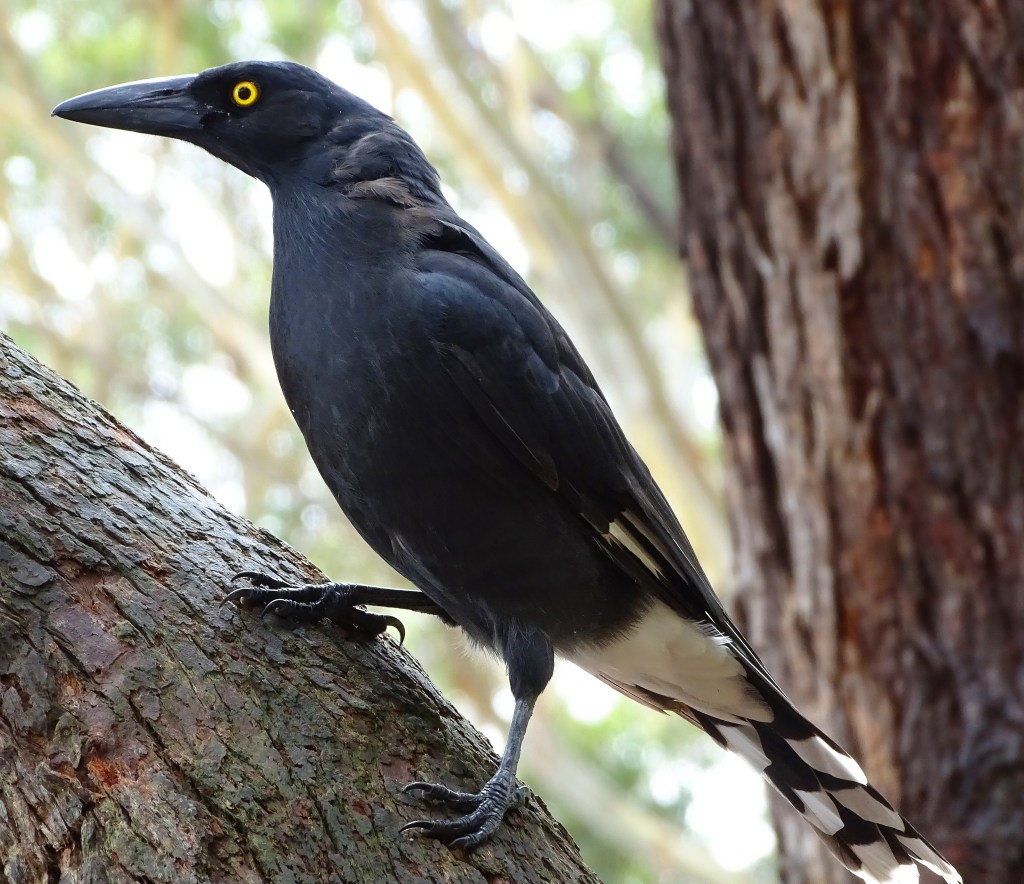
Birds seem to always understand us.
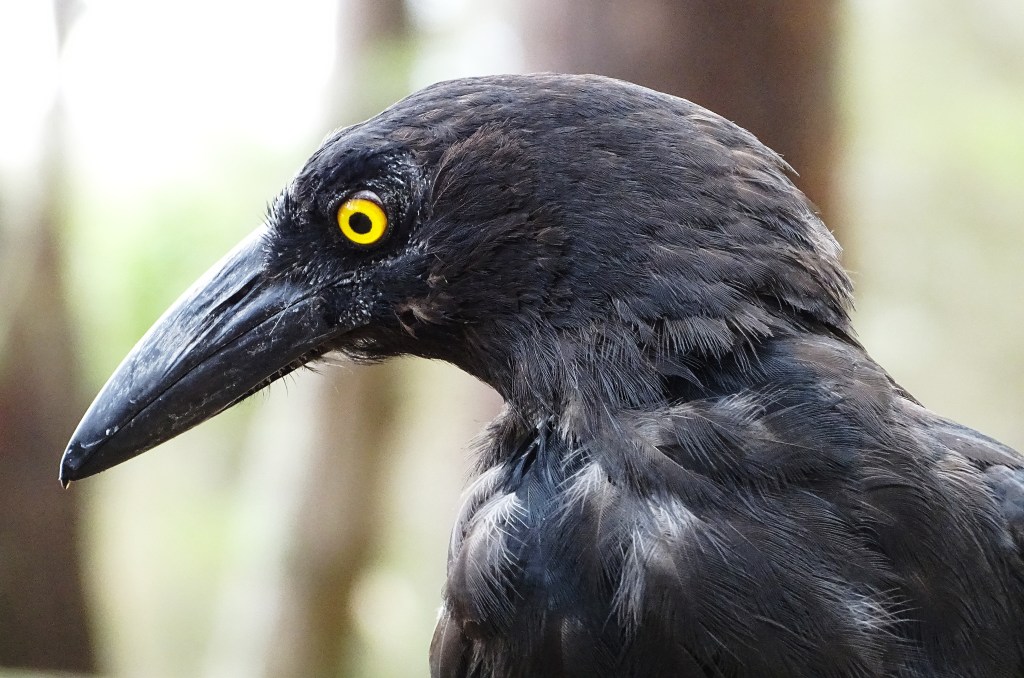
Hope these guys bring smiles and cheers, to you, from me at The Holler~
Note: Pied Currowangs are omnivorous birds from Eastern Oz.


In the last two posts we started filling our anxiety busting toolbox and we are now down to our final three tools.*
Thank you to all the bloggers who added their own personal tools that work. They are most helpful and are incorporated into our toolbox. Choose any tool(s) that might work for you, and discard any/all that are not a good fit. Add more of your own resources that work. Adapt your toolbox to suit yourself. The most important thing, regardless of the specific tools, is to have tools in your awareness, to improve your mood, and ease your anxiety, when bad things happen.

Here is our toolbox:
ANXIETY TOOLBOX:
Self Talk Reframing (Cognitive Therapy)
Guided Imagination/Visualization
Exposure Management
Progressive Relaxation
Distraction in Action
Self Soothing
Second Voice
Spiritual Meditation/Prayer
Exercise, Diet & Good Health Practices

SECOND VOICE
Carl Jung emphasized the importance of paying attention to our inward self and inner voice and felt that, “engagement with the inner voice is pursued not as a form of inner housekeeping, but rather in the humble service of the development of a relationship with an intelligence present within us but greater than our own. Committing to that service means relating more deeply to our inner nature; its only end-goal is the whole-bodied, whole-hearted, full blossoming of who we really are.”
https://themindunleashed.com/2015/12/five-ways-carl-jung-led-us-to-the-inner-life.html
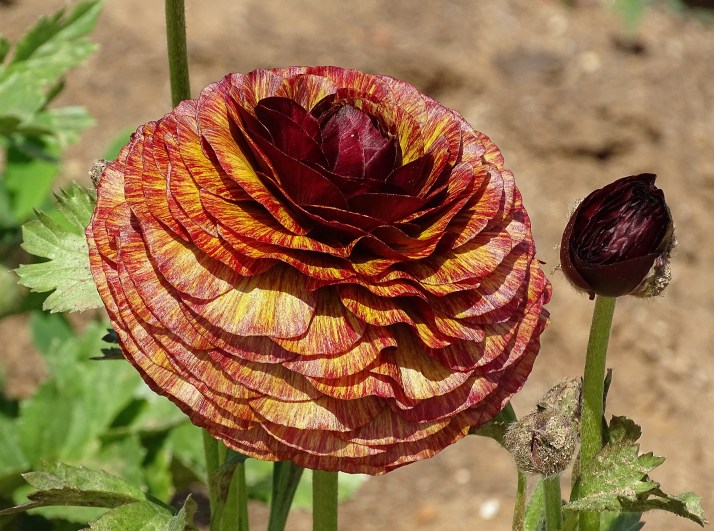
I wait for, seek out, and listen to my ‘second’ voice, which is often corrective, more helpful, and more calming to me, than my first immediate thought. If this makes any sense to you, try it. When an event occurs, and you have an immediate thought about it, pause, ask yourself, “is this right?” Your second voice may well chime in giving you a more helpful and accurate option. The more you practice listening for your second, more rational thought, rather than accepting your first immediate impulsive thought, the better you get at doing it. Jung felt that our inner voice was direct communication with the collective unconscious, hence the Divine.
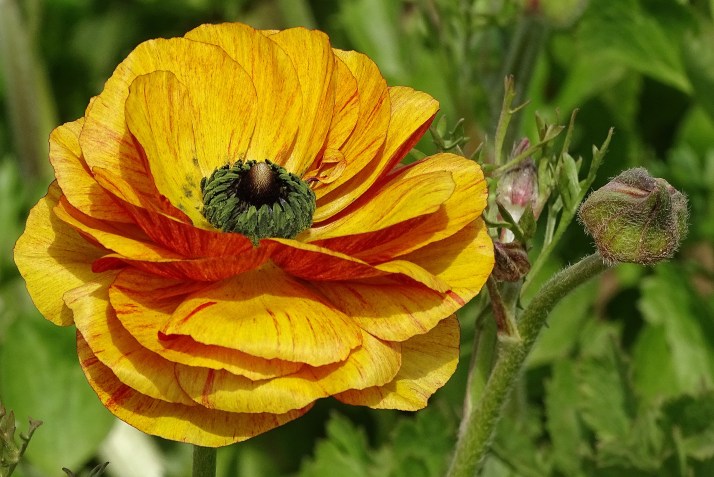
SPIRITUAL MEDITATION/PRAYER
Taking time each day to clear your mind of worries and concerns by focusing your attention on the bigger picture is immensely helpful. There are many ways to do this. Prayer and spiritual meditation are methods for connecting ourselves to the greater whole which is profoundly comforting. This spiritual connection can be reached through independent or group prayer, formal or informal meditation, religious or spiritual practice and study. Immersing oneself in nature helps us feel comforted, part of a grander design. Exercising creative pursuits and talents help us feel spiritually connected. The idea is to take time daily for spiritual retreat and connection, eliminating all the noise, chaos, and negativity of the temporal world.
These practices encourage us to fully live in the moment and feel gratitude for being alive. In times of serious stress like a pandemic, turning inward spiritually, connects us outward, bringing calm and comfort. And now that most of us are isolated, finding a way, remotely to be of service and help to others, could never be more important.
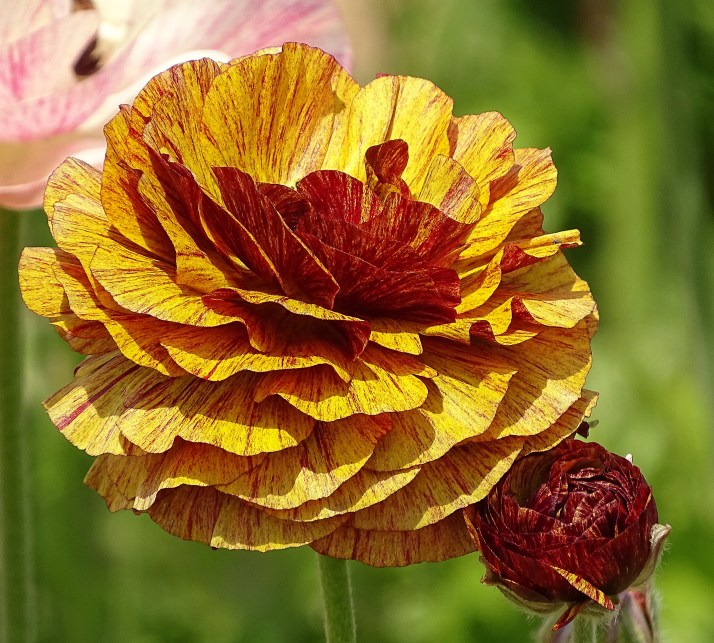
EXERCISE, DIET & GOOD HEALTH PRACTICES
We all know the importance of exercise, a healthy diet, hydration, plenty of sleep and rest, in maintaining our physical health. These practices boost our immune system and improve our emotional and psychological health. This becomes more important when we are under sustained and serious stress. As part of your health plan don’t forget to have fun. Be creative about fun, include daily relaxing, distracting, and fun activities, that you have more time for now that you are home. Don’t forget to enjoy life, after all, it is passing, and you are living, now.
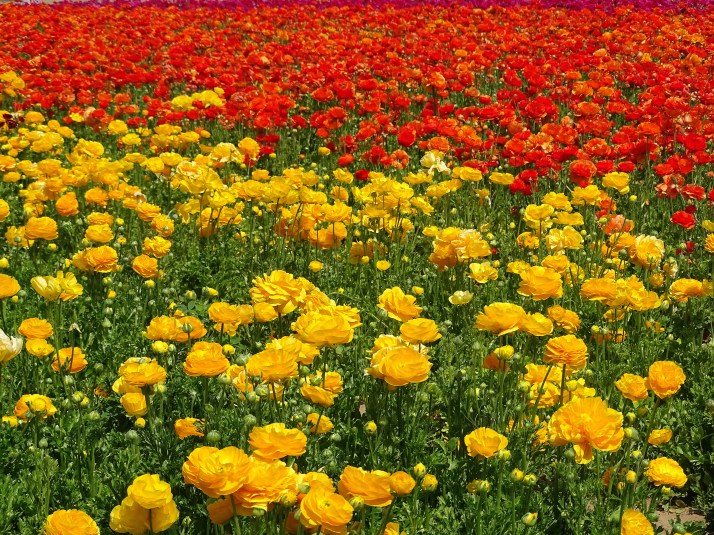
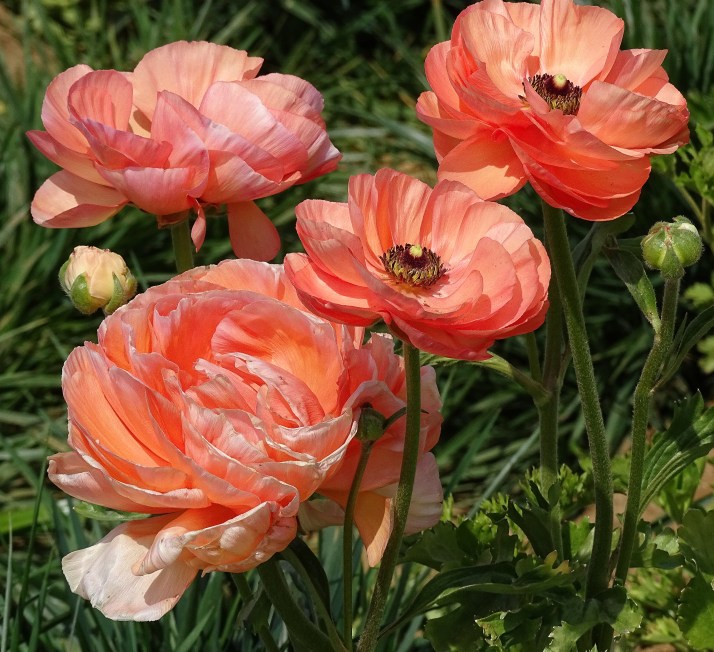
Cheers & calm to you, from me, at The Holler~