
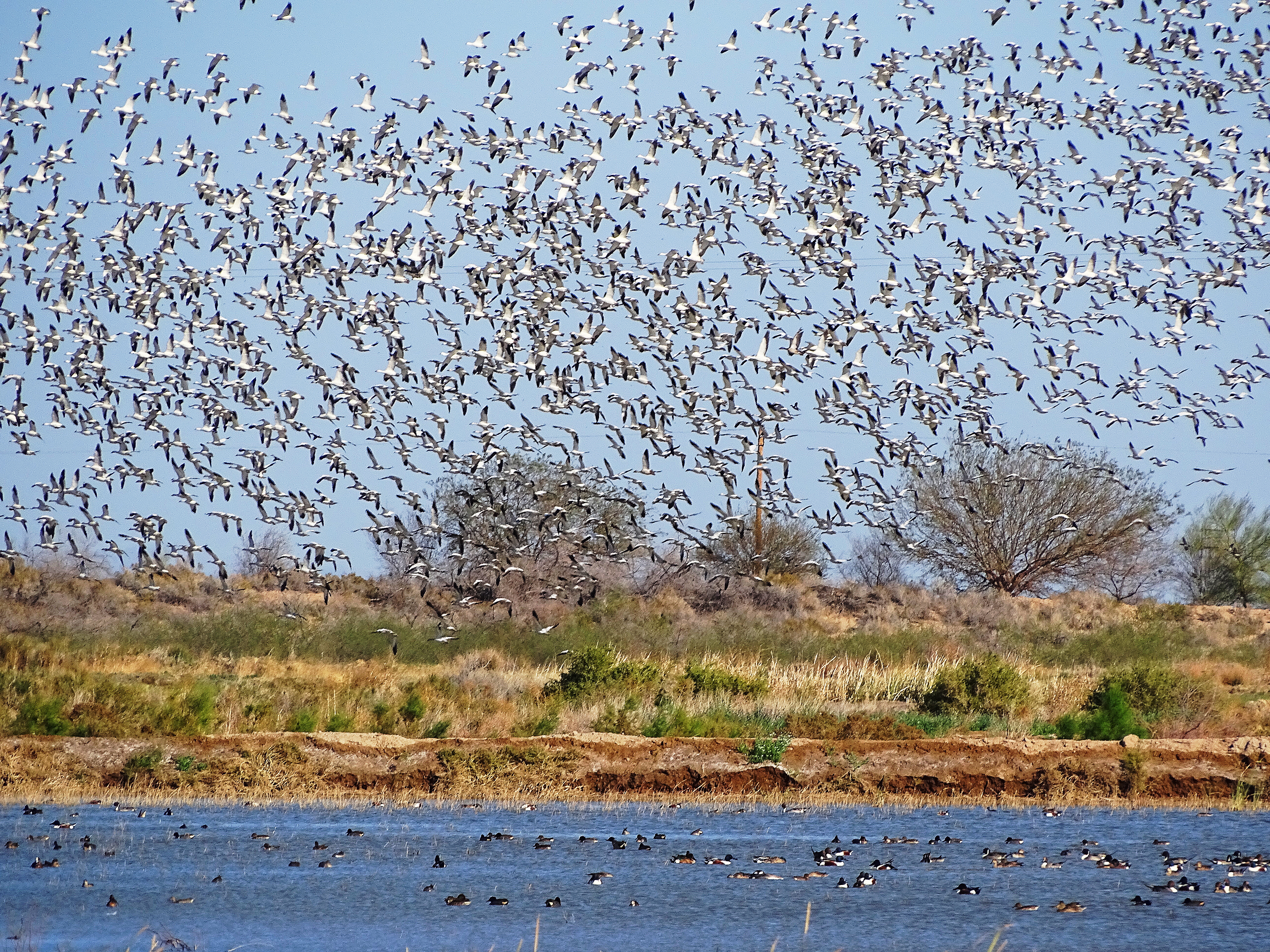
The Salton Sea near Anza Borrego Desert in Southern California is one of the crucial wetland stops on The Pacific Flyway for birds migrating between Alaska and Latin America.
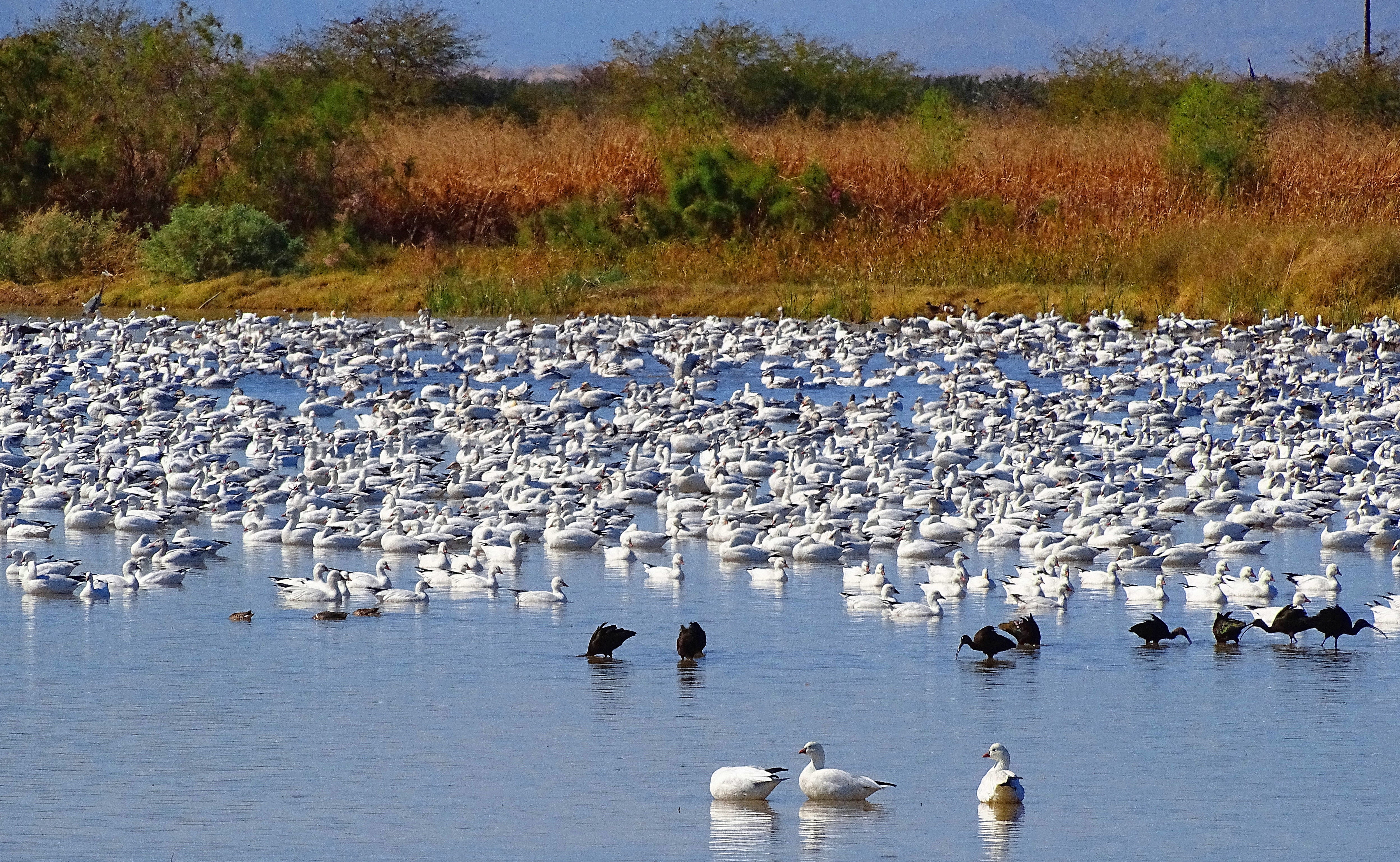
6 million birds rest here every year. (Snow Geese, Glossy Ibis)
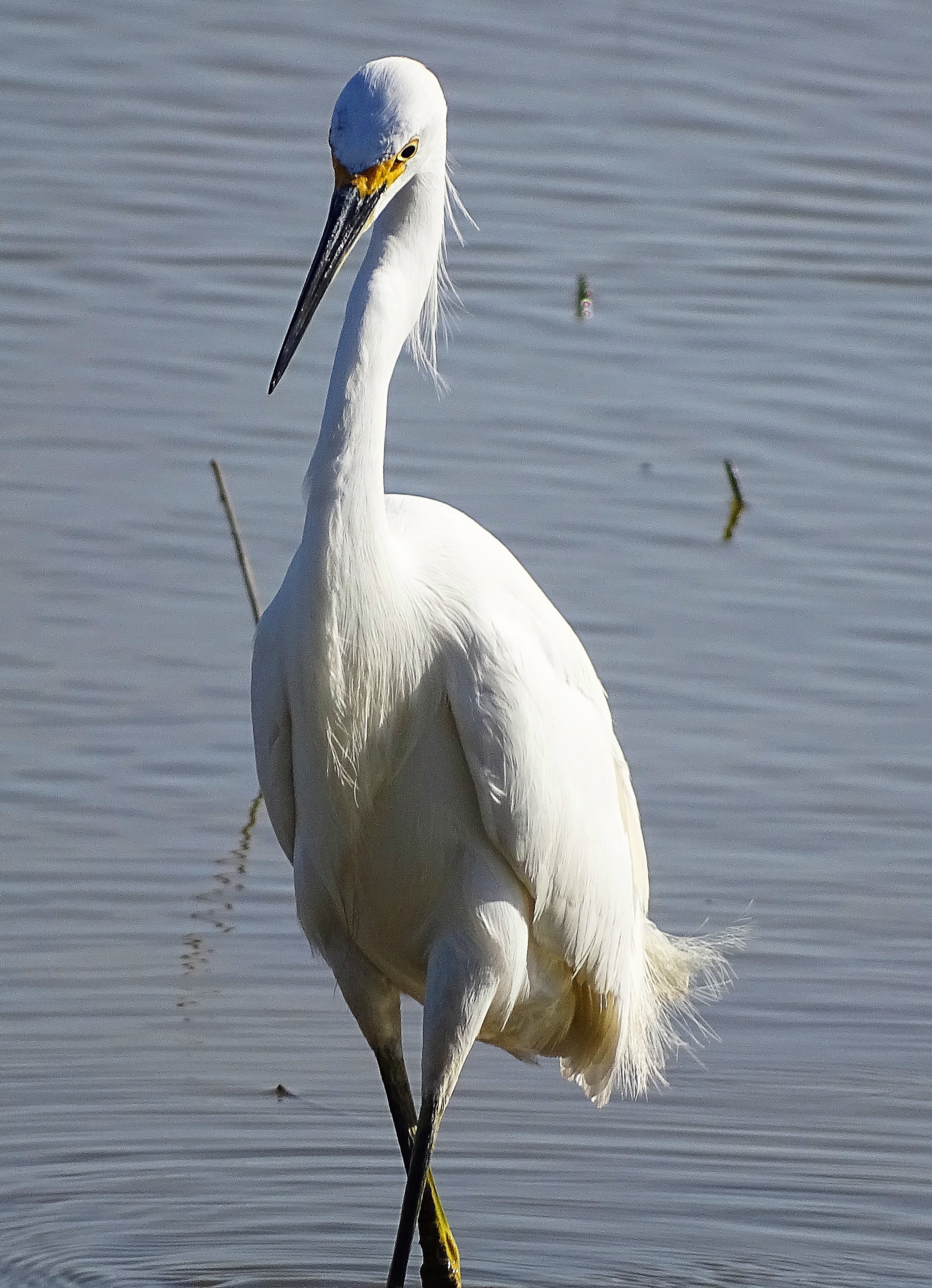
424 different bird species have been counted at The Salton Sea. (Snowy Egret)
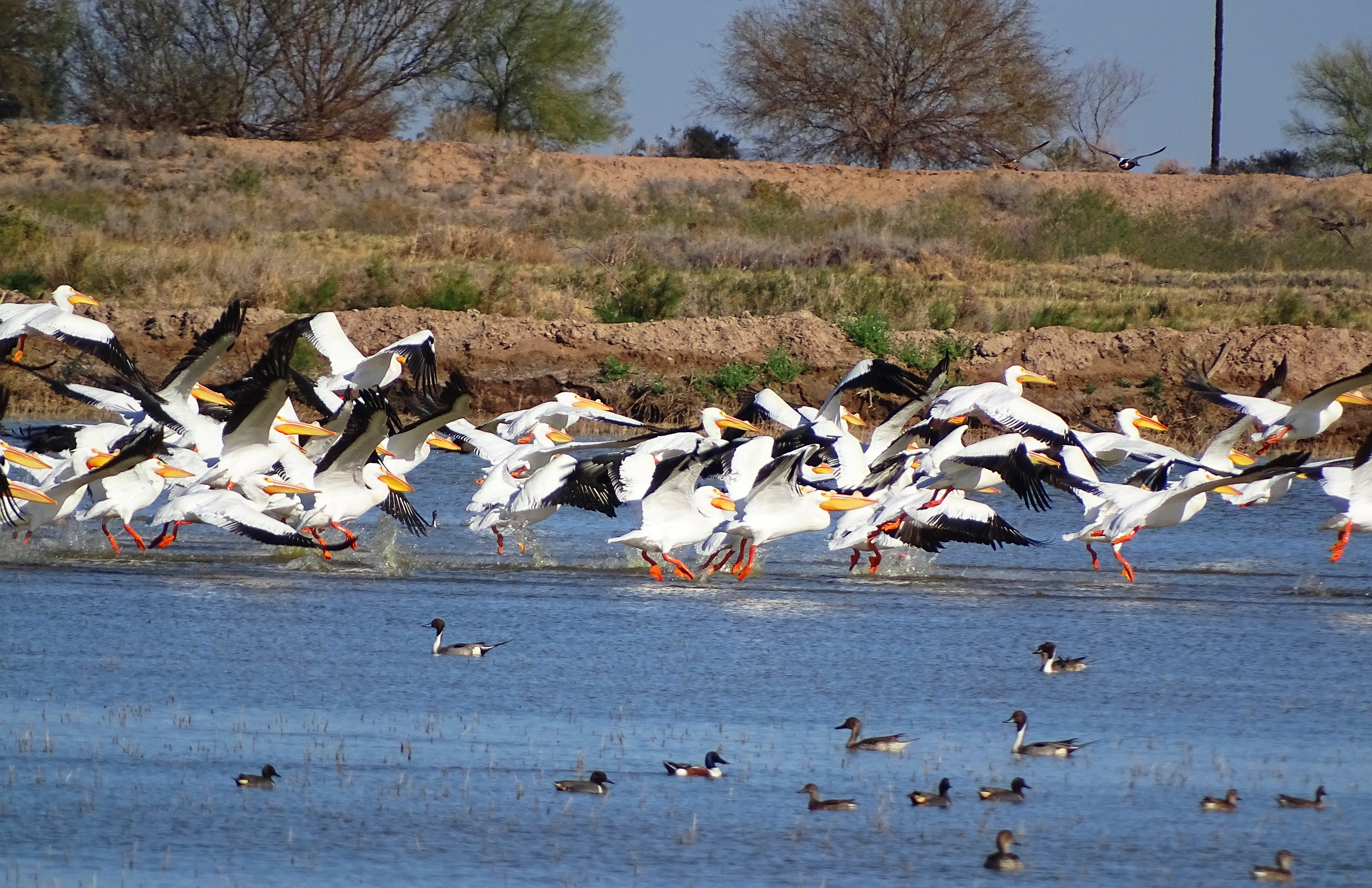
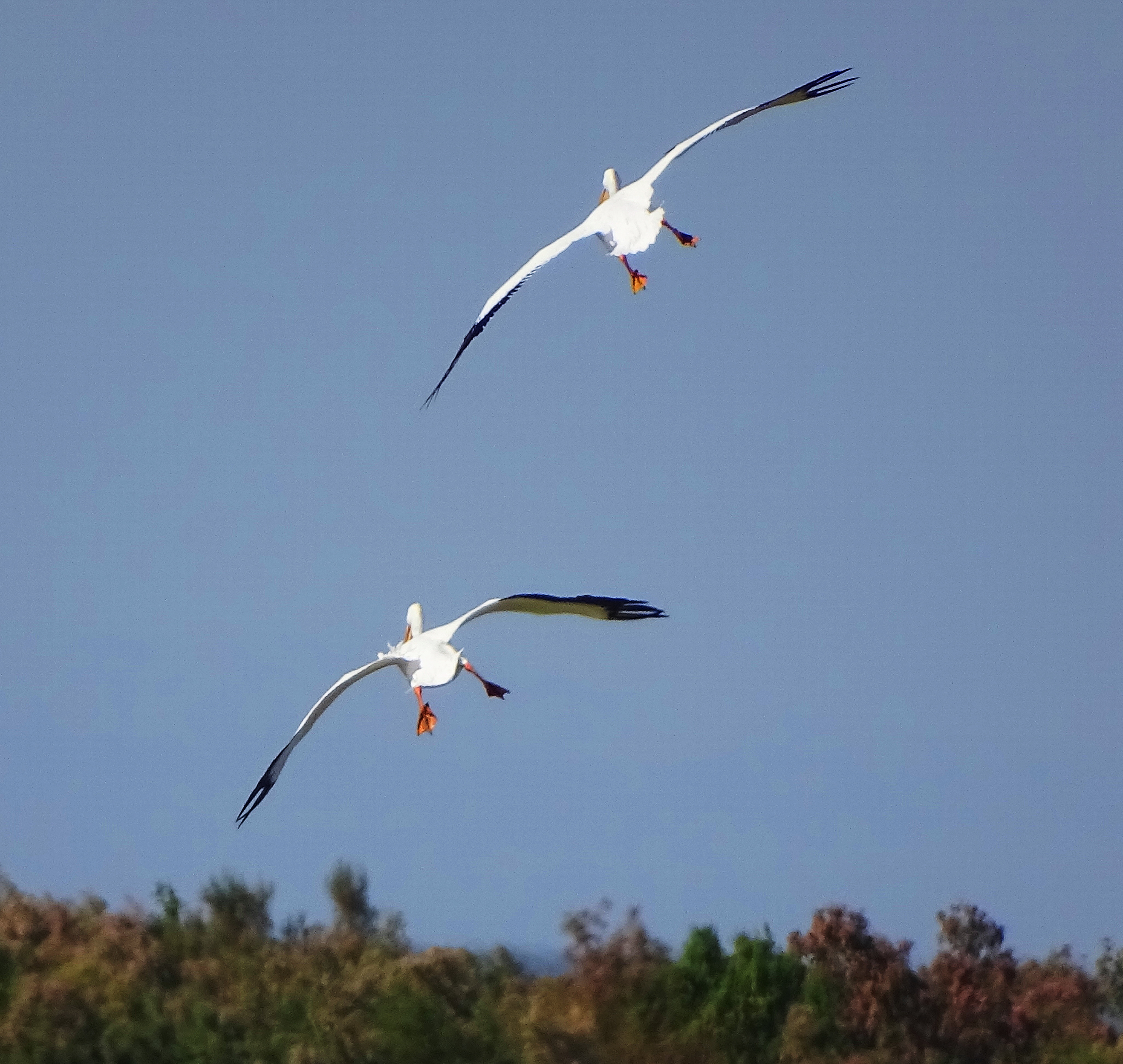
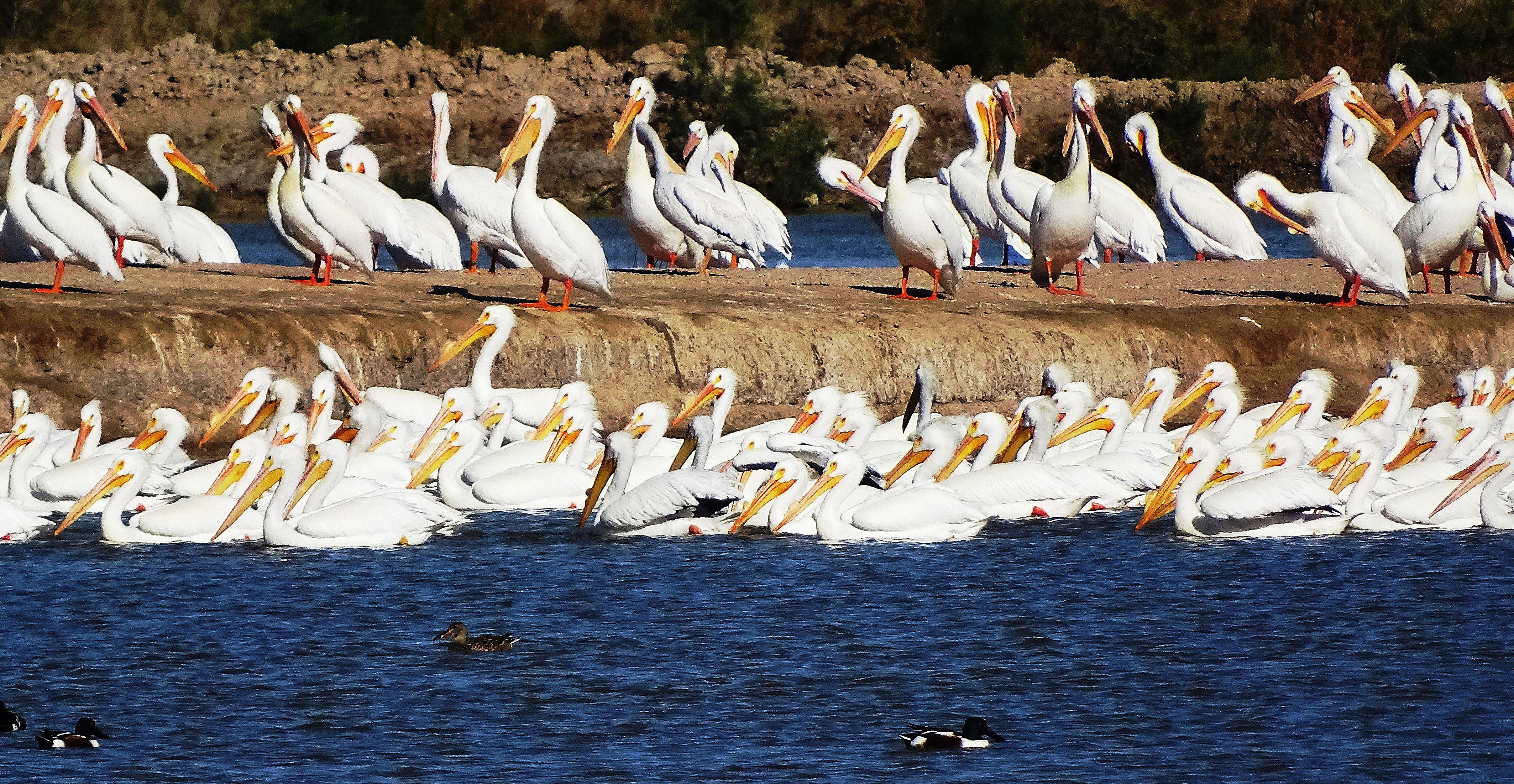
San Diego County hosts more than 500 different bird species, more than any other location in the continental United States. (White Pelicans)
The Salton Sea sits 228 feet below sea level, its salinity percentage is greater than The Pacific Ocean, and it is California’s largest lake.
The sea has been steadily evaporating for the past fifteen years, and this evaporation is accelerating due to Southern California’s prolonged drought.

If the sea evaporates, 6 million migratory birds could be brutally affected. (American Avocet)
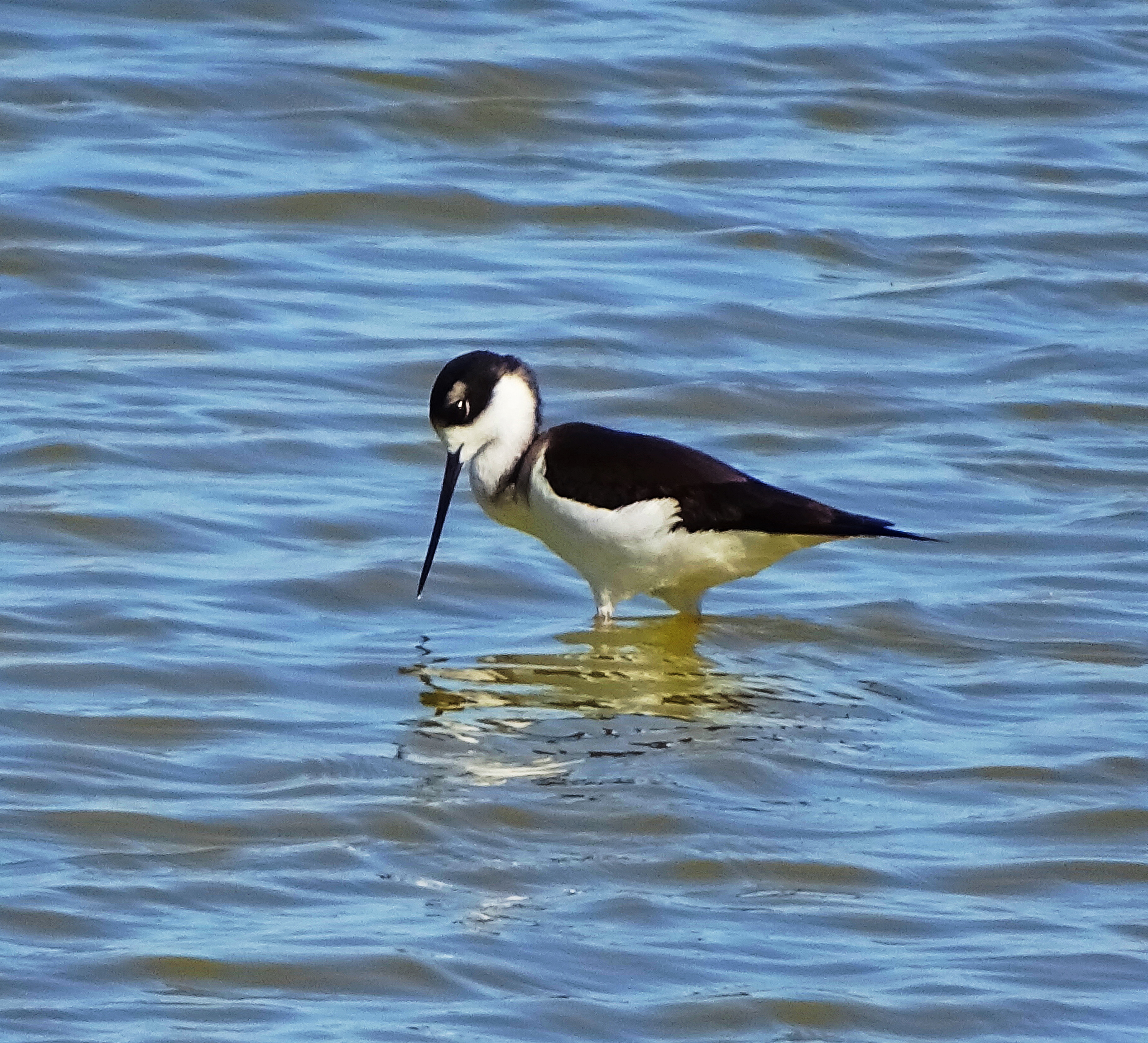
90% of California wetlands are already gone! (Black-Necked Stilt)
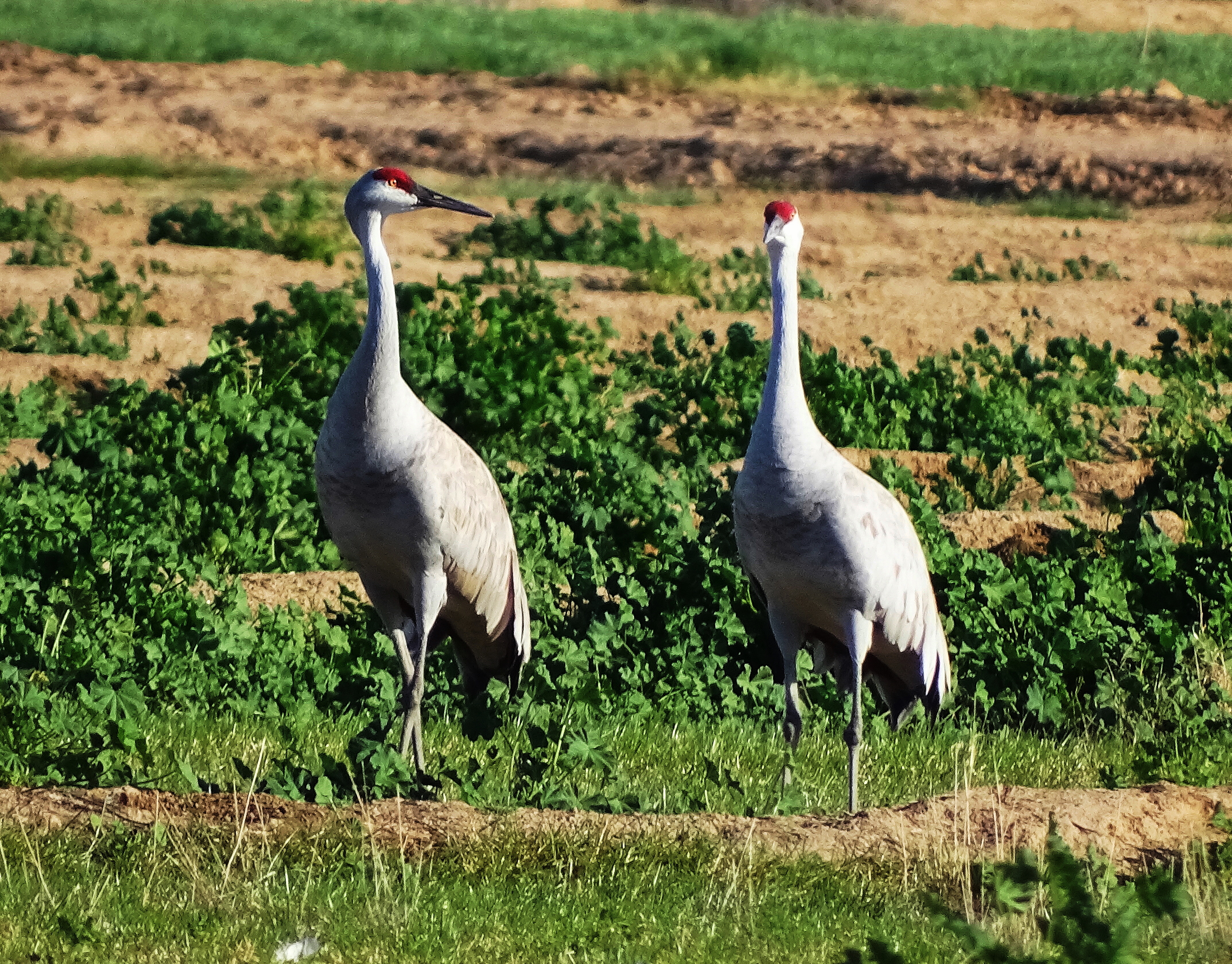
95% of the US population of Eared Grebes rely on The Salton Sea, as well as 90% of White Pelicans, 50% of ruddy ducks, and 40% of Clapper Rails. Several threatened and endangered species also shelter here. (Sand Hill Cranes)
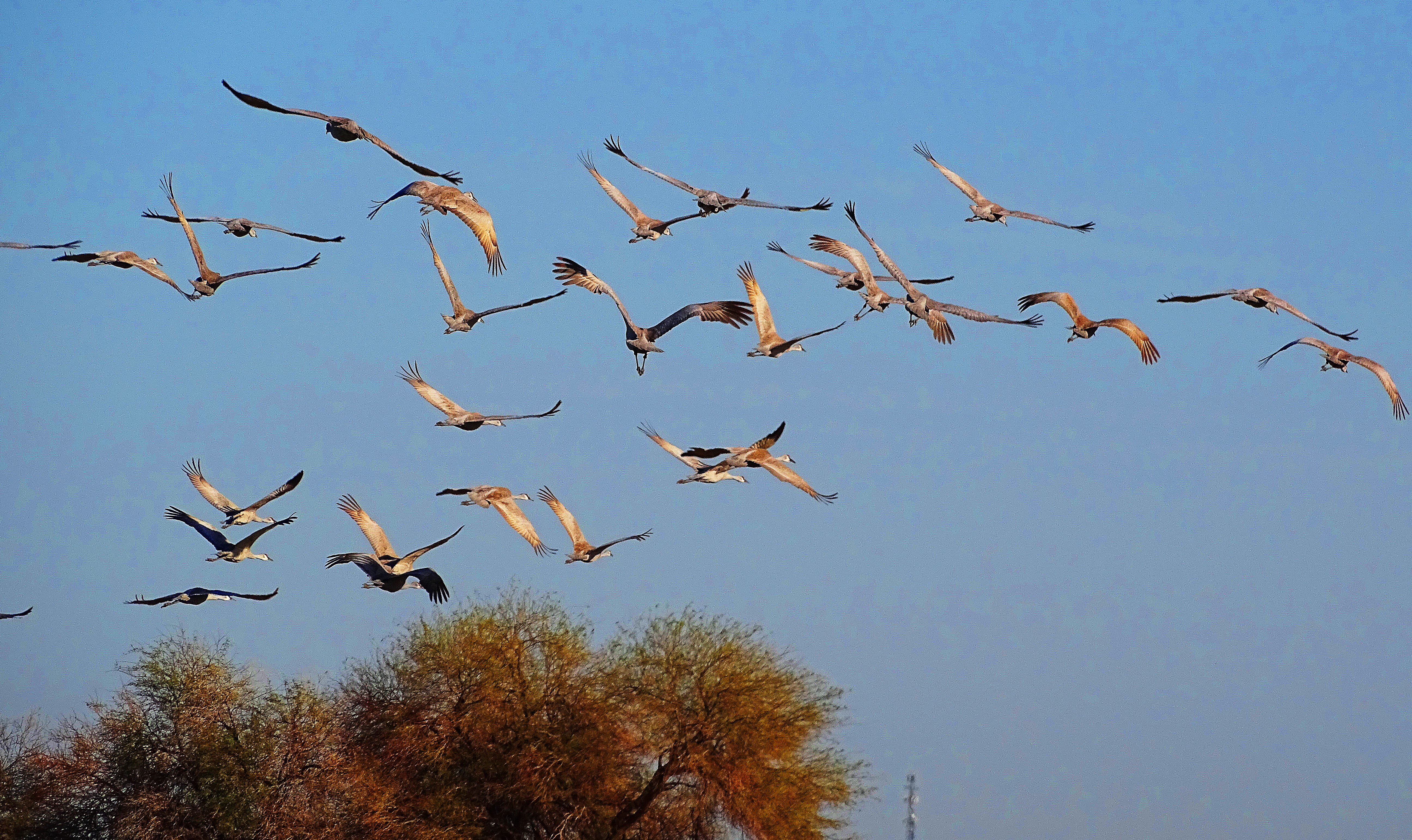
Cheers to you from the millions of beautiful, but at-risk birds at The Salton Sea (Sand Hill Cranes)~
Share this:

Discover more from Cindy Knoke
Subscribe to get the latest posts sent to your email.
These photos are magnificent! 🙂
You are very kind and most appreciated!
It’s terrible that 90% of the wetlands are gone. The builders will have their way. We can only hope for the best. Beautiful pictures, Cindy.—- Suzanne
Yes, you are right on both counts. Sometimes it does feel a bit helpless though doesn’t it?
Enjoyed the photographs, class !!!
Thank you Kenny~
What a glorious celebration of the Salton Sea, Cindy. I love the Salton Sea, and your photos are a great testimony to the marvels of the Pacific Flyway.
Next time you are down this way, drop me a line and I’ll meet you by the birdies! 😉
I will take you up on that Cindy, it would be a pleasure! 🙂
<3
Es impresionante el espectáculo de los miles de pájatos, y las fotos son magníficas. Disfruta de la naturaleza, amiga. Un abrazo y buen finde. <3
Estoy feliz te gustan los pajaros mi querido amiga. Gracias y que tengan un fin de semana maravilloso. Abrazos y besos~
Wonderful scenes of all the birds at the wetland stopover. It is so important now to protect the remaining wetlands. My current quote has the lines of a poem that Ive always loved about letting the wild and wet live and be left. Seems it was disappearing a century or so ago.
Yes, the initial damage that dried up the Colorado and created The Salton Sea happened around 1905-1907, paving the way for mass agriculture and development. We have 10% of our wetlands remaining in California and they are shrinking and evaporating quickly.
Sounds drastic and so short sighted. Keeping wetlands might have helped with droughts.
Yes, good point I hadn’t thought of. Thank you.
Good pics o the birds but I didn’t realise that you had lost such much of your wetlands. That’s very worrying.
When you consider that 90% of California’s wetlands were destroyed, and the remaining 10% are shrinking fast, then you have a potential environmental disaster that cannot be recovered from. Imagine the numbers of birds and wildlife that lost their lives along with the lost wetlands and you get a sense of how staggeringly stupid California’s environmental policies have been for the past 100 years.
It’s very sad, but does look as if there at least attempts to change. Humans seem programmed to play brinkmanship with everything.
Yes, and there are attempts by so many concerned people to change our treatment of the natural world. I just worry it may be too little, too late.
They certainly do and it is pathetic.
Beautiful photos, Cindy. My husband and I were talking about global climate change and how the world is impacted down to the tiniest living organisms. Is that the source of these recent epidemics? As the life-giving water changes, the bacteria changes, the insects, the flora, and the animals. It’s all intricately connected in this global dance of which we are part. We aren’t immune to it and we won’t escape it. I hope the Salton Sea survives long enough for us to figure this out 🙂 Thanks for sharing (and sorry for the mini-rant!).
Yes, your comment is particularly apropos to The Salton Sea. As it evaporates, the salinity and chemical components increase creating a toxic brew. The sea was created in 1907 when The Colorado River was diverted for human use in a series of canals. A canal broke flooding the desert and creating The Salton Sea. Waterfowl used to shelter in the natural marshes and deltas of The Colorado River. These deltas were drained for human use, with some leakage creating the marshes around the perimeter of The Salton Sea. The sea itself is full of pesticides and herbicides from agricultural run off. So Salton Sea was created by human folly and it may well be destroyed by the same process, this time though the birds and animals may have no where else to go.
Sad, Cindy. I hope for the sake of the birds, it can be saved 🙂
<3
Klassefotos liebe Cindy. Deine Reiseerlebnisse und Berichte sind ganz toll, herzlichen Dank fürs zeigen. 🙂 Ernstt
Vielen Dank fur Sie Anerkennung Ernst. Du bist ein wunderbarer Freund. Schones Wochenende! <3
I liked working in El Centro, only because I got to drive by the Sea… A human made sea by the way..
Yes indeed on both counts!
Did you see that ghost town…? We drove our company trucks around the place…
This, since I was a kid, used to be all I knew of the sea. It of course is far more complicated and interesting. Driving around it makes a powerful impression, I know exactly what you mean.
What an amazing place. But how sad that the wetlands are vanishing. Maybe that’s the Lord’s way of bringing some of his creatures home early before things get really bad. Hmm, didn’t mean that to sound as negative as it actually does.
Well, it is a pretty negative situation to people like you and I who love all God’s creatures, great and small~ <3
Beautiful photos, Cindy, but sobering statistics. I hadn’t realized California had lost so much of the wetlands. What a sad state of affairs.
Yes it is sad and not enough people are aware of how important wetlands are to so many wild species.
Thanks for spreading the word with your beautiful photos.
Thank you more for “getting” it. <3
Wow! Seeing the birds in flight makes my heart sing Cindy. I can only imagine the noise!!!
Its so sad that their habitat is in peril.
For a person who loves birds, watching these massive flocks take off is just thrilling. In terms of noise, spectacle and the sheer power of nature, it can’t be beat.
Habitat issues all over our poor planet are very sad.
Swans migrate and stop over in a field in front of my Mum’s in Scotland. I’ve only seen them once, but it made my heart soar!!
Achingly beautiful photos. We just need to eliminate humans and all will be well with the rest of nature.
Unfortunately, history has demonstrated that nature would be better off without us. This is a sad state of affairs because there are so many people who revere the natural world. We just don’t seem to be the ones making the decisions.
Wow! Amazing images… <3
I am happy you enjoyed them! <3
I love to see the migrations overhead here in Omaha, and I’ve experienced some of the Sand Hill Cranes’ passage through central Nebraska, but I would sure love to take in an opportunity to be with so many species in such a rare meeting place. How fortunate you are, Cindy!
I would love to visit Nebraska’s Sand Hills. It is second best to see the cranes here but still a big thrill. They are such magnificent, old world birds. I love to watch them take off and fly. You are correct, if you love birds, these Salton Sea Wildlife Refuges are hard to beat in terms of vast numbers and varieties of species.
Wonderful photos.
Very kind and Happy Saturday~
So beautiful, Cindy! 🙂 Your photos are breathtaking. <3
Thanks and so is your house. I can’t wait to see the finished result!
Liebe Cindy das sind ja wieder so schöne Fotos super fotografiert ein sonniges schönes Wochenende wie hier das wünscht die Klaus in Freundschaft
Glucklich Samstag mein lieber Freund Klaus und ich danke Ihnen sehr!
What beautiful creatures! Wish we could ship you some of our excess moisture so their habitat can be replenished!
You have no idea how many times I wish this when traveling to places that actually get rain! <3
Such beautiful birds and so many if them! ☺
It is amazing to see them in the thousands. They have a grandeur. Hope all is well with you and wolf child~ <3
Another poetic journey. I am an avid bird watch. Water birds are some of my favorite. We live in Florida and I am fortunate enough to see a few whenever I go to a doctor’s appointment. And, sometimes, I’m even able to snap a photo! 🙂 Thanks again Cindy!
Floridas birds mesmerize me. We will be there for our annual visit in April. I am particularly fascinated by the wild parrots. I am glad you get out to see the birds and snap some photos Nancy. Cheers to you~ <3
Wonderful photo series, I love to see the birds migrate…
Yes it is an incredible sight to see~
Wishing them a safe summer! It is a tragedy that their habitats disappear.
That is just what it is, a tragedy.
Incredible scenes here Cindy ~ the first show is simply a sky of feathers, amazing. The Sand Hill Cranes shot is spectacular ~ what a great way to spend a day.
Yes, it is an amazing experience to see so many different species in such huge numbers~
Wonderful, these images are inspiring.
Your comment just inspired me! Thank you~
Funny how that works : )
Yesterday I found a beautiful dead bird outside, it hit the window and never recovered. I guess, i must do something against window collisions
This is a huge problem at The Holler because we are on top of a mountain, and have so many windows and wild birds. Here are some ideas to prevent bird strikes that may help:
https://www.allaboutbirds.org/why-birds-hit-windows-and-how-you-can-help-prevent-it/
Love, love, LOVE the photos. Makes me want to go, to see it for myself 🙂
I hope you do go, get prepared for the fact that much of the area around The Salton Sea looks like a post-apocalyptic wasteland and don’t let this deter you. Head to the Sony Bono National Wildlife Refuges. You can stay in Borrego Springs and take day trips to the refuges in about an hours drive through gorgeous state desert scenery. They are nice places to stay and eat in Borrego Springs. We have been staying at La Casa de Zorro since I was a kid and love it. Carlees restaurant is a major treat. It doesn’t look like much, but the food is wonderful.
So many wetlands ( originally known as swamps) are being drained, as well as evaporated due to the drought, and the habitat for all these amazing birds that rely on them is gradually being depleted. I hope the Salton Sea area is a dedicated wildlife sanctuary and it can be saved for the future of all those birds. It always amazes me to see the huge flocks of birds swirling around and they never appear to crash into each other.
Certain areas of The Salton Sea are refuges for wild birds and animals, but the sea itself is not part of the state park and is not protected. There is talk of protection, but no action. It is discouraging and reflects the idiocy of California’s environmental policy.
Australia and NZ have a few marine sanctuaries but they could have more.
I like the Black Sicklebill with The Thin Blue Line.
That is a tropical bird with a really long tail.
Specifically the King of Saxony bird-of-paradise
tolles Bild, liebe Cindy, schönen Sonntag
Vielen dank und Schones Sonntag mein Freund~
danke und alles Gute für die Woche
What gorgeous shots and what a powerful message about this endangered habitat. Our son told us about Salton Sea when he lived in California. I want to visit it on our next trip. It makes me think of the Dust Bowl era with the droughts in that part of the country.
Be prepared for a rather shocking post-apocalyptic wasteland around much of the sea. Head to Units 1 & 2 of the Sonny Bono National Wildlife Refuges to see what I posted here and so much more. You can stay in Borrego Springs where there are several nice places. We love La Casa de Zorro. There are nice restaurants in Borrego Springs. Carlees Restaurant doesn’t look great, but trust me, the food is wonderful! Borrego Springs is about an hours drive from the refuges and the desert itself in Borrego is gorgeous and fascinating to explore, especially this time of year as the wild flowers bloom.
Thanks, Cindy, for all these great tips!
<3
Stunning once again Cindy! I’m not sure how many types are here but I do adore the seagulls and the flamingos are here from October through April. There are many others but I have really become stuck on the owls just across the river.
Since I don’t have an email address for you, I am adding a few links here I thought you might enjoy. The second one in particular was sent by a very dear friend, former professor, in Sacramento.
https://www.youtube.com/watch?v=A5jZTHRd5hM
https://www.youtube.com/embed/fdSVp9GFeS4?autoplay=1&rel=0
Bisous, Léa xx
Spectacular Lea! The wild ones in winter are simply divine. I love the insomniac grizzly! The still shots were ethereal. Thank you so much for sending these to me my friend and be well!
Cindy, I couldn’t wait for you to see them as you came into mind immediately. Like your photos, this allows us to get up close and personal with nature which I’m afraid few take the time to do. Perhaps if we did, we would take better care…
xx
Exactly!!! Precious beyond words Lea. Hugs to you my friend~ <3
Fantastic looking birds! They look magnificent in the huge numbers! Hugz Lisa and Bear
They are thrilling to see in such huge flocks. Bear would love to chase them!
Gorgeous photos, gorgeous birds. I pray for rain! We get the snow geese stopping over at the Reifl Bird Sanctuary near Vancouver, and sand hill cranes spend the summer there.
Alison
They are both beautiful birds, but the cranes have some mysterious added magic about them. I will need to look for them next time I am in Vancouver.
You’ll find two pairs out at the Reifl Bird Sanctuary – they’re there all summer.
Great photos and reminders Cindy. Maybe the rains will recharge the lakes and we can learn to live more in balance with nature. One can hope. 🙂
Yes, hope this happens too!
All beautiful, and the first is my fave.
It is quite spectacular to see these massive flocks of birds taking off in unison!
Fantastic collection of wild life of birds, beautiful images.
Truly an honor from a photographer as brilliant as you~
Such a beautiful place and you are so clever with the photos. I hope the place can survive for the sake of all those species.
My hope precisely. Thank you!
Beautiful place and beautiful pictures, thanks for sharing 🙂
Thank you more for your thoughtful appreciation~
Those birds are magnificent. Sad to think the Salton Sea could dry up entirely. Hasn’t el nino given you any relief? Droughts can last for centuries. It’s very scary to think that drought may have been what ended the Mayan empire, as they now theorize. San Diego has always seemed like a paradise, but not if you’ll be running out of water. It’s sobering to consider that 90% of California’s wetlands are gone.
I agree with you Brenda and my son talks about the historically cyclical nature of extinctions on this planet. The Anasazi peoples may have been wiped out by drought too and others by disease and other processes. Oceans used to cover where I now live and ice ages obliterated everything. Still one can easily see in the California wetland’s debacle, the negative impact of human environmental policy and practice. We, as a species probably don’t want to be speeding the planetary processes towards our own extinction, or maybe we do, for temporary gain and gratification. Humans don’t seem to have a positive impact on this planet or the creatures living on it.
All you have to do is think about nuclear waste… What are we doing? At least you feed the birds.
If we just sat and brain stormed all the actions humans have taken that has damaged the planet and the creatures on it, we would probably see our species in a different way. But I don’t want to do this. It would be too depressing. I would definitely rather feed the birds. Hugs to you Brenda. <3
The birds are such amazing beauties! How awful that the wetlands are disappearing. Is this due to global warming?
Yes, and to human mismanagement unfortunately. Be well my friend~ <3
You, too!
Hi Cuz,
Been absent for a while on a journey into the past…., long, long, long ago, tracing family history all the way back to 10th century Ireland. Was quite an interesting journey. Now I’ll have to go over there to walk in their footsteps.
… The migratory flyways are magic, Cindy. I love to watch all of the species as they follow their inbred natural instincts this time of year. In your pics I noted geese (just a few), white pelicans, gulls, and just a whole lot more. Especially like the egrets and herons. Thanks for sharing with us. ….Hugs !
Oh your search sounds fascinating. I do hope you will share what you have learned with an interested Barton! And yes, you must go to Ireland and trace your ancestors footsteps. It is so incredibly beautiful. I missed you and glad to hear you are well!
Beautiful as always!! I am in love with your bird photography 🙂
Ahhh, so motivating and encouraging! Thank you~
Thank you Cindy 🙂
Exquisite photos Cindy! So much motion and life in them. And I love pelicans– I don’t know why. They look so awkward once they settle onto the ground. thanks for another wonderful post…
Have you ever seen a pelican run? Pelis-can’t run well at all, but it doesn’t stop them from trying! 😉 <3
No Cindy– I’m trying to picture it and it does look pretty awkward in my imagination! haha. But love your pictures of them sliding through the sky!!
A pelican chased my daughter recently and I have the pics to prove it. It was quite comical!
Great photos! They make me want to go to visit the Salton Sea some day.
The wildlife refuges are quite amazing!
The Glossy Ibis, the Snow egret and the Snow Geese were among birds I rarely see in such numbers. I really enjoyed all the birds and pray for rain and this body of water, the Salton Sea, to stay moist for birds in their long distance flights. Your photos are outstanding and your message so poignant, Cindy.
Thank you Robin. You are a lovely friend and the birds, and I, appreciate you. <3
The critters, birds and nature love to have a particular photographer who “gets their good side, Cindy!” 😉
Laughing, I do hope so Robin! 😉
Cindy, this is bird paradise. Must be an experience to see so many at one location. Thank you! Hugs! Veraiconica
Aren’t they incredible! So happy you came by my dear friend~ <3
Such a shame man puts so much of the natural world at risk.
Yes, no words for it really are there……
reminded me of winters when these birds visit India and rest on the wetlands, populate and then move on to their next destination… Great egrets, pelicans are an awe view to have.. Love this pictures, specially the solo egret.
They are magnificent to see in full migration mode aren’t they. How I would love to see this in India. Thanks for stopping by my friend and be well~