

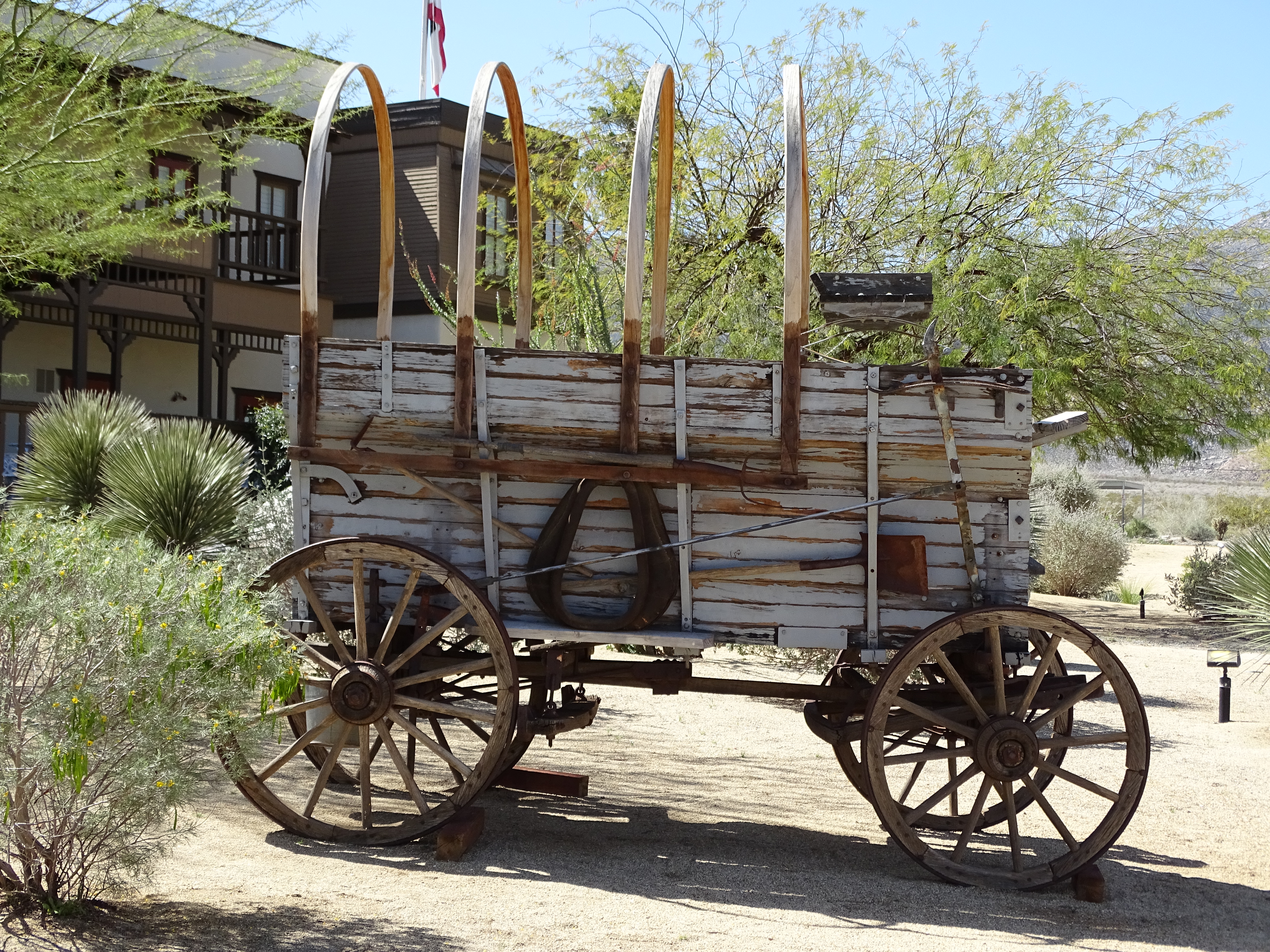

“Covered Wagon Women” is a fascinating non-fiction account of fourteen pioneer women traveling west in the 1840’s. The book was edited and compiled by historian Kenneth L. Holmes. It is a remarkable book in that it consists of primary source, unedited diary entries, letters and other correspondence. The editor left the women’s narratives unedited as the women actually wrote them, replete with original syntax, spelling, and punctuation, and the mistakes made therein.There are additional “Covered Wagon Women,” volumes in a series. I read volume two and found it equally compelling.These unedited first person narratives give the reader a genuine sense of who these women really were, what they were seeing, experiencing, and feeling. Of course the unbelievable hardship, birth, death and tragedy are heart wrenching, but these incredible women’s intelligence, courage and appreciation of the beauty of their experience is also made abundantly clear. The women’s observations are reminiscent of the biographies of the famous male explorers, at times scientifically dispassionate, as they keenly and in detail, describe the new flora and fauna, terrain, climate, and Native Americans they encounter. They were after all, explorers as well.
They are also most effective in relaying their feelings. Take for example this excerpt from Tabitha Brown about her experience traveling west in 1846, now left to her own devices as she struggles on with an old, feeble, near death companion who was unable to care for himself or offer her any assistance,
“Here the shades of night were gathering fast and I could see the wagon tracks no further. I alighted from my horse, flung off my saddle and saddle bags and tied him fast with a lasso rope to a tree…..his senses were gone…..I covered him as well as I could with blankets…and helped the old gentleman, expecting he would be a corpse by morning. Pause for a moment and consider my situation-worse than alone; in a strange wilderness; without food, without fire; cold and shivering; wolves fighting and howling all around me; darkness of night forbade the stars to shine upon me; solitary- all was solitary as death…. As soon as light had dawned, I pulled down my tent, saddled the horses, found the Captain so as to stand on his feet…”
And she continues on towards Oregon. Remarkable. And there are many more narratives like this in the book.
I read a lot of these non-fiction pioneer and Native American history books (more about these in a latter review) as I traveled recently through the west, crossing and re-crossing the Oregon and Santa Fe Trails. I read books about a woman homesteading alone on the prairie, the first homesteading couple in what is now Glacier National Park, another about a widow hiring a helper and traveling on the first trek over the Oregon trail where they broke the trail, a book about a woman and her family crossing the Mojave Desert and this incredible collection of women’s narratives and I realize we’ve all been robbed with the books, movies and folklore of “the old west,” that have focused on the cowboys and male explorers, and mostly ignored the incredible fortitude, bravery and contribution of these pioneer women.
Riveting reading. Highly recommend.

Share this:

Discover more from Cindy Knoke
Subscribe to get the latest posts sent to your email.
After 33 years high school American history teaching I’ve put aside the textbooks as these primary sources give us so much more insight into the times.
Which would make you an excellent history teacher whose students will actually get something from your class, if they read it! I would love the class! Thank you and cheers to you~
Carl I have followed you for years, just got a new blog…stop Jackie Paulson 🙂
Thanks for this. Have you read “Women of the West” (Cathy Luchetti & Carol Olwell, Antelope Island Press, 1982)? A lot of first-hand accounts dating from 1830 to 1910. We agree whole-heartedly with you and some of your commenters: source material is the only way to really get at history – why read someone else’s interpretation of the same stuff?
No I haven’t read this but will look into loading it on my kindle if available for our upcoming trip. I agree with you. These first person accounts are riveting reads. Thanks for stopping by and cheers to you~
Ça me semble fascinant ce livre, je vais essayer de me le procurer, merci pour cette excellente description. Mes amitiés et bon week-end 🙂
Merci beaucoup mon ami! Comment gentil à vous et à quel point j’apprécie votre gentillesse. Si vous le lisez, je je voudrais savoir ce que vous pensez. 🙂
I’ve always been fascinated by the resilient and strong women back then. They were amazing in spite of the hardships and no real rights. This world could not survive without women. In many ways.
I agree with and appreciate your comments!
You have done a beautiful job here on this post, you have made me want to find these books to purchase for my personal library. Good job, great post.
Well that makes me feel good! Thanks and cheers to you!
Hi Cindy, nice to meet you. Thank you for stopping by my blog.
This is an incredible read. You are so right about the movies on the ‘old west’ being mainly about the cowboys. Maybe some brave women or men out there in Hollywood will take a giant step forward and produce a film about these women. That would be extraordinary!
Great job on this blog! I will follow you! Best wishes!
That would be wonderful, but I’m not holding my breath! Hollywood seems to be spending it’s money on cheesey remakes…..like we need another Spiderman! Laughing…….Thank you for your kind workds & cheers to you~
An erudite account that will be useful to writers and historians alike!
Very kind and appreciated. Thank you sincerely!
Cindy I really love what I always learn from what you share consistently! Thanks for the blessing!
How kind you are and how appreciated! Thank you~
Pingback: Thank you Awesome Bloggers – here is an award for you | Perspectives on life, universe and everything
How very kind of you and most appreciated too! Cheers to you~
what a great, thoughtful review. As a Montana raised gal, I have a penchant for the Wild Wild…did you wean on the Little Prairie Books?, lol–and these sound just great. Right up my alley. I am going to order them from the library directly! Or should I say: terectly…;)
good perspective for me–wrapped up in modern day woe…
Oh yes I was a Ingalls fan big time and love Montana….spent summers in Wyo! While you are ordering, check out the bio on Laura Ingalls Wilder, the true story of her life. Fascinating! Cheers to you my friend~
Hello Cindy, I very much appreciate it. I personally miss your blogs:)
Thanks for the recommendation. I truly love this type of non-fiction
Freundliche Grüße, Wolfgang
http://youtu.be/q1AvcgriAHY
Wunderbar Wolfgang! Danke schoen!!
😛
Alles OK. Wolfgang
http://wolfgangpowerpoint.wordpress.com/
😎
Danke Wolfgang!!
My grandmother’s oldest sister went west when she was small. Grandma had a matchbox with thread and a needle inside that belonged to her and I have it now. Your post was a great, quick read.
You are a real pioneer woman descendant then!! Welcome and so glad you enjoyed~
Very interesting to look at the West through women’s eyes. We never see this side of the story. Thanks for this information.
Exactly and pretty amazing women to be ignored. Thanks for stopping by~
Strong women!!
Yes, I think they had to be to survive. Thanks for dropping by~
How refreshing to discover and read your review of the journals of these courageous women. I love history! I find there is a commonality of bravery, perserverance and trust in God throughout every generation. We do what we have to do ” So help us God!” Thank you for sharing and thank you for visiting and liking my blog.
I love to read about pioneering women so I posted it on my FB page for all my pioneering women Friends. Thanks
Wonderful! Thank you so much. Women are pioneers!
I have often thought that I would have been one of the women who wouldn’t have survived such a difficult journey. I live on the border with Mexico and occasionally run into people who have crossed the border illegally. Some have walked for days and days. Some die of dehydration, rattlesnake bites, and in winter, of the cold. I simply cannot imagine the desperation and bravery (the hopes and dreams, too) that led people of the 1800s to move west. I feel the same about people who come north from Mexico and further south.
Have you read “These is My Words?” Recommended.
I will look up the book. Thank you. My children were delivered by cesearean because I couldn’t deliver naturally. I always thought I would have been one of the women who died in childbirth on the pioneer trail.
Cindy, thanks for this review. I just ordered the book and cannot wait to read it.
~Ron
Wonderful. Please let me know what you think of it!
What a wonderful insight to life on the frontier…guess I will have to read the rest of the volumes. Thanks Cindy.
Well it definitely got me addicted to reading all the non-fiction on the subject that I could find. This could be considered good or errrrrrr…..bad, accordingly!!
Hello and Thanks for following me . I like these type of stories of olden times. where I live has a history too:) Have a nice day.
Welcome!!! Love your blog too!
Thank you. :)Have a nice day..
Visa versa 2 U X 2!
Thanx U have a Nice Day:)
Nice read Cindy, with a touch of nostalgia and warm vintage feelings !
Hope you have a peaceful and creative weekend , love ~~~~♥ Doda 🙂
Happy weekend to you Doda & cheers to you too my friend! <3
Cindy, thank you for reading my post on multipleyouuniverse.wordpress.com. I wanted to share that I also have a deep appreciation for women in early Western American history, who settled there and helped civilize (if you will) the townships which sprang up. I lived in Los Angeles in 1975-1984, when my friend, Marlowe, who used to own a book and magazine store in Hollywood, talked me into writing a proposal for a television series (working title, Women of the West), about fascinating true life stories. My agent shopped it around but it never garnered enough interest. I loved their stories and hope that some day I will have time to develop them into a book. I will dedicate it to Marlowe, who was my first mentor, and early woman’s libber for his time. He has long since transitioned, but I have often remembered how good it felt to have someone believe in me, as a struggling writer, back in the day.
I hope you have a lovely day, Cindy.
Oh I do hope you develop it into a book! I would read it in a heartbeat and so would a lot of other people. So happy to meet you and thanks for stopping by! Cheers to you~
Cindy,
Just signed on as a new follower. I thank you for yor interest in my essay, “Stumbling Toward Success,” posted on Contagious Optimsm. I also have a personal blog titled, “Crossroads-Right Choices.” I invite you to visit it also, as time permits.
Your blog is quite interesting.
Again thank you.
-Alan
I was trying to remember the song “Gold Rush Brides” (Natalie Merchant – 10,000 Maniacs). It finally came to me – https://www.youtube.com/watch?v=2t9CL46awfY&feature=kp – I have always liked that song. I think I need to read this book. Thanks for the review.
Dein spannnender und interessanter Bericht über diese Western Trails hat mir sehr gefallen. Schade, dass mein Englisch nicht besser ist. Liebe Grüsse. Ernst
Ihr Englisch ist besser als mein Deutsch! 🙂 Vielen Danke Ernst~
I don’t think so dear Cindy! I wish you a nice sunday. 🙂 Ernst
Haben Sie einen wunderbaren Sonntag Ernest!
Liebe Cindy, ih wünsche Dir ein herrliches und angenehmes Wochenende. 🙂 Ernst
<3 <3
Have you see “Letters of a Woman Homesteader”? It was free on Amazon in Kindle form for a while. This looks good as well 🙂
Yes indeed! I had to check my kindle to confirm, I read it and very much enjoyed it~
Much, much more should be written regarding the contributions of women! I am with you totally on this! It seems each time I write something lately, I have been thinking how the male image and the war machine is so much in our expression and our language. We will have to continue the crusade to honor the value of women. Worldwide women have suffered so much. The internet certainly has brought that reality to the forefront. I enjoy your photographs and written words, Cindy! Thank you for your visits to my blog—your presence there does encourage me to continue! Blessings on your weekend!
Good, because continuing your blog is important for you and for your readers. And yes, there would have been no successful westward migration without the incredible fortitude of pioneer women. Women all over the world today face such heinous trials and yet they have so much to offer in creating a more peaceful and harmonious world. Blessings to you~
A fascinating read and articulated so well Cindy. Those years must have been incredibly challenging. We take so much for granted in this day and history most certainly bears repeating. We can all learn from the hardship, mortality and many forms of adversity that women lived through in those days.
It is hard to imaging the level of hardship, felling trees and cutting the Oregon trail as you go, crossing The Sierras, the plains, and the deserts, walking the bulk of it. We used to be made of sterner stuff!! Cheers to you and thanks for stopping by~
I’m delighted you dropped by my blog giving me the opportunity to read your post about those pioneer women and their endurance. I love the history of the 1800’s and I’m going to look into those books mentioned in your post and in the comments.
Welcome and I am delighted to meet you! Please let me know what you think of the books & cheers to you~
Reblogged this on clarabetty and commented:
I love this post as I love history, especially our -“Women’s History” I will reblog.
Very thoughtful of you and most appreciated too! Cheers & thank you!! <3
My grandmother grew up in Kansas and I have a book called “Pioneer Women – Voices from the Kansas Frontier. It’s an older book, pub. 1981 and confirmed the stories about the life my grandmother led. I have written down the name and will see if I can find it on Amazon – thanks 🙂
I’m a big fan of the Little House on the Praire series, will definitely add this book to my reading list.
Thanks for liking my blog post on the anniversary of the Wilderness Act. Your own article above is very interesting. This looks like a great book!
Thank you and cheers back to you!
Cindy, if you enjoy this era perhaps you may want to read Orphan in America…my latest historical novel has just been released. Here is the link to get some insight to the story. http://www.amazon.com/dp/1495433404 If you read off Kindle it is on that format as well. Cheers!
Thanks for the tip, I’ll check it out!
Reblogged this on Mazdboss's Blog and commented:
Awesome read! <3
So glad I stumbled on this post. I just finished reading The Covered Wagon by Emerson Hough and was wishing for another read about the trip West. This sounds perfect. Thanks, Julie
Yes, this is exactly what I do. I get on a particular topic and read everything I can on the subject until the books run out. I did this with female pioneers, female homesteaders, American Indians and the west. There were a fair number of books about female homesteaders who went for the 100 acres and a mule offer by themselves and wrote about it. Really fascinating stuff and remarkable women~
I ordered the book from amazon- can’t wait till it comes.
Let me know your thoughts!
I love to look at your blogs and the pictures that accompany them; and above all I like you personally. You are one classy and sweet lady. <3
That is an incredibly kind thing to say and just proves that you are one classy lady too my friend, something I also know about you! Hugz and thank you!!!
But it is true. Even your picture shows what a beautiful and kind woman you’re. I am happy to call you my friend, better yet, my sister dear Cindy. I like when people use their real name in their blog. Other kind of names always confuse me if the person behind the post a woman, a man, a group, etc, etc! You’re Cindy and I am Ellie. Love you sister <3
Never understood the pseudonyms. Why would one wish to put forth the effort to blog under a contrived name? I have good blogger friends whose lives I know about but whose names I don’t know. It seems strange to me too~
Vielen, vielen Dank für deinen Besuch, alles Gute, Klaus
Vielen dank Klaus! Freundschaft~
I often wonder what our pioneering ancestors, male & female, would think of people today, and what wimps we’ve become with all of the luxuries we enjoy through modern technology. I remember losing electricity for a week due to a hurricane, and you’d think the Earth had fallen off of its axis. Today’s population wouldn’t last a week suffering the hardships our brave, sturdy predecessors faced (I imagine). I’ll bet the ‘pioneering books’ would be an interesting choice(s) in reading, especially for someone who really appreciates the trials and hardships our ancestors suffered cutting the paths for the rest of us to follow.
It has always amazed me when traveling and seeing the various terrains, how people actually accomplished this over and over again. Taking wagons over the Rocky Mountains for example, or the Sierras, crossing the Mojave desert, making rafts and floating wagons and animals across the Columbia River. It just stupefies me. How on earth did they do this? Did you know there were women who took advantage of The Homestead Act, got their mules and acerage, and homesteaded alone in places like Montana and Wyomming. They wrote diaries. I knew nothing about this until reading these books. I agree with everything you are saying!
Do the women in these narratives look down on the Native Americans as much as the men? If not, how do they morally deal with taking somebody else’s land?
I don’t mean this in the sense of shaming anybody. Considering the Native Americans as subhuman was normal, healthy morality for the time. I’m just curious as to how these new heroes differed from the old heroes, if at all.
Really excellent question and worthy of an entire review of every book I’ve read on the subject. I would appreciate it if you read the book and give me your impressions if you have time. It’s been awhile since I read the book. That said, going off of memory, I will guesstimate that the women’s narratives seemed to be full of curiousity towards Native Americans mixed with some, not pronounced, fear, and some prejudice. IF, and this is a big if, I recall correctly, many of these first trains were guided by trappers. The trappers were the only white people who knew the country at this time. Many of them lived with the Native Americans, spoke their language, had a Native American wife and children. Trappers were non-conformists who rejected civilization and all it’s discontents. Some of them were deeply imbedded with Native Americans and attempted in later years to advocate on their behalf.
The trappers influenced the early pioneers. These were also the first wagon trains west. Anglos hadn’t commenced their campaign of genocide against Native Americans at this point and relations were not yet fully strained. So the full fledged racist idealogy/campaign hadn’t taken hold. I remember curiousity (with women writing detailed descriptions of encounters), some fear during encounters, peaceful exchanges/trade, and some prejudicial bias. But nothing like the horrid racist virulence that came later.
Please read the book, and set me straight if my memory isn’t accurate.
I have read so many books on this subject and my guess is that initially there was some fear, prejudice, but mostly peaceful interactions. It was when the anglos wanted to steal the Native American’s land that the genocide began, fueled and supported by racist idealogy.
Thanks for the very interesting post. I’ll look into that book. 🙂
Freundliche Grüße, Wolfgang
Hallo Wolfgang ! Es ist toll, von Ihnen zu horen , und ich hoffe, Sie sind gut mein Freund.
It sounds like the people who audition for these so called reality TV shows like “Survivor” should read this book first.
Porbably would be way too much reality for them! Laughing…….
This is the type of book I just love, even though I am a mystery writer. It’s now at the top of my reading list! Thanks for the great review!
Well thank you and I do think you will be glad you read it. Please let me know what you think!
Just tweeted this fascinating post 🙂
You are very thoughtful and most appreciated!! <3
Downloaded this and am reading this now!
Please let me know what you think of it!
Ein toller Bericht über diese tüchtigen Frauen der Auswanderer.
Gefällt mir. Leider ist mein Englisch nicht so gut. Grüsse Ernst
Ihr Englisch ist die gleiche wie meine deutschen !! 😉 😉 Vielen danke Ernst~
for me it is okay like that 😉 🙂
Korrektur , Ihr Englisch besser als meine deutschen Unter Faint!
My great-great-great grandparents were immigrants & pioneers,crossing the Allegheny Mtns. by wagon, then took a flatboat down the Ohio River, a journey of three months – in the WINTER! They had 5 children with them, including one who was only a year old, and my 3-greats grandmother was pregnant during the entire journey! I wish I had a first hand account of this journey but nevertheless it was remarkable. First hand accounts such as the ones in the book you have reviewed here are invaluable resources for those who want to be able to have some idea of what these arduous journeys were really like, what these people endured. Incredible!
How wonderful that you know this history! So much of it is lost forever. Especially the stories of the women pioneers, most of whom were caring for young children, many while pregnant, and quite a few giving birth on the trails. The wild west as we were taught and shown was never really the stories of these incredible women and their strength and courage. I am sure you are very proud of your female ancestors, for very good reason and I am glad you are able to tell their stories. Might you be encouraged to write a post about them? I would love to read it.
Am about to start reading “Pioneer Women: Voices from the Kansas frontier” by Joanna L Stratton.
I will check and see if I read this. If I didn’t I will. I find this history fascinating….