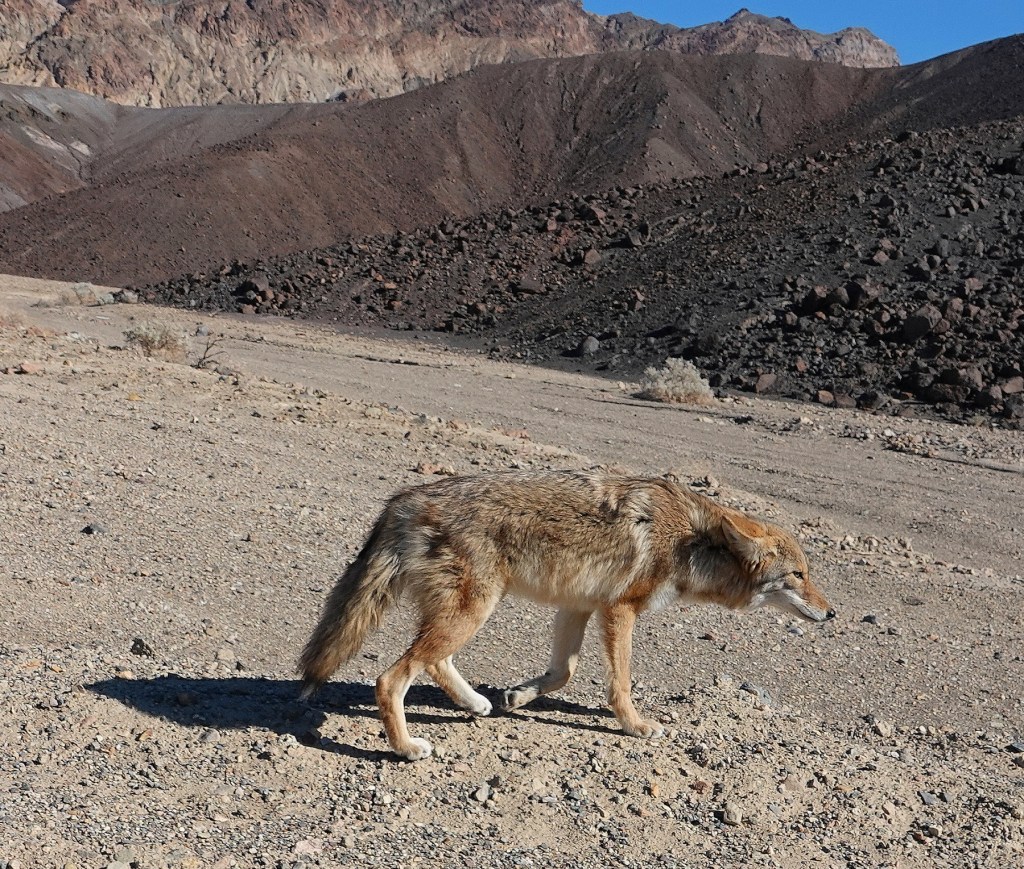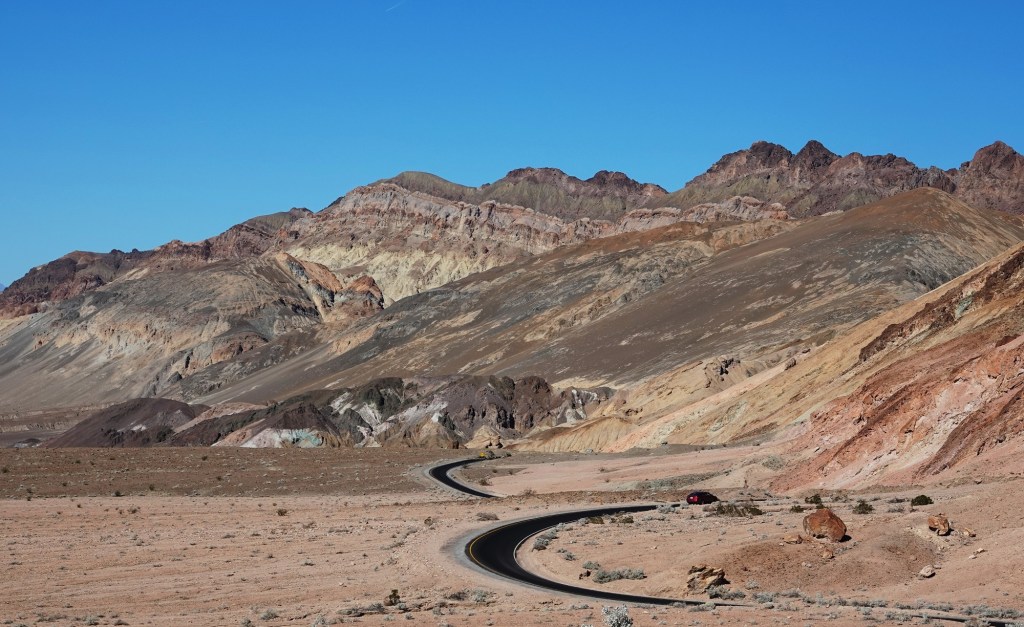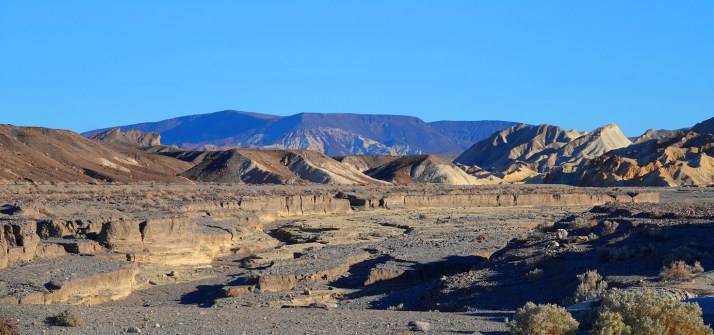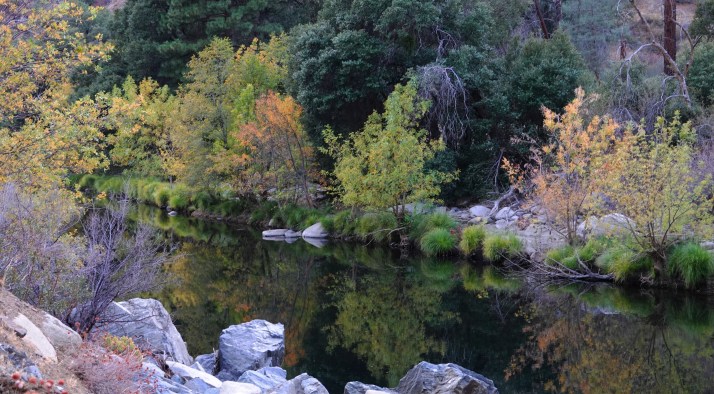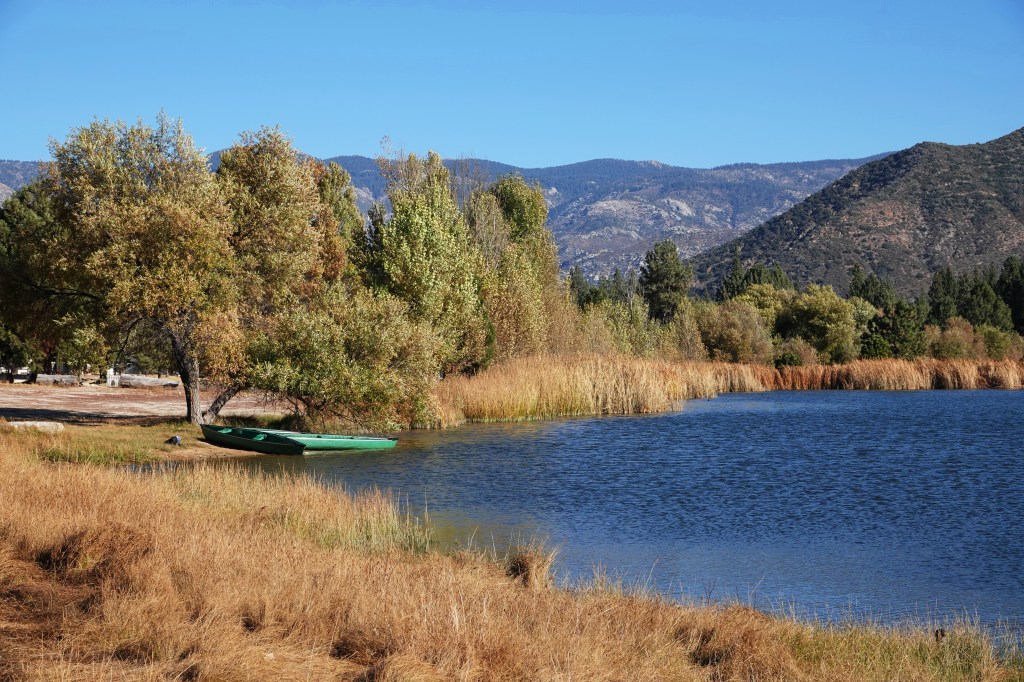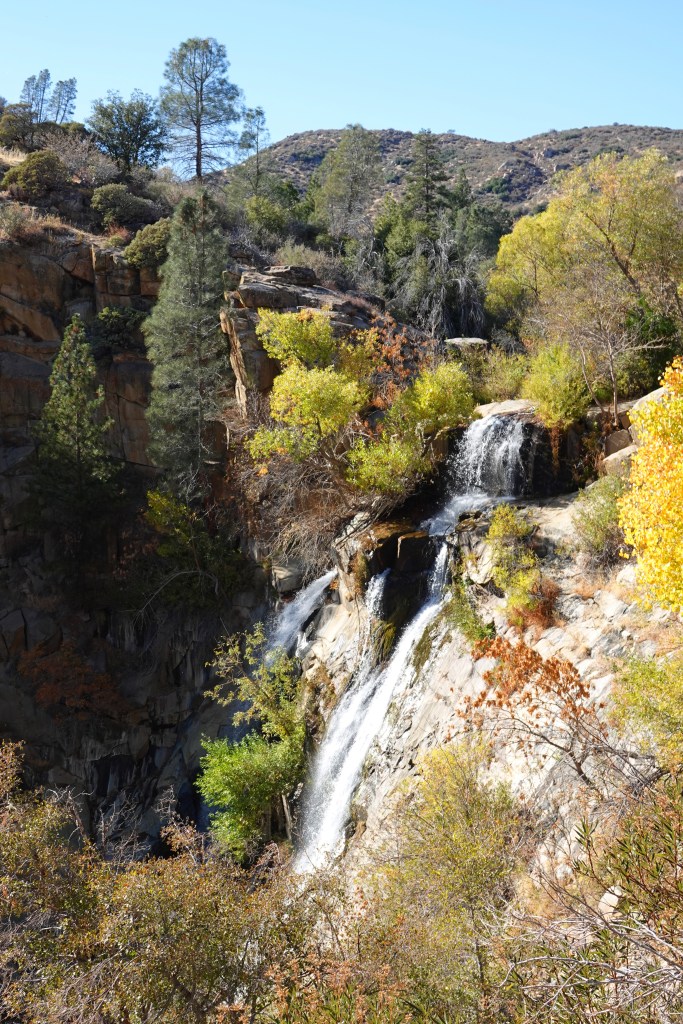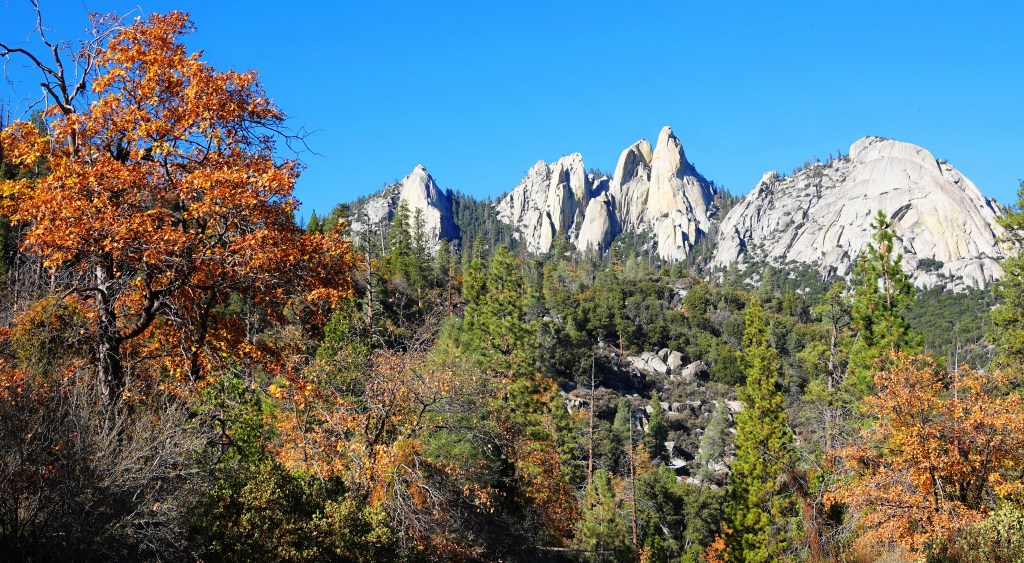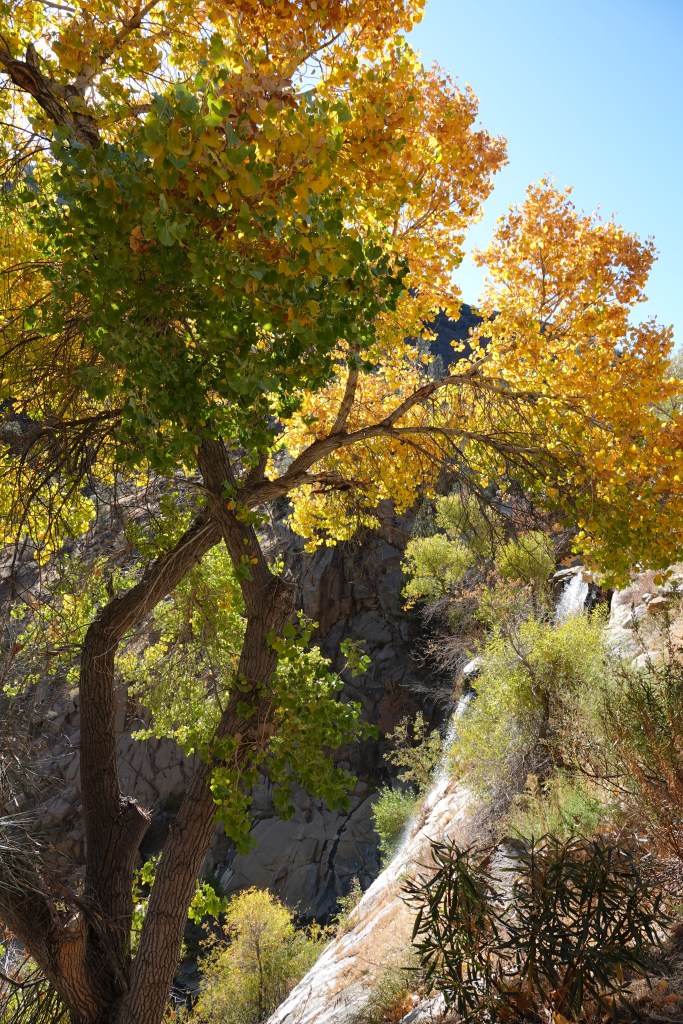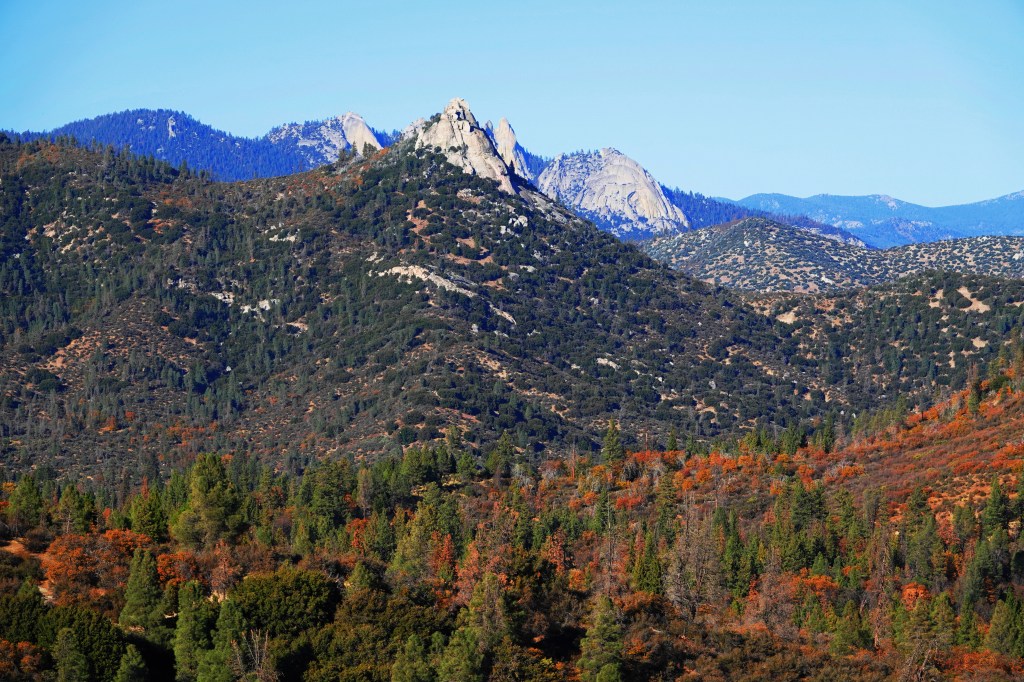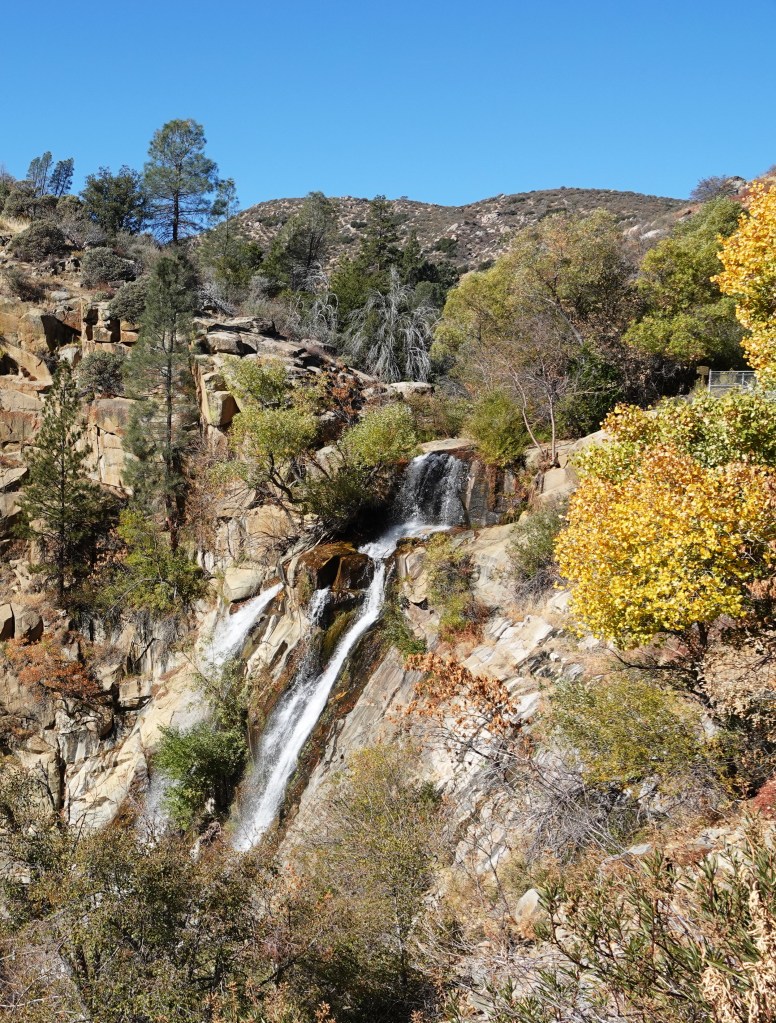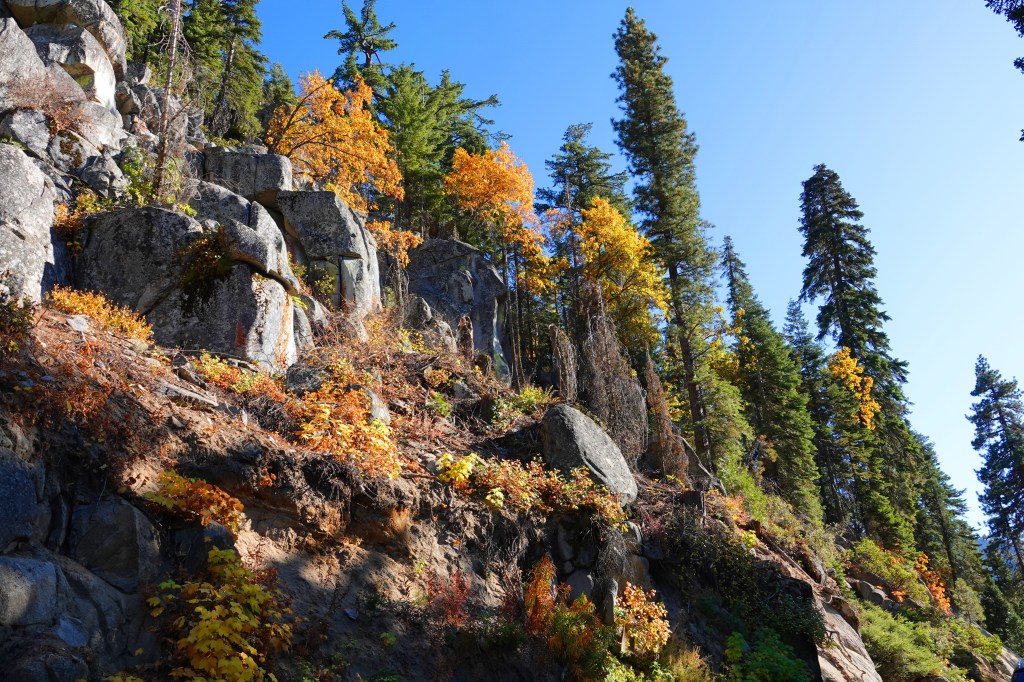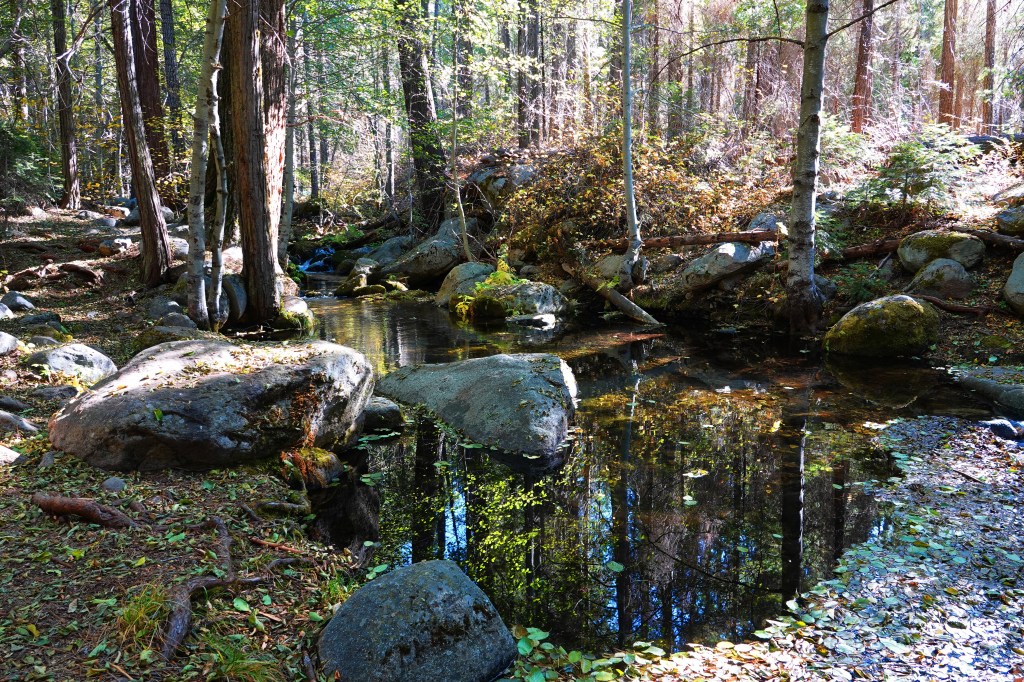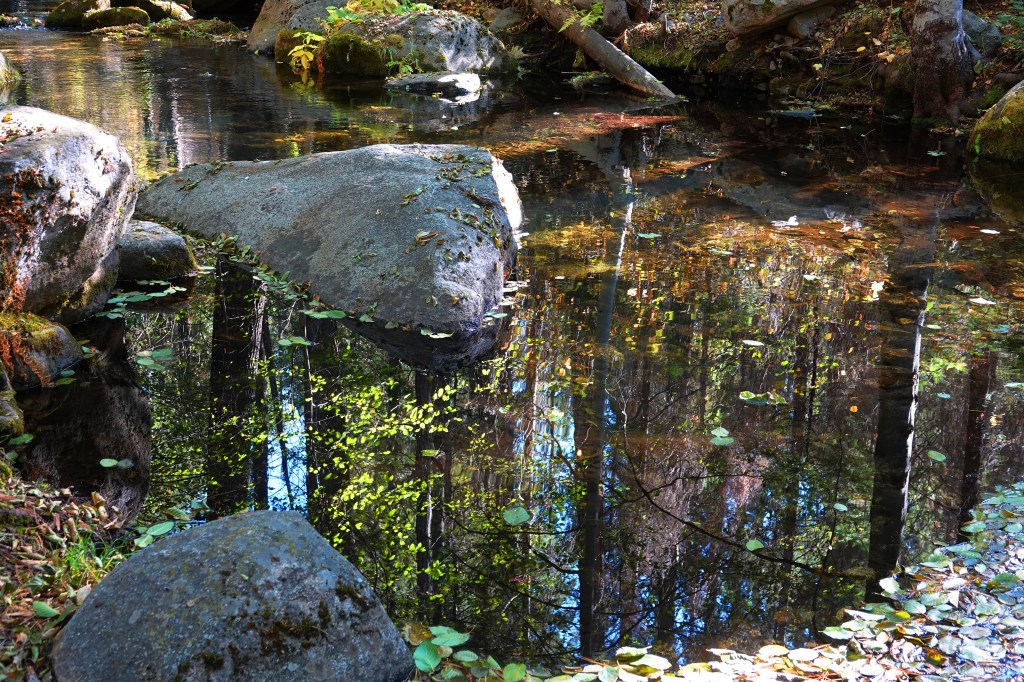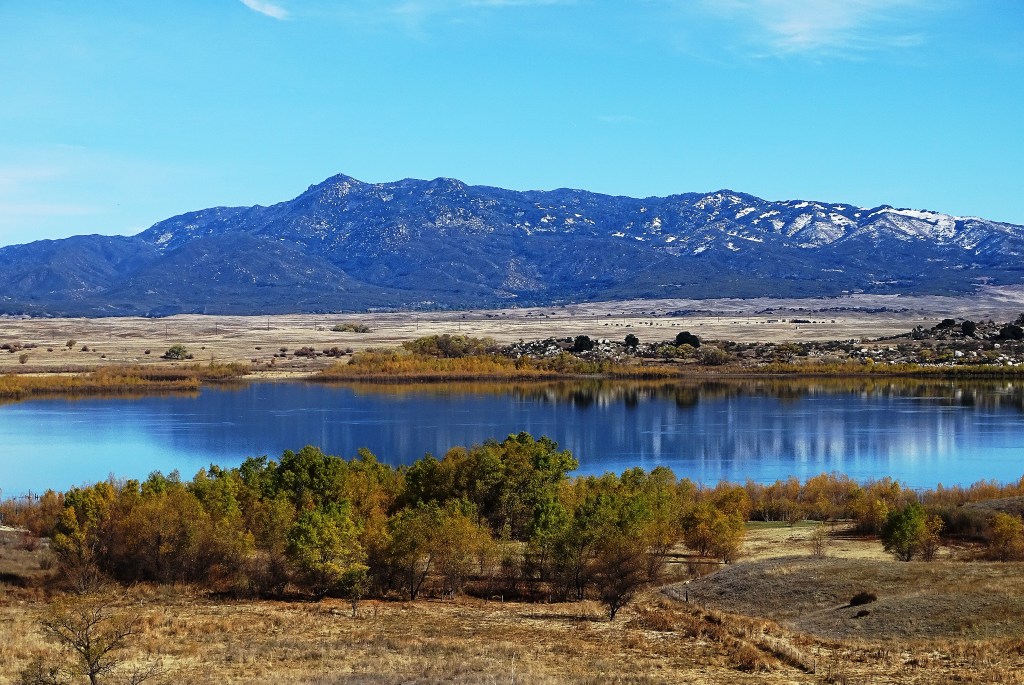
Dusts The Lagunas,

in early December,
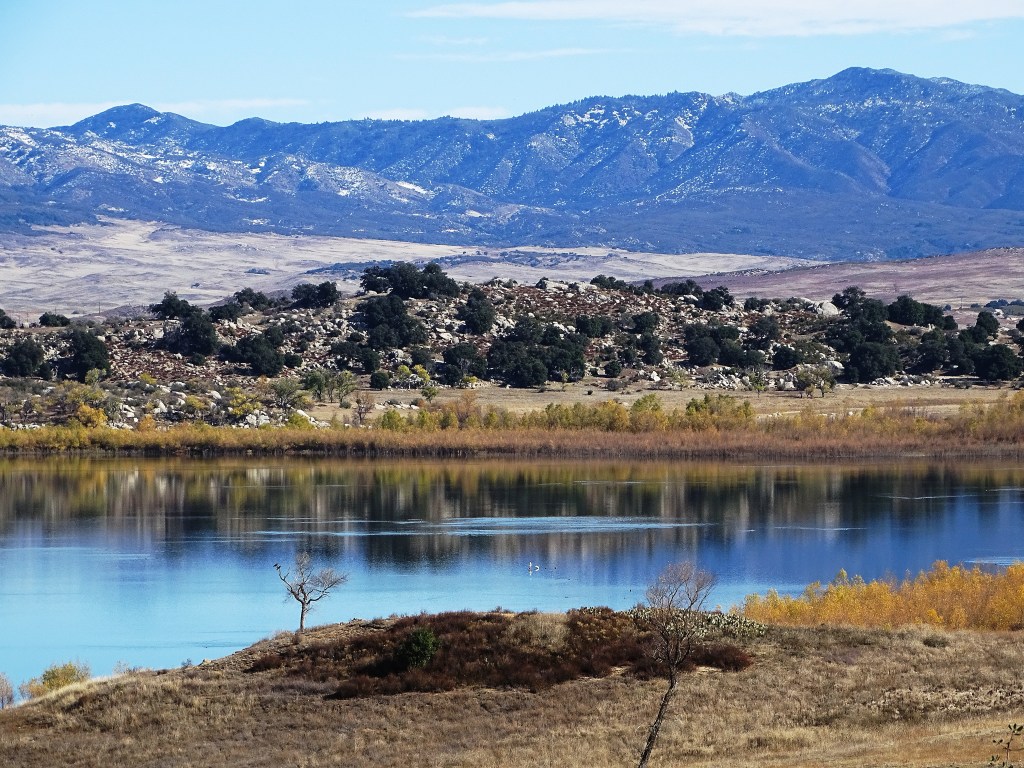
as The Snow Queen,
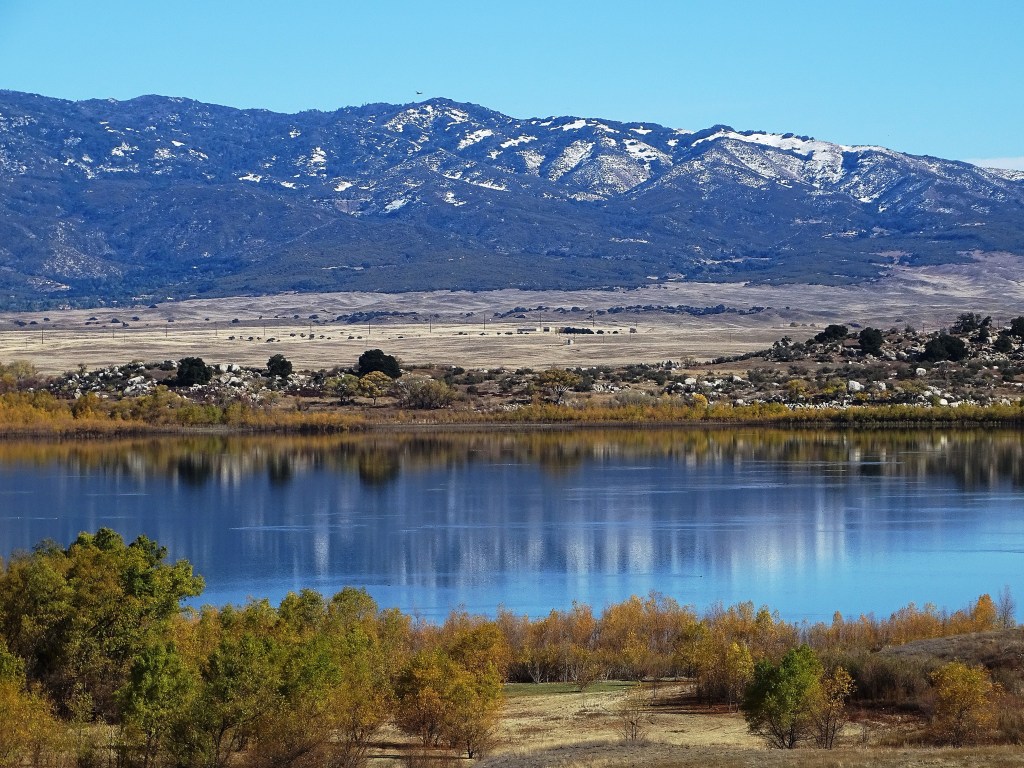
gently tiptoes in.
Cheers to you from The Holler in Winter~

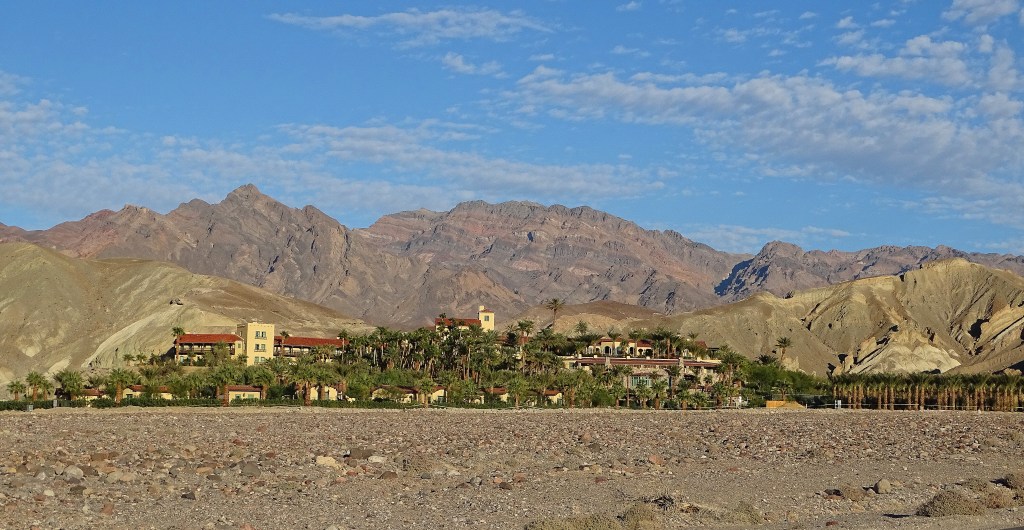
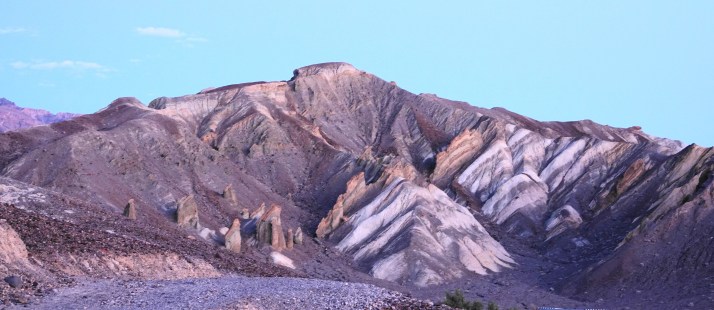
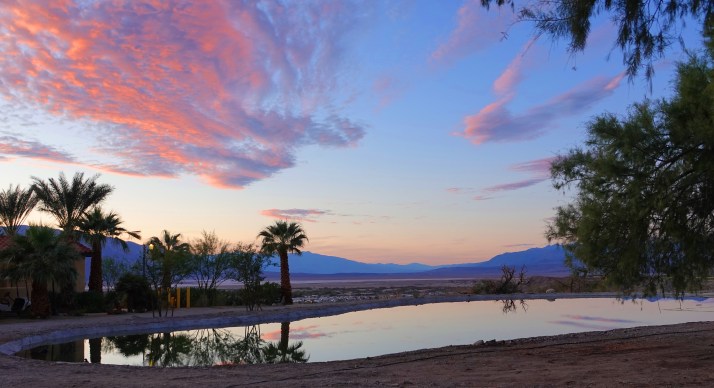
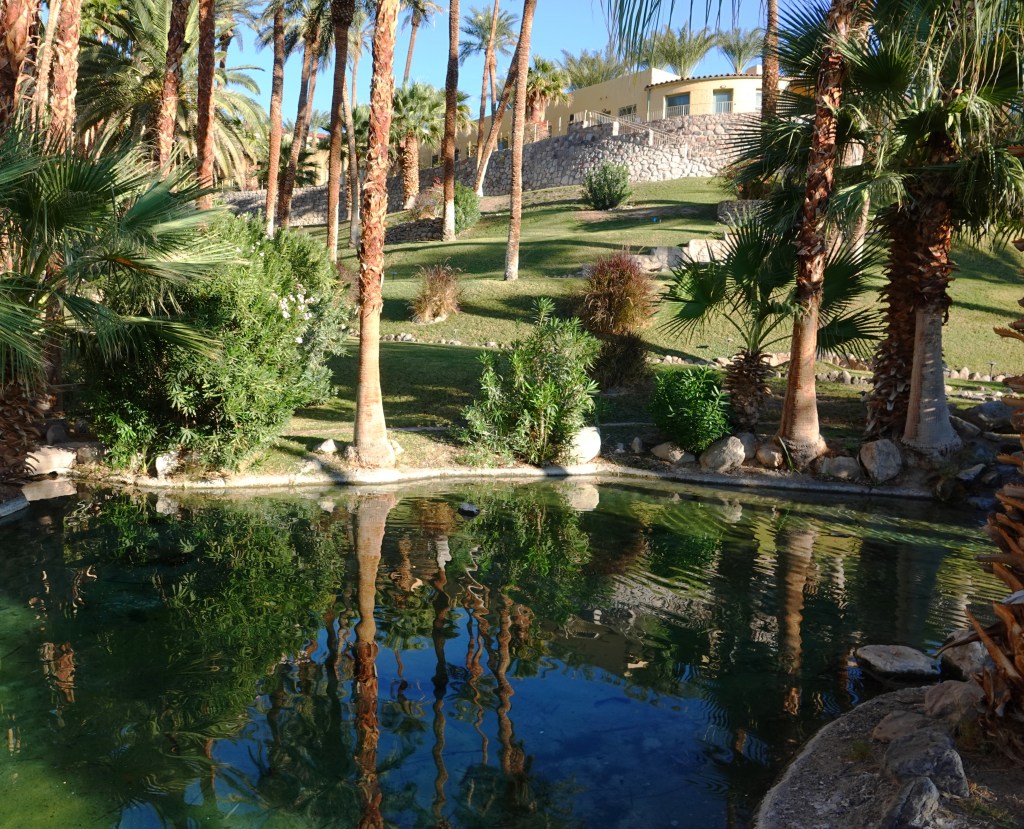
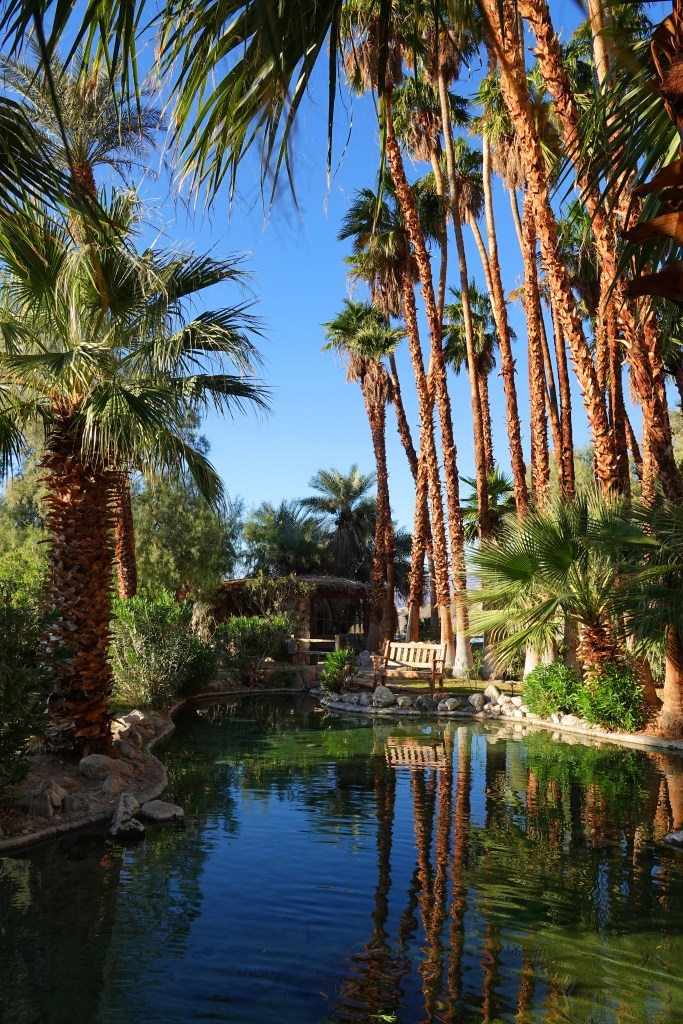
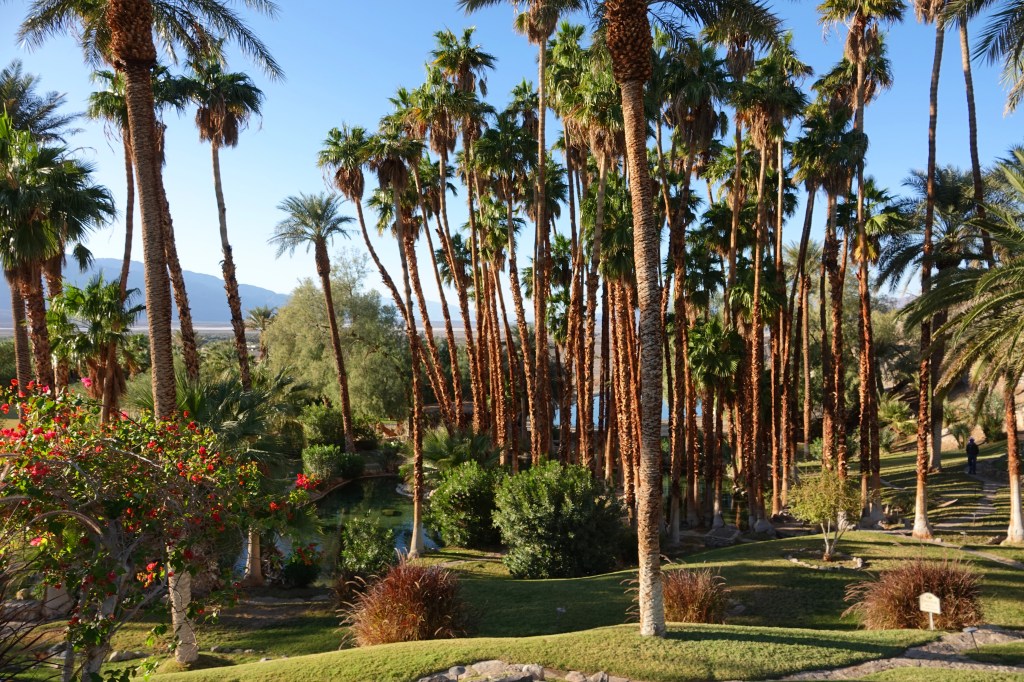
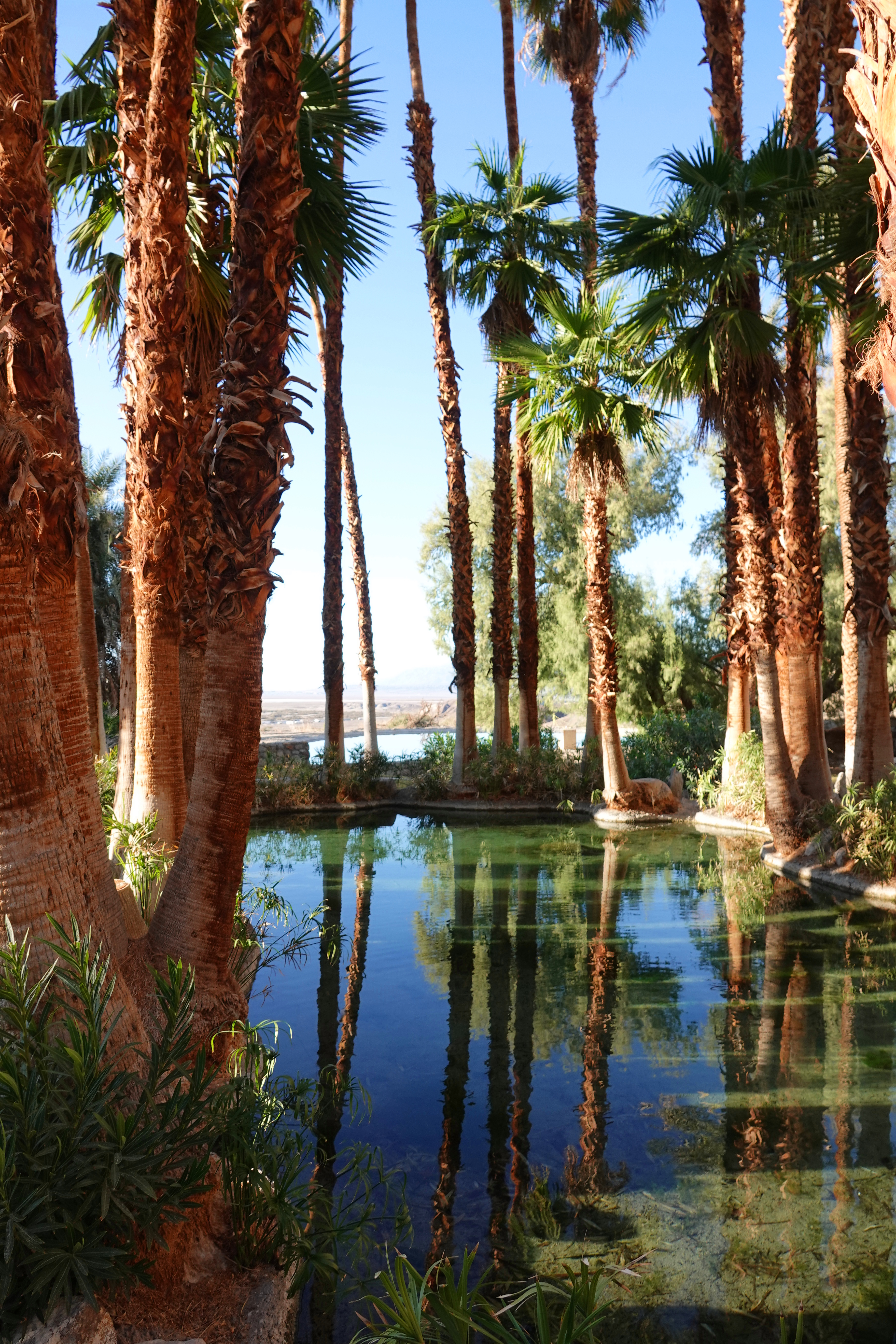
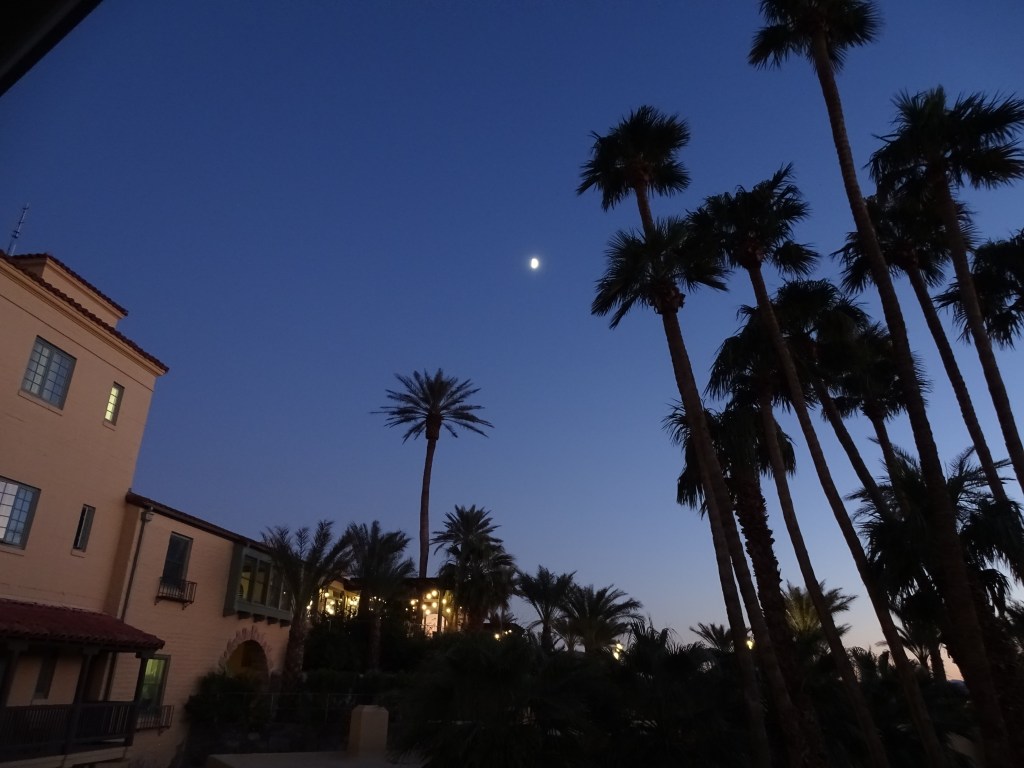
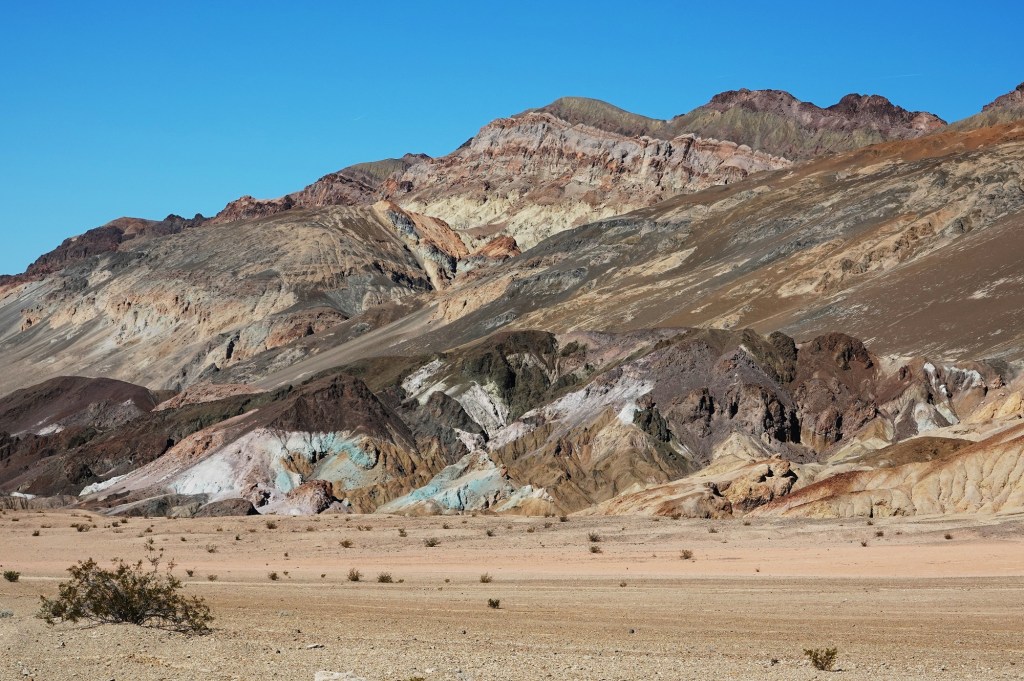
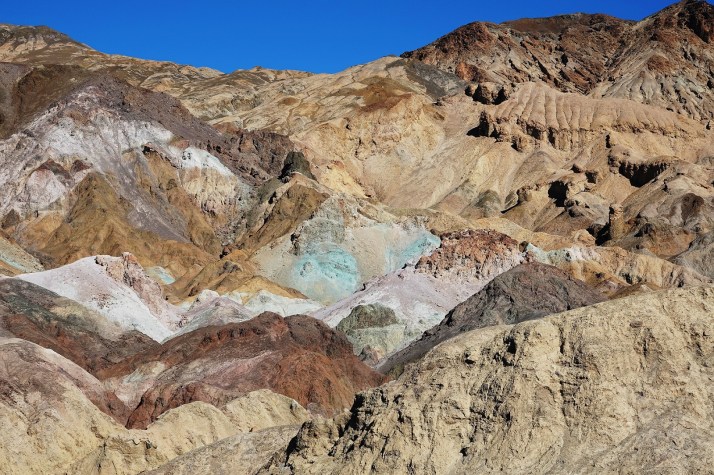
The Oasis Inn in Death Valley National Park lives up to its name. But there is so much more in the area. Come on, let’s go explore….
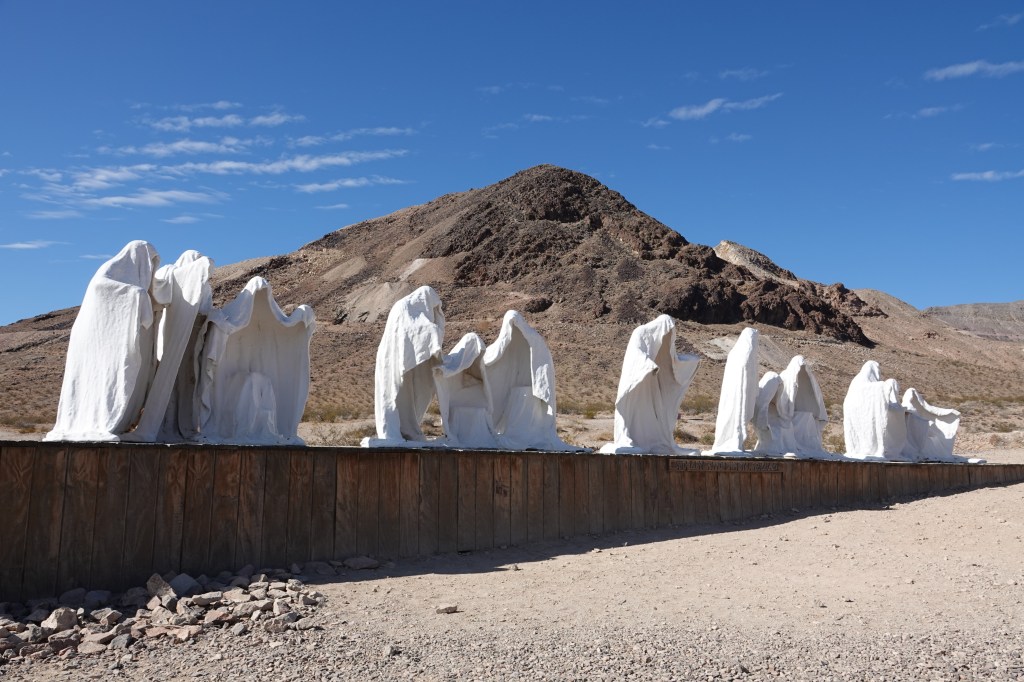
Check out The Goldwell Open Air Museum, established by four Belgian artists in 1984, just outside the boundaries of the park.
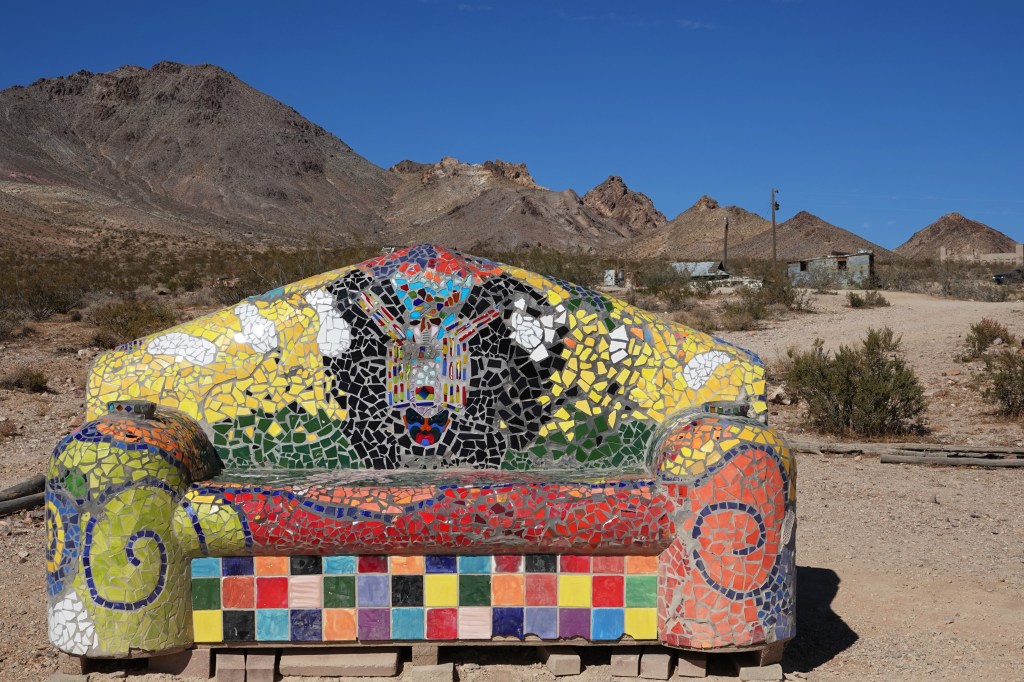
The artists created large scale outdoor sculptures which, in combination with the desert landscape, result in a truly unique visual experience.
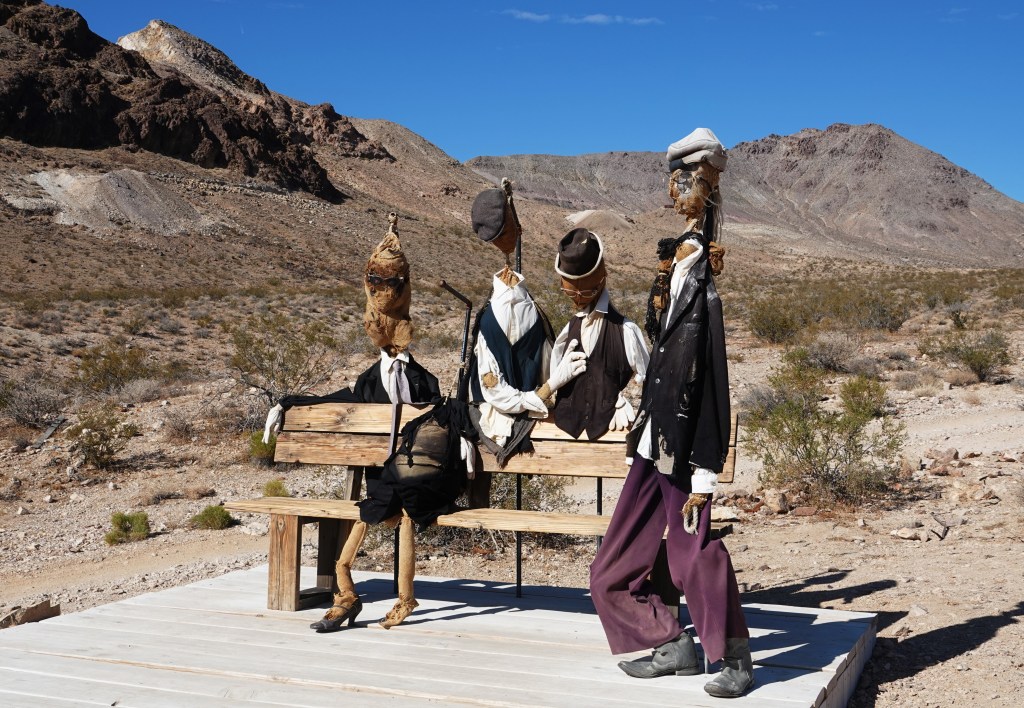
The feeling this evokes, like the desert itself, is eerie.
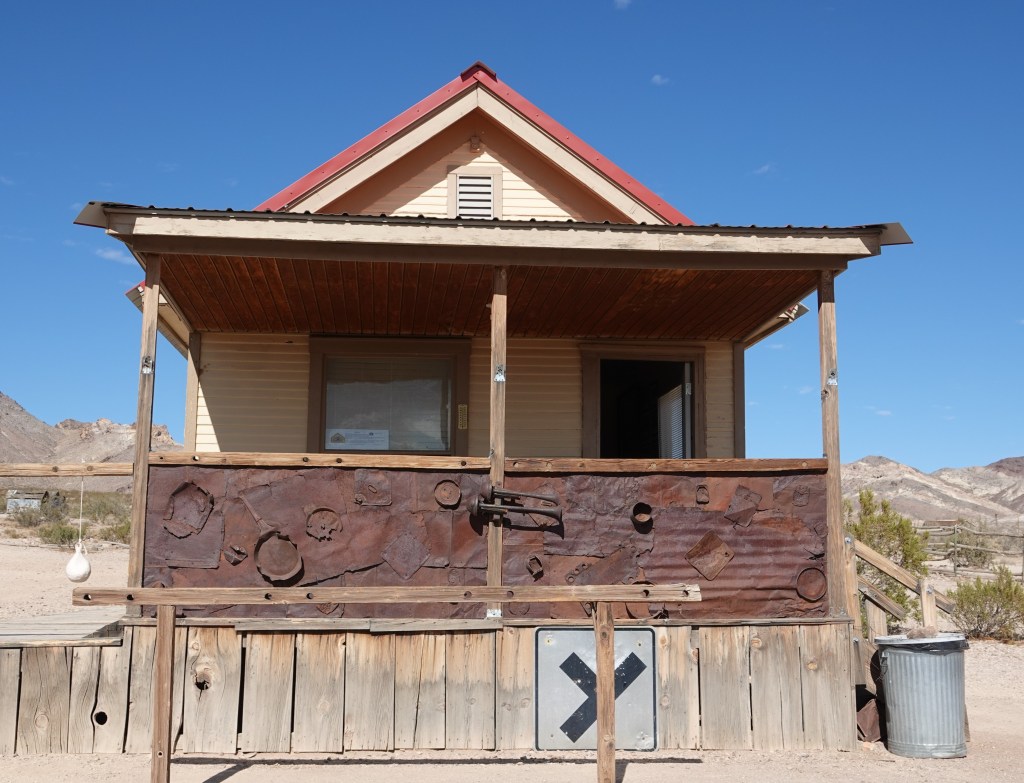
This is one of the artist abodes. Check the museum out at: http://goldwellmuseum.org/

After we explore the remarkable museum and it’s ghostly sculptures by ourselves for as long as we want (there is no one here to bother us), we mosey on down the road to Rhyolite, Nevada, a gold mining ghost town that boomed and busted between 1904 to 1920.

At it’s peak in 1908, Rhyolite had a population of 8,000. By 1920, when the gold had petered out, the population stood at 14.
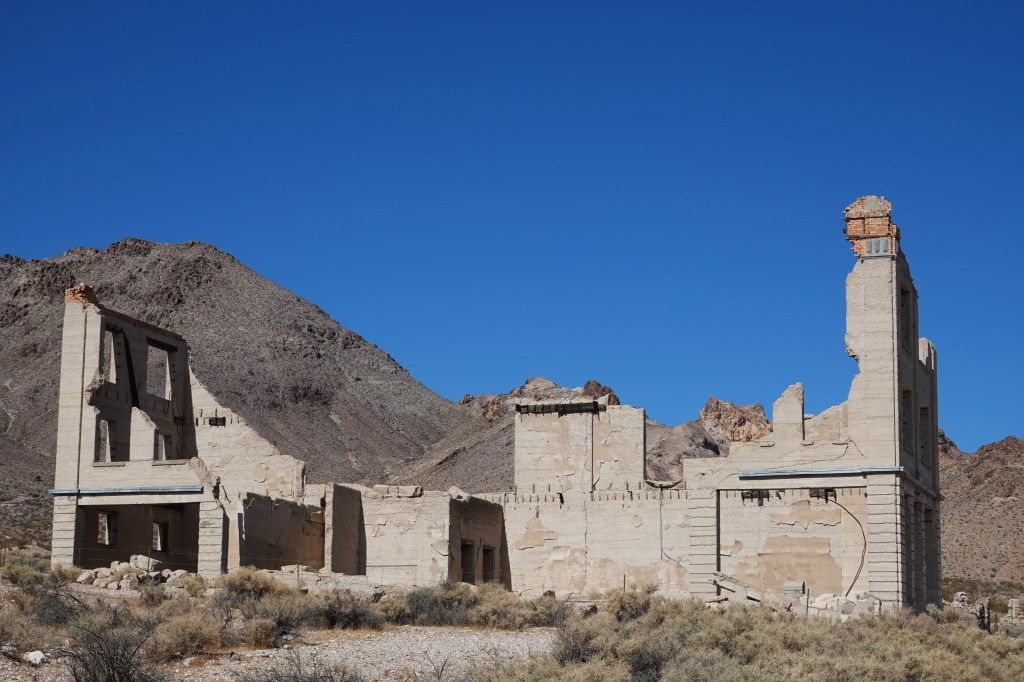
The post office, the bank, the store, the school, all were abandoned.
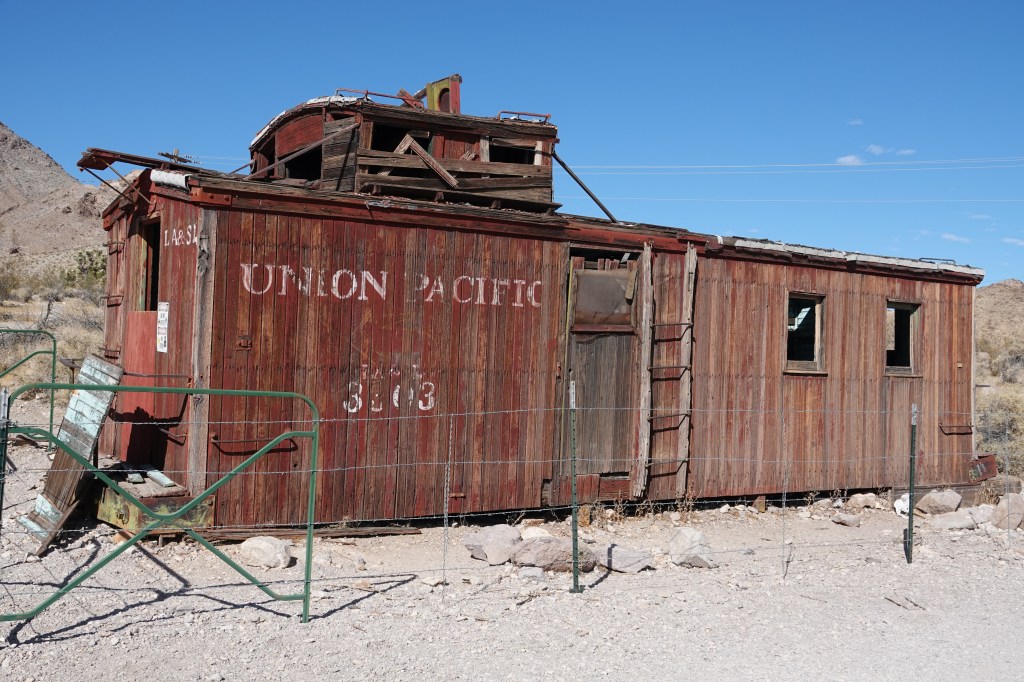
Can you imagine living in a desert that reached the hottest temperature on earth with no AC?
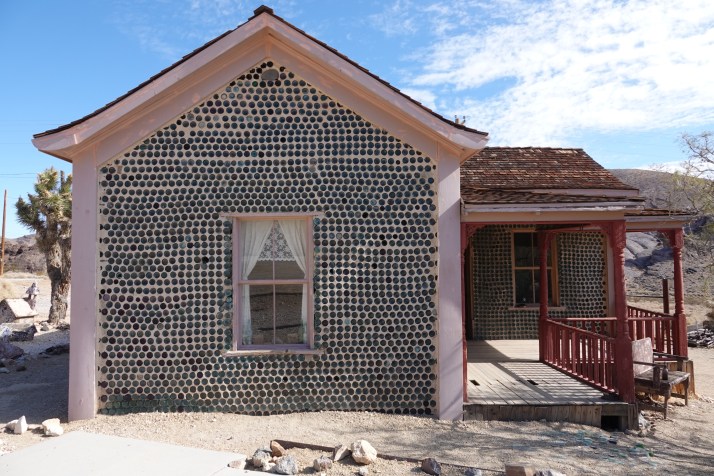
One home, built in 1905, was constructed almost entirely of 50,000 beer bottles. It is one of the most well preserved buildings in the ghost town.
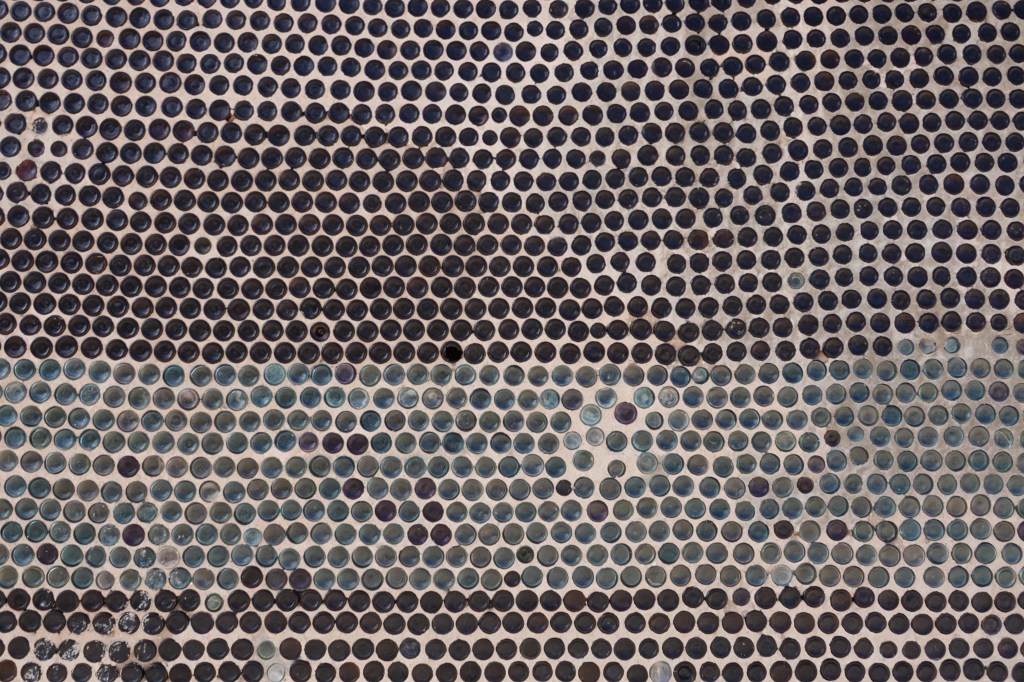
You can see the bottle details in this section of wall. You could sing “99 Bottles of Beer on the Wall,” in this house, and actually be counting! For more on this unusual home see : http://www.nbmog.org/bottlehouse.html
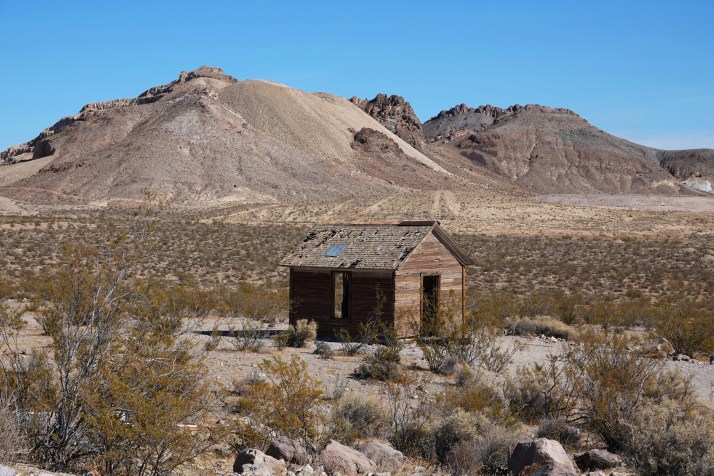
Cheers to you from the fun to explore and always mysterious Mojave ~

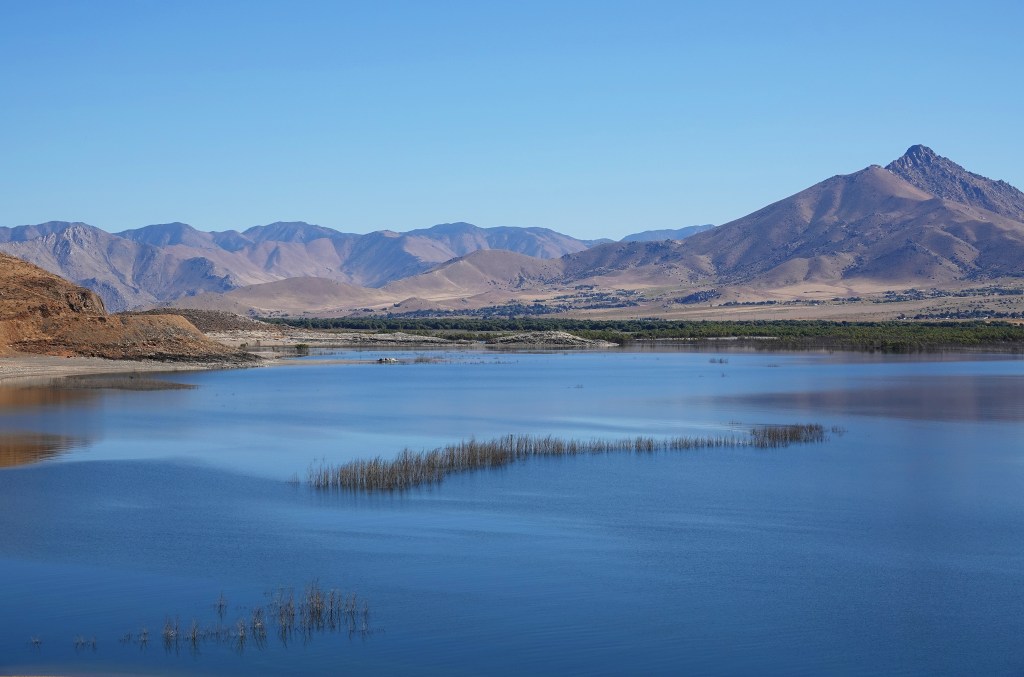
Lake Isabella is at the southern terminus of The Sierra Nevada Mountain range in California.

The drive to the lake from Southern California takes you through the Mojave Desert where the distinctive Joshua Trees grow enmass at higher elevations.

This was our wonderful rental cabin near the lake.
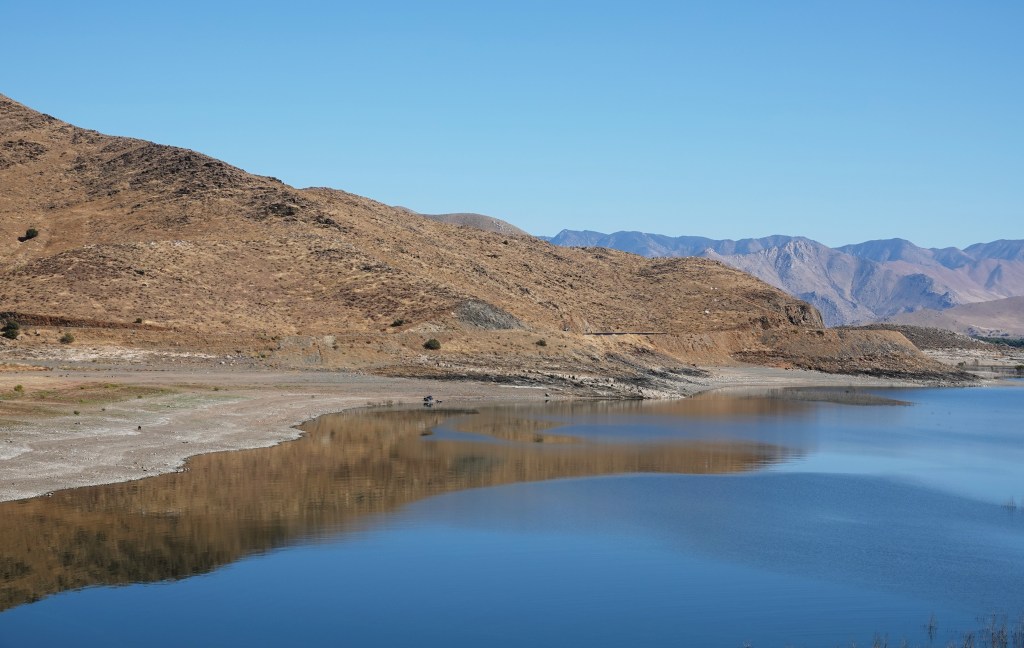
Lake Isabella is in the high desert at the confluence of the north and south forks of the beautiful Kern River.
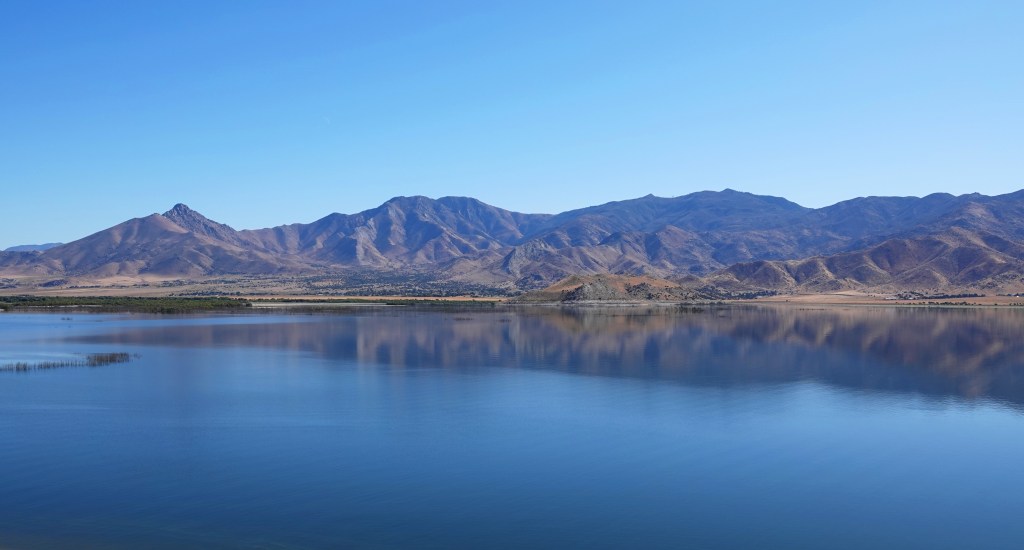
The lake sits at the southern entrance to Sequoia National Forest allowing access to both the eastern and western Sierra.
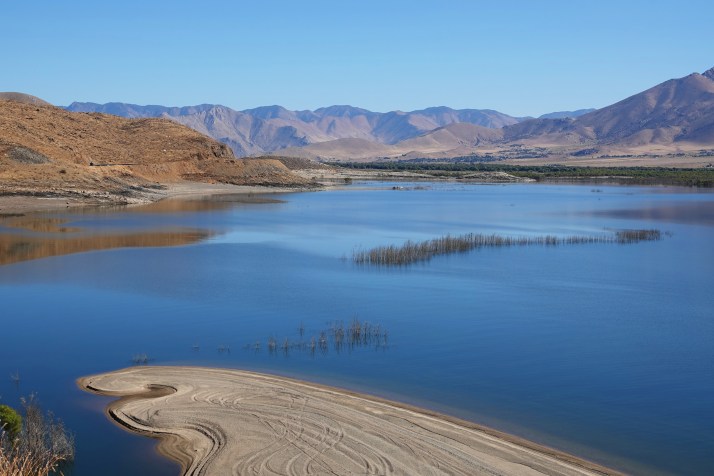
Lake Isabella is especially peaceful and empty in late fall. Cheers to you from scenic Lake Isabella~

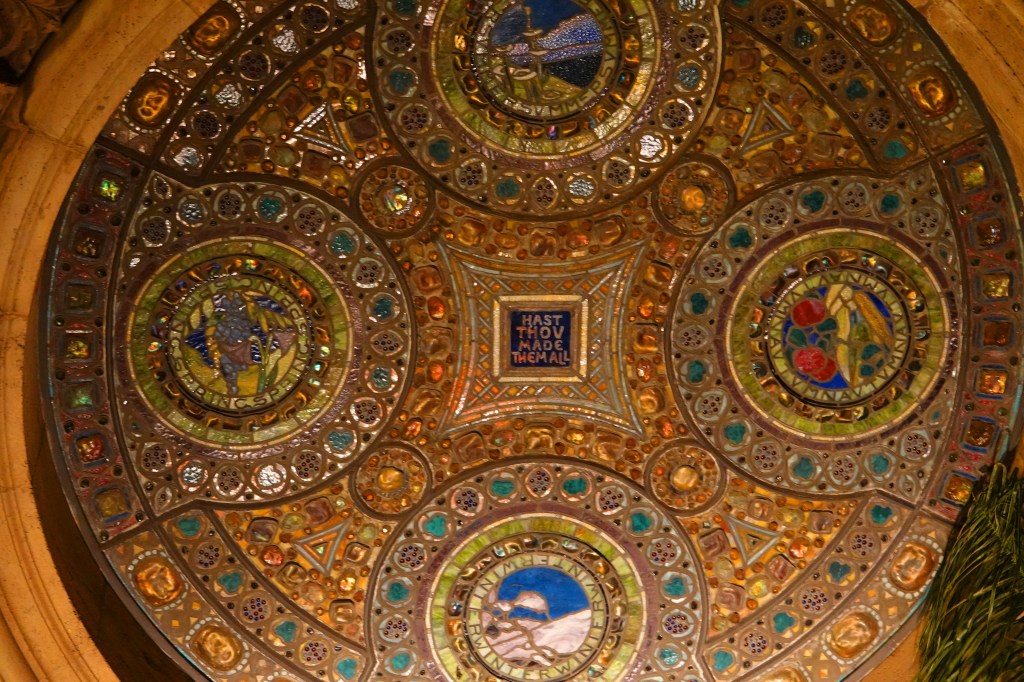
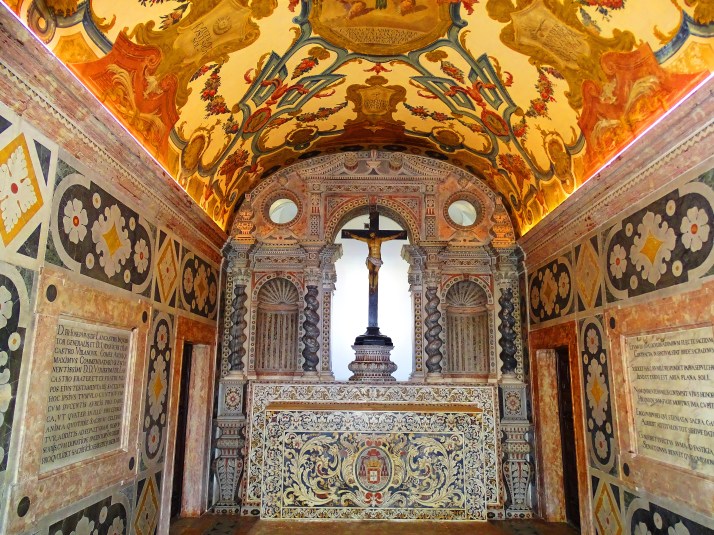
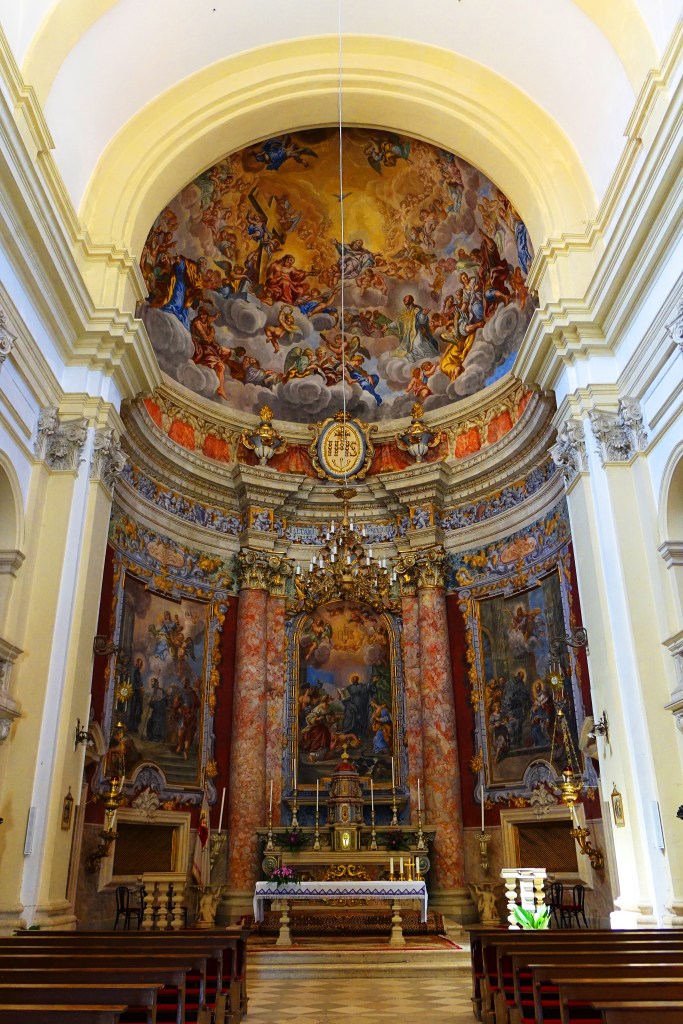
The Mission Inn in Riverside California, built over a sixty year period beginning in 1876, is a living museum full of priceless art and antiquities. It has two onsite chapels, one is dedicated to St. Francis of Assisi and has glass works designed by Louis Comfort Tiffany in 1906 for a chapel in New York.
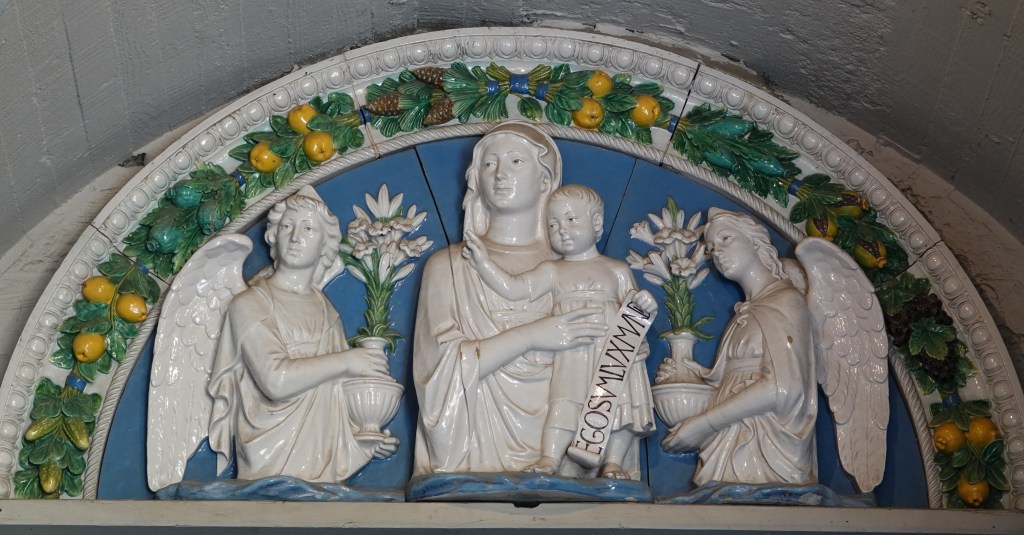
Many Della Robbia style ceramics from Italy,
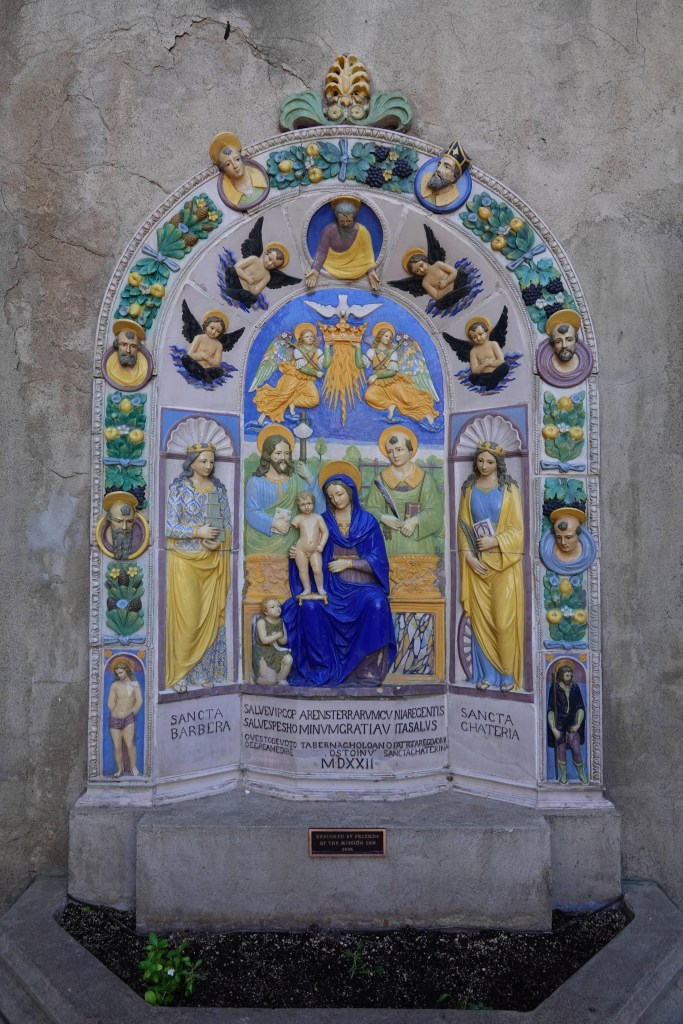
are on stunning display throughout the property.
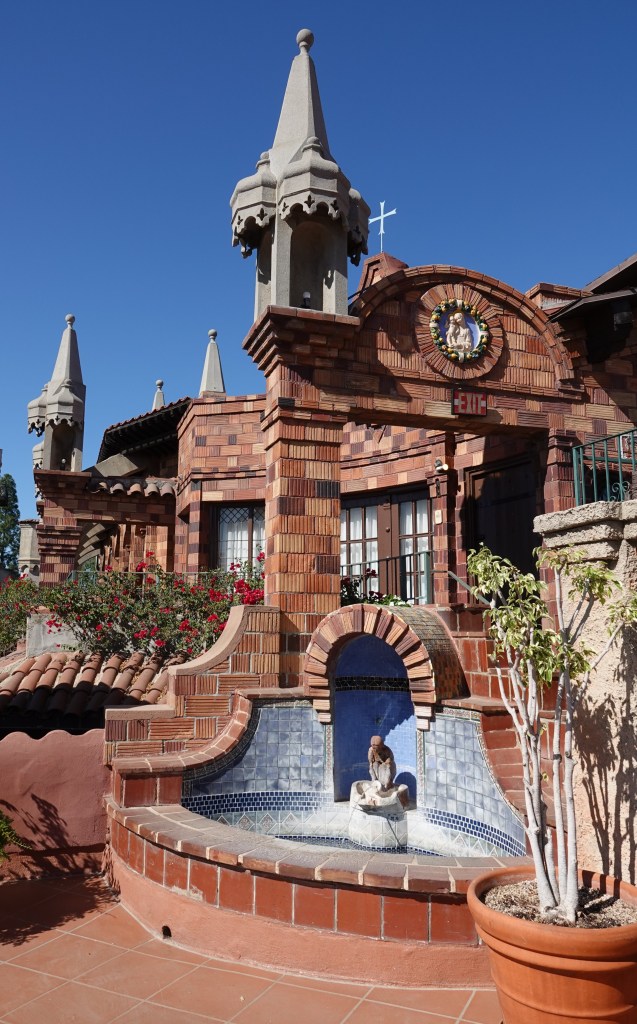
The Inn is a National Historic Landmark which you can tour on your own or with a docent. The art and artifacts overflow the spacious Inn and there is a museum with more art across the street that can also be toured.
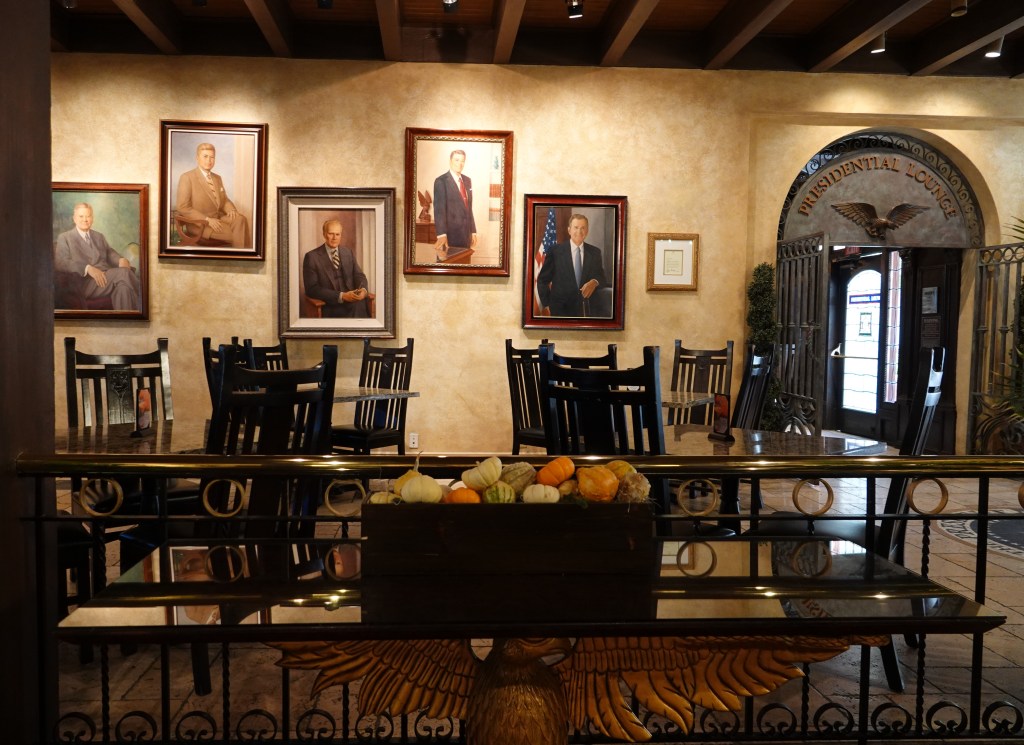
Ten US presidents have visited The Inn,
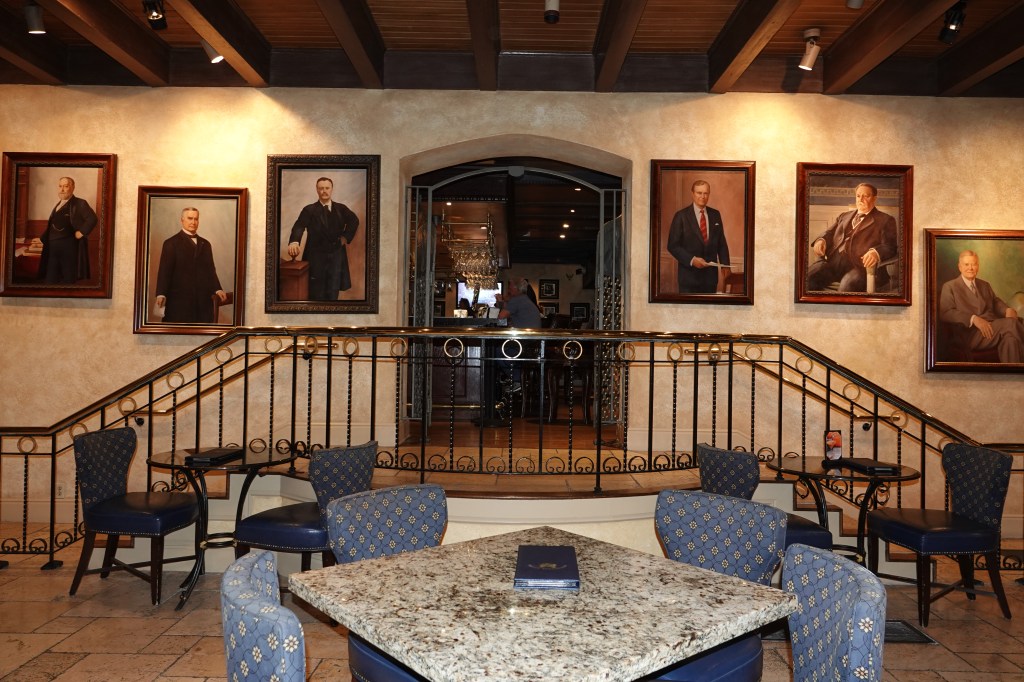
and there is a presidential lounge dedicated to them.
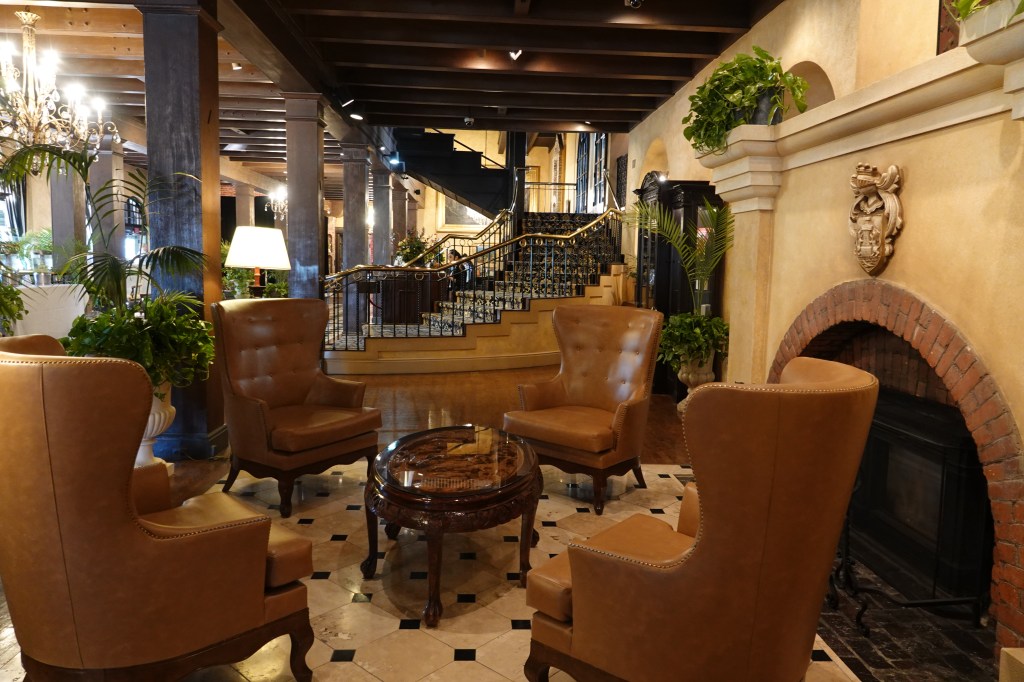
The mission style interiors are comfortable and spacious, but the most amazing spaces for me are all the inner courtyards which are like beautiful outdoor rooms full of whimsical artwork and constant surprises.
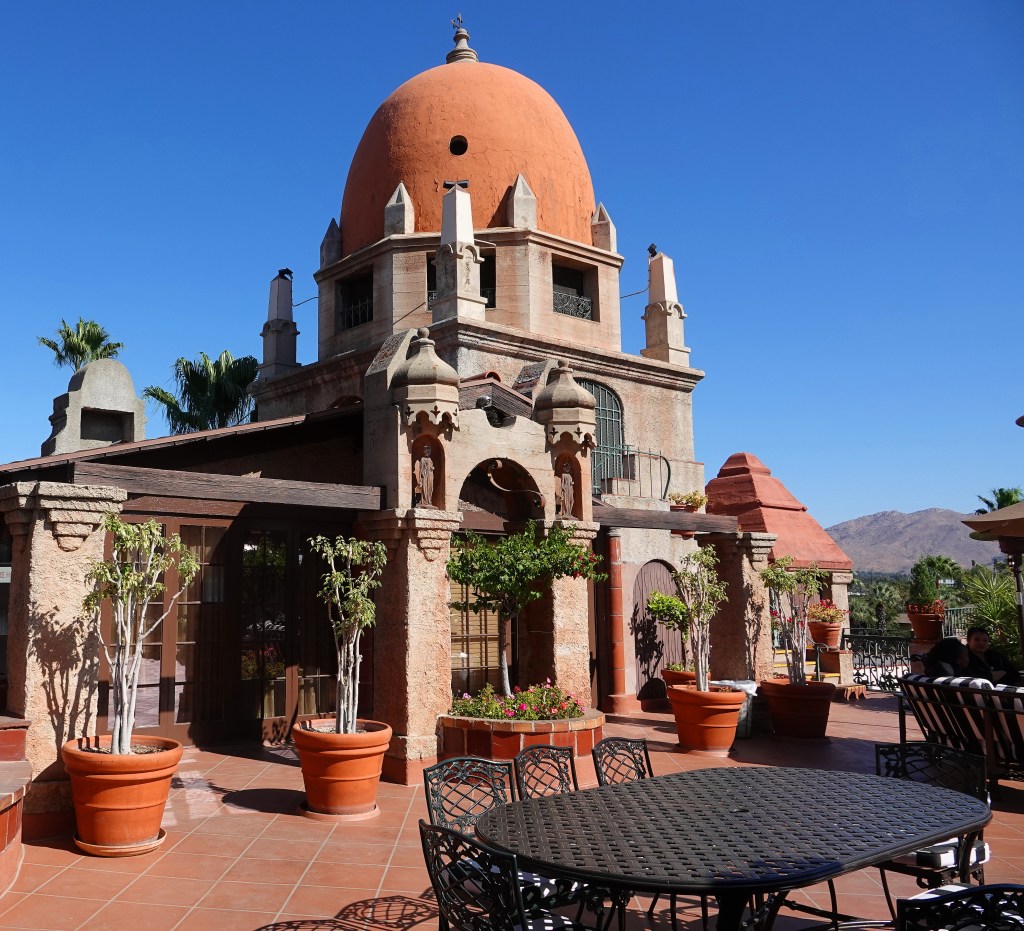
Exploring is great fun as everywhere you look you find precious art and artifacts.
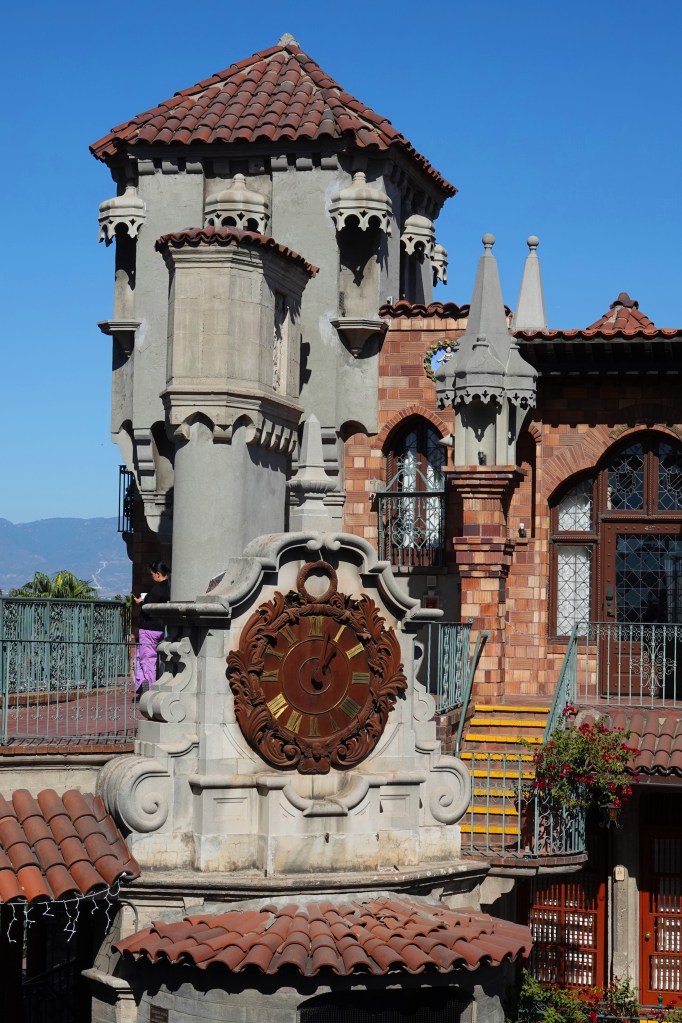
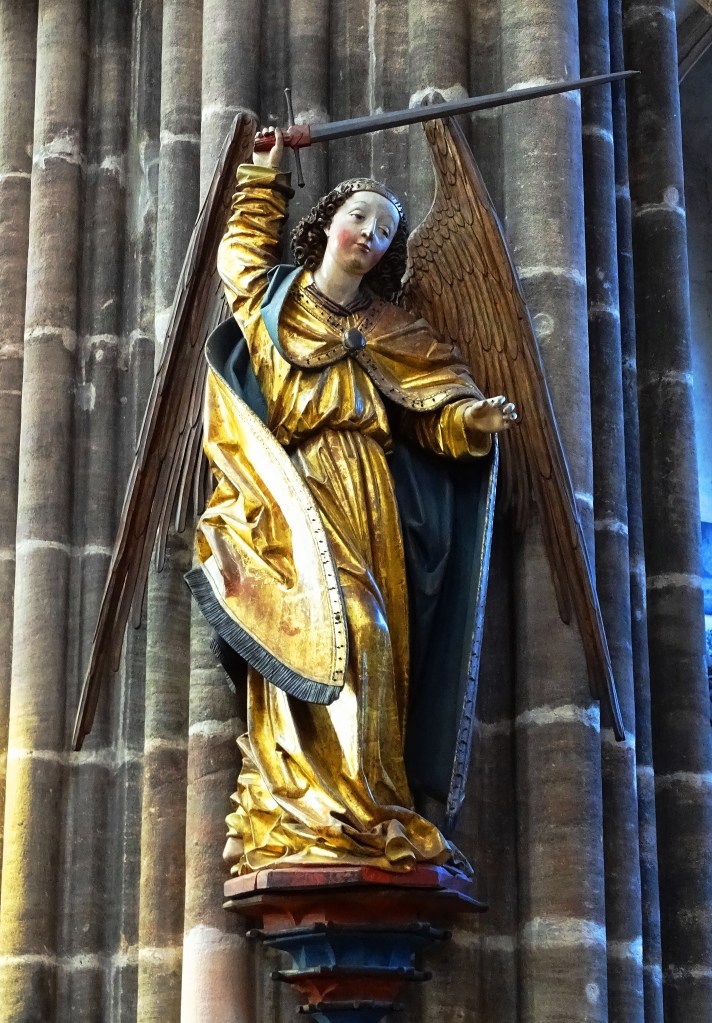
The clock tower has a glockenspiel with full size rotating figurines that is a replica of the original built in Nuremberg Germany in 1709.
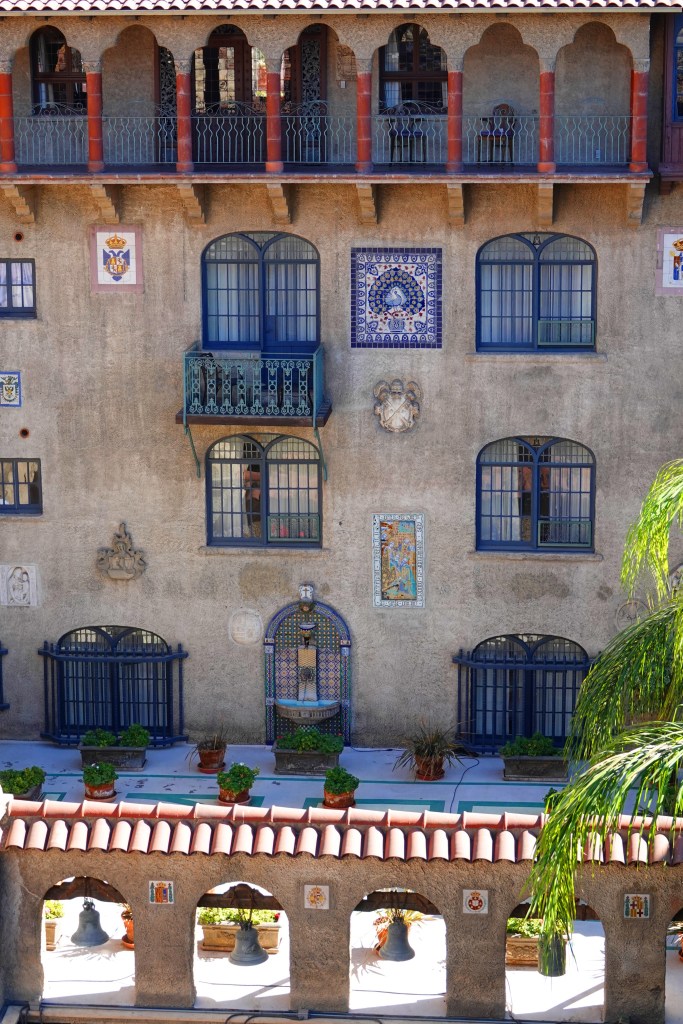
The Inn has over 400 antique bells. One from Nanjing China dates from 1247 and is the oldest bell in Christendom.
Cheers to you from the fascinating and fun Mission Inn in Riverside California~

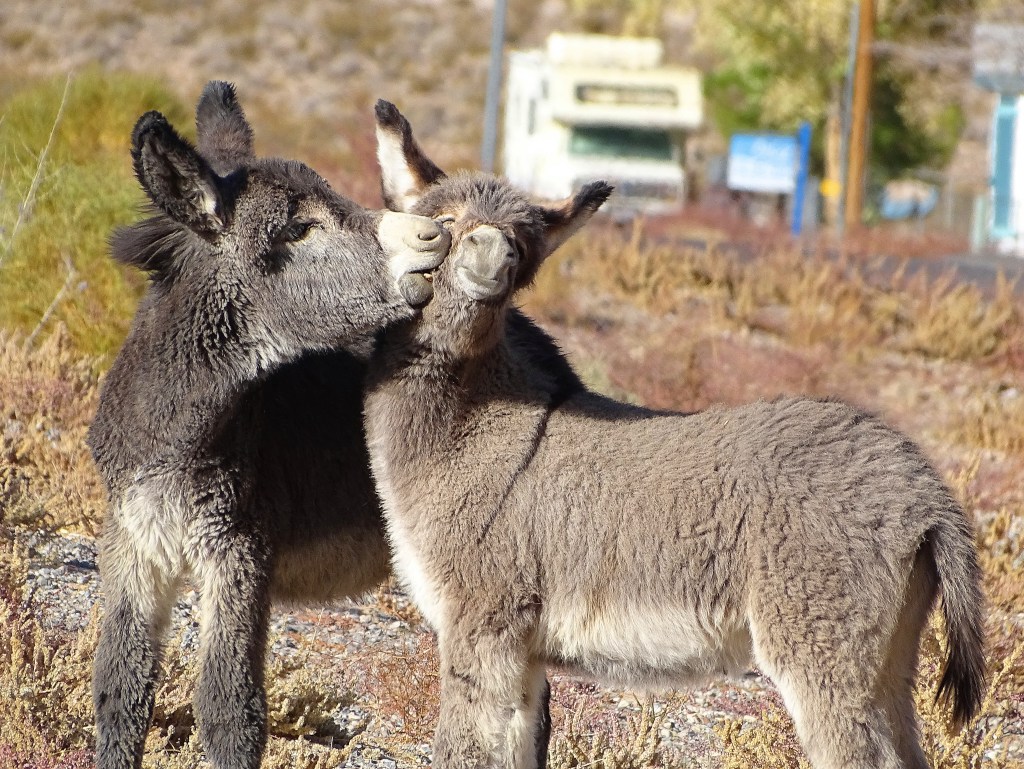
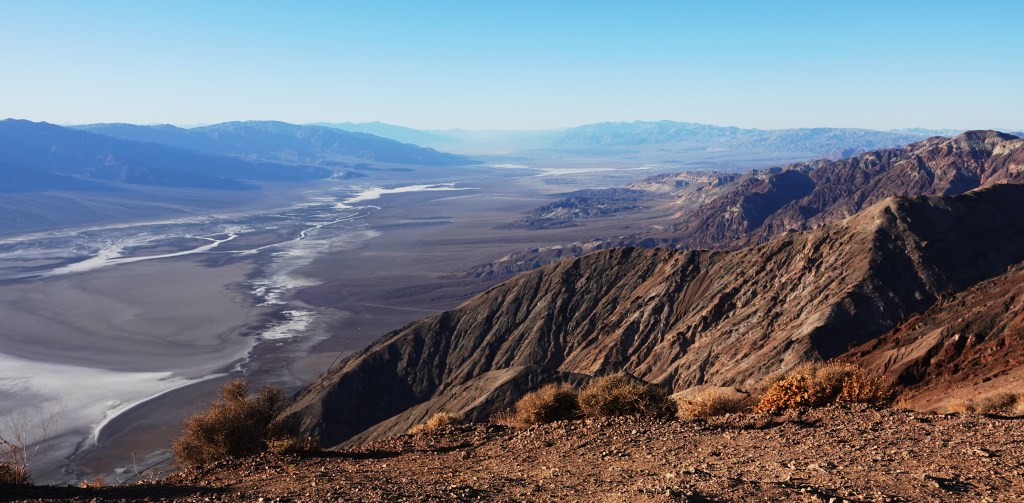
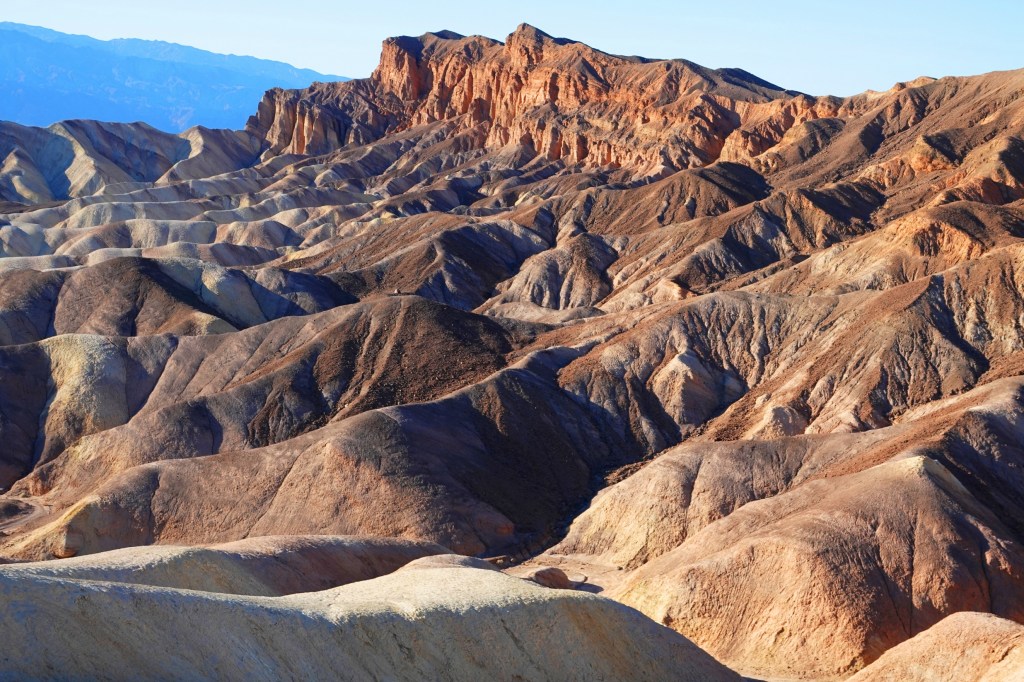
Death Valley National Park is the largest national park in the lower ’48 consisting of 5,270 mi² of barren, beautiful desert. It holds the world record for the hottest place on earth topping out at 134 F in 2013.

Burros (donkeys) were introduced to the park by gold miners in the 1800’s. Some escaped and wild burros have thrived in the park ever since. Burros dig holes to find water and these holes are often used by other desert creatures. Burros are a food source for resident mountain lions, taking pressure off big horn sheep populations.
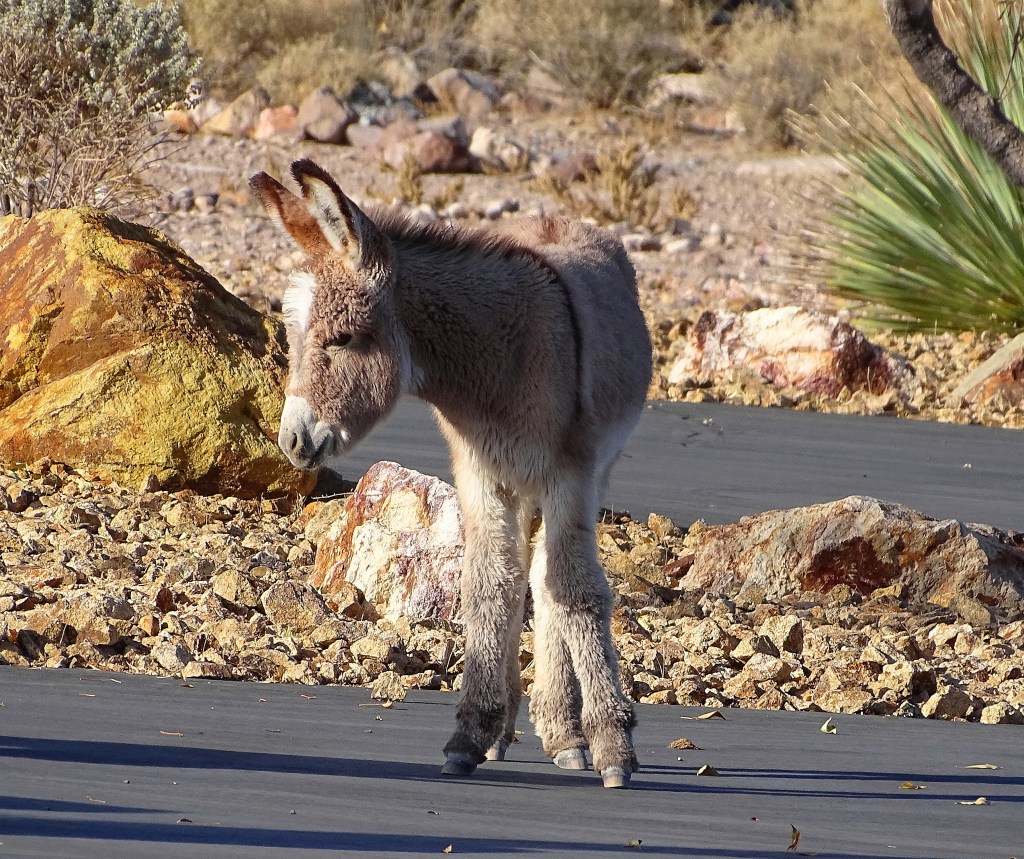
Burros are not wanted by The National Park Service in Death Valley.
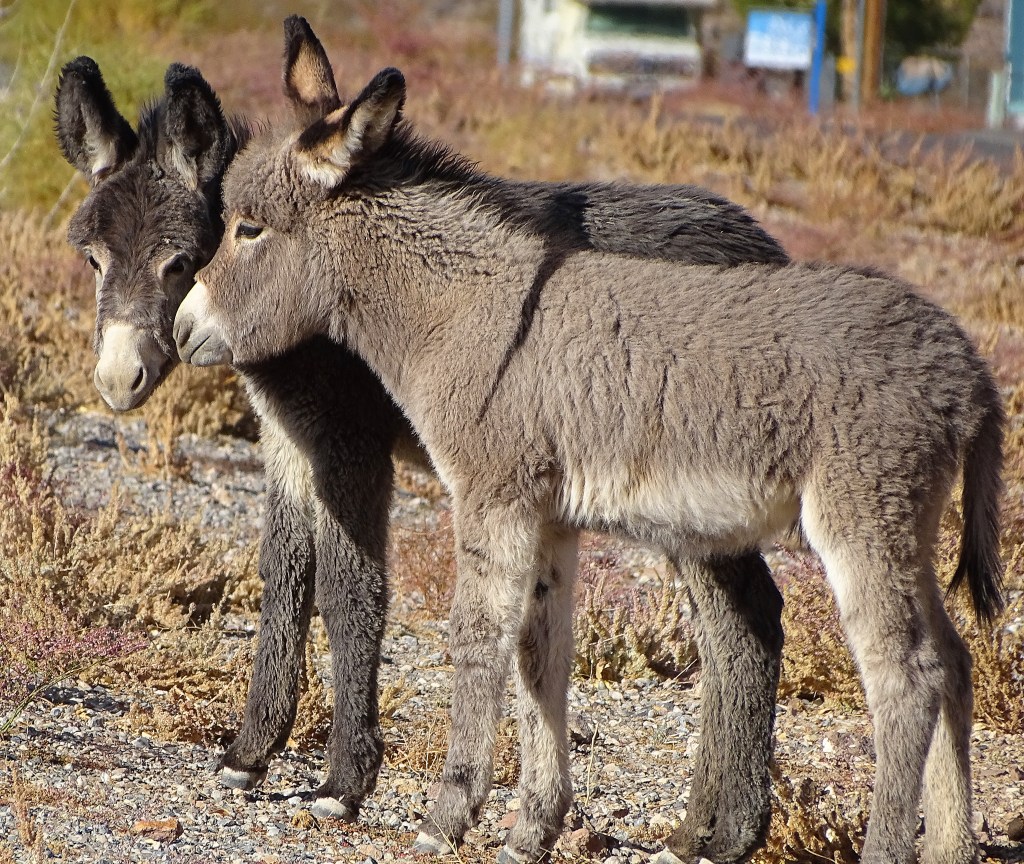
The front page of the 2019 National Park Summer Visitor Guide says burros are an “invasive species……they stomp around and make a mess…they over browse…..they can be mean and aggressive when defending young….they stand in roads and won’t budge.”
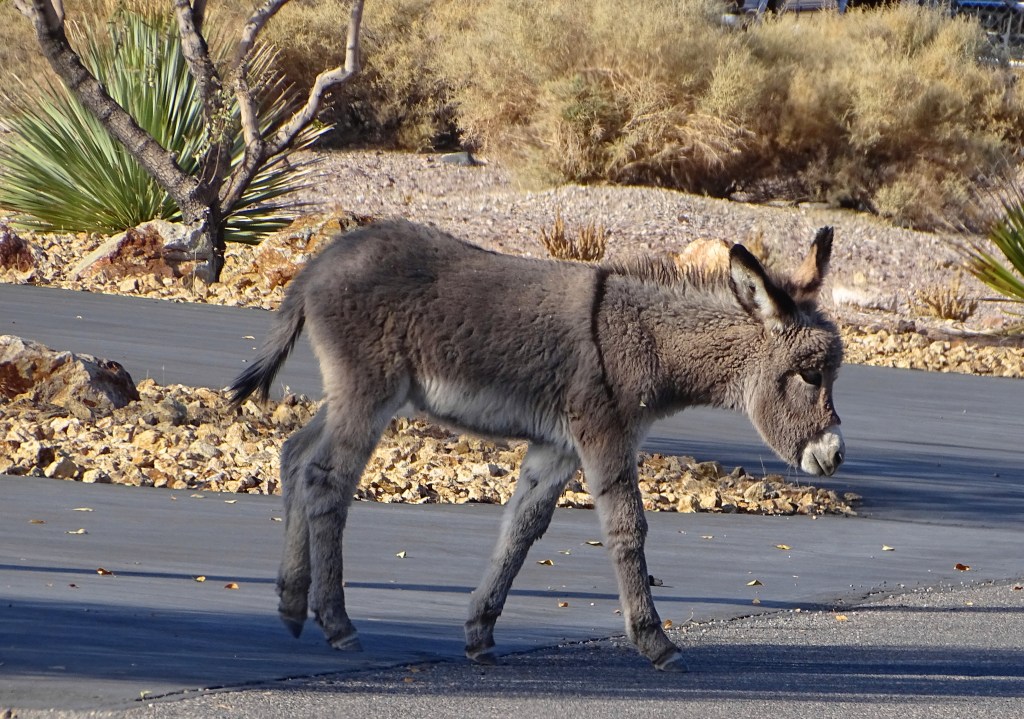
This sounds a lot like some of the human visitors I have seen in national parks over the years. But despite this, the park service has pursued a policy of rounding up wild burros by helicopter and horseback, shipping them off to rescue organizations. “Eliminating wild burros from the park has been the park service goal since 2002,” (Pahrump Valley Times).
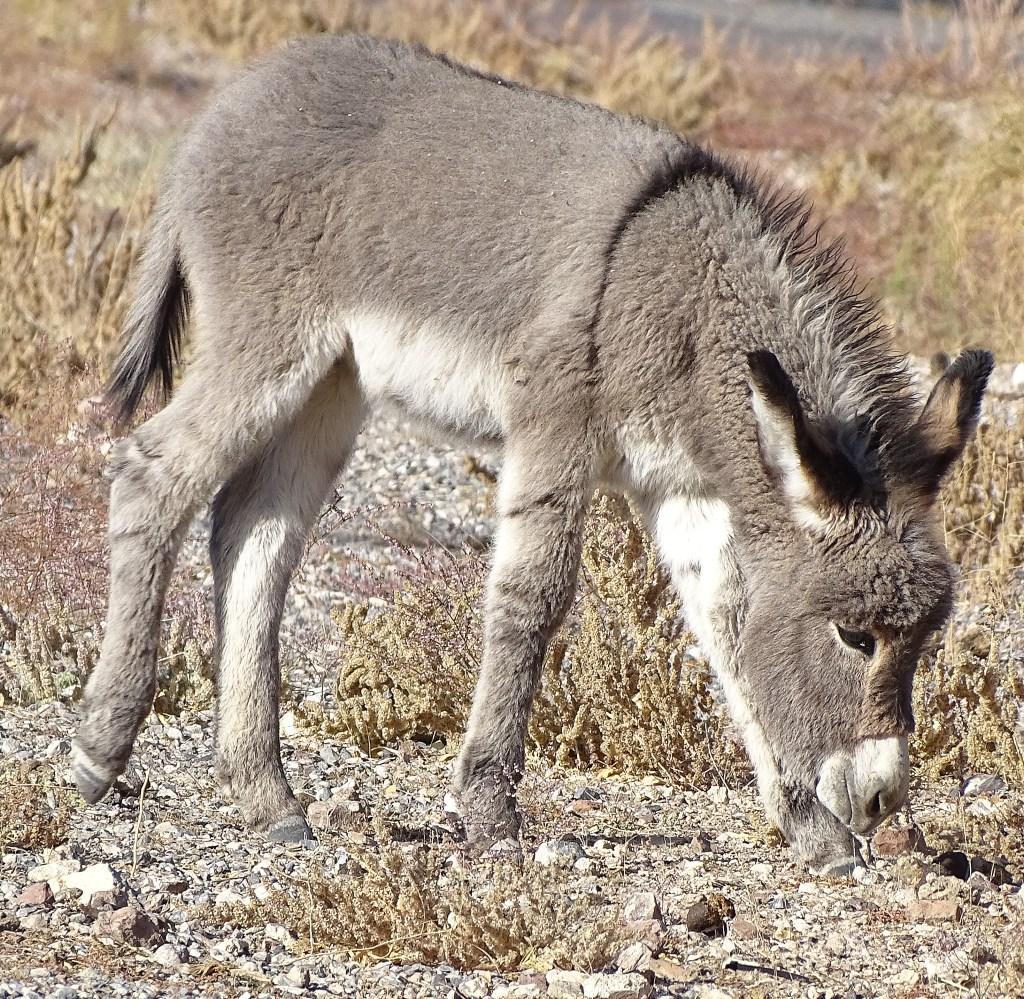
Having read about the wild burros, and wanting to see the last remaining ones, I decided to go search for them. I started by asking locals where I could find them. Every local I spoke to told the same basic story, which amounted to, “I haven’t seen them in the park. I have seen them outside the boundaries of park.”
One person even said, “It seems they know they are not wanted in the park, so they tend to stay just outside it.”
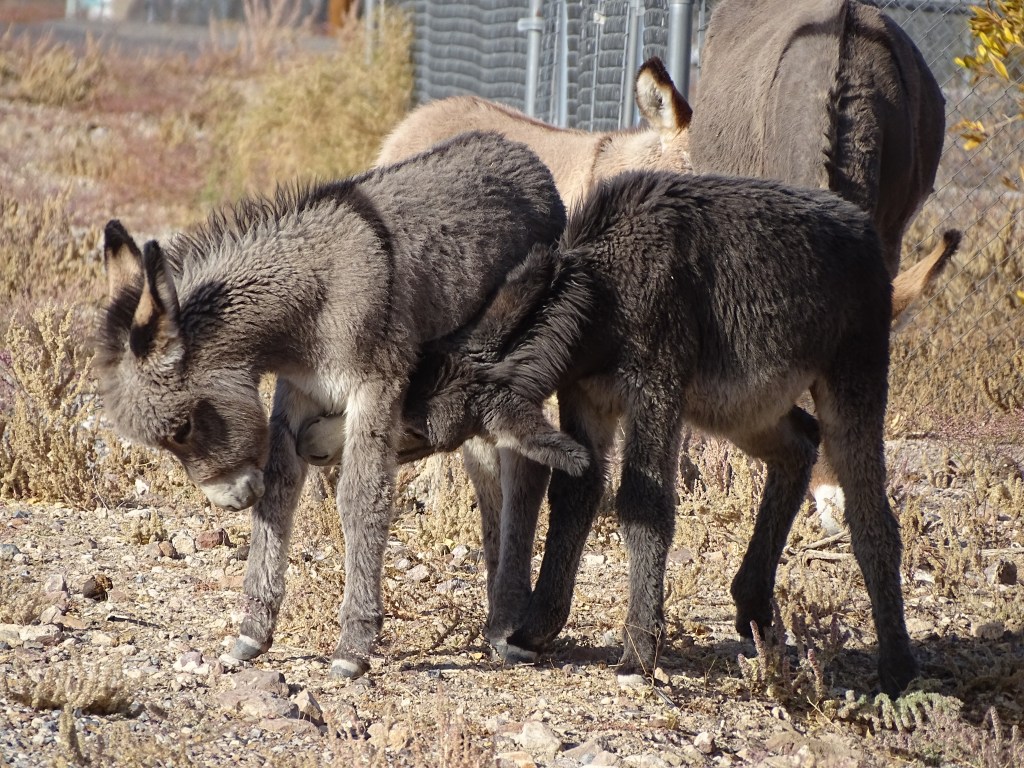
Pretty clever critters, huh?
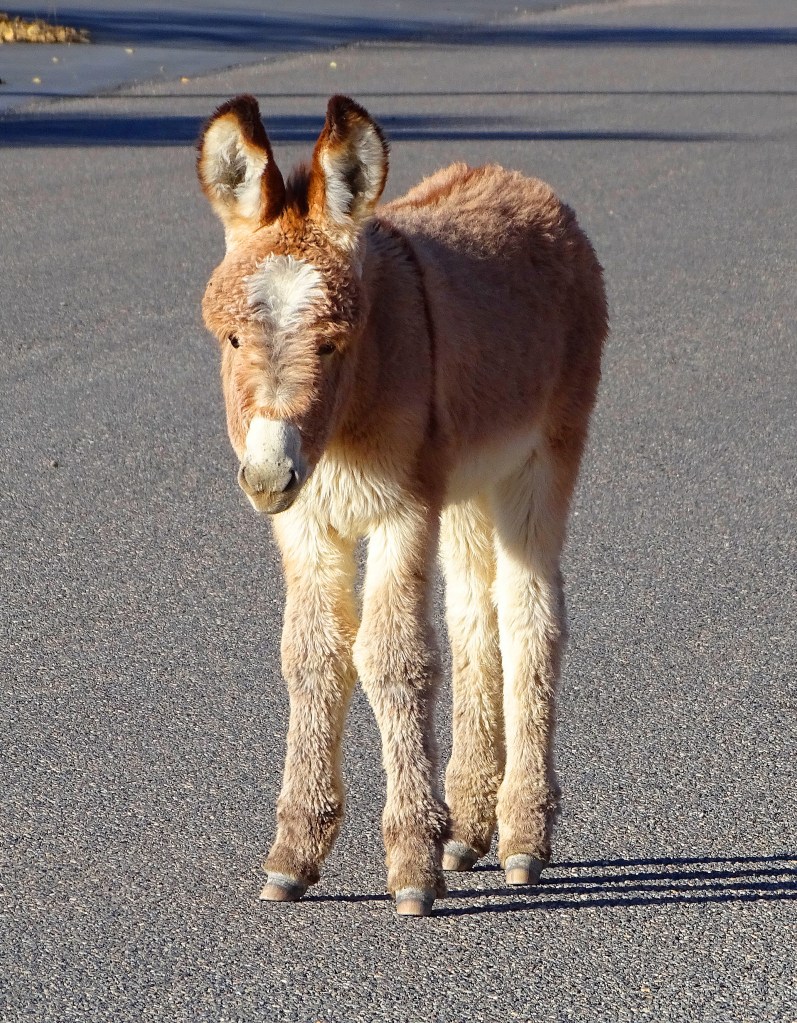
The road to Beatty Nevada, a town of 1010 people, just outside the park came up in lots of conversations as a place where wild burros congregate. So off to Beatty we went.
Sure enough, near the outskirts of town, we started to see signs of burro presence, not stomped up messes, but donkey scat. My husband Jim is a patient person, and he was willing to take all sorts of rocky dirt roads following donkey scat. We had no luck, and were about to give up when Jim decided to drive around the perimeter of town, and there they were! A small herd of eight burros, with one dominant male, three foals, and four females. One female was pregnant. Here was the male being protective when we first saw the herd:
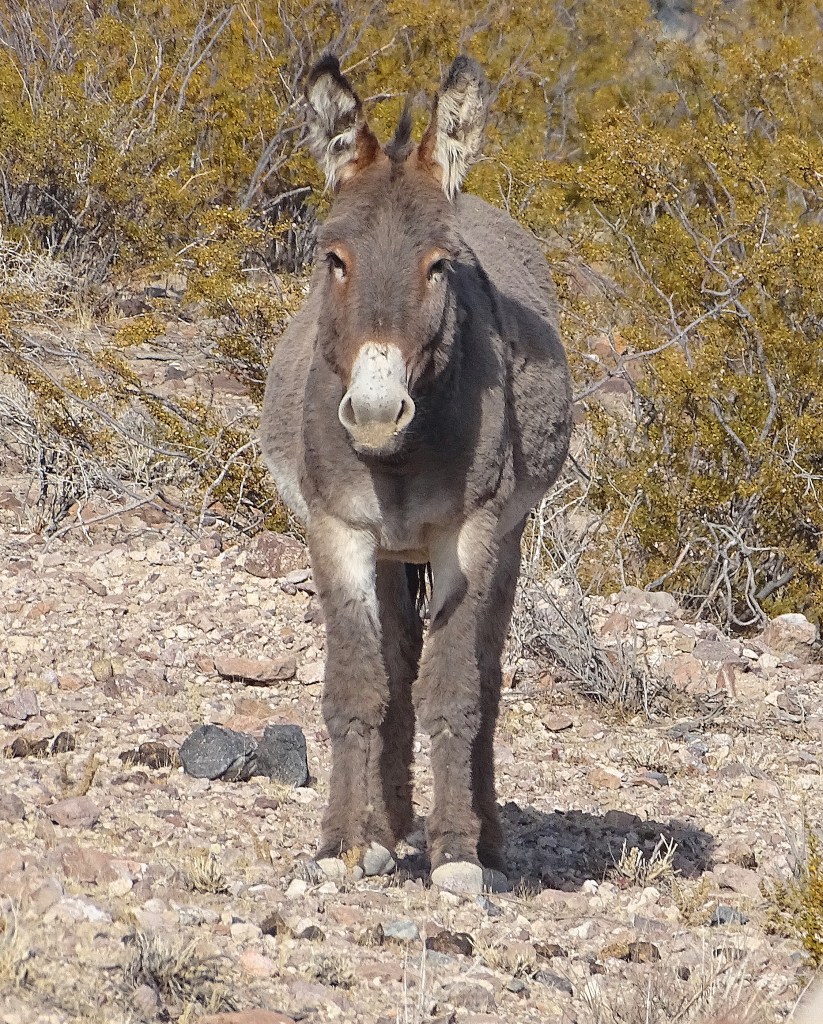
After awhile of distant observation, the burros seemed to decide we were not a threat, and walked slowly over and approached us directly, showing no sign of aggression. Mindful of the park literature, I backed away from them, and retreated to the safety of the car.
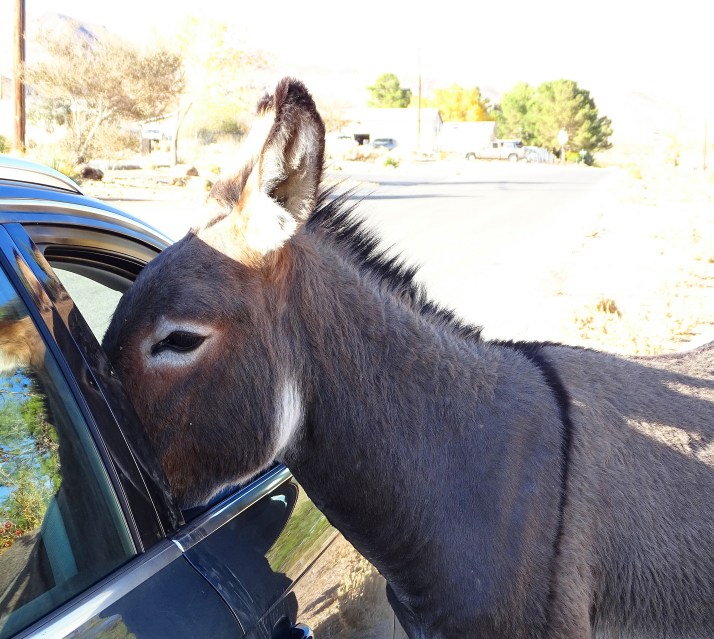
This was the burros reaction to my retreat!
A Beatty local resident, observing my caution, walked over and introduced us to the burros.
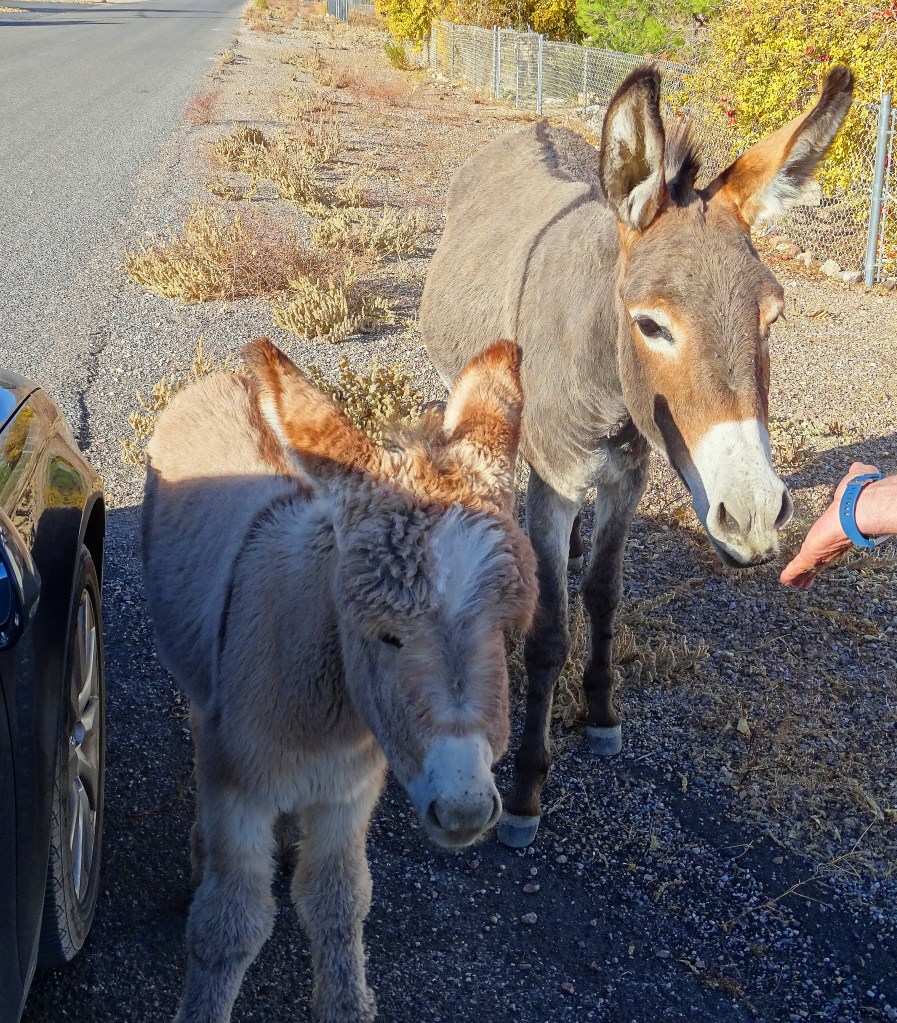
You can see his hand here.
No one should ever approach wild donkeys. They can be aggressive and dangerous when threatened. But this nice local man showed us their other side as well. They can also be friendly, curious and affectionate.
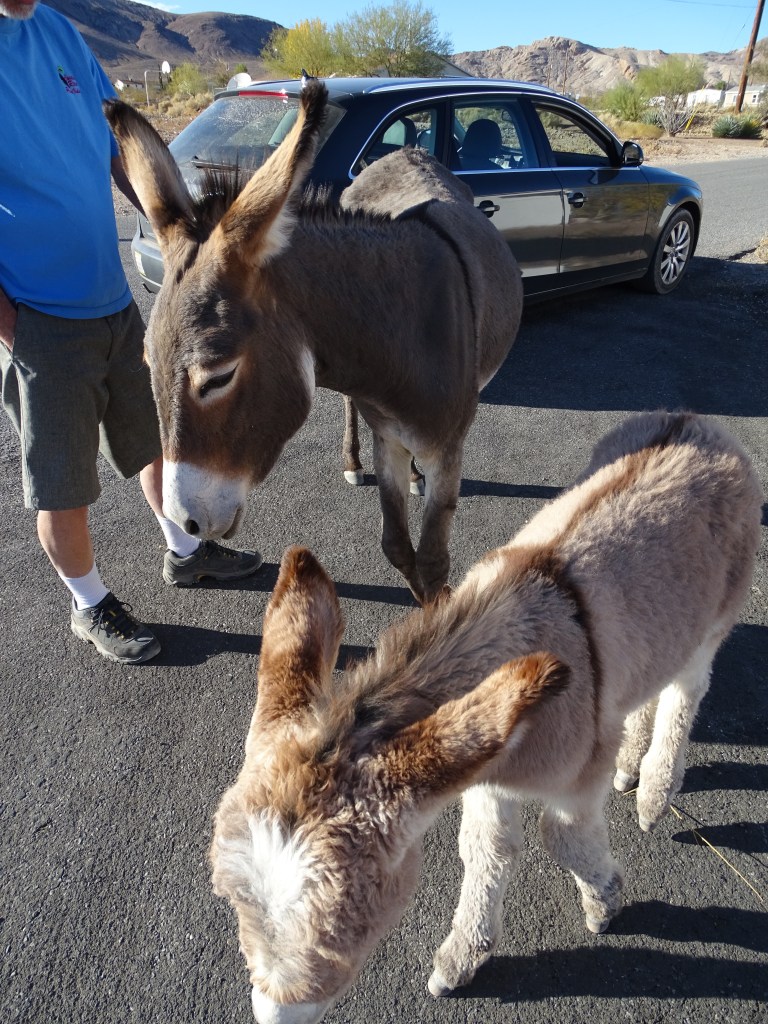
You can almost see Jim here making friends!
Cheers to you from the beautiful burros of Death Valley~
For further discussion of the burros and park policy see:
https://undark.org/2019/10/14/death-valley-burros-fate/