

Tiny Scaly Breasted Munias are native to India and Southeast Asia (click/tap to enlarge).
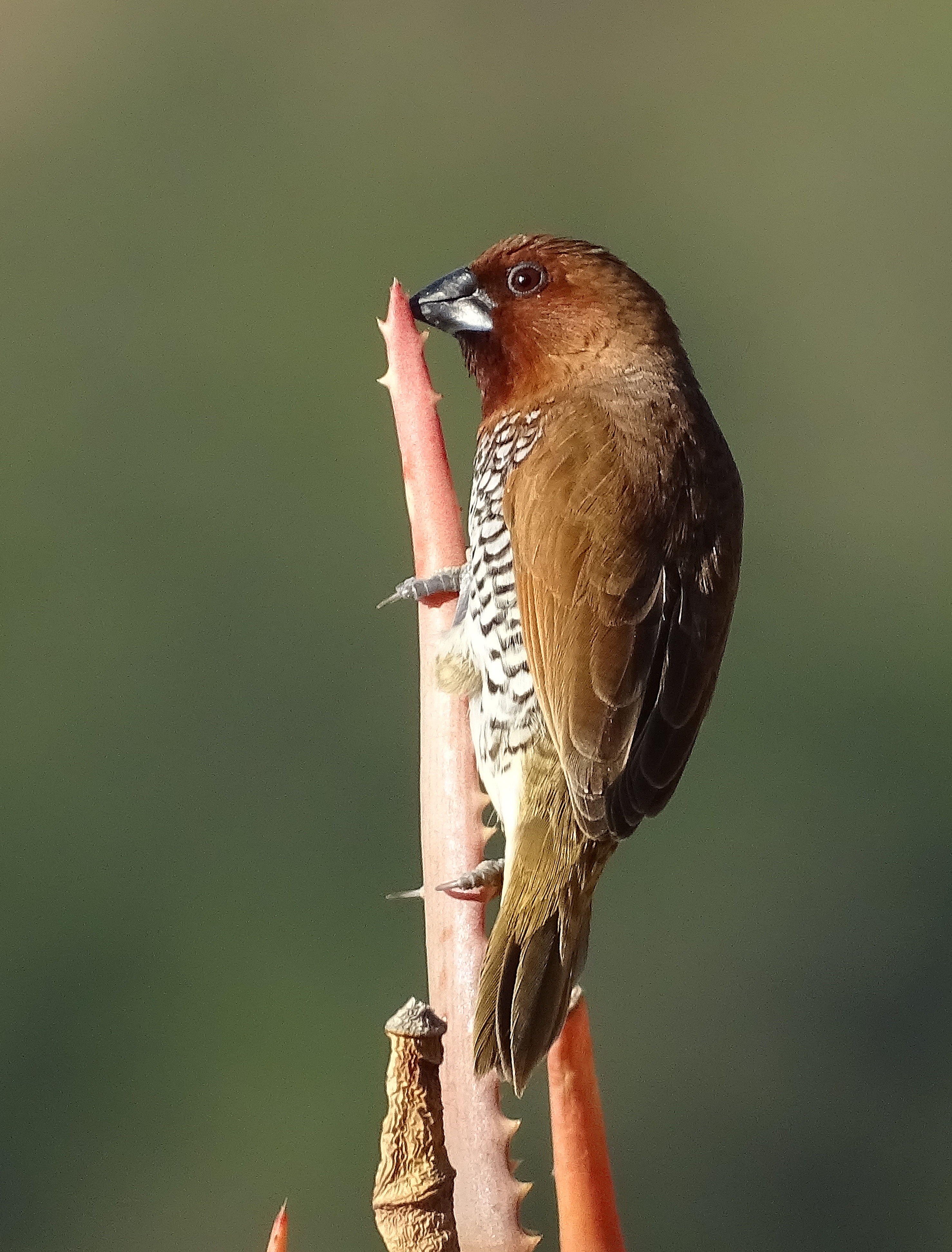
I told you birds,
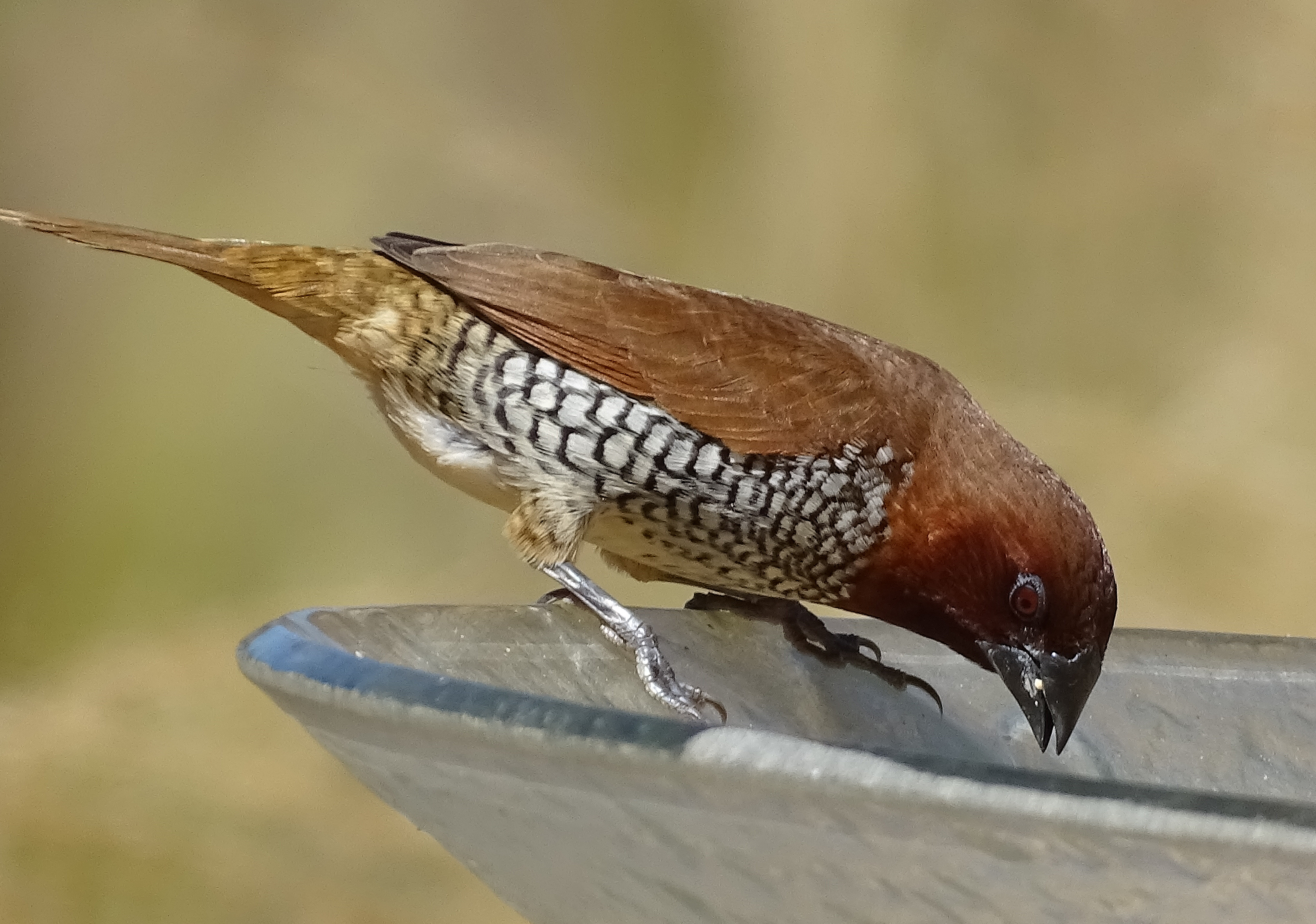
don’t pay attention,
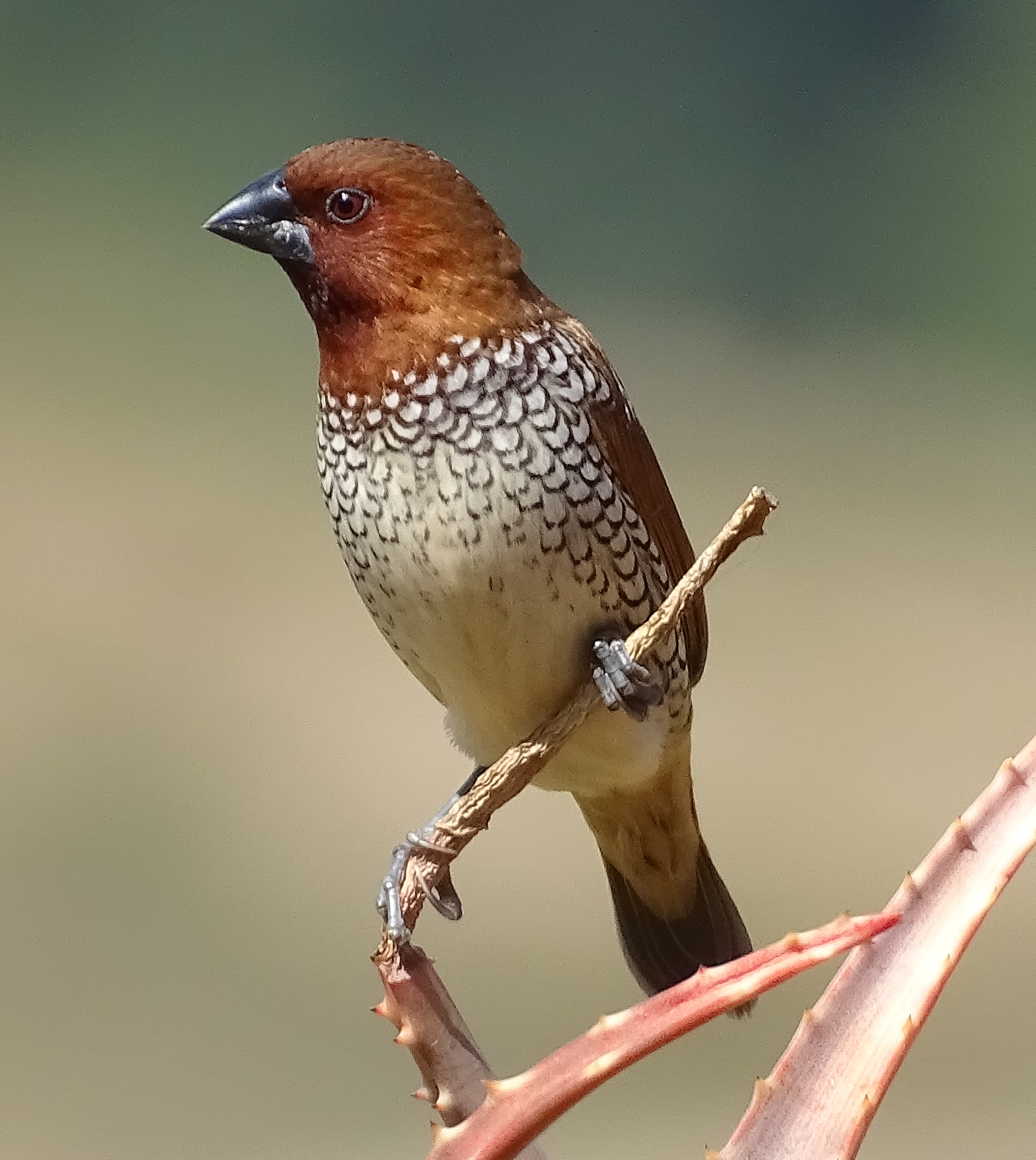
to where they are ‘supposed’ to be!
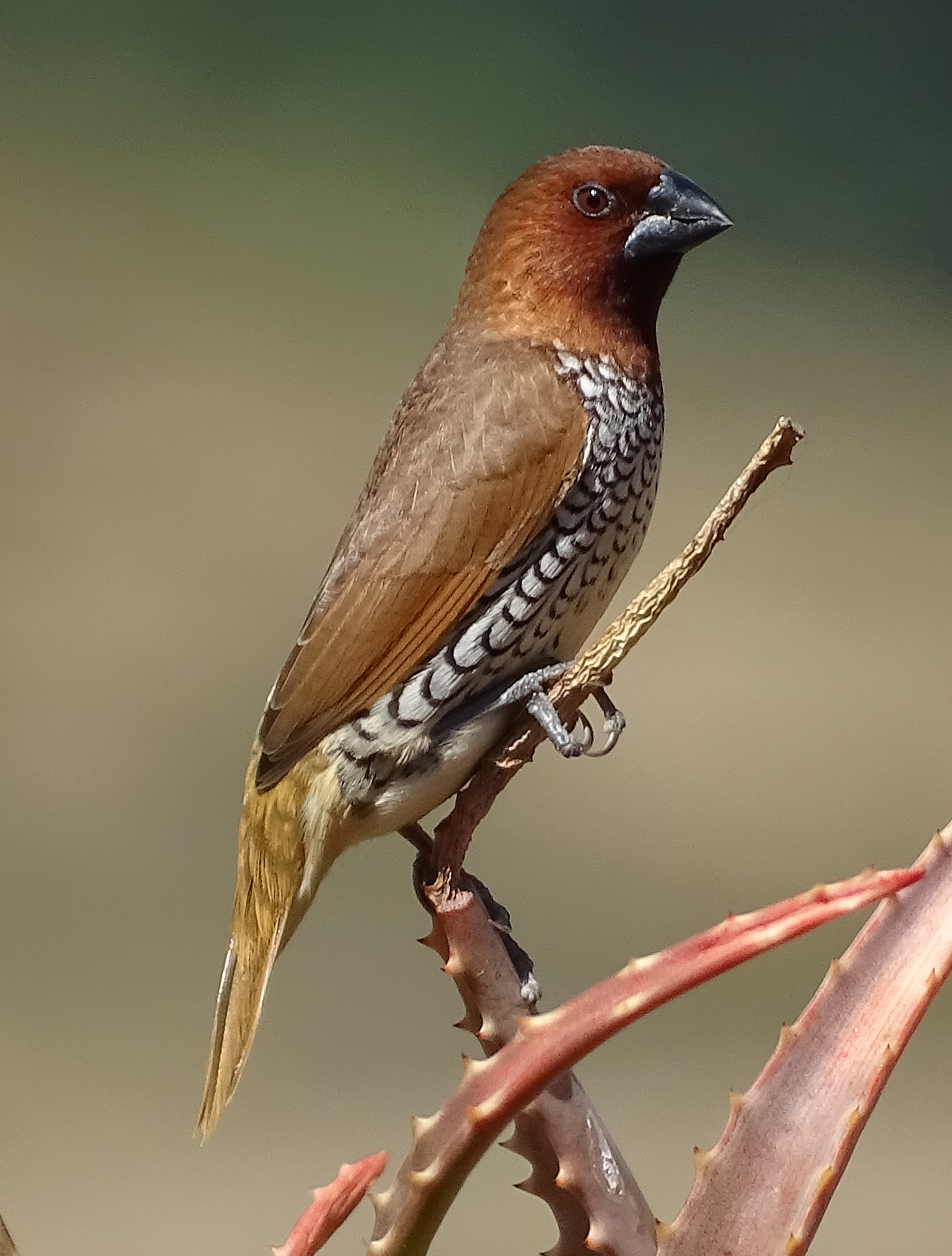
They looked as surprised to see me as I was to see them, but we are getting used to each other.
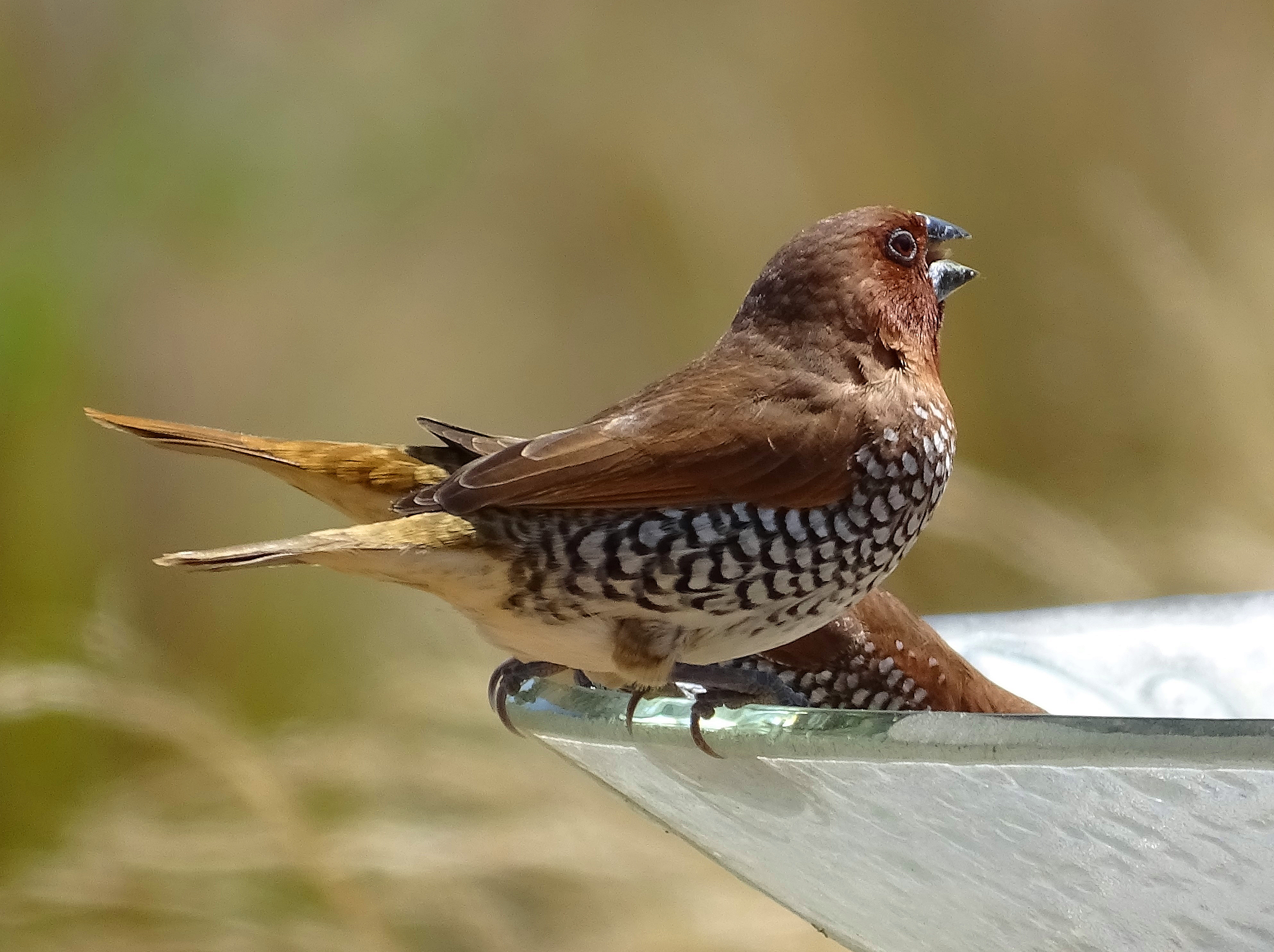
There is a whole flock of them.
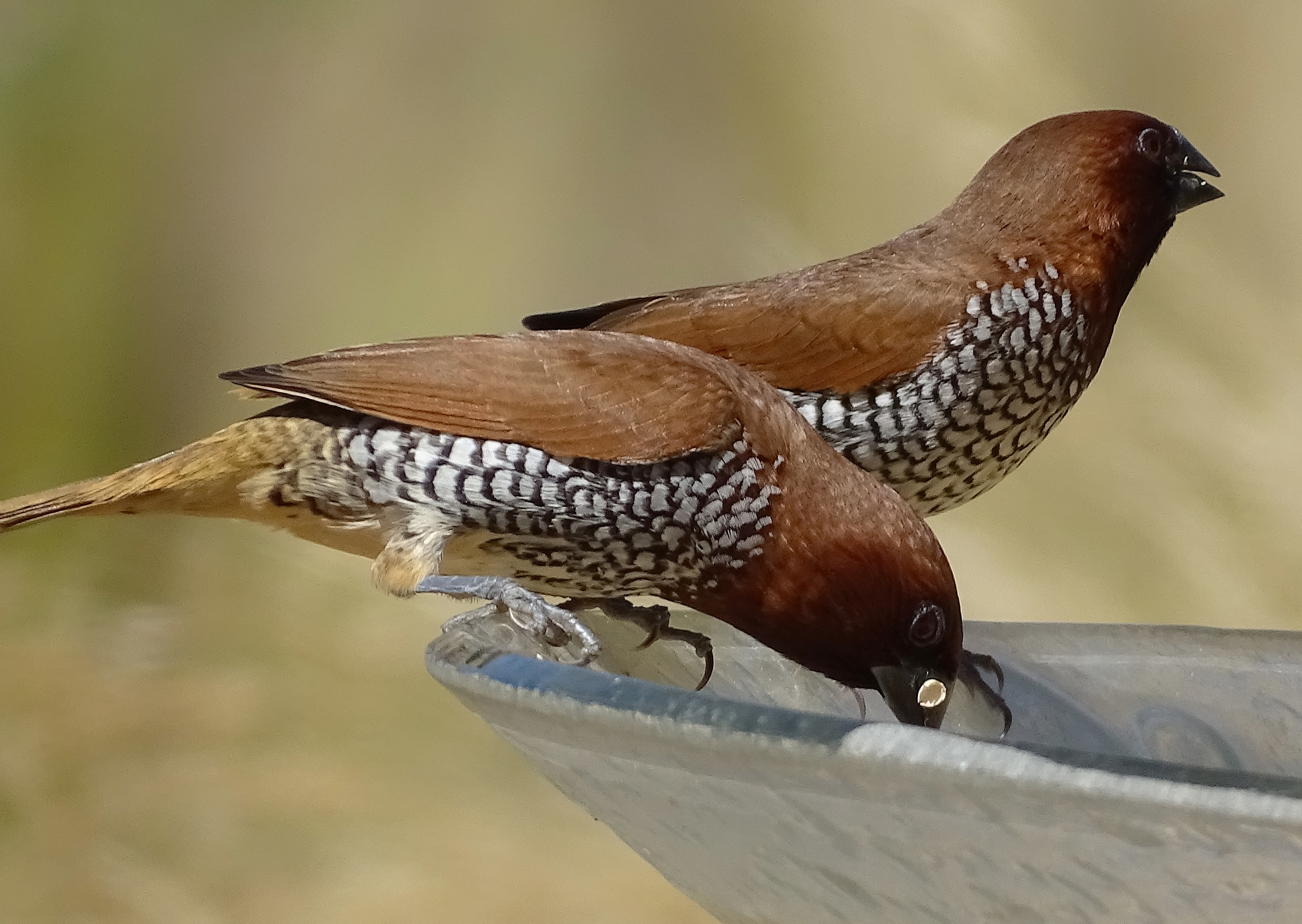
It turns out these birds were sold in US pet stores as Nutmeg Mannikins.
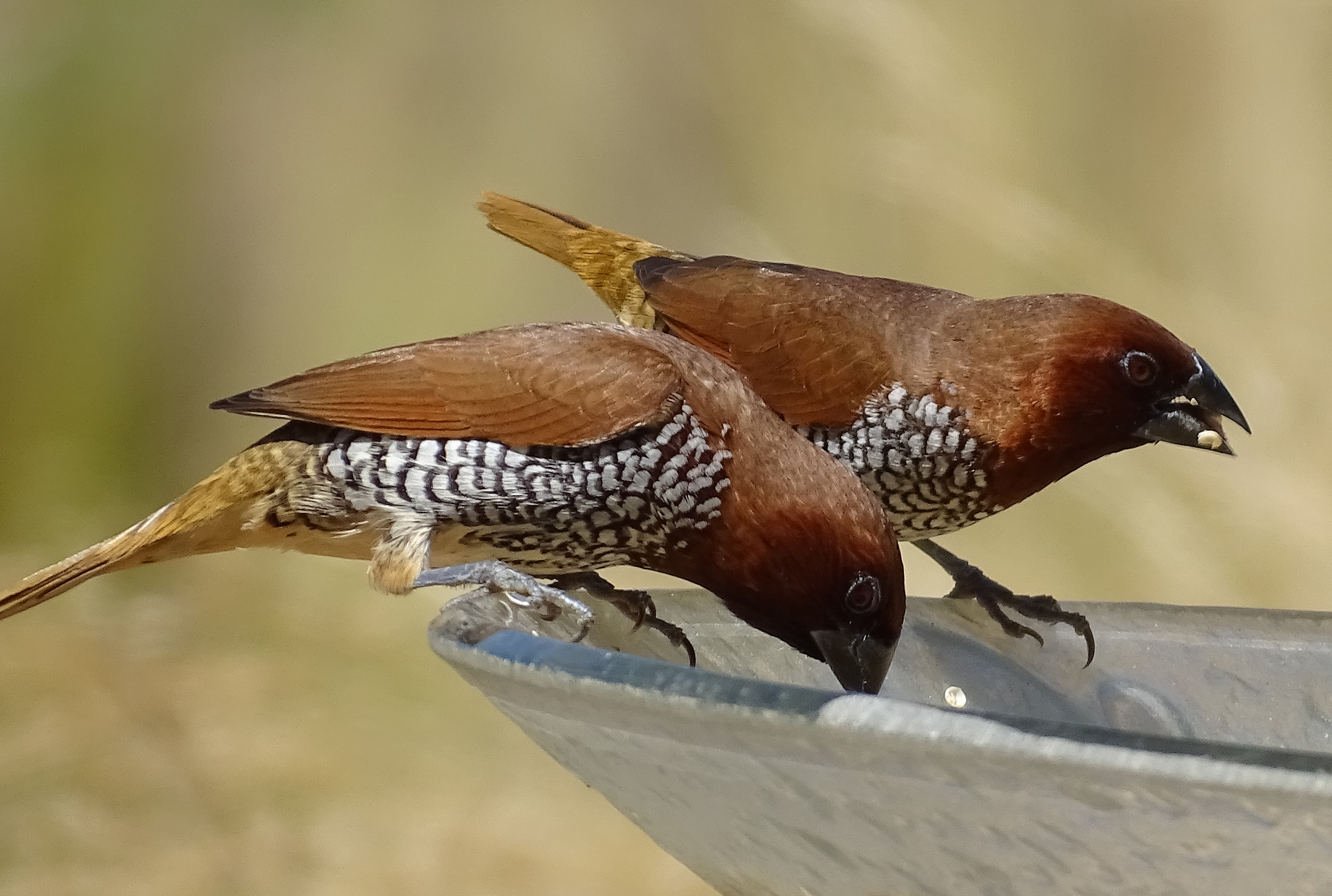
Some escaped and have been breeding in Southern California.

I had a dickens of a time identifying them because they are not native.
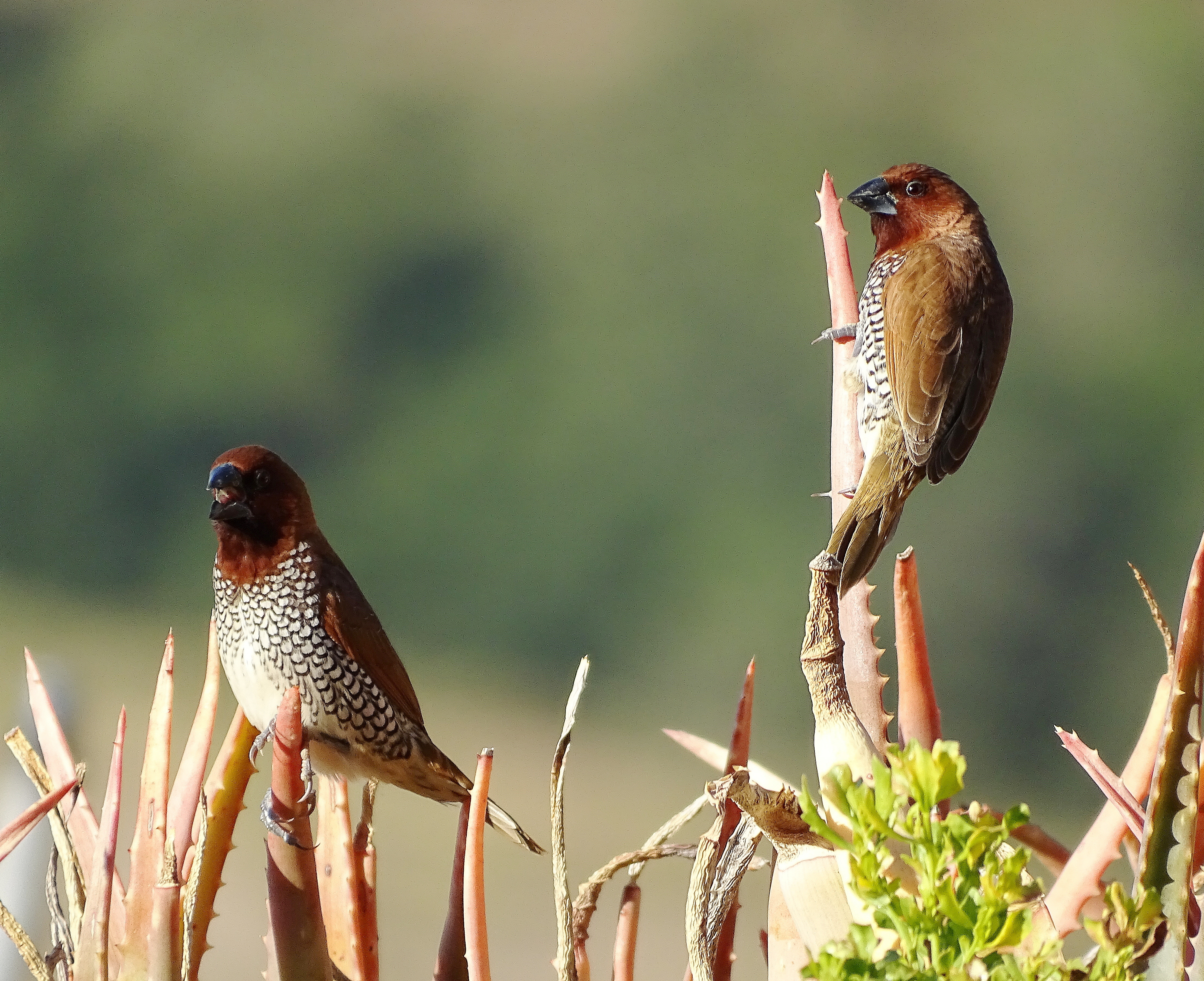
Cheers to you from the new Holler locals who are fitting in quite nicely with the neighbors~
Share this:

Discover more from Cindy Knoke
Subscribe to get the latest posts sent to your email.
Expat birds! They are adorable and like people, they will adapt to their surroundings. I saw a Hoopoe bird in our park the other day. They are native to Africa but do make their way here in Spain as we aren’t that far away. They are adorable little birds.
How wonderful is that! Birds definitely do not read the manuals about where they are supposed to be. I saw Egyptian Geese and Ring Necked Parrots in St. James Park! დ
Comme habituellement, les photos sont très belles, très nettes, très soignées. Je ne commente pas à chaque fois, mais je suis vos voyages et vos clichés. Bravo;
Je suis honoré. Merci beaucoup. Votre gentillesse est la plus appréciée დ
Surprise – surprise, you never knows what comes flapping these days. I understand your brain got hot.
Smiling…. Smoke was coming out my ears! 😉 😉
so beautiful
They are lovely little birdies დ
Great pictures again, Cindy, and beautiful birds!
So appreciated! Thanks much & cheers დ
A beautiful addition to Southern California.
Yes indeed! We are lucky to have these Indian beauties დ
What lovely little birds! 🙂
Thank you for showing them to us, dear Cindy!
You are very welcome dear Martha & take good care my friend დ
What beautiful little birds! Thank you for sharing.
Thank you for appreciating them Robyn and cheers to you დ
Gorgeous birds!
Aren’t they QT’S! დ
Gorgeous!
Merci beaucoup mon Ami დ
De rien. 🙂
Beautiful birds! One species that got loose that is NOT harming the environment!
Exactly. A happy ending. They are sweet tiny birdies დ
Many times you travel for variety Cindy. Today it seems that
it comes to you! How very beautiful and delightful.
Yes!!! Wonderful and serendipitous. These little Indian birdies are now Holler locals! დდ
That is so charming, they are a beautiful bird
Thank you Eddie.
You are so talented and patient in capturing more lovely images. Well done!
Ahh…. So very appreciated! Thank you sincerely & cheers to you დ
What beautiful plummage these birds have. There is a free app called Merlin from Cornell University Dept of Ornithology which has bird recognition from their sounds. I tried it out the other day and it worked very well. You can download different geographic areas including the USA and Europe.
Thanks Kaiti. Merlin was down when I was trying to identify this species. I sent Cornell an email, but as soon as I did this, I was able to ID the species. Ask, and you shall find…. დ
Hi Cindy, I guess they are natives now. Do they have a nice bird song?
Leslie
They are native now! They are tiny birds with sweet voices. Here is a audio sample in their native India: https://www.youtube.com/watch?v=7_mhH_Y5dtA&ab_channel=IndianBirdVideos
A lovely addition to nature. Thank for sending that Cindy.
Leslie
Take good care my friend დ დ
How sad they’re shipped across the globe to be sold as pets… I’ve seen them outside my window here just before the monsoon… I hope they’re all freed and live happily at the holler.
Yes. It is sad and I am happy they have escaped and are thriving here. Don’t worry, I will take care of your birds, and make sure they have food and water all year long. I love them. They are sweet little birds დ
So glad they landed up at your doorstep. Thank you for caring.
Visa versa 2U.
I would like to stop by and thank you for sharing the miracles of the 🌎!
Very great collection you have here!
Should get back to taking pictures myself.
Well done Cindy!
What a lovely comment! Thank you for your kind thoughtfulness Nadea & cheers to you! დ
These amazing Scaly Breasted Munias. I love all of your amazing images and so photogenic. Anita
The appreciation is mutual Anita. Visa versa 2UX2! დდ
Really unusual. At least they are free and thriving and doing no harm. Rather the way there are wild parakeets in Florida. Great photos!
Yes! I still want to see more of Florida’s wild parrot species. I photographed them once. It was not enough. Parrots adaptability is astounding დ
A beautiful bird. So glad that they’ve adapted well to life in California 🙂
Now they are here everyday and we are used to each other. I am pleased as punch about the whole thing! დ
Wow, Cindy! These are spectacular birds – ones I’ve never heard of or seen before. Thank you for sharing your gorgeous photos of them.
Ah.. Thank you so much more for appreciating them & take care დ
These small creatures are a testament to the complexity, adaptability, and beauty of our world. Cindy – these are extraordinary photos.
I love your first sentence Rebecca. There is so much to see and absorb in this world of ours. I so admire the way you notice the ever present beauty and complexity დ
They are gorgeous but much better free than in a pet store.
We are in perfect accord დ
💟
Wow, what a treat.
Yes!!! Thank you for knowing დ
What lovely birds, great addition to your area and they seem very happy. Wonderful photos, Cindy.
You make me smile Ute. Thank you დ
Beautiful pictures!
Much appreciated Andrew დ
They are lovely birds as are your pictures of them. and it’s a shame they were caged as amusement for folks. Now they are multiplying in a land where they are not native and likely causing trouble for other species. Sorry I am a downer.
Thank you Steve for your sensitivity, knowledge and awareness. The common problematic denominator as you well state is human intervention. Even when we try to do things right environmentally, we tend to screw it up. I have learned so much from environmental biologists all over the world in my travels as they describe the contrary and illogical ‘species management policies’ in their various countries vis a vis invasive species. There are so many examples of us just making bad things worse with our good intentions. Thankfully, fiftenn years after the estimated release of Munia’s in Southern California, there is no evidence they are displacing any other finch species in Southern California დ
I’ve never seen birds like that before, but they sure are beautiful!
I had never seen birds like this either. Now I see them in flocks everyday! Life is beautiful დ
While not quite as exotic, we have been having a very busy birding season… or maybe it’s just my new hearing aids makes everything much more evident 😉
Great to ‘hear’ from you Oscar. I know you have faced challenges recently. Maybe life is ‘more evident’ to you now. Love to you დ
Just posted the last poem. Eulogy in a couple of days. Enjoy our celebration of freedom (now if we can just he Hydra of Totalitarian leaders in check!) this week.
Yes, always new challenges to face…
Such handsome birds!!
And tiny! Good things come in small packages დ
Wow, I’ve never even heard of these guys before! It almost looks like they’re wearing chain mail. Thanks for introducing them to us, Cindy.
Oh my gosh! I should have used the chain mail as a descriptor in my search to identify them. It may have been the key. It does look exactly like this! დ
😉
Hi Cindy, thank you for more lovely photographs!
Pick a photo you like Charles, and I will send it to you, framed დ
Wow, that would have been surprising. Pretty little things. Amazing that enough were turned loose/escaped to create flocks. I wonder what the time frame is? I also wonder if they are considered an invasive species?
Yes, apparently the escape happened around 15 years ago. They are not invasive, not displacing other species. They are more adaptive, which is quite remarkable, considering they are tropical birds, and The Holler is a semi-desert. Hope all is well with you and Peggy დ
This is absolutely fabulous, Cindy! Gorgeous bird, love its chest pattern!!
I tried so many varieties of descriptors to find a species with this chest pattern, to no avail. Finally, in defeat, I typed in checkerboard pattern, which led me to scaly breasted, and this sweet, tiny little expat დ
Beautiful birds! I have never seen them in real life, but love your photos. I too wonder if they are considered invasive?
Thank you very much Leya. They are not invasive. They are more like polite neighbors that get along with everyone, rare concept for us humans 😉 😉
💚 Always better than us.
დდ
How beautiful, special! Incredible photo captures, Cindy!
Thank you very much Amy & take good care დ
Such welcome little breeders, to, I bet? ♥
Yep. I am happy to have them! Hope all is well with you my friend დდ
Great, Cindy. They really are so beautiful. ♥
So appreciated. Take good care my friend.
Thank you again!
დდ
How amazing that they landed on your doorstep. Scaly Breasted Munias is quite the name, and they’re a long way from their native home, but seem very at home at the Holler.
Alison
I get the distinct feeling they like it here, which is amazing, because we are not the least bit tropical, more semi-desert. We did have a very wet year. I need to make sure I keep the water full as summer hits which is delayed so far დ
Nice shots!
Thank you Sharon დ
They are so beautiful. We don’t see them in my place in South India. I read they are in the north and also in some parts of South India. It would be a fascinating study about how birds reach different places in the world. Thank you.
They are such sweet birds. I am very happy to have them here and promise to take good care of your expat birdies. Birds do manage to get around this small world of ours in amazing ways დ
They do indeed.
Great captures! I’m sure these visitors were most welcome!
Thanks much. They are a most appreciated new neighbors! დ
How beautiful!
So happy you think so & cheers to you! დ
Absolutely gorgeous photos, Cindy!
Honored by your thoughtfulness Eugi. Thank you sincerely and be well my friend დ
My pleasure, Cindy.
დდ
💖
Stunning images, I love nature and you’ve brought a smile on my face this evening. I hope you’ll have a great week ahead, Cindy.☺️🙏
You just gave me a smile Seyi. Thank you very much and have a lovely week my friend დ
Beautiful
So happy you enjoyed & thanks for stopping by! დ
Nice looking birds. Hopefully they don’t become invasive to the point of being a problem.
So far no problem. They are polite little birdies 😉
That’s a very long flight! Hope they travelled business class.
Great photos, Cindy.
Laughing….. Definitely need to put their birdie feet up for that flight!!! 😉 😉
How delightful! The ‘escapees’. And, a flock of them . Big WOW!
Smiling! We are very happy with our Indian expat new neighbors დ
Absolutely beautiful pictures, Cindy! What lovely birds!
Thank you so much Sue. I am happy you enjoyed them & cheers to you my friend დ