
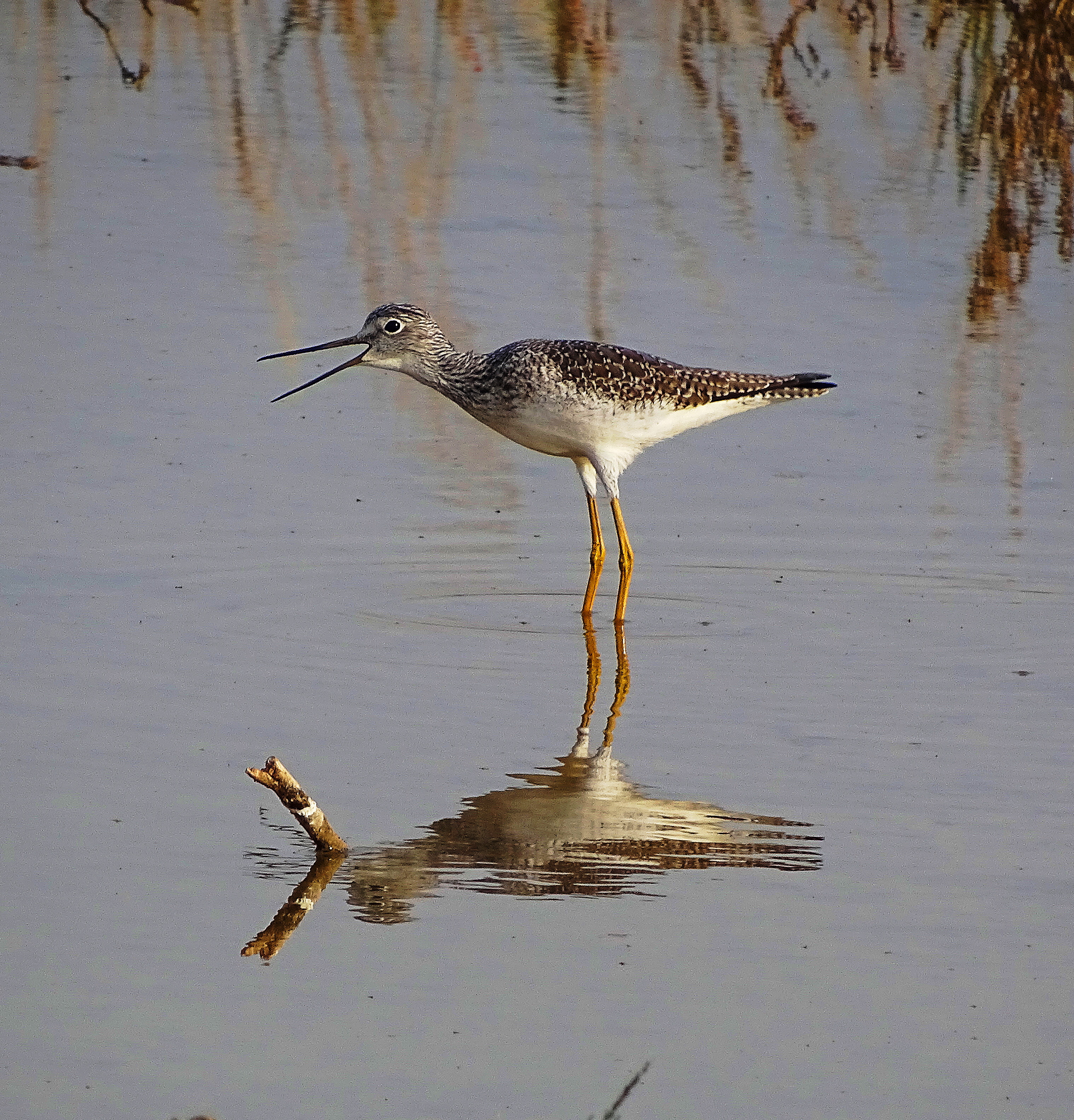
This little Yellowleg gave me quite a scolding for coming near him!
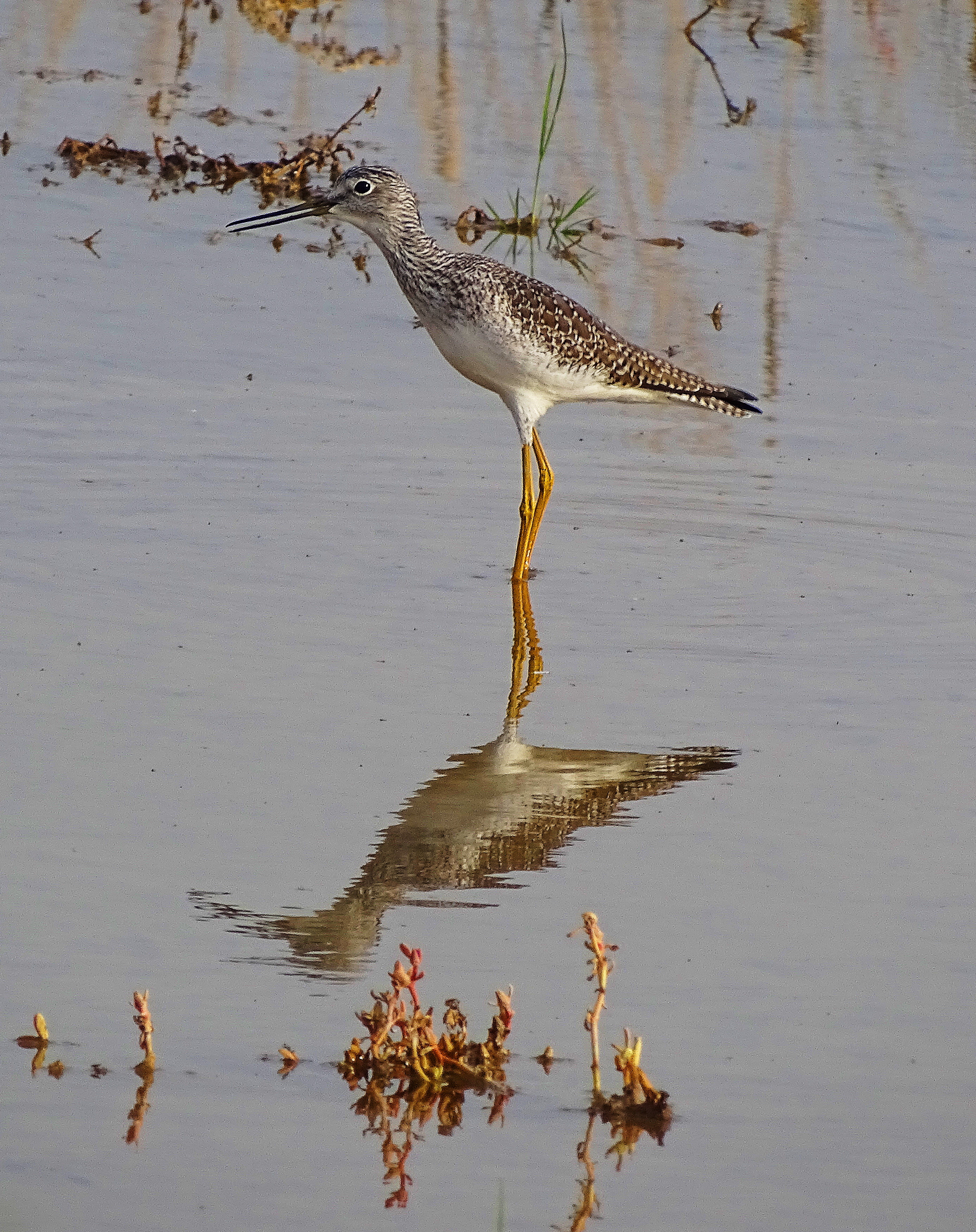
He may be little, but he’s tough and quite loud, and he stood his ground!
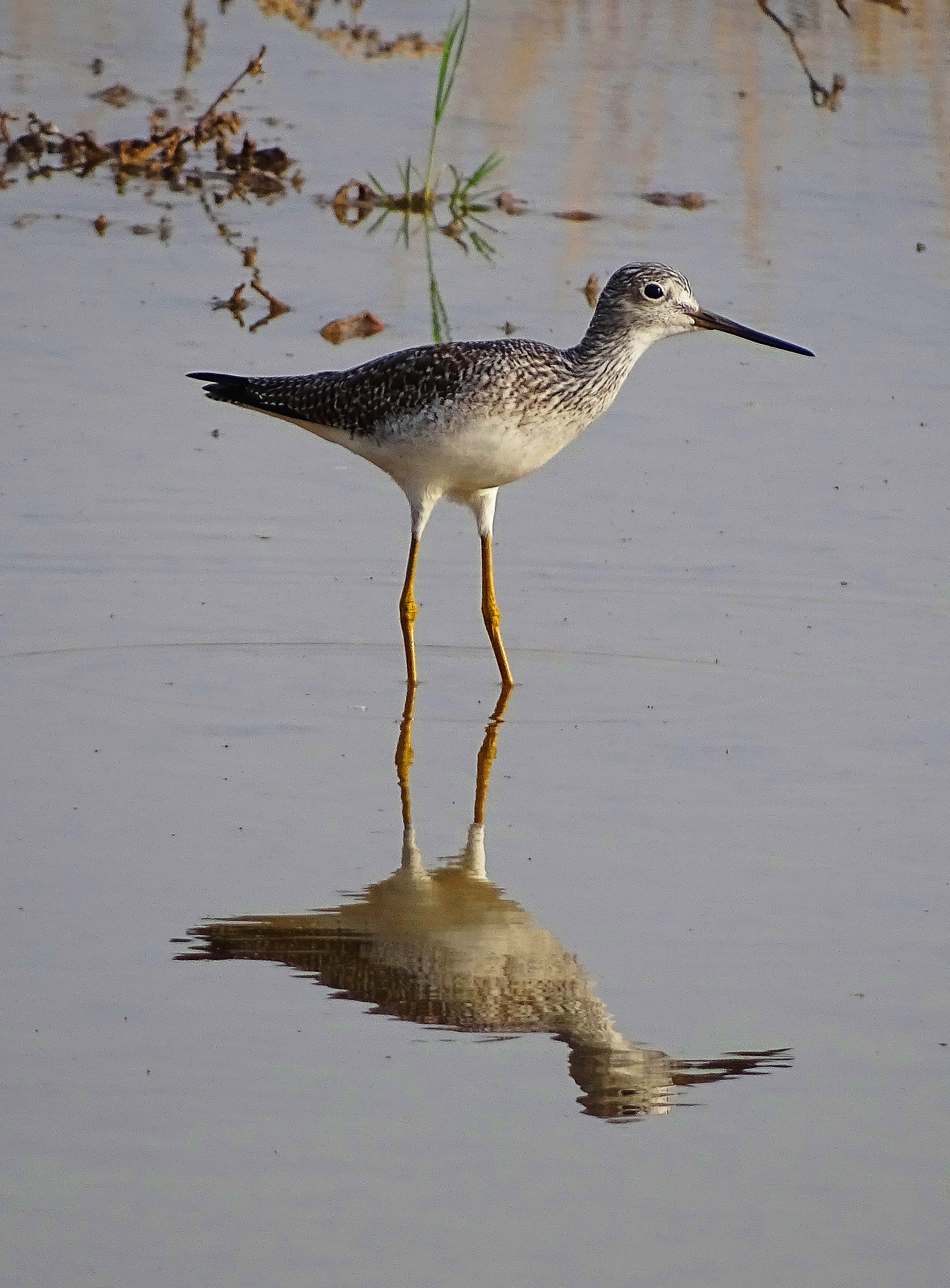
Eventually he settled down with me around.
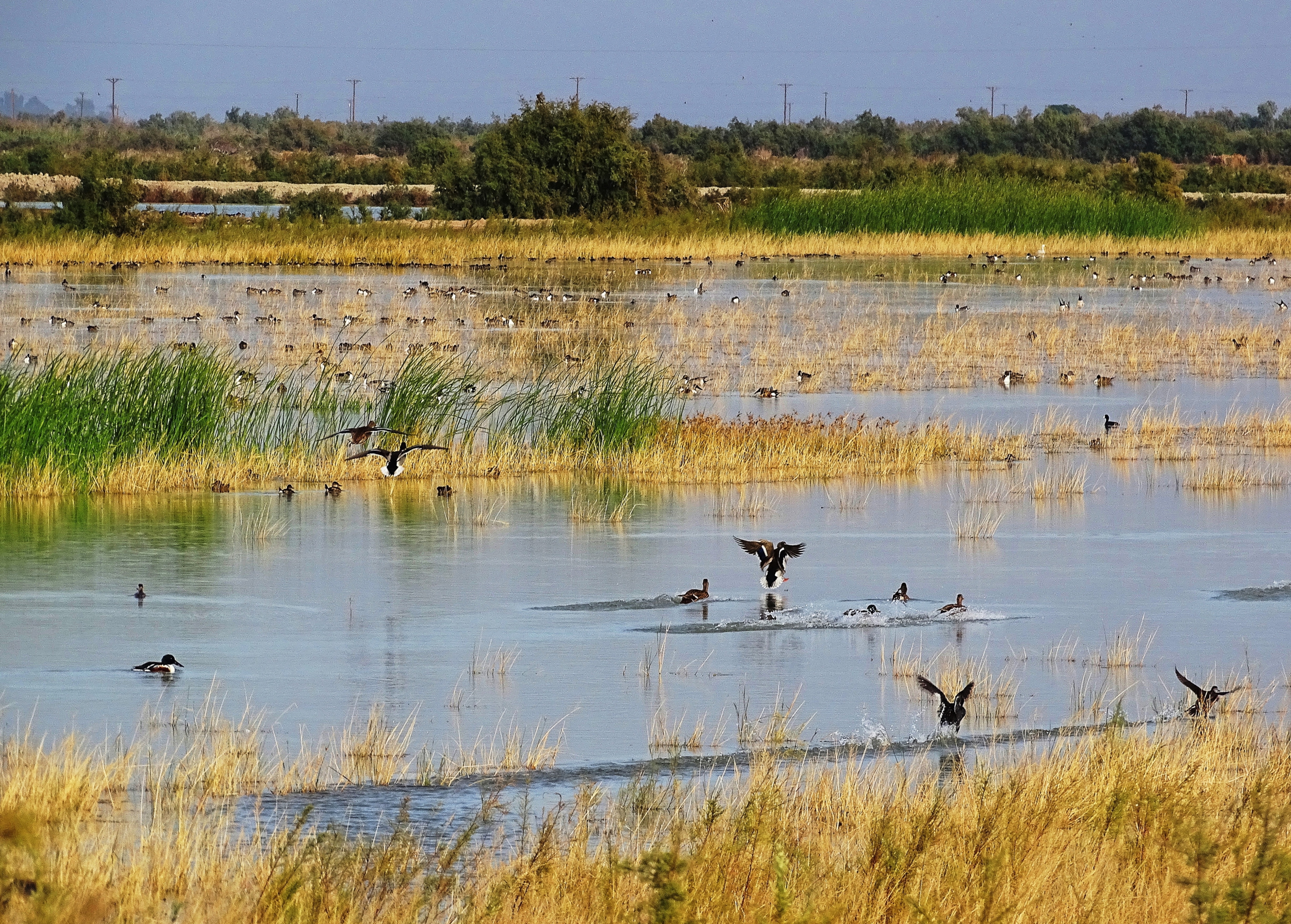
I understand he feels territorial.
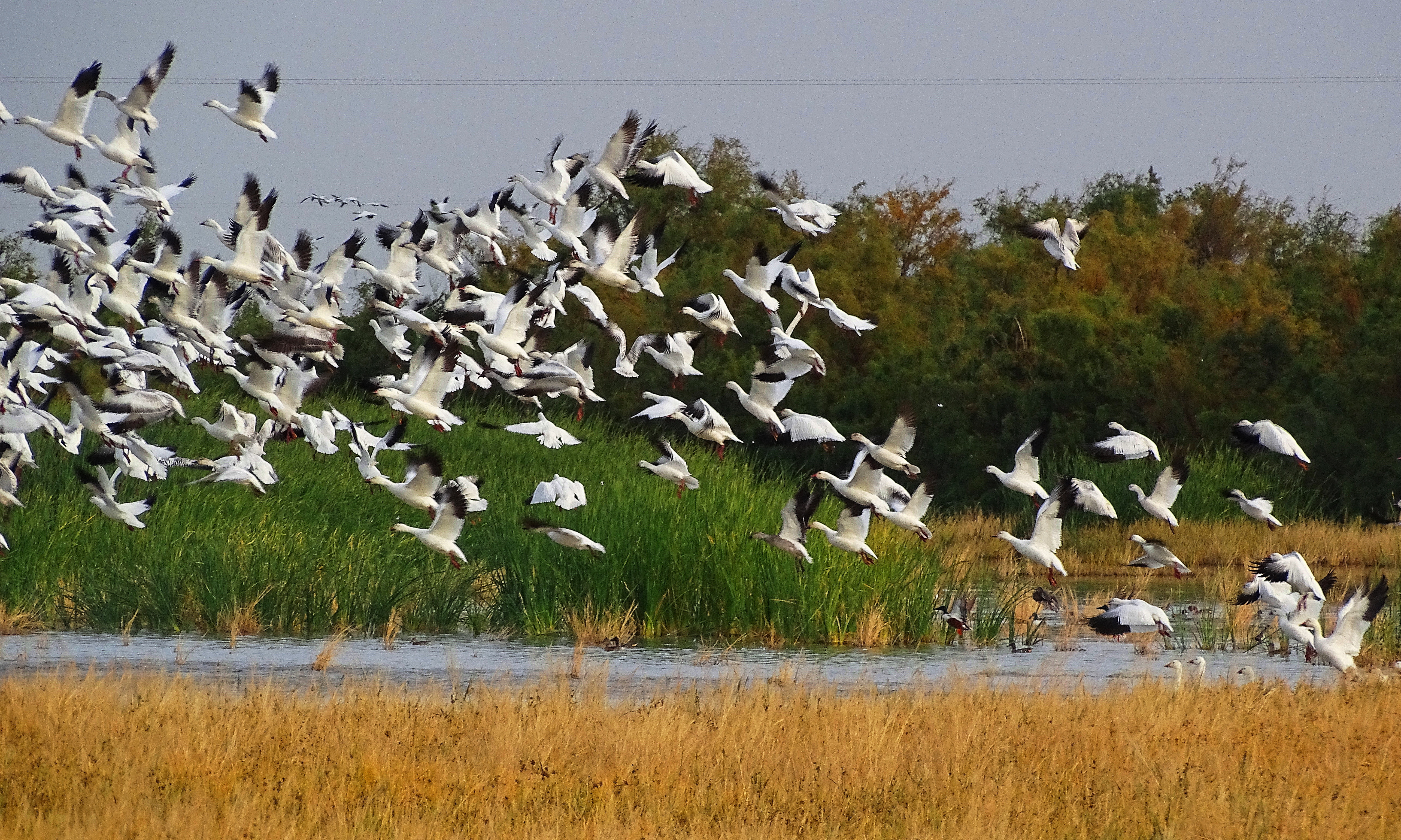
There’s lots of birdies at The Salton Sea,

and a little Yellowleg needs to hold his claim.
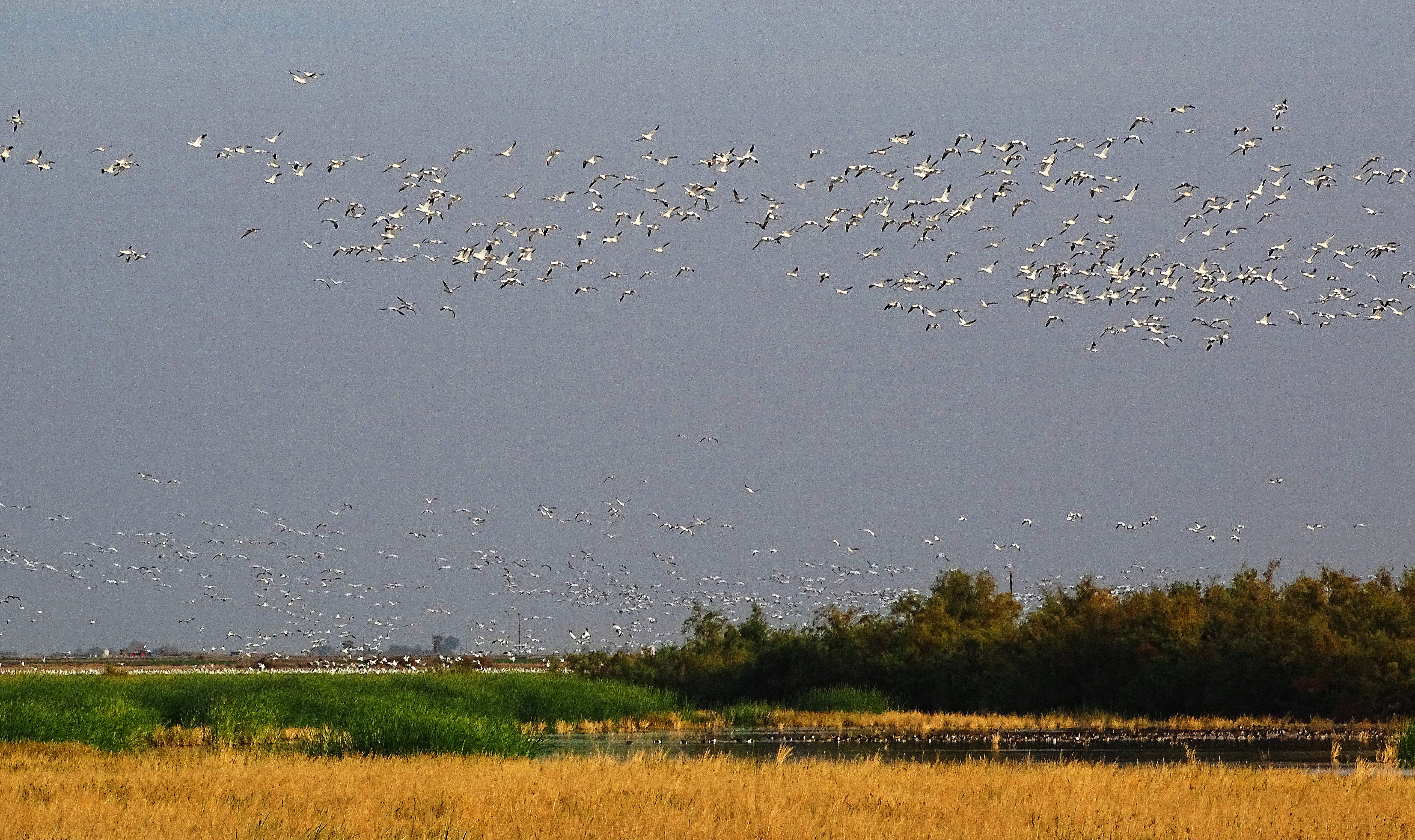
Cheers to you from the wintering birds at The Salton Sea~
Share this:

Discover more from Cindy Knoke
Subscribe to get the latest posts sent to your email.
Reblogged this on IdealisticRebel's Daily View of Favorites and commented:
Excellent photographs Cindi
Ahhh, your thoughtfulness is very much appreciated! Thank you & cheers too~ 🦆
Amazing photos, Cindy 🙂
Muchas gracias amiga mia~ 🦆
What an interesting bird. He’s all legs!! Glad he calmed down but love that he gave you a talking to first lol 😊
I love birds that give me hell! They usually are really small too! 🦆
Then you’d fit right in, in my backyard lol the little ones are always squawking, especially if I forget to feed them!! 🙂
also very beautiful…love the legs…smiles hedy
He was so cute and so loud for a liittle guy! 🦆
you’ve capture bird images Cindy…i love the series you put together feels like i am there to see them for myself…enjoy your day 🙂
That first picture is such a classic with the branch mirroring the open beak…!
Ahhh, thank you for your thougthfulness~ 🦆
You are so knowledgeable about these bird. Beautiful shots!
How nice of you to say! I have loved birds since I was very little~ 🦆
nice seeing birdies
standing their ground 🙂
They don’t always fly away. Sometimes they hold the ground and give humans a beak lashing! I love this! 🦆
(Y) 🙂
🦆 <3
Beautiful!
Merci beaucoup~ 🦆
He’s beautiful. But no wonder he needs his own space with so many large flocks around.
To him, I am just less agile and threatening than most other beasts out there! Laughing….🦆
Beautiful! There’s nothing quite like seeing a flock of birds lift off into the sky together. And that Yellowleg reminds me of my assertive Nikita! Little but tough and territorial. Hope the Salton Sea can remain a place that supports all this life. I’ve heard a bit about the problems there but here’s hoping! 🙂
I love birds like Nikita, all sass and outsized personality!
Yes, there are big problems with the sea and 6 million migratory birds on The Pacific Flyway rely on The Salton Sea. It is incredible when huge flocks out here take of. The sound is like something you’ve never heard, a deep rumble that becomes deafining and is quite thrilling. It’s the sound of a million wings beating~ 🦆
Toujours de très, très belles photos. Bravo, et merci !
Merci beaucoup mon ami Lorrain~ 🦆
Nice photos of the yellow leg. 🙂
Thank you Ranu! 🦆
Lovely shots. I can hear the scolding
It was most impressive I assure you! 🦆
The balance looks great: thin n’ pointy legs, thin n’ pointy beak, thin n’ pointy tail <3 Cheers Cindy
He is just a TP kinda fellow!! 😉 🦆
Las aves zancudas son muy divertidas por sus largas patas. Muy bonito post. Feliz finde, Cindy, y sigue visitando estos lugares tan preciosos para traernos tan bonitas fotos 🙂
Eres una amiga tan encantador! Gracias por su amabilidad~ 🦆
superb pictures Cindy
Honored! Thank you~ 🦆
So well done! I love your posts!
I love bloggers like you! You brighten my life~ 🦆
Aw!!! The feeling is mutual.
I once new a parrot that lived in a pub by a lock and small car park. His favourite game was hiding in a tree by the car park and calling “You can’t park here” as soon as people got out of their cars. The looks of confused consternation on the faces of people was a delight. 😀
Laughing! You told me this before, and it is so hilarious that I remember it well, and so great that I am laughing again. That parrot had more fun in one day than most people in a lifetime. I would love to see the people’s faces! 🦆
Ooops. It seems that parrot stories repeat themselves as much as parrots, as much as parrots, as much as parrots. Squawk 😀
I love the Salton Sea! I stopped there once on my way to work in El Centro.
Parts of it look like a post-apocalyptic wasteland, and other parts are the most amazing bird refuge I have seen. Hopefully you saw the latter parts~ 🦆
I saw both:)
Perfect!
I love the pure honesty of birds. They speak their peace (piece) and then let go of their disgruntlement just as quickly.
I watch them all the time obviously. I think doing so is instructive. Just as you say, they get in arguments, and move on. They seem to live so fully. I learn from them~ 🦆
There is so much we humans can learn from nature. I wonder if the reciprocal is true?
It doesn’t seem that nature or wild creatures could learn much from us does it? Except maybe as negative role models, examples of what not to do. Negative role models are important though for just this purpose. Watch us mess everything up and learn from it…..
Too true on that…
Love this little guy! 🙂 Such a beautiful place. 🙂
It is paradise for birds, and bird lovers! 🦆
I hear ya! 😍💖
Great pictures. Cheers to you also.Cindy. 🙂 Suzanne
Thank you Patricia and Happy Sunday! 🦆
You would think he should fall over with those long legs. Perfect long legs to stand in the water and fish. Isn’t nature fascinating?
Endlessly fascinating and instructive since we all are just another part of it! 🦆
That’ll teach you! 😉
Laughing! Exactly! 🦆
😀
I’d never seen that kind of little birdie before, Cindy. Good for him, standing his ground and holding his own! And despite all his grumblings, you still got some beautiful shots — so everybody wins!!
I love win win situations! Quack~ 😉 🦆
Okay, Cindy. That little guy is certifiably cute!
Absolutely! He was adorable & tough! 🦆
Your photos are always magnificent, but the images of the little Yellowleg are especially gorgeous. Thanks, Cindi.
Ahh, your kindness brightened my morning. Thank you~ 🦆
Reblogged this on Random Ramblings; Myriad Musings and commented:
Hehehe…here’s a plucky little guy! I hope he wasn’t too profane in his scolding, when Cindy politely asked for his picture – great photos!
😎
Thankfully I don’t speak Yellowleg. I got the gist from his volume though and I am sure it was laced with Yellowleg profanity! 😉 😉
LOL!
XD
Stunning birds series posts! Love it!
I am so glad. People who don’t like birds will be underwhelmed, but that’s okay. I’m good with the nature lovers! <3
This must be a sight to see. Is the SS area protected from development?
The parts I photographed are protected, but other sides of the lake are open for development. There is a prison on the east side of the lake and a ghost town on the west side. The Salton Sea is the largest lake in California and is man made. It functions as a catchment for all the agricultural run off from The Imperial Valley, as such it is highly polluted with pesticides and herbicides, due to evaporation it is highly salinated, and due to ongoing drought, it is steadily evaporating. These are the biggest threats. Despite all of these appalling environmental insults, the sea supports over 6 million migrating birds, and a host of animals, and reptiles. Unbelievably all these creatures thrive due to the presence of the sea. The birds that you are seeing are on the south east end of the lake, where there are fresh water marshes, and agriculture planted for their consumption. It is a fascinating place, environmentally, biologically and sociologically. People live on the west side in master planned communities, with streets and lots that were never developed. There is an abandoned hotel and restaurant. The shores of the sea on the west are covered with fish bones because the fish that live in the sea only live for a very short while.
It amazes me that such life and beauty arises from such desolation~
It must a interesting scientific ‘experiment’ for those who study the effects of man on the environment. Given what you’ve told me, I feel badly for the negative health effects these creatures are subjected to. God help us. 🙁
Yes. It is surprising they do so well. My son’s a biologist and he explained that the shorter normative lifespan an animal has the less they may accumulate toxins in their systems. The longer, the opposite. I don’t know but I would suspect that the fact that they spend a few months near the sea and then many months far north and south in more pristine habitats may be protective, but I don’t know. We need a ornithologist to weigh in here.
Cindy, now that’s a thought worth investigating! I’m not an ornithologist but parrots are known to self-medicate at the famous South American clay lick in particular. Ingesting that clay (with all its minerals) helps dilute the toxins that’re naturally a part of the plant seeds they eat (since they go after the youngest rather than ripest fruits) – according to what I recall from that text we read, Parrots of the Wild. The potential for other birds and animals (like the ones who spend time at the Salton Sea area) to find other ways to self-medicate is, of course, a mystery to me but it’s definitely a question for ornithologists to pursue!
Love the message, little birds and happy flocking!
Yes, we could learn from them! 🐦
Great photos!
Thank you kindly~ 🐦
Beautiful photos, Cindy. I love the reflection in the water.
Leslie
That bird clearly saw how cute he is!!! 🐦
He/she was full of character.
Leslie
Very much so~ <3
This little bird had a huge lesson to teach us, through your gift of interpretation, Cindy. <3
And of course my love of blarney! 😉 😉
😉 smiles!
Cindy, many hugs to you and yours for a fantastic holiday season.
Beautiful photos, Cindy. I love the reflection! What a lovely place.
It is a wonderful place to spend the day and frequently there is no one else there!
It’s been a while since I’ve been to the Salton Sea and admired its birdlife, Cindy. The bird’s personality, and his reflection, were charming. –Curt
Glad you enjoyed Curt & cheers to you~
Awesome photos Cindy but I loved the first one (with it’s reflection of the legs and the stick) and the one of the flying birds the best. I have tried so many times to capture them as they fly off but…
Yes, it is hard photographing flying birds and thank you for your kind comments my friend. Have a wonderful week~ 🐦
Wish you a lovely week too 🙂 Love your emojis 🙂
He’s a darling little guy, Cindy. Where is the Salton Sea?
Happy Holidays to you, my sweet friend ♥
It is in Southern California, east of Anza Borrego Desert, near the border with Arizona.
I’ve lived in California for 40+ years and didn’t know that. How could I not have known that … Thanks, Cindy. Hopefully I’ll visit there someday ♥
If you go, please let me know so I can suggest where to go to have the best experience and see the most wildlife , and if you want to stay a night or two in Borrego there are nice places to stay and eat.
Thank you, Cindy. How lovely of you to offer. You will be my first contact ♥
An aptly named bird! The photos are stunning, just lifts my heart and the added bonus of such a fine reflection in the water. 😀
Ahhh, your kind comment made my heart smile~ 🐦
He is a funny fellow! His legs look really long in reflection, and I am a bit envious. 😉
Well, don’t forget, they are reflected, adding height, like some airbrushed celebrity! 😉 🐦
Wonderful captures, Cindy! An elegant bird 🙂
And an assertive one too! 🐦
I love the reflections of the bird in the water. Beautiful.
Ahh, thank you! It is wonderful when the surface of water is still enough to get shots like these. I love reflections. They challenge our perceptions~ 🐦
All beautiful photographs. Are they snow geese on the wing?
Alison
Yes they are snow geese and they will be heading to Canada in the spring to your neighborhood~ 🦆🦆
Yes, they settle at/near Reifl Bird Sanctuary. It’s amazing to see thousands of them together like that.
Yes they are beautiful birds and amazing in these huge flocks~
That is a very interesting bird. The legs seem fragile. Does the Yellowleg live there year round, or is it wintering?
It is actually both, most migrate, but fewer can be found year round. This is a bird that follows it’s own drumbeat as you can probably tell. 🦆
Hi Cindy! I have nominated you for the Mystery Blogger Award. Let’s move it forward!
Ah, that is so thoughtful of you and so appreciated even though I am award free. I only mention it on my about page so you could not have known. Thank you for your kindness Carolyn. It touched my heart~ <3 <3
Amazing images!!
Honored. Thank you Indah & cheers~
Good for him! But he could tell you were his friend 🙂
Quack! 🦆🦆 😉
Love how he extends out of his reflection.
He’s a doublemint bird, two birds in one! 🦆🦆
Cindy, as I look outside and see our unusual snow cover and have heard so much about the birds here not being prepared I worry about them. Then I see your pictures and rejoice in their grace and beauty. While we are not supposed to, I put out a suet block with seeds in it like my mother used to do when some of the birds got caught in winter. It is in a fairly safe place from rodents and has been dinner for more than a few little feathered ones!
Good for you! You keep that suet and seeds going all winter and you will save birds. Hummingbird populations in the west were dying out, the population has rebounded because of the extensive and continuous maintenance of so many backyard feeders. If you keep it up all winter you help stressed birds survive. I don’t buy the argument about the benefits of non-interference , we humans have so damaged ecosystems and species that anything we can do to offset this harm is good. So, I say thank you, and bring on the suet and seeds. The birds know you are doing it and they thank you too~ <3 <3
I feel like I have to carry on my mother’s fight. And I plan to keep it up all winter for sure. The rules in this complex seem to only apply to those who don’t break them if you know what I mean. I put hummingbird feeders up in the warmer months and suet in the winter.
Good for you & happy holidays! 🦆