
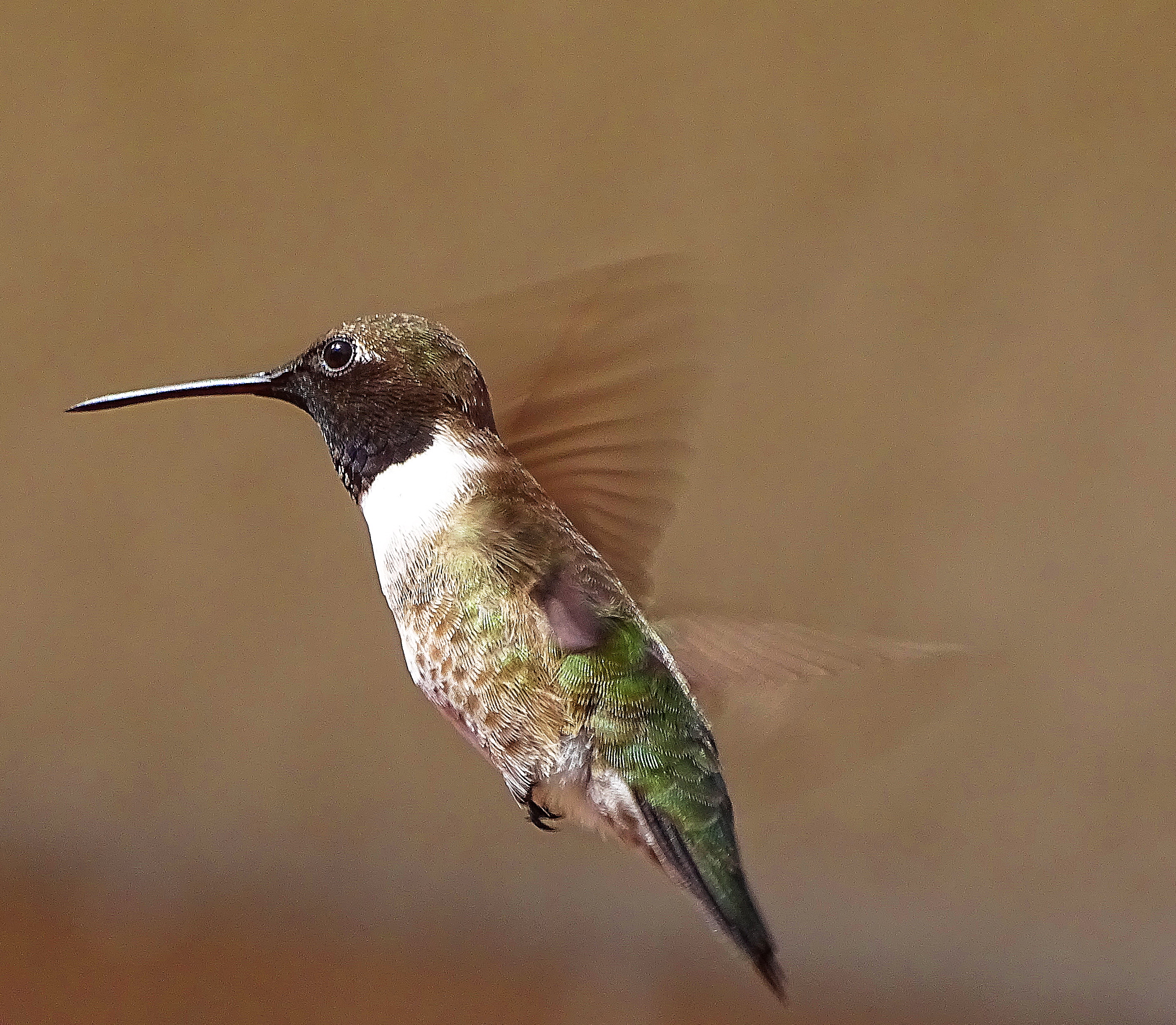
Four quarts of nectar were being consumed by The Holler Hummers in 48 hours. But now, each two quart bottle of nectar, has it’s own lethal enforcer, who will attack any hummer who tries to feed. So one hummingbird controls 2 quarts of nectar!

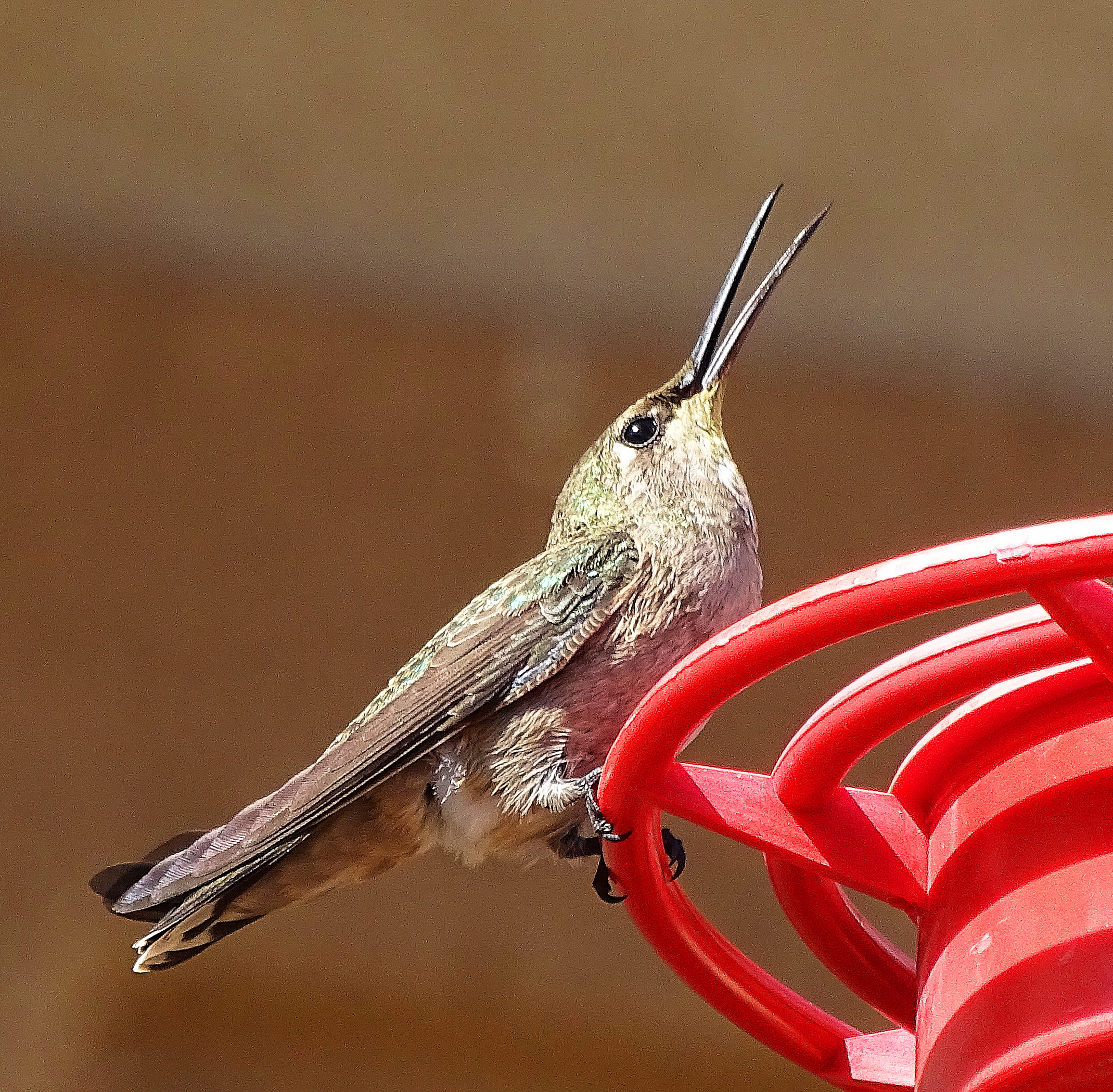
The most lethal enforcer is the guy above. You can see he has a malformed beak that he may have gotten in one of his many battles. He is like a capitalist robber barron, hoarding riches he will never be able to consume.
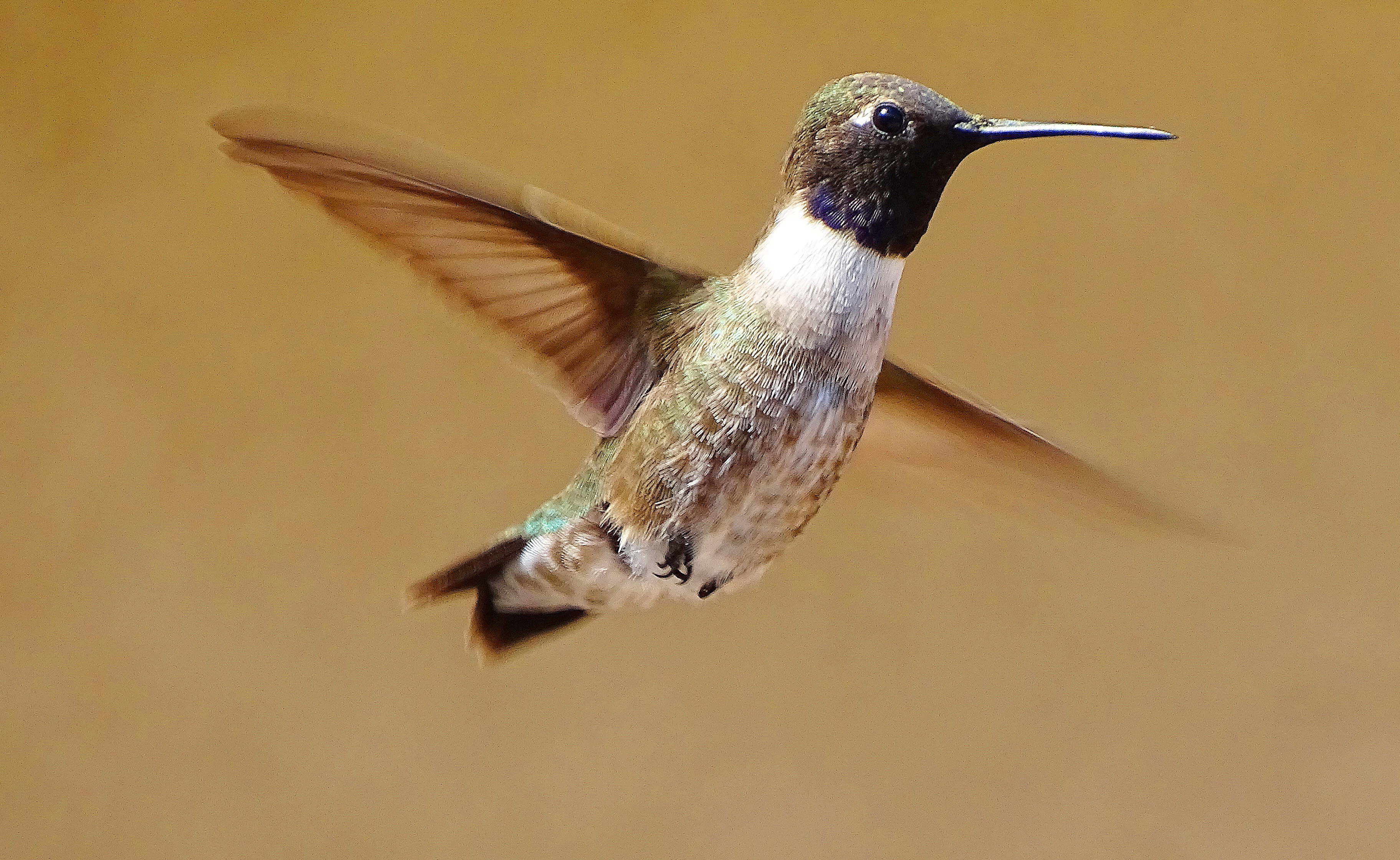
Here is enforcer number two. Both enforcers have visble differences from the other hummers, the beak malformation in number one, and number two is the only black chinned hummingbird at The Holler.
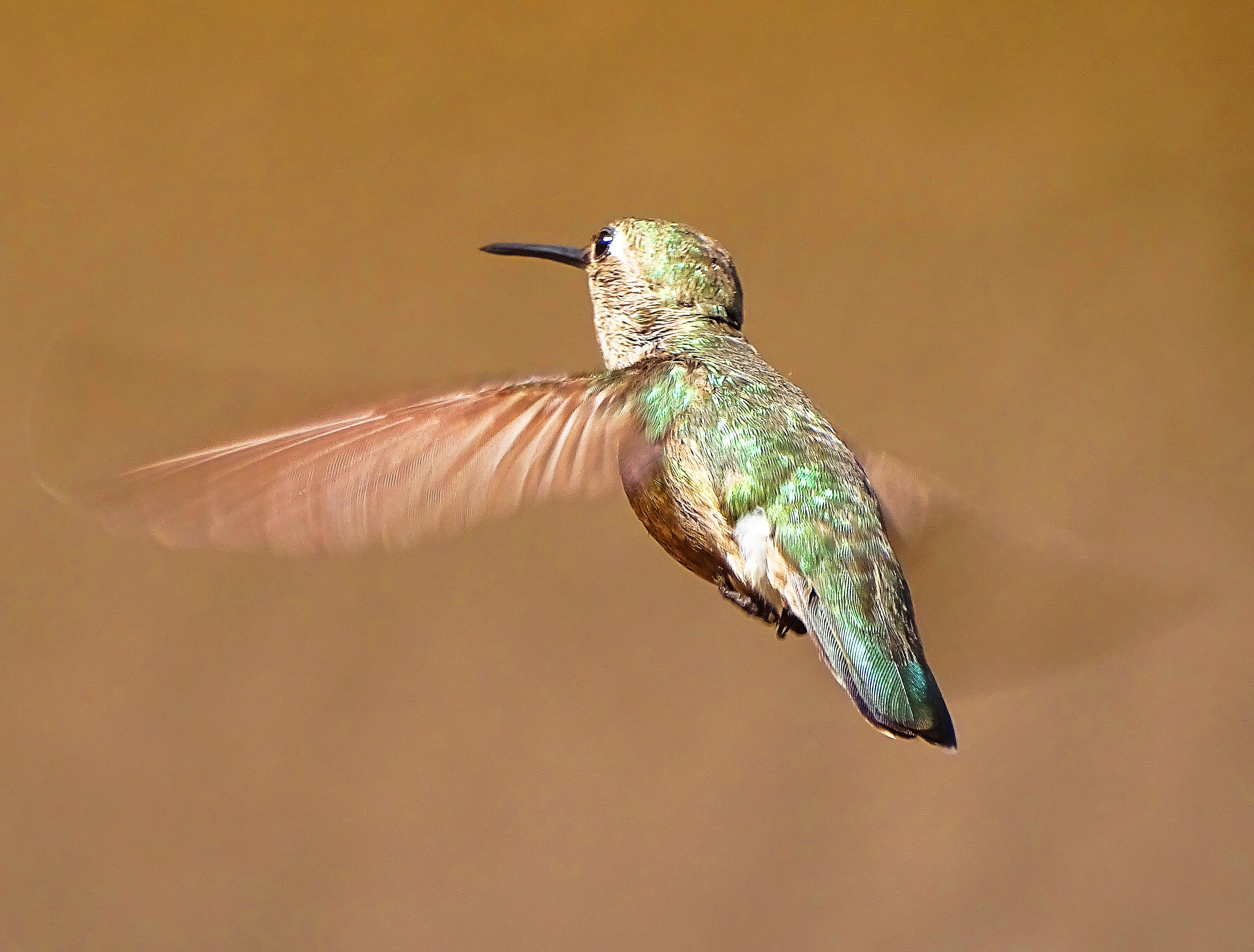
The other hummers snatch nectar when they can, but most have given up and go feed on the flowers. I think they are the smarter ones. Who wants to waste all this energy fighting?
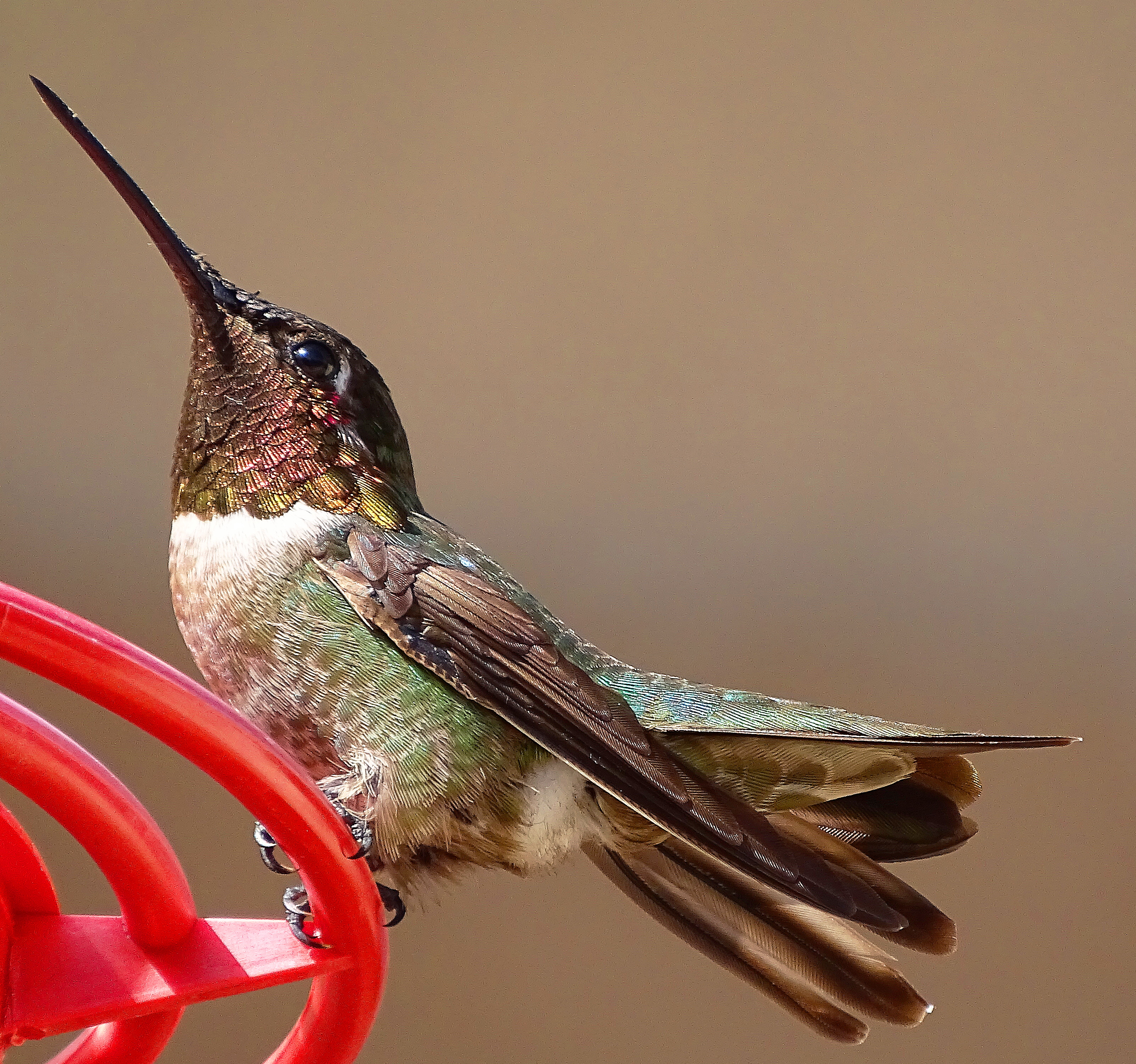
All the hummers who do attempt the feeders are intensely leery of attack from above.
They are constantly ready to self defend!
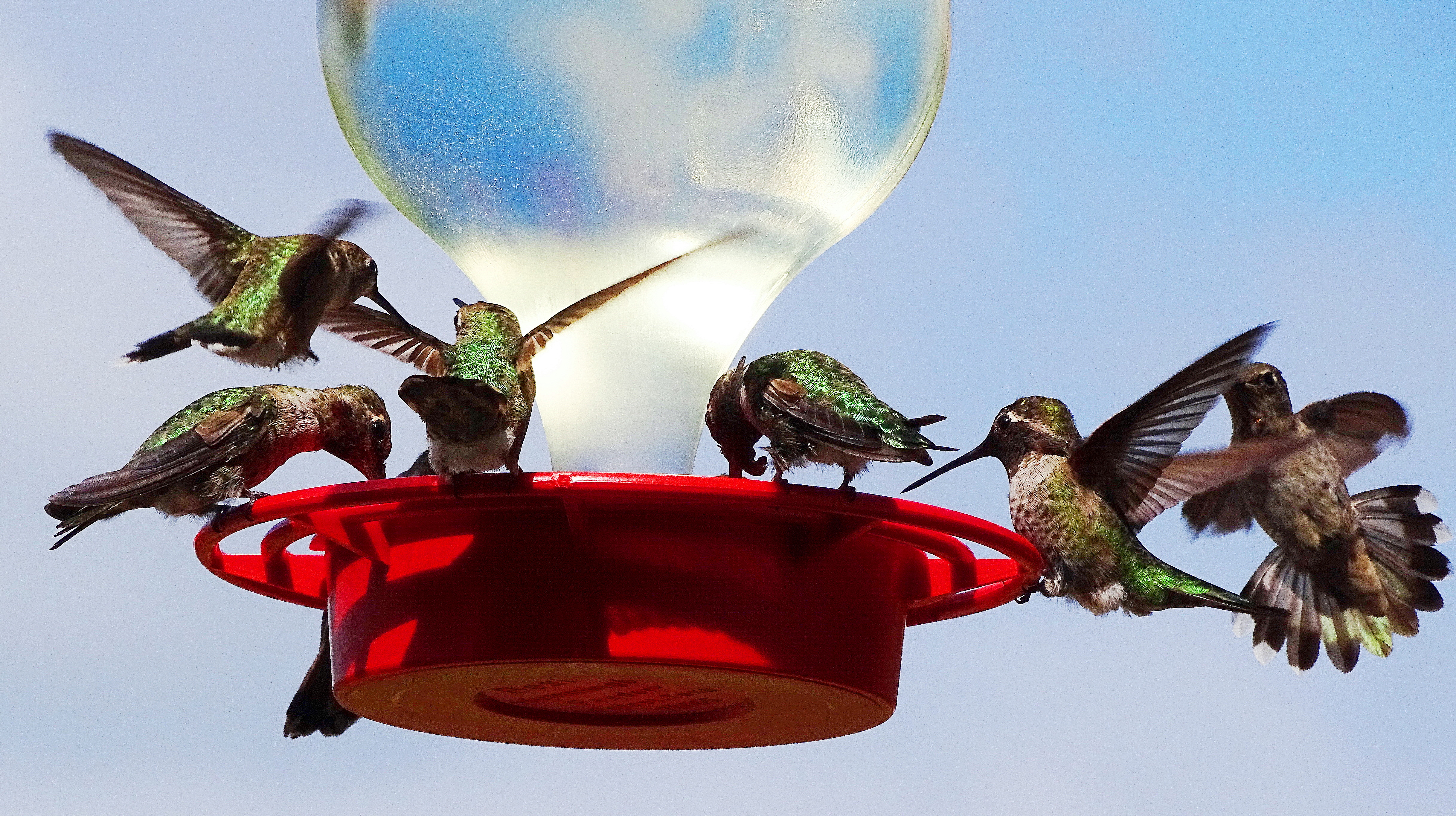
I understand that hummingbirds need to feed constantly because of their hyper-drive metabolisms, but I don’t understand how all this relentless attacking is adaptive for them as a species.
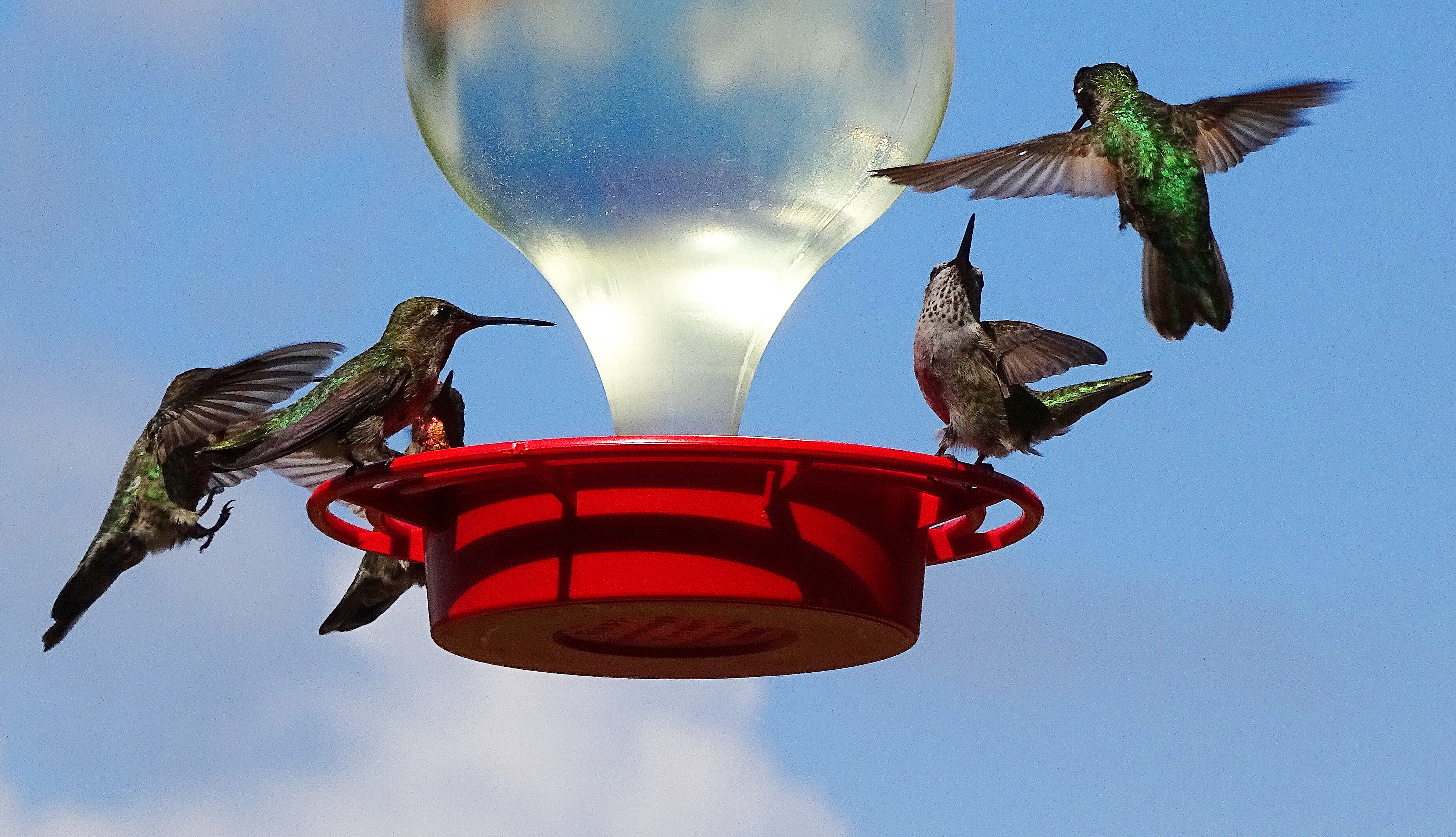
They remind me of human governments that hoard resources and launch vicious attacks for control. I wonder why they, and we, can’t all just share and get along?
Cheers to you from The Holler’s sometimes too “human-like” hummers~
Share this:

Discover more from Cindy Knoke
Subscribe to get the latest posts sent to your email.
Oh my what great photos these are!!! 🙂
Well bless you and Happy Easter Natalie!
Wow. Stunning photos 🙂
So happy you enjoyed them & cheers to you~
Boy, I know what you mean. It’s like that at my house too, except I don’t take all the great pictures you do! Thanks.
I have never seen it quite this extreme before. We have the two robber barons controlling the feeders that will spoil if they keep this up!
HI ,Cindy, I love your photographs of humming birds, thank you for sharing 🙂
Thank you more Ranu for your thoughtful appreciation! <3
What FABULOUS shots – only yesterday I suggested to Darling Daughter we should be cleaning up our Hummingbird feeders in readiness for hanging but she assured me we had “ages” yet. Looks like we’ll be busy tomorrow! 😉
Hopefully the tryant kings won’t be moving in on your feeders!
We had two bullies last year who ruled from afar. I so wanted to hit them with a water pistol as up until their arrival we FINALLY had a full feeder then… zippo… all we were left with were the bullies 🙁
These are phenomenal photos. How’d you get these enforcers to be still long enough for you to focus on them!!! Kidding, of course. You’re just skilled! Thanks for sharing with us!
Thank you more for the thoughtful and motivating feedback! Happy Easter~
They are awesome and you have awesome shots of them.
Awww, so pleased you enjoyed my friend and Happy Easter!
I’m impressed by the amount of hummingbirds you have down south. We get an occasional one up here from time to time…
Oh yes we have hordes, until the tryants drove them off!
Wow!!! Great photos of the Hummingbirds!!! I have tried to get photos of them but they are never this clear and detailed. Impressive.
Well thank you! That is most encouraging & cheers to you too!
Fantastic capture!
Mil grazi!
Those are some of the best shots of hummingbirds, ever! Wonderful! And shame on you, little robber barons! I actually always thought they shared better than that.
They have gotten along better until today! I did go out and chase the tyrants away a few times, emboldening the others to challenge them. There are eight feeding peacefully on one feeder now which is some progress. We’ll see if it lasts…..There was just a new research study published that clarified that hummingbirds are one of the few bird species that use their beaks as swords against other birds. It’s a bird slash bird world out here in hollerdom!
Yes, they’re back! We’ve been getting a rare red visitor at our feeders. I believe it’s called the Rufous hummingbird. I need to try to get some pictures of him!
As for the guy with the malformed beak, I sure hope it wasn’t the result of crashing into any buildings/windows – though I suppose there’s less human development out where you are. I have an academic article that helped me understand why some avian species are more territorial (my parrotlet is like this!) and while others aren’t or, in other words, why natural evolution will favor competition in some species. If you want to see it, let me know and I can provide a link.
Yes, of course I want to see it! Please provide link! The good thing about hummingbirds and their aggression is that they don’t construct weapons! We have a Rufous too. Just one. He is such a pretty color. Would love to see yours too. I’m not sure about the beak. It could be an healed injury, so some other sort of malformation. It isn’t slowing him down that’s for sure. We had a finch here with a seriously deformed beak. I got some pics of it and it turned out to be a bacterial infection.
Here you go Cindy… I’m providing 2 links to the same paper in case one becomes unusable at some point in the future: (1) https://sora.unm.edu/sites/default/files/journals/wilson/v076n02/p0160-p0169.pdf (2) http://politespider.com/papers/general/The%20Evolution%20of%20Diversity%20in%20Avian%20Territorial%20Systems.pdf
I’ve undertaken this research because I noticed a difference between lovebirds and parrotlets… the word “share” is particularly not in the Pacific Parrotlet’s (my current parrot) vocabulary and they are noted for forming smaller flocks than more social species. Also, when I give her something (food, a treat, etc.) she won’t allow me to touch it again. My lovebird, from awhile back, was wayyy more gentle, not as possessive, and actually gave ME stuff! Since this is nature, there’s still variation such that there are gentle parrotlets and aggressive lovebirds for sure, however trends in competitive behavior make sense when you consider how ecological niches make one way of being more advantageous than another for survival.
According to a parrotlet expert I encountered, the dense South American rain forests fostered more competition and was generally more hostile for small birds (spiders are as big as they are) such as parrotlets, so it justifies their behavior because individuals have to be at their strongest to survive (unlike hummingbirds, no sex difference in behavior here!) rather than everyone sharing and being in a physically weaker state. Contrast this with the spacious savannas of Africa that lovebirds come from (and I hear that they flourish in the dry climate in Arizona too!).
So the way to tone down the competitive drive is to provide more space to territorial individuals since it’ll be harder for them (and not worth the energy used to do so) to patrol a wide expanse than a small one. Parrot owners (and I practice this with my parrotlet) are told to have several “homes” for them strewn about the house and to take them to different parts of the house throughout the day so that they won’t feel like they only have a small space that they must do their utmost to defend.
With hummingbirds, the more feeders and more physical separation between feeders you can provide, the less aggression and fighting there will be. To some degree, they’ll just be who they were compelled to be due to their long evolutionary history under particular circumstances, but learning why my parrotlet is the way she is really helped me compassionately accept the total package when I realized I couldn’t train her out of it.
Sorry for nerding out here, but I figured you’ll read through things at your own convenience! 🙂
Fascinating Lynn. Please nerd out more often. As a fellow nerd, I fully appreciate it and am most interested in everything you had to say here. Nerding right back at you, I just read the results of a four year study in Costa Rica that found that hummingbirds are one of the only bird species that use their beaks as spears to puncture the necks of rivals. The males do this during breeding. I wonder if this heightened aggression I am seeing now is mating related. I have never seen it to this degree before though. I will take your advice and separate the feeders geographically. That makes perfect sense. Thank you Lynne. This was informative, interesting and helpful! <3
PS- Your parrotlet is one lucky birdie!
Ouch 🙁 Yes, I imagine that is mating related. I haven’t seen that level of aggression here either. The males in our area just bump each other. Since that’s Costa Rica then I imagine that the competitive pressures that ensured certain types of parrotlets survived may also be at play for South American hummingbirds. Then, there’s also the fact that hummingbirds don’t typically form long-term dyadic parenting partnerships like parrots typically do, so male hummingbirds will be fighting for every female they can get. Thanks for the information and for being a fellow nerd! <3
Yes, I imagine not everyone out there would understand where her aggression comes from if they had her under their care. 😛
I didn’t know hummingbirds do that… really surprised. Stunning photos of these beautiful hummingbirds, Cindy!! Beautiful details, they are really tiny though.
They are itsy bitsy little guys with really big personalities! 😉
🙂
Gorgeous shots!
Mil grazi! <3
Cindy, your photos leave me breathless! 😉 I don’t use hummingbird feeders for a couple of reasons, one you mention – I can’t stand to listen to their constant bickering! I am lazy about filling and more importantly, cleaning, the feeders, and lastly, worrying about bees or hornets. I just plant lots of flowers they love and it works like a dream. 😉
This is the first time this has happened. The two guys at this writing are each in control of a feeder. I’ve been feeding the hummers for seven years without a problem, except for the bees once, which I saw the hummingbirds just work around. I will watch, but I am going to guess that a counter assault will be occurring soon! I do boil the feeders before each filling. We have a bazillion flowers, so I know they are not dependent on the feeder. They certainly hold my interest!!! 😉 😉
Cindy, I have experienced the same thing at my feeder. This winter one very fat hummingbird just parked himself on the feeder and let no other bird eat. So I got another feeder and put in a different location. It was so funny to watch. He found a place in the middle and started controlling both feeders at once. Thought this was happening, because it was winter here in Washington, but now I hear from you, that they do this all the time. Thank you for sharing! Hugs! Veraiconica
Oh my gosh! That is amazing. I wonder why it never happened here until now. There has been bickering sure, but not total domination like now! They are little Napoleans!! 😉
These are awesome hummingbird shots, Cindy! And yes, they are vicious defenders. I love to watch them dive bomb other hummers when they’re defending they’re food. I plant Agastache in our back berm and when it is blooming in August, they’re amazing to watch!
They are fascinating to watch aren’t they! I am happy to report, that after shooing off the tyrants, we have eight birds peacefully feeding on one feeder! The other feeder is still under the control of tyrant #1! 😉
I guess territorialism rules even for such tiny birds!
Little birds, big ambitions!
Amazing shots of these bossy little birds-Hope you Easter was blessed and you had a wonderful day.
You too my friend! Happy Easter~
Oh wow..
Assertive little beauties! Looks can be deceiving after all! 😉 😉
Gosh, they’re so beautiful… thanks for sharing Cindy, didn’t know this about hummingbirds!
I had never seen this degree of aggression until today, so we both learned something new!
Amazing shots. Just loved looking at them and reading your post. Wow! 🙂
Awwww, makes me happy I posted! <3
Always jaw dropping spectacular!!!!
You are so kind Gary! Happy Easter~
Wonderful pictures – and great dialog…
Really pleased that you enjoyed the feisty little birdies & cheers to you~
Beautiful captures of these little dive bombers!
They are amazing dive bombers aren’t they! Just such incredibly fascinating birds~
Good evening Cindy – Your photos are amazingly beautiful and relating the actions of the hummingbirds to human behavior is brilliant and sadly… so true… Thanks for sharing this with us…
Hope your Monday morning is most beautiful…
Michael
What a thoughtful comment which is most appreciated! Thank you and Happy Monday to you too~
Perfect commentary on humans and hummers, Cindy. I can’t get over four quarts of nectar consumed in just 48 hours. Keeps you busy at the Holler. And those sword fights look pretty rough.Incredible photography.
Awwww, you are very thoughtful Lynne and most appreciated too! These little guys pack quite a punch per gram, especially considering they weigh around 4.5 grams each! 😉
Absolutely stunning photographs Cindy!
Most honored that you think so and thank you too! <3
What a series! You captures the essence of these hummingbirds so well ~ beautiful.
They are wild birds, but they are part of our lives. They see me as the epitome of non-threatening. You should have seen me try to chase off the tryants. The other birds were waiting as backups to fly onto the feeders while I ran after the tyrants, repeatedly. The tyrants seemed to view me as a minor annoyance, but I did shake up the feeder monopoly. 1 point to the human! Of course, there is always tomorrow, and somehow I doubt my victory will last! 😉 😉
One point to the humans 🙂
Yes, yes, by all means enjoy your small victory as I think your last sentence is quite accurate when it comes to birds ~
🙂
This is an amazing shot…I still don’t know the secret to capturing the flight of a hummingbird!
Awwww, thank you!
Greedy little things. I purposefully space three feeders well apart so they can’t possibly control them all. Great shots! Battle scars and all.
Thank you my friend and yep, am going to have to space the feeders! The tyrants are back on post!
Fascinating. Who would ever believe that birds would fight for their drink. 🙂 I guess not even the birds are immune to fighting for what they want to gain control. Much like you said of governments. 🙂
Amazing how aggressive they are for the tiniest birds in the world, but maybe, like Napolean, their size has something to do with their aggressiveness!
Stunning Pictures <3
Muchas gracias mi amiga!
Fantastic captures!
Merci beaucoup!
Beautiful. Amazing you got more than one hummingbird in that shot! That MUST mean good luck right? 😃
Errrrr, I’m not sure, but I will just suppose it does! 😉
Stunning images Cindy !!!
Very pleased you think so & thanks~
Beautiful photography. I completely agree with your conclusion:)
Conflict is such a waste of a good day!
Yes!
The “enforcers” have more than their dreams of avarice! Hummingbird behaviour as a metaphor for human greed? Yes, Cindy, I think you’ve “nailed” it
Awwww, thank you Russel and pleased you see the analogy too!
Mean Hummers! They do need to share!M I love your post and perfect analogy of our government! I hope you had a wonderful Easter! Hugz Lisa and Bear
Hugz and happy spring back to you guys~
Isn’t it ridiculous? Them and the politicians. We had an enforcer that hid in the corner of our balcony when we lived in AZ seemingly sleeping, but no! He chased all others hummers off then went back to his perch. We called him the nectar police.
Laughing….the nectar police is perfect! I do think the hummers are preferable to politicians though…..;)
No doubt about that!
Fantastic shots… Happy Easter from us… 🙂
Thanks much and same back to you!
How lovely! Happy Easter 🙂 Love, Jana
Happy Easter my friend and cheers too~
Breathtaking!
Awwwww, thank you!
Seems like those two bullies are humming the wrong tune for the peaceful Holler community.
Exactly, we voted bullies out of hollerdom! 😉
fantastic!
So kind…….
Wunderschön wünsche dir einen schönen Ostermontag lieber Gruß und Umarmung Gislinde
Vielen dank und Gluckliche Woche, Sie lieben Gislinde! <3
Liebe Cindy wunderschöne Kolibrifotos ein schönen Ostermontag mit vielen lieben Grüßen wünsche ich dir in Freundschaft Klaus
Frohe Ostern Montag bis Sie lieber Klaus und danke mein Freund ~
Wow!
Love wow! 😉
Wow… I am so blown away by your photography. Such incredible shots. Beautiful birds and love the story of their lives. Great piece.
Awwww, so thoughtful and so motivating & encouraging! Thank you~
I finally saw some hummers on a documentary recently and saw how small they are and heard the hum. So beautiful and I hope I experience them some time xx Rowena
Oh I hope you do too! The hum is so loud for a creature that weighs 4.5 or so grams. They also click repeatedly and quite loudly when they are angry! So much fun to watch them~
Since I’ve been blogging, my wish list of places and things to visit has expanded expediently. I also want to see the migration of the monarch butterflies.
Yes! That is a wonderful thing to see. They do come here and should be here soon. Bucket Lists expanding is a very good thing! It is your hopes and dreams for the future~ <3
Hummingbirds are such fun to watch…they are mini miracles!
They are, stuffed full of outsize personalities!